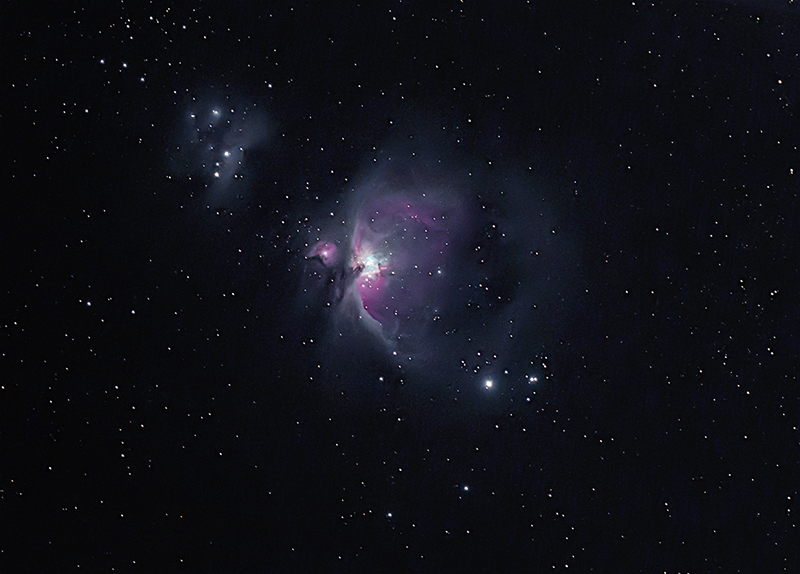
The birthing of starts involves much chaos. Orion is a great example of this.
I had a chance to get to a dark sky sight this weekend and what a difference it can make.
Best of luck to all this week.
Greg
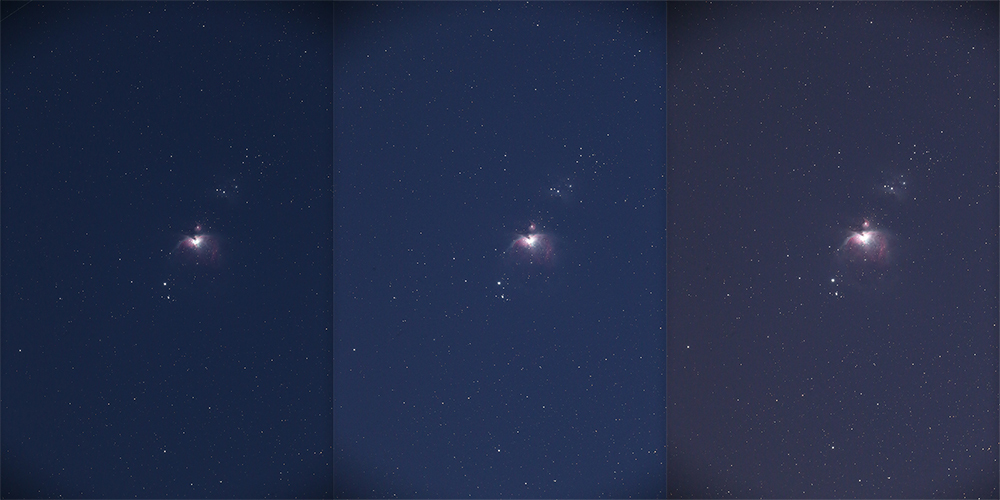
Thanks Voltaire. This was my 1Dx attached to an Astro-Tech AT65EDQ 65mm f/6.5 ED quadruplet astrograph on a Celestron CGEM mount. I found a location that is considered a class-3 on the Bortle scale. This is a blend of three shots at 15, 20, and 30 seconds at ISO's of 4000-8000. The next time I get out there Orion will not be visible.
Thank you for looking and commenting.
Greg
Thanks Travis. Here are the three exposures, as requested. (I could probably have succeeded using just the lightest and darkest but using all three made it a little easier.)
I had no idea that was going on at stars, I also have no idea how that is done, even with your explanation...and I am not going to look it up...I don't need another rabbit hole to fall into!
So...I was editing some images I shot of the Milky Way a week or so ago...after seeing these images, can I draw the conclusion that this is the kind of thing going on at the stars that appear brighter and with colorful aura around them? I
You say this was taken with a 65mm telescope...is that in any way translatable to 35mm equivalent focal length? I'm wondering if it's possible to achieve this with stacking multiple photos at shorter exposure (to not need a tracking mount) with say a 50mm f/1.4 @ 1.4. On a dark sky, of course. Or is the telescope magnification much stronger and not equivalent at all?
Travis Rhoads wrote:
So...I was editing some images I shot of the Milky Way a week or so ago...after seeing these images, can I draw the conclusion that this is the kind of thing going on at the stars that appear brighter and with colorful aura around them? I
The Milky Way is rich with Nebulae so yes, your Milky Way shots will have captured many of these. Not all stars have this nebulous material around them. Pretty much stars that are forming. (Or areas of star formation.)
Thanks for the comments Travis.
Greg
---------------------------------------------
Max_Pain wrote:
Amazingly done!
You say this was taken with a 65mm telescope...is that in any way translatable to 35mm equivalent focal length? I'm wondering if it's possible to achieve this with stacking multiple photos at shorter exposure (to not need a tracking mount) with say a 50mm f/1.4 @ 1.4. On a dark sky, of course. Or is the telescope magnification much stronger and not equivalent at all?
So the 65mm refers to the size of the primary lens and since the telescope is an f6.5 you multiply to get 422.5mm for a 35mm equivalent focal length. I have had good luck using a 200mm lens on a tripod. And yes. multiple stacked exposures can yield good results.
My mount wasn't behaving very well on the night I took this so I had to keep my exposures quite short. With no tracking mount though, these would have been useless. Best thing to do is get out and experiment. Orion is pretty much gone now until the fall but there are lots of things to see once the main body of the Milky Way is directly overhead this summer.



 Really cool image. Well done!