fredmiranda.com
Login

Moderated by: Fred Miranda
  New fredmiranda.com Mobile Site
  New Feature: SMS Notification alert
  New Feature: Buy & Sell Watchlist
  

FM Forums | Leica & Alternative Gear | Join Upload & Sell

1              3       end
  

Archive 2016 · Bellows vs Tilt Shift


tntcorp
Offline
• • • •
Upload & Sell: Off
p.2 #1 · Bellows vs Tilt Shift


I'm envy of jcolwell & naturephoto1 for their macro setup... all i can hope for is the pitiful 1:1 mag with my simple macro lens. :')


Aug 02, 2017 at 04:20 PM
LightShow
Offline
• • • • •
Upload & Sell: Off
p.2 #2 · Bellows vs Tilt Shift


Yes Jim, that one, I don't recall seeing it before, I especially didn't know it folded up till I did some searching for it, I'm interested in what you think of it's build quality and operation. Thanks.


Aug 03, 2017 at 06:25 AM
jcolwell
Offline
• • • • • • •
Upload & Sell: On
p.2 #3 · Bellows vs Tilt Shift


LightShow wrote:
Yes Jim, that one, I don't recall seeing it before, I especially didn't know it folded up till I did some searching for it, I'm interested in what you think of it's build quality and operation. Thanks.


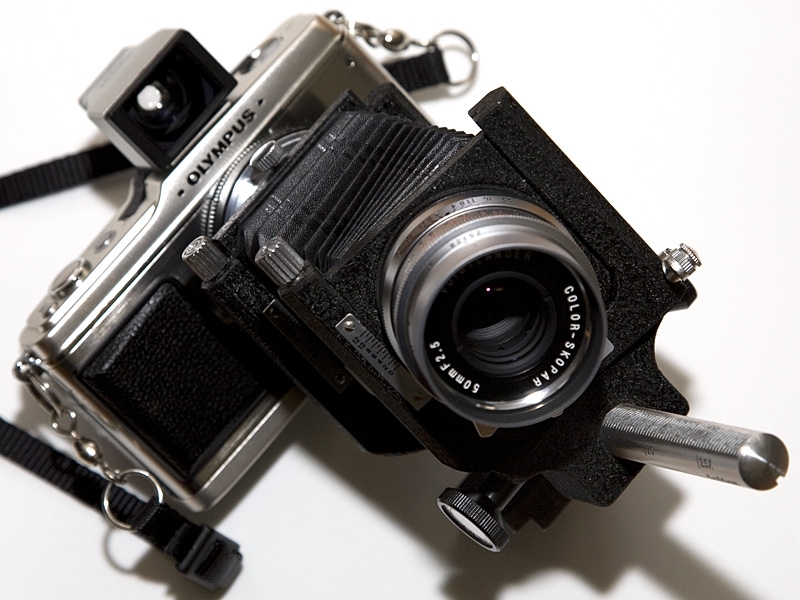
I've had it for almost ten years (spotted in on eBay, in 2008). It's very compact, and i9s especially nice for travel, with a small, mirrorless kit. It has a Leica Thread Mount, LTM, mount (M39), which I sometimes use with an M39 > M42 step ring, for lenses with a rear group that will fit. With the bellows setup in a 'normal' orientation (i.e. the rail is under the bellows), the front standard has +/- 45 deg swing (ie. rotate lens nose left and right), with bellows vignetting starting at about 30 degrees, and it has +/- 6mm rise/fall on both front and rear standards. The bellows is fairly well-made, but a bit of a lightweight. The threads driving rise/fall are a bit coarse, and the swing is freehand, with a very small clamp lever-arm that's basically open or closed. It weighs 0.43 kg with no lens or plate, but including an LTM to LM adapter (which appears to prefer staying attached, at the moment). The M645 Auto Bellows N weighs 1.2 kg.

In order to use nose up/down 'tilt' with the Kopil, you have to mount the bellows or camera in 'portrait' mode, which puts the rail on the side of the bellows, as shown in the photo I posted earlier (with the rail behind the bellows). This gets a bit weird, but works fine once you have it set. I attached another photo of the Kopil below, this time with the rail under the bellows, and the lens showing swing to the right of about 15 degrees (guessing).

The photo I posted earlier shows it with a Rodenstock Rodegon 105/5.6 enlarging lens (M39), which is a very nice match, along with other small-ish lenses like the EL-Nikkor 50/2.8 and SMC Bellows-Takumar 100/4. Larger lenses like the Zuiko 135/4.5 MC Macro and Schneider-K Xenar 180/4.5, and small LF lenses in-shutter, like the Tokyo Kogaku Horseman Pro. 105/3.5 (Copal 0), are a bit much for the Kopil, but they're easily handled on the M645 bellows.

P.S. Thanks for asking. I just found my 'missing' M39 to X adapter, on the back of the Kopil.


© jcolwell 2017


Kopil T-S bellows on Olympus EP-1


Aug 03, 2017 at 08:53 AM
Gunzorro
Offline
• • • • • •
Upload & Sell: On
p.2 #4 · Bellows vs Tilt Shift


The Samyang 24 TS (Rokinon, et. al.) is pretty awful. Awful for lens resolution and awful for build design and parts quality. I much prefer the original Canon 24 TS-E lens, with which I had very good results.

I find the TS-E series to be best overall solution, unless you have specific subjects like extreme close-up, or telephoto (beyond 100mm). Used TS-E are pretty inexpensive. 24 TSE around $600, 45 TSE around $700, 90 TSE around $800, new 24 TSE II for around $1500 and 17 TSE for around $1700. Those are pretty reasonable prices for top quality build and imaging. Some deals go even lower if you are patient.

thebmrust wrote:
I was looking at the Rokinon 24mm TS. Inexpensive and seems to get decent reviews.

It's more of an affordable entry into a genre we don't have any experience in.

But, I can see some fun & different applications with a TS or bellows in what we are shooting right now.

The info, links and GIF's are good stuff.

If you have example images that might show the difference between bellows and TS those would be appreciated too.


Aug 03, 2017 at 09:19 AM
retrofocus
Offline
• • • • • •
Upload & Sell: Off
p.2 #5 · Bellows vs Tilt Shift


Tilt/shift work with bellows for a 35 mm frame defies the purpose IMO. But it makes absolutely sense to use it with a 4x5" view camera where the circle of view of the lens plus distance to the film plane is big enough to allow a good tilt/shift movement without having any kind of vignetting. Tilt effects are much better visible on such large format screen than it is on a smaller frame size.

I agree that possible the best tilt/shift on a 35 mm frame is with a dedicated TSE lens. Not often mentioned but very possible to do is to use combinations of extension tubes and teleconverters for critical macro work together with TSE lenses, for example with the 90/2.8 TSE lens. If lens speed is not too important, the 45 TSE lens can be nicely replaced by a combination of 24/3.5 TSE with 2x teleconverter which gives a 48/8 lens. Optically I don't see any flaws by using such combo either.

Bellows work nice with 35 mm frame based cameras for macro and close-up work with sufficient external lighting. This and for microscopy work attached to a tinocular tube is the only application for which I use bellows on my 35 mm-based cameras.


Aug 03, 2017 at 12:46 PM
LightShow
Offline
• • • • •
Upload & Sell: Off
p.2 #6 · Bellows vs Tilt Shift


Thanks Jim.
And I'm glad I helped you find it.


Aug 04, 2017 at 11:27 AM
Audii-Dudii
Offline
• • •
Upload & Sell: Off
p.2 #7 · Bellows vs Tilt Shift


retrofocus wrote:
Tilt/shift work with bellows for a 35 mm frame defies the purpose IMO. But it makes absolutely sense to use it with a 4x5" view camera where the circle of view of the lens plus distance to the film plane is big enough to allow a good tilt/shift movement without having any kind of vignetting. Tilt effects are much better visible on such large format screen than it is on a smaller frame size.


I disagree with your general contention that using tilt/shift movements with a 35mm format sensor makes no sense. In fact, the size of the sensor has very little to do with the ability to see "tilt effects" whereas the size of the LCD is very much a factor. Which is why I use a 7" external HDMI monitor with my Cambo Actus and WDS outfits:


I agree that possible the best tilt/shift on a 35 mm frame is with a dedicated TSE lens.

Again, I respectfully disagree with your contention. If I wished, I could buy a trio of Canon TSE lenses, but I find the better solution is to have movements incorporated into the camera -- as is the case with the Cambo Actus -- and not the lens.

Unless one is using rise / fall / shift movements to stitch images together, it often isn't necessary to use T&S lenses, because many 35mm format lenses have image circles that are sufficiently large for many purposes. For instance, I am using three Sigma Art lenses with my A7R / Cambo Actus setup and their image circles are adequately large for my purposes at least 99% of the time.


The bottom line is what while your claims were certainly valid many years ago, times have changed and they're no longer generally valid these days.


Aug 04, 2017 at 06:39 PM
freaklikeme
Offline
• • • • • •
Upload & Sell: Off
p.2 #8 · Bellows vs Tilt Shift


It depends on how wide you want to go, how much you want to invest in it, and what and when you want to shoot, but something like the Cambo Actus and the right lenses can be very rewarding on FF mirrorless.

Two shot pano with the camera in portrait and shifted down to the maximum, a7, Cambo Actus, and CF Distagon 40.

a7_Actus_CF40FLE_WestyU by Bradley Clemens, on Flickr


Same, six shot pano...

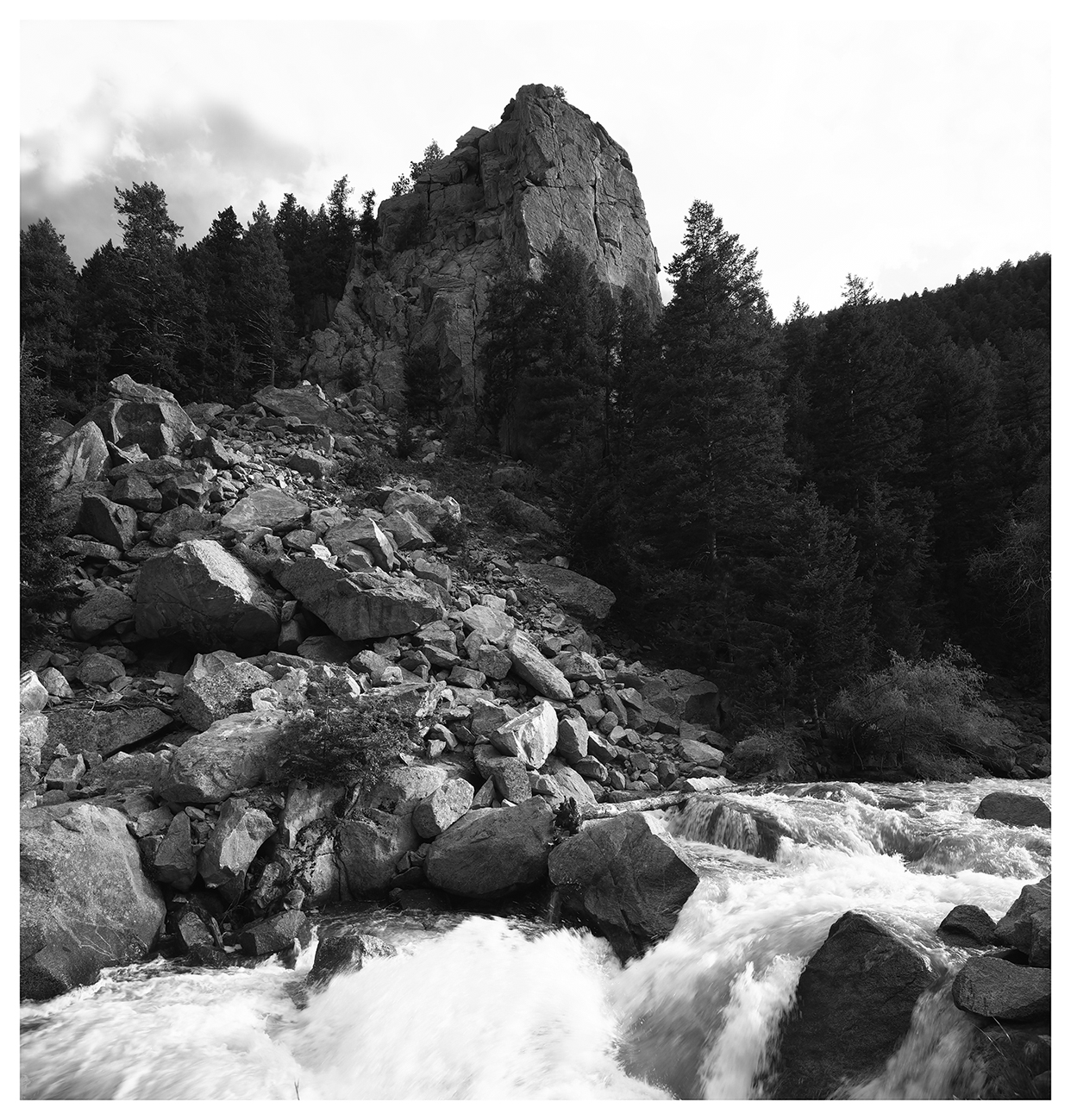
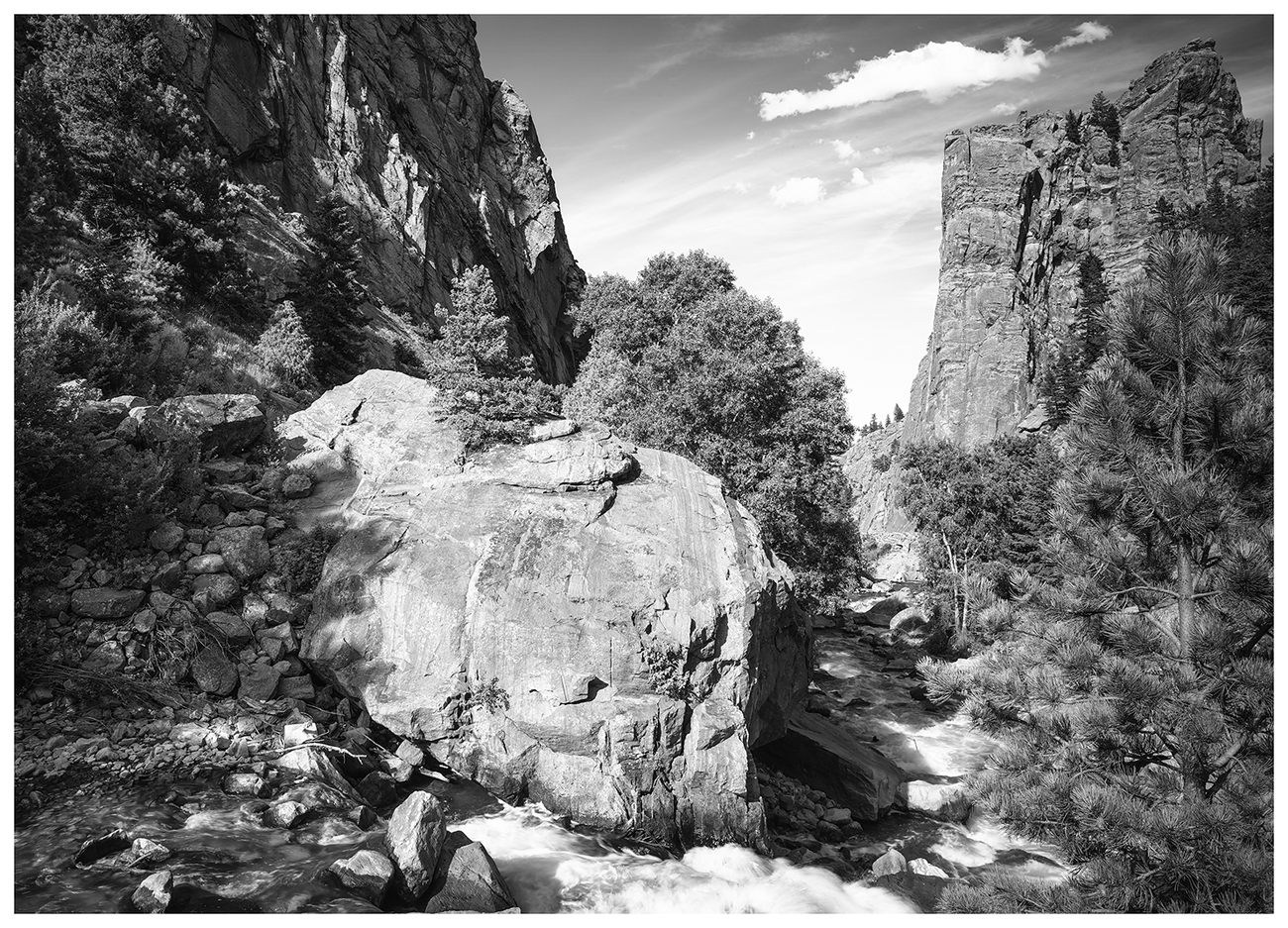
a7_Actus_CF40FLE_BoulderCanyon by Bradley Clemens, on Flickr


Six shot pano with the Rodenstock Grandagon 55/4.5...

a7_Actus_Rode55_NobodysHome by Bradley Clemens, on Flickr


Six-shot with the Rodenstock APO-Sironar-Digital 45/4.5...

a7_Actus_Rode45_EldoradoCanyon1 by Bradley Clemens, on Flickr


Aug 04, 2017 at 07:20 PM
rdeloe
Offline
• • • •
Upload & Sell: Off
p.2 #9 · Bellows vs Tilt Shift


Not only can you tilt and shift usefully on full frame, but also on APS-C! I'm currently working with a Fuji X-T2 and a Kipon Tilt-Shift adapter and Olympus OM lenses. I'm obviously not getting the camera movements I had on my 4x5 view camera, or on the A7R with dual Mirex adapters and medium format lenses that I used to use. Nonetheless, I'm very pleased with what I can do with such a tiny kit.

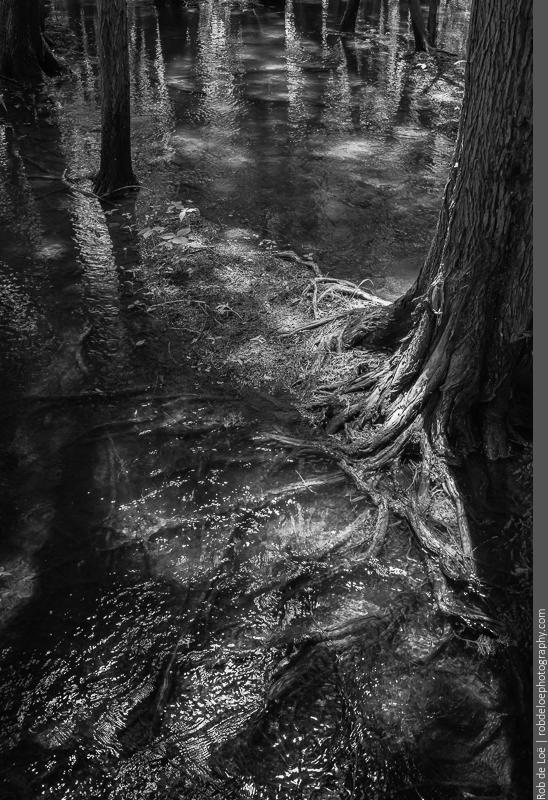
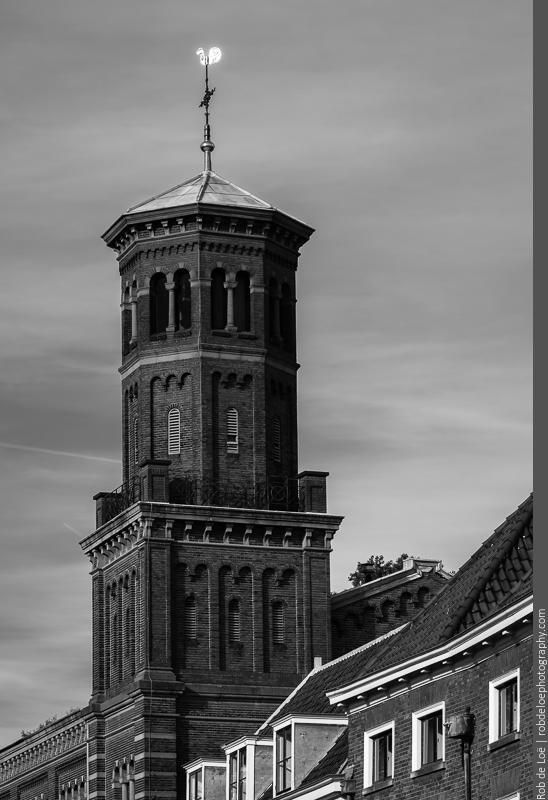
Here are two examples of a bit of tilt using my OM 24/2.8, and one where shift helped me get the composition I wanted using an OM 100/2.8. In the third image I could of course have corrected the converging verticals in post -- but I prefer to get the composition right in camera, and to not give up any pixels. A shift adapter lets me do that.


Flood in the forest


In a rush


Rooster in sunlight, Utrecht


Edited on Aug 05, 2017 at 07:43 PM · View previous versions


Aug 04, 2017 at 08:11 PM
Audii-Dudii
Offline
• • •
Upload & Sell: Off
p.2 #10 · Bellows vs Tilt Shift


rdeloe wrote:
In the third image I could of course have corrected the converging verticals in post -- but I prefer to get the composition right in camera, and to not give up any pixels. A shift adapter lets me do that.


Indeed, it does!

And a shift adapter also allows the plane of focus to remain perfectly perpendicular, whereas tilting the camera upward to include the top of a building and then correcting the perspective during post-processing results in a plane of focus that's angled, which may or may not be an issue and/or affect the final image quality.

As you say, it's best just to get everything correct in-camera whenever possible!


Aug 04, 2017 at 08:25 PM
rdeloe
Offline
• • • •
Upload & Sell: Off
p.2 #11 · Bellows vs Tilt Shift


From a purely practical point of view, I also find it very difficult to judge how much pixel real estate I need to have around a subject that will need its verticals corrected in post. I just gave up on an image I made using my Fuji 35/2. Not only was the shape of the subject badly distorted by the time I had the verticals sorted out, but also I hadn't left enough space around the subject so I couldn't preserve it in the composition and straighten the verticals. Had I left enough space, the resulting file would have not been printable at the size I wanted due to all the wasted pixels.

Two of these problems (composition errors and loss of resolution when correcting verticals) can be avoided by using a higher MP sensor with a lot more resolution, but the distortion resulting from extreme vertical correction could not. So for me, a tilt-shift adapter on my Fuji X-T2 gives me the flexibility and mobility I want, plus the ability to sort out these kinds of issues in camera.

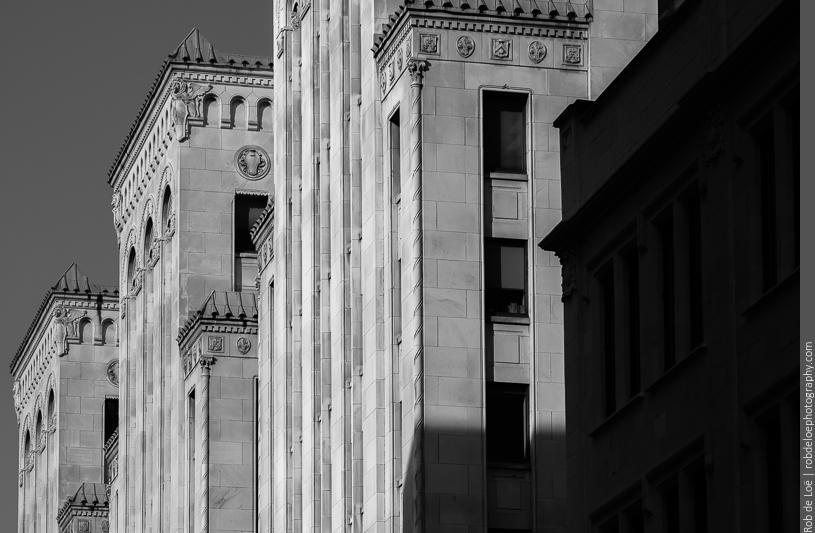
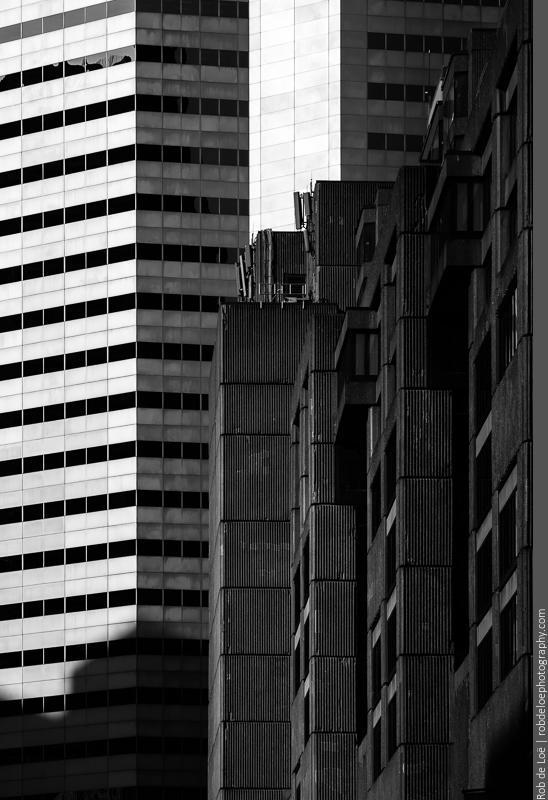
Two quick examples of flexibility and mobility: In the first one, I'm waiting on the sidewalk for my family to come out of a clothing store and notice the light on the Dominion Square Building. In the second one, we're running for the train and I see the ugly Place Bonaventure building in shadow under a shiny new office tower. No time for a tripod in either case, but plenty of time for a quick 8mm rise on the shift adapter and a few frames to get the light and relationships I'm looking for with my OM 100/2.8. I had to fine tune a bit in Lightroom in both cases (a touch of rotation because I wasn't quite level) -- but the 24MP Fuji sensor leaves me with plenty of pixels to print these at 17"x25" and keep the nice details.

Audii-Dudii wrote:
Indeed, it does!

And a shift adapter also allows the plane of focus to remain perfectly perpendicular, whereas tilting the camera upward to include the top of a building and then correcting the perspective during post-processing results in a plane of focus that's angled, which may or may not be an issue and/or affect the final image quality.

As you say, it's best just to get everything correct in-camera whenever possible!


Edited on Aug 05, 2017 at 07:41 PM · View previous versions


Aug 04, 2017 at 09:14 PM
retrofocus
Offline
• • • • • •
Upload & Sell: Off
p.2 #12 · Bellows vs Tilt Shift


Audii-Dudii wrote:
I disagree with your general contention that using tilt/shift movements with a 35mm format sensor makes no sense. In fact, the size of the sensor has very little to do with the ability to see "tilt effects" whereas the size of the LCD is very much a factor. Which is why I use a 7" external HDMI monitor with my Cambo Actus and WDS outfits:

http://www.canyonero.com/files/1501889251.jpg

Again, I respectfully disagree with your contention. If I wished, I could buy a trio of Canon TSE lenses, but I find the better solution is to have movements incorporated into the camera -- as is
...Show more

I have seen your shown T/S system before here, and I formerly also commented that I admire that innovation and novelty which you have put in here! No question about it. But let's keep in mind that your system is a unique and not a standard system which most people potentially use for T/S photography. Your external display acts like a view screen of a large format camera (enlarging the 35 mm sensor view) which allows better positioning for tilt because this is much harder to see on the regular LCD screen of a 35 mm based digital camera.

Tilt movements have both their place with the lens plane and the film/sensor plane. Ansel Adams describes the effects for each or in combination of both very well in his book "The Camera". Having the ability to tilt with the back is certainly an advantage and also comes from the large format cameras. What you built is practically an adaptation of large format options with 35 mm lens and 35 mm based camera lens gear. Still your sensor is limited to the full frame format - and not for example a 4x5" film plane size which simply allows more distinct tilt effects to achieve. Even more so these kind of effects would be visible in 8x10" frame - but I personally never shot with this size of large format camera.


Aug 05, 2017 at 07:49 AM
rdeloe
Offline
• • • •
Upload & Sell: Off
p.2 #13 · Bellows vs Tilt Shift


retrofocus, can you walk us through the logic of your claim that "4x5" film plane size which simply allows more distinct tilt effects to achieved"?

When I use tilt tables (or the app on my phone that I use to calculate the initial tilt), there's no concern for the size of the sensor. The angle of tilt in the tables and apps is based on the focal length of the lens and the distance to the hinge point. The sensor size (e.g., 4x5 film versus APS-C digital sensor) and focal length interact in the usual way (i.e., determining the field of view). But as far as I understand it, that's it.

I wonder whether you simply mean that there are more camera movements possible on a full-blown view camera (i.e., like my old Wisner Technical Field) than on the kind of gear we're talking about here (e.g., I believe the Cambo Actus doesn't allow back tilts and swings).


retrofocus wrote:
I have seen your shown T/S system before here, and I formerly also commented that I admire that innovation and novelty which you have put in here! No question about it. But let's keep in mind that your system is a unique and not a standard system which most people potentially use for T/S photography. Your external display acts like a view screen of a large format camera (enlarging the 35 mm sensor view) which allows better positioning for tilt because this is much harder to see on the regular LCD screen of a 35 mm based digital camera.

Tilt
...Show more


Aug 05, 2017 at 04:20 PM
retrofocus
Offline
• • • • • •
Upload & Sell: Off
p.2 #14 · Bellows vs Tilt Shift


rdeloe wrote:
retrofocus, can you walk us through the logic of your claim that "4x5" film plane size which simply allows more distinct tilt effects to achieved"?

When I use tilt tables (or the app on my phone that I use to calculate the initial tilt), there's no concern for the size of the sensor. The angle of tilt in the tables and apps is based on the focal length of the lens and the distance to the hinge point. The sensor size (e.g., 4x5 film versus APS-C digital sensor) and focal length interact in the usual way (i.e., determining the field
...Show more

Yes, more available tilt/shift positioning in a large format camera is one point I made above, but I also relate to simply seeing the effect of tilting on a large format screen compared to a smaller sized sensor format. With modern digital cameras you might be able to get a good idea of the tilt via directly looking EVF or LiveView with magnification - but the magnification only enlarges a certain area of the frame. On the matt screen of a 4x5" for example, I can see every tilt effect well instantly in big size (just upside-down!) - it is just a matter of convenience which I am pointing at here. I am doing this kind of T/S work both with my full format digital cameras and TSE lenses and as well as with my 4x5" large format film camera.


Aug 05, 2017 at 05:53 PM
jcolwell
Offline
• • • • • • •
Upload & Sell: On
p.2 #15 · Bellows vs Tilt Shift


I figure using magnification to browse around a DSLR FF image in LiveView, on the rear LCD or on my phablet, is equivalent to using a loupe on the GG, at the back of my old 4x5.


Aug 05, 2017 at 06:03 PM
Audii-Dudii
Offline
• • •
Upload & Sell: Off
p.2 #16 · Bellows vs Tilt Shift


rdeloe wrote:
retrofocus, can you walk us through the logic of your claim that "4x5" film plane size which simply allows more distinct tilt effects to achieved"?


I was likewise scratching my head about that comment, because there is no variable for film/sensor size included in the Scheimpflug Principle formula. That said, given the size of the standards for a large-format view camera compared to, say, Cambo's Actus, applying the same angle of tilt will result in a larger lateral displacement of a larger standard, which makes it quite a bit easier to work with, especially when in the field instead of a studio. The tilt mechanism for the Actus is marked off in full degrees, whereas I rarely ever use more than a fraction of a degree and it can be tricky to dial-in just the right amount, let alone being able to determine what the right amount is. This is where the 7" external monitor I use with my outfit is immeasurably helpful.

I wonder whether you simply mean that there are more camera movements possible on a full-blown view camera (i.e., like my old Wisner Technical Field) than on the kind of gear we're talking about here (e.g., I believe the Cambo Actus doesn't allow back tilts and swings).

You're correct: The Actus does not have any provision for *direct* back tilt or swing movements. However, it's still possible to apply back tilts and swings indirectly, just as we did back in the day when using view cameras that had a limited range of movements.

To apply back tilt with a Cambo Actus, one simply tilts the camera upward or downward so the rear standard is at the desired angle, then applies an identical amount tilt at the front standard to make it perfectly vertical ... voila! The resulting "tilt effect" is exactly the same as if the rear standard had been tilted directly, except that a few extra steps were required, which in turn takes a bit more time. Ditto for applying back swing movements, too.

Personally, though, I rarely use back tilt or swing movements, because most of the photography I do is architectural in nature and I'm trying to minimize any perspective distortion, not add to it. But if I ever need them, the Actus does provide them, at least in a time-honored albeit roundabout way.


Aug 05, 2017 at 06:47 PM
rdeloe
Offline
• • • •
Upload & Sell: Off
p.2 #17 · Bellows vs Tilt Shift


Thank you. I see what you mean about the viewing area now.

To be honest though, and as Jim mentions below, I still used my loupe on the ground glass to see what was going on in detail, which seems an awful lot like magnification of a portion of the digital sensor.

All in all, I think I'm getting a higher rate of success with tilting on digital than I did on film 4x5. But then again the comparison is a bit dubious because I obviously never made as many frames with film as I can with digital.

I will say that Sony got it right on the A7 series cameras with its 14x magnification and much better magnified view. The 6x magnification on my Fuji X-T2 is crap in comparison to my former A7R. I don't understand why Fuji can't give us a higher rate of magnification, and a better quality magnified image. I expect it has to do with a low resolution JPEG preview image in the Fuji relative to the Sony. Oh well.


retrofocus wrote:
Yes, more available tilt/shift positioning in a large format camera is one point I made above, but I also relate to simply seeing the effect of tilting on a large format screen compared to a smaller sized sensor format. With modern digital cameras you might be able to get a good idea of the tilt via directly looking EVF or LiveView with magnification - but the magnification only enlarges a certain area of the frame. On the matt screen of a 4x5" for example, I can see every tilt effect well instantly in big size (just upside-down!) - it is
...Show more


Aug 05, 2017 at 07:30 PM
retrofocus
Offline
• • • • • •
Upload & Sell: Off
p.2 #18 · Bellows vs Tilt Shift


rdeloe wrote:
Thank you. I see what you mean about the viewing area now.

To be honest though, and as Jim mentions below, I still used my loupe on the ground glass to see what was going on in detail, which seems an awful lot like magnification of a portion of the digital sensor.

All in all, I think I'm getting a higher rate of success with tilting on digital than I did on film 4x5. But then again the comparison is a bit dubious because I obviously never made as many frames with film as I can with digital.

I will say that
...Show more

Yes, I hear you - I also enjoy using my A7R in combination with my 24/3.5 TSE II lens. The magnification tool works well as you said even it has also its debits (for example that it does not remain in the magnified view when slightly pressing the shutter release button). I never shot with Fuji, so I lack any experience here how well it might work there. Good thing that we have plenty of tools and gear combinations to use around!


Aug 06, 2017 at 07:30 AM
JohnJ
Offline
• • • •
Upload & Sell: Off
p.2 #19 · Bellows vs Tilt Shift


+1

The A7r2 with the 4/17 TSE is superb and much easier to focus thanks to it's highly magnified viewfinder image than on a Canon body with Live View. I've only had the 4/17 TSE this year and it's now my most used lens, hands down.


Aug 06, 2017 at 09:27 PM
rdeloe
Offline
• • • •
Upload & Sell: Off
p.2 #20 · Bellows vs Tilt Shift


Lately I've been trying to make my use of tilt a bit less trial-and-error. I can get things focused quickly enough, but I was missing the deeper understanding. There are lots of decent sites out there that explain the basics and offer some rough and ready procedures. And of course there's St. Ansel's book The Camera. However, I've never read as clear an explanation as this one: https://www.waldonell.com/photos/photography-articles/focusing-normal-and-tilt-swing-lenses


Aug 10, 2017 at 09:37 AM
1              3       end


FM Forums | Leica & Alternative Gear | Join Upload & Sell

1              3       end


Welcome back
Log in to your account