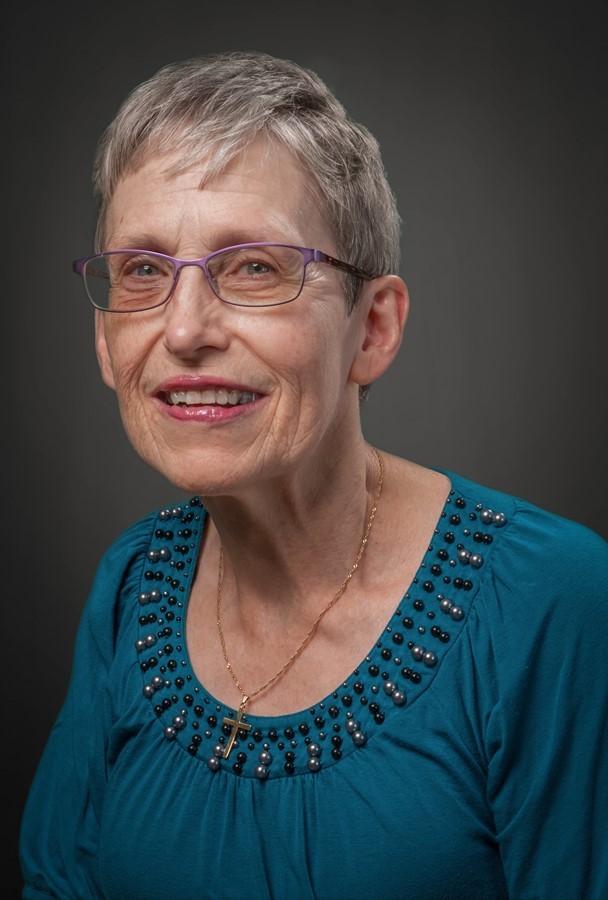
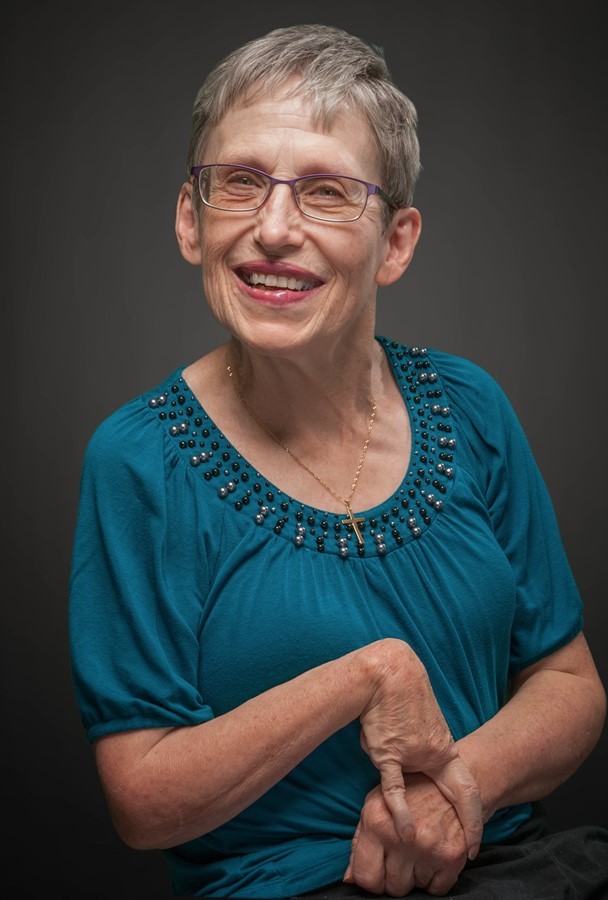
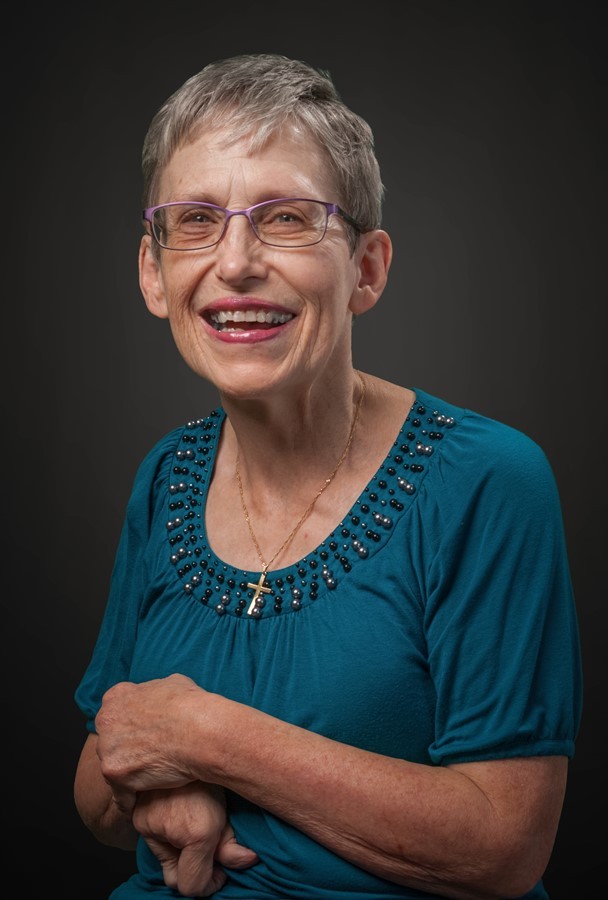
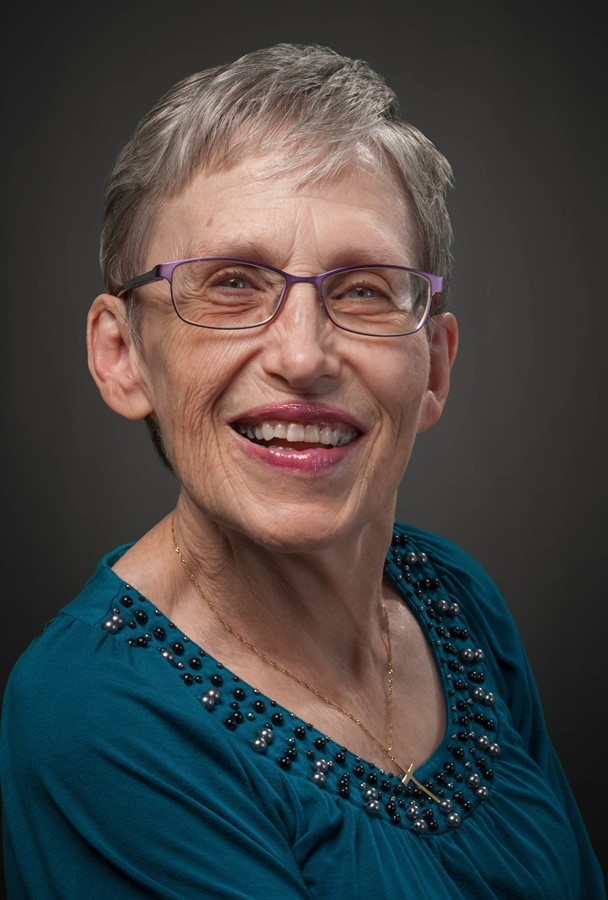
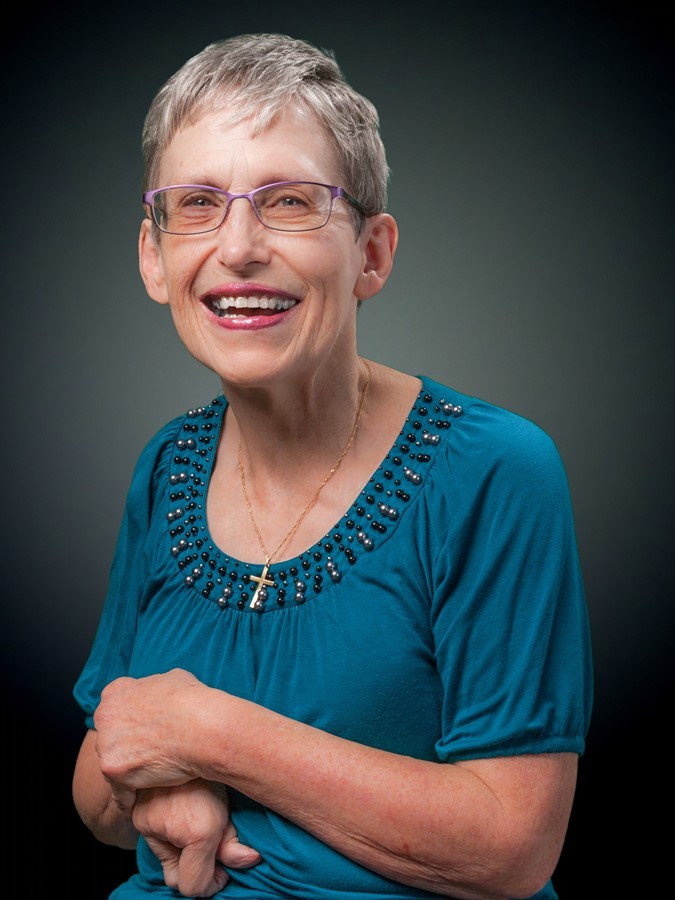
Hello gang! The other day I came to the forum seeking assistance/advice in regards to shooting a disabled author for a book jacket portrait..... see this thread
I was able to do the shoot today... unfortunately, she didn't have time for me to take her somewhere with more room. After moving furniture around in her 10x14 area dining/entrance space of her apartment and setting up my gear, we got the shoot done.
I tried to work on the tips I got the other day... what a challenge! Trying to keep her position without physically taxing her more than necessary... shooting from a position level or below her while keeping glare off of her glasses, remembering to fix her necklace every time she moved her body.....
I was never able to get any contact with the publisher for advice. She stated that she wanted her arms in for some images as her book talks about rising above disabilities and she felt it was important to show some of her physical disposition... I have my own concerns about my work.....i'll appreciate anything else you can point out for me and take whatever advice you have to give, thank you
- my hair light was too strong or positioned in such a way that it spilled onto the left side of the face (right from where we look into the image).
- with my limited space to move the fill, I can see it reflected in the glasses.... (boo), I should have lowered that to the ground so it was firing up at her and therefore limiting the reflection of it on her glasses....
- in image number 3 I should have had her stretch out her middle fingers over her wrist so it doesn't appear that they are amputated off....
- light ratio's between main and fill are off... too bright on the main washing out the skin on the forehead.....
Please point out anything else..... shot at f10 1/250, ISO 100... Softbox left camera (AB800 + 24" Octa) was higher than I wanted... any lower seemed to produce reflection in the glasses...... fill was a flashgun inside of a reflected umbrella...
Also.... if I could have your vote for which looks best to suggest for the book cover....thanks
I think you can't go wrong with any of these. You did a nice job. I do agree that your main light was too high. One thing you could have done to offset that a bit was to put a reflector or white foam core just below camera level, reflecting the light back up. But it's really nice just as it is.
The only thing that jumps out at me is the distortion caused by the lens of one of her glasses. This happens very often, where the edge of the person's head and adjacent hair are captured within the lens of the glasses. All of these have this issue (camera left on the first four, camera right on the last one). This is a tough nut to crack, as it requires careful placement of the subject's head relative to the camera, something that isn't always conducive to a good pose or expression. In those cases, you have to do some judicious post processing to "repair" this part of the portrait, or simply ignore it. In these shots, I think you could do it in numbers 1, 3, and 4. The second and fifth portraits might be a stretch. I'd try it, and for this reason, I'd choose the first shot as my first choice. As the others have said, these are all nice shots of her.
The author decided that she liked #4 the best, but wanted her wrinkles smoothed out a bit.
Upon the advice from somebody to watch for banding in the digital background I went back in and used a larger sized backdrop to avoid the banding issue. I also did not add in any further vignetting so as not to darken the skin on the arms. Smoothed out the skin as much as I was comfortable with and she is happy.
For those interested in the book details, it will be out on the market sometime around Easter and the title is "It Takes More Than Legs to Stand" by Lyla Swafford.
I think mostly your analysis of your own work is spot on. The edit looks maybe a little plasticky on the skin for my taste but its probably perfect for her (I tend to be very sensitive to oversmoothing of skin).
RE the glasses issue:
1. First choice is to get fake frames from an ophtalmologist
2. Second choice is to set the glasses just a hint down her nose to change their angle and give you a bit more room to play
3. Third choice is you can use a second equal light at 45 for a classic butterfly approach.