This topic is in the 2017 archive. You can read it and like its posts here. It is read only.
Archive 2017D7200 Image Thread
p.3 #1D7200 Image Thread
Goodness. We are all so very human and technology is all so very technological.
When the two meet, we both puzzle each other and it makes for such a lovely game as we try to find common ground.
Andre, I hope you're having fun. You've waited (and bitched) a long time for this.

Best to you and yours.
C
When the two meet, we both puzzle each other and it makes for such a lovely game as we try to find common ground.
Andre, I hope you're having fun. You've waited (and bitched) a long time for this.
Best to you and yours.
C
Sep 14, 2015 at 01:29 AM

p.3 #2D7200 Image Thread
Andre,
One word of advice (as I just did this Saturday night at a football game) with a new camera (mine was a new to me D800e)
I set my camera up with 1/800 being the slowest shutter speed ( I am shooting Canadian University football) and my aperture was at 2.8 (forget anyone telling you the DOF is too shallow, throw that crap out now, not NOW, RIGHT NOW!!!)
I set my ISO to Auto with my max at 3200, then after a few shots I set the max to 6400, then HI 0.3, HI 0.7, HI 1.0 I think you get the idea..... then went in at half and looked at the pictures on the laptop. I decided my files at Hi 1 cleaned up perfect and set that as my new max.......
Don't go out to your second game with a specific max ISO..... shoot a few shots all the way up to the camera max and decide for yourself where YOUR max is........
Mine worked out like gold after some sharpening and NR is lightroom.
Here I will upload an example. Just did the reduction at work, in GIMP so it might not be the best......
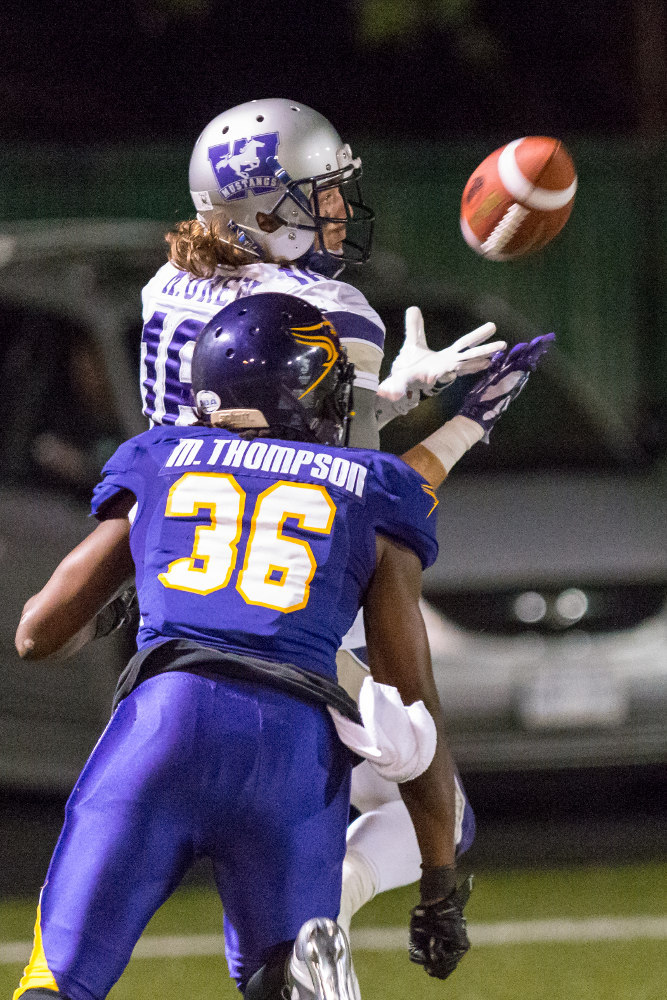
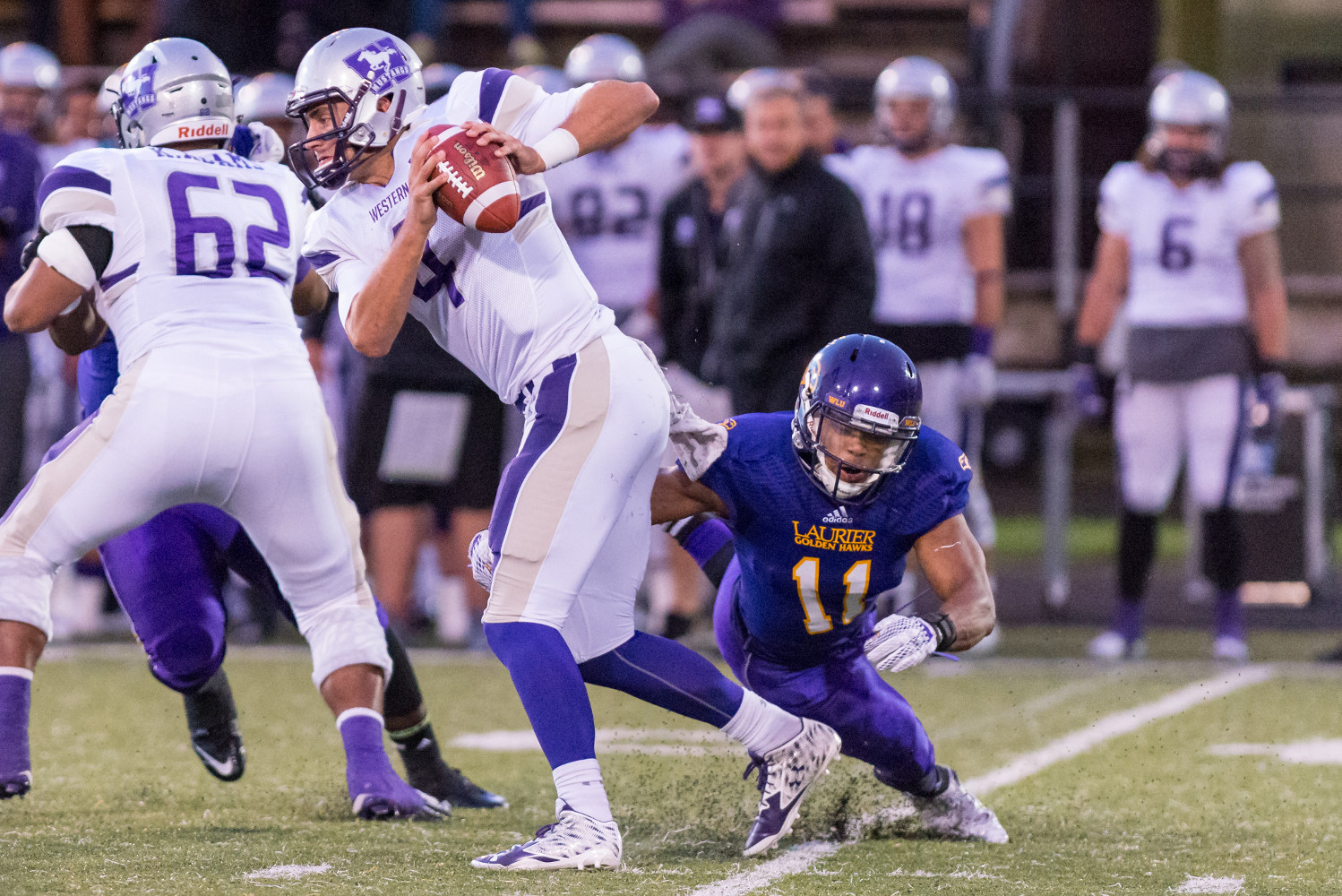
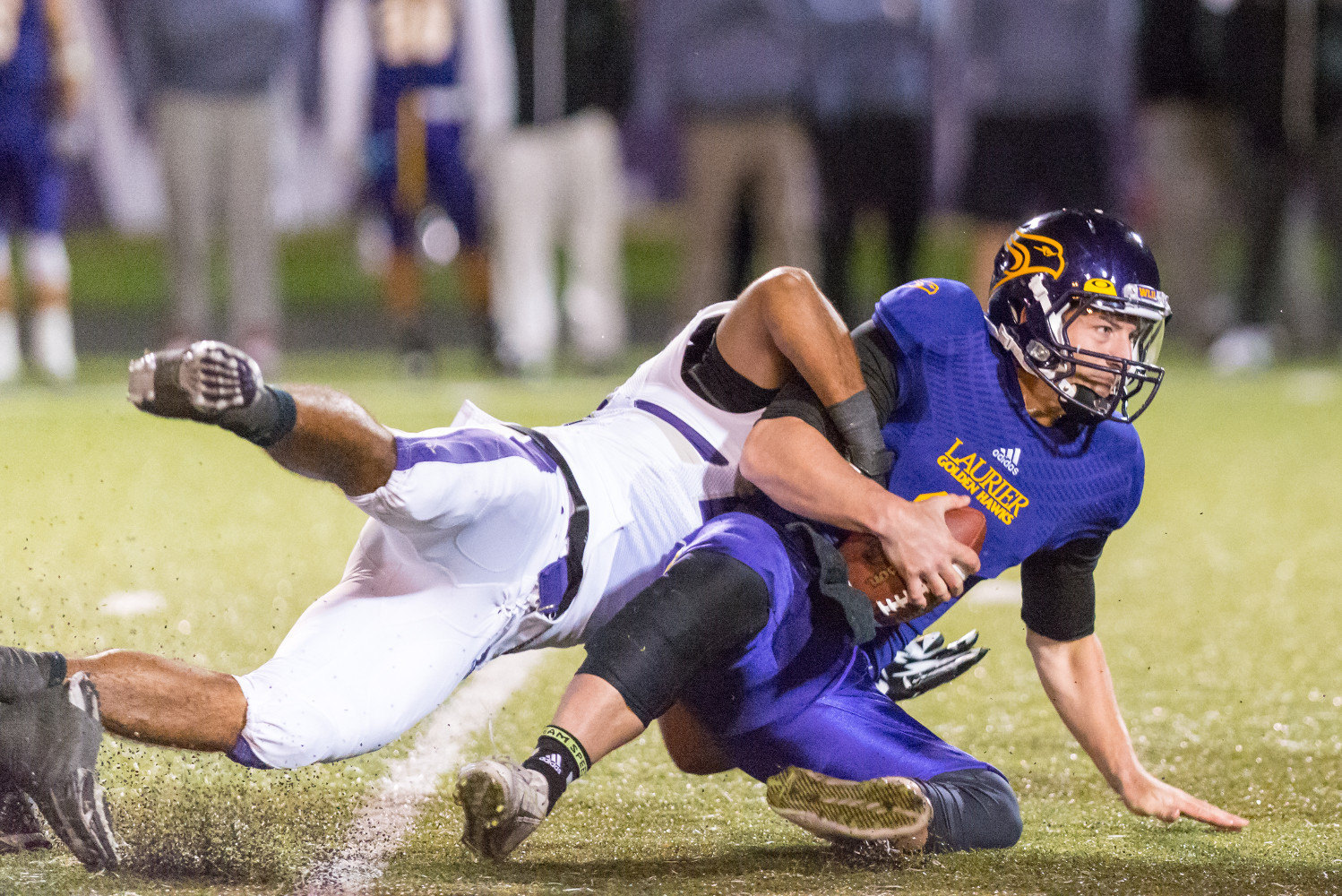
Shot taken with D800e, 1/800th, ISO 12800, 300mm VRI @ f2.8
 |
||
 |
||
 |
|
||
 |
||
|
|
||
 |
||
|
Sep 14, 2015 at 10:11 AM
p.3 #3D7200 Image Thread
Trevorma wrote:
Andre,
One word of advice (as I just did this Saturday night at a football game) with a new camera (mine was a new to me D800e)
I set my camera up with 1/800 being the slowest shutter speed ( I am shooting Canadian University football) and my aperture was at 2.8 (forget anyone telling you the DOF is too shallow, throw that crap out now, not NOW, RIGHT NOW!!!)
I set my ISO to Auto with my max at 3200, then after a few shots I set the max to 6400, then HI 0.3, HI 0.7, HI 1.0 I think you get...Show more →
*******************
Thanks for the great advice. I like your methodology.
Sep 14, 2015 at 07:13 PM
p.3 #4D7200 Image Thread
Auto ISO makes sense to me Andre and the way to assess what is a sensible max suggested by our friend from Canada certainly appears sound. What an adventure! Enjoy yourself playing with your new camera. Who says an old dog can't learn a new trick? 
Sep 14, 2015 at 11:20 PM
p.3 #5D7200 Image Thread
Trevorma wrote:
Andre,
One word of advice....
Don't go out to your second game with a specific max ISO..... shoot a few shots all the way up to the camera max and decide for yourself where YOUR max is........
Exactly, each person has a different tolerance for noise. Keeping in mind that full frame will perform better than the best DX in that regard.
Sep 14, 2015 at 11:45 PM
p.3 #6D7200 Image Thread
Here is a good example of 2 different users shooting with 2 different environments.
One uses a full frame D800E with at least 1 to 1.5 stop better noise handling than the crop frame D7200.
The D800E user might be able to push it all the way to ISO 12800 and still able or willing to accept that kind of noise level, resolution and sharpness. Just look at the pictures on a monitor screen and one will see quite an amount of noise. The resolution and sharpness will be softer than if used with a lower ISO settings due to the on camera processing firmware which we have no control over. Than there is this additional noise generated by each additional stage of the cascaded amplifiers for each steps of ISO increment on the camera that we can minimize if we use post processing because our computers can handle the S/N level better than a camera due to its higher signal levels and less confined space for EMI.
The next thing is the D800E with an aperture of f/2.8 will give a DOF of about 2.87 ft compare to that of the D7200 which will give about 2.3 ft shooting at the same distant of about 35 yds or 100 ft. As can be seen on the first picture that the focus is more on the defender #36 than on the receiver. This could have been avoided if there is a little more DOF coverage, and also make it simpler for the shooter to track moving objects which is by itself already difficult.
Finally, it also comes down to the lighting situation one is shooting in. Based on the pictures, Andre is shooting in a less well lighted field than Trevorma just by judging from the background illumination. This will make it even more difficult for users using a DX compare to the advantage of having a FX other than the X-factor.
So the difference between the 2 users and situations are different. The only way one can tell which is the best combination is to try all possible options provided by users here which have already helped to narrow down the possible combinations.
So once again, good luck for whatever settings one chooses!
Sep 15, 2015 at 03:02 AM
p.3 #7D7200 Image Thread
hans98ko,
When shooting sports and sports at night in poorly light stadiums one accepts high levels of noise. That is the price you pay to play.......
Second your depth of field argument is wrong, just wrong!!! If I step down to f4, or even f5.6 to gain more depth of field I lose light, I then have to lower my shutter speed or increase my ISO. I am at the lower limit of my shutter speed and upper limit of my ISO. There is a reason folks who shoot night sports all have f2.8 glass.
This isn't landscape shooting man, you can't just ask the players to hold in place while I lower my shutter speed and increase my depth of field........
I am also not convinced that I am dealing with a whole lot more light than Andre. Exposure being right in the camera is key. In my shots I have not touched the exposure at all. All of it was in camera.
Sep 15, 2015 at 06:25 AM
p.3 #8D7200 Image Thread
I am not going to waste my time debating on who is right or who is wrong.
But just wondering how those guys were able to shoot football at night with nothing more than a 70-200mm f/2.8G or a 70-200mm f/4G with/without a TC-14? There are many better shots on the sports corner on this forum than what you have posted.
Go check it out!
Go there and tell those guys whose pictures are better than yours that they shouldn't be shooting with f/4, f/4.5 or even f/5.6 and make a fool of yourself.
As for me I shoot Formula 1 night races with f/4 lenses and airshow at sunset with f/4.5-5.6 lens with much less noise SOOC.
Edited on Sep 15, 2015 at 07:09 AM · View previous versions
Sep 15, 2015 at 06:38 AM
p.3 #9D7200 Image Thread
As always I welcome any and all C&C.......
That said typically when I post criticism of someone else's work I will typically post my own work for C&C. So can I see some of your sports work? Preferably night football........
I also agree that there is always work in the sports corner that is TOP NOTCH from some of the best shooters on this planet.
That said in my humble opinion the images I have posted would stand up against those shooters in similar situations and similar gear.
Thanks
Sep 15, 2015 at 07:05 AM
p.3 #10D7200 Image Thread
hans98ko wrote:
I am not going to waste my time debating on who is right or who is wrong.
But just wondering how those guys were able to shoot football at night with nothing more than a 70-200mm f/2.8G or a 70-200mm f/4G with/without a TC-14? There are many better shots on the sports corner on this forum than what you have posted.
Go check it out!
Go there and tell those guys whose pictures are better than yours that they shouldn't be shooting with f/4, f/4.5 or even f/5.6 and make a fool of yourself.
As for me I shoot Formula 1...Show more →
You seem to want to make a thing of this........so show me the threads in the sports corner where photogs are shooting at night with apertures of F4 and F5.6....... and like I said I have images up all over....... let's see some of yours. Don't tell me what you shoot and how, show us!!!
Sep 15, 2015 at 07:19 AM
p.3 #11D7200 Image Thread
Why should I pay to post? I should be getting paid for my pictures.
The next thing is if you are too lazy to search, why should I bother to do it for you?
The next thing is if you are too lazy to search, why should I bother to do it for you?
Sep 15, 2015 at 07:28 AM
p.3 #12D7200 Image Thread
hans98ko wrote:
Why should I pay to post? I should be getting paid for my pictures.
The next thing is if you are too lazy to search, why should I bother to do it for you?
You don't have to pay to post...... you can link from flikr, blogs, your website ect.......you were pretentious enough to tell me that my images aren't up to snuff so let's see your night sports skills........
Oh and while you mention pay..... I am paid for my images.
Lazy See I actually know what is posted in the sports forum, I know that there are VERY FEW images of night sports shot at f4, or f5.6. Ones that are shot at f4 are from pro stadiums that are professionally lit for cameras.
Why should I pay to post? I should be getting paid for my pictures.
The next thing is if you are too lazy to search, why should I bother to do it for you?
You don't have to pay to post...... you can link from flikr, blogs, your website ect.......you were pretentious enough to tell me that my images aren't up to snuff so let's see your night sports skills........
Oh and while you mention pay..... I am paid for my images.
Lazy
See I actually know what is posted in the sports forum, I know that there are VERY FEW images of night sports shot at f4, or f5.6. Ones that are shot at f4 are from pro stadiums that are professionally lit for cameras.Sep 15, 2015 at 07:32 AM
p.3 #13D7200 Image Thread
Well, I do have our company's website that my clients are able to access and Nikon is aware of for my NPS renewal. But I would rather keep it just for business rather than reviewing my business types, style and techniques used to get to those results.
Sep 15, 2015 at 07:48 AM
p.3 #14D7200 Image Thread
hans98ko wrote:
Well, I do have our company's website that my clients are able to access and Nikon is aware of for my NPS renewal. But I would rather keep it just for business rather than reviewing my business types, style and techniques used to get to those results.
In other words you want to just be the pretentious guy who tells other people they are wrong, but doesn't want any critique himself? Fair enough. You just joined the grain of salt club..... meaning I take EVERYTHING you say with a grain of salt
It's nice being the guy who is critical of others but won't open himself up to the same critique eh?
Sep 15, 2015 at 07:55 AM
p.3 #15D7200 Image Thread
hans98ko wrote:
Well, I do have our company's website that my clients are able to access and Nikon is aware of for my NPS renewal. But I would rather keep it just for business rather than reviewing my business types, style and techniques used to get to those results.
you really are starting to go far afield of things. this is a two way street.
Sep 15, 2015 at 08:10 AM
p.3 #16D7200 Image Thread
sjms wrote:
you really are starting to go far afield of things. this is a two way street.
I don't think people realize the balls it takes to put something you think is good up and have it torn apart. Andre shared images, took criticism and is looking at ways to improve.
I myself have broad shoulders and can take the harsh words.... but when people put themselves out there to help others and are told their work is crap or sub par by someone who is not willing to do the same is, well CRAP!!!
hans98ko wrote
Well, I do have our company's website that my clients are able to access and Nikon is aware of for my NPS renewal. But I would rather keep it just for business rather than reviewing my business types, style and techniques used to get to those results.I don't think people realize the balls it takes to put something you think is good up and have it torn apart. Andre shared images, took criticism and is looking at ways to improve.
I myself have broad shoulders and can take the harsh words.... but when people put themselves out there to help others and are told their work is crap or sub par by someone who is not willing to do the same is, well CRAP!!!
Sep 15, 2015 at 08:13 AM
p.3 #17D7200 Image Thread
I wonder who is pretentious? You or me.
I might fall into the grain of salt club, but to follow your style, one will fall into the full of noise (grains) club.
Okay! Just to make you happy, we all like your grainy pictures. It really looks good on a smartphone screen.
I might fall into the grain of salt club, but to follow your style, one will fall into the full of noise (grains) club.
Okay! Just to make you happy, we all like your grainy pictures. It really looks good on a smartphone screen.
Sep 15, 2015 at 08:19 AM
p.3 #18D7200 Image Thread
we all have our particular "issues". its not worth the effort to get tangled up with a blank wall. it's a no win.
Sep 15, 2015 at 08:24 AM
p.3 #19D7200 Image Thread
hans98ko wrote:
I wonder who is pretentious? You or me.
I might fall into the grain of salt club, but to follow your style, one will fall into the full of noise (grains) club.
Okay! Just to make you happy, we all like your grainy pictures. It really looks good on a smartphone screen.
I agree that they are noisy...... I have NEVER said otherwise, but you seem to have this magical formula that involves a greater depth of field and lower noise all while freezing the action. Yet you won't explain it, or show us any examples of it (either your work, or a link to someone else who is doing ti better). Would a D4s help.... Sure, but it's $5,000 used here.......would Andres pictures be "better" with a D4s? Sure, but again $....
When given lemons you either make lemonade like I did or you create some magical elixir, but don't tell anyone about it.... like you did.
Edited on Sep 15, 2015 at 08:28 AM · View previous versions
Sep 15, 2015 at 08:26 AM
p.3 #20D7200 Image Thread
hans98ko wrote:
I wonder who is pretentious? You or me.
I might fall into the grain of salt club, but to follow your style, one will fall into the full of noise (grains) club.
Okay! Just to make you happy, we all like your grainy pictures. It really looks good on a smartphone screen.
i strongly suggest you veer off this particular course. it will not end well.
you also have no right to use the term "we" when its you who is speaking. i am fully capable of
speaking for myself as are the others who are here to use this site.
the opinions that hold sway are from those who have delivered product and have demonstrated a love for shooting and shown it.
Edited on Sep 15, 2015 at 08:36 AM · View previous versions
Sep 15, 2015 at 08:26 AM