p.157 #7 · Nikon AF-S NIKKOR 200-500mm f/5.6E ED VR
The freedom to “back up” with a zoom is a big advantage.
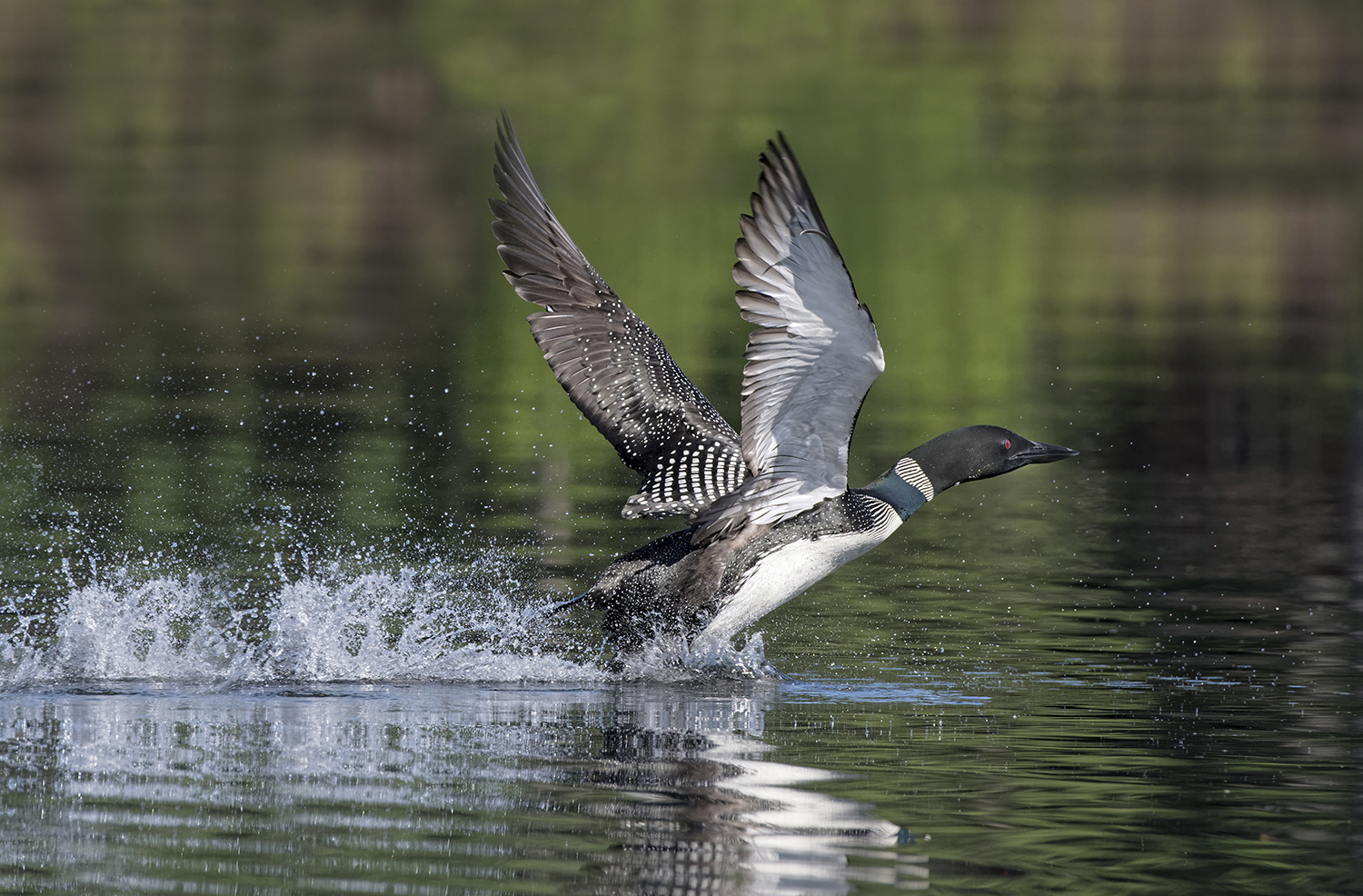
It happened to me on the water, last Tuesday, June 19.
When the loon’s paddling feet and flapping wings first started, the composition was too tight at 500mm. So, I quickly cranked it back, before starting the burst (36 frames).
p.157 #8 · Nikon AF-S NIKKOR 200-500mm f/5.6E ED VR
bs kite wrote:
The freedom to “back up” with a zoom is a big advantage.
It happened to me on the water, last Tuesday, June 19.
When the loon’s paddling feet and flapping wings first started, the composition was too tight at 500mm. So, I quickly cranked it back, before starting the burst (36 frames).
Great shot. I'll be back up there in 2 weeks and I am looking forward to spending some time in the kayak with the loons.
p.157 #9 · Nikon AF-S NIKKOR 200-500mm f/5.6E ED VR
Thanks and I hope you have a blast.
Have been sick for a long time and just got back into it. The loons here were already incubating by the time I was able to get out. My point: I do not know when they started. Twenty-nine days (or a little more) of incubation and you have a chick or two. But getting there is a long shot.......
When they spot the sitting loon, some folks get so excited that they have difficulty keeping their distance. Loons cannot take that stress. Enough of it and they simply abandon.
The one above was just relieved by its mate. 24 hours divided by 2 = 12 hour shifts. Someone has to be on that/those egg(s) virtually the entire time. It has to be rough.
Have fun
And will look forward to seeing some great loon shots by you.