Fred Miranda wrote:
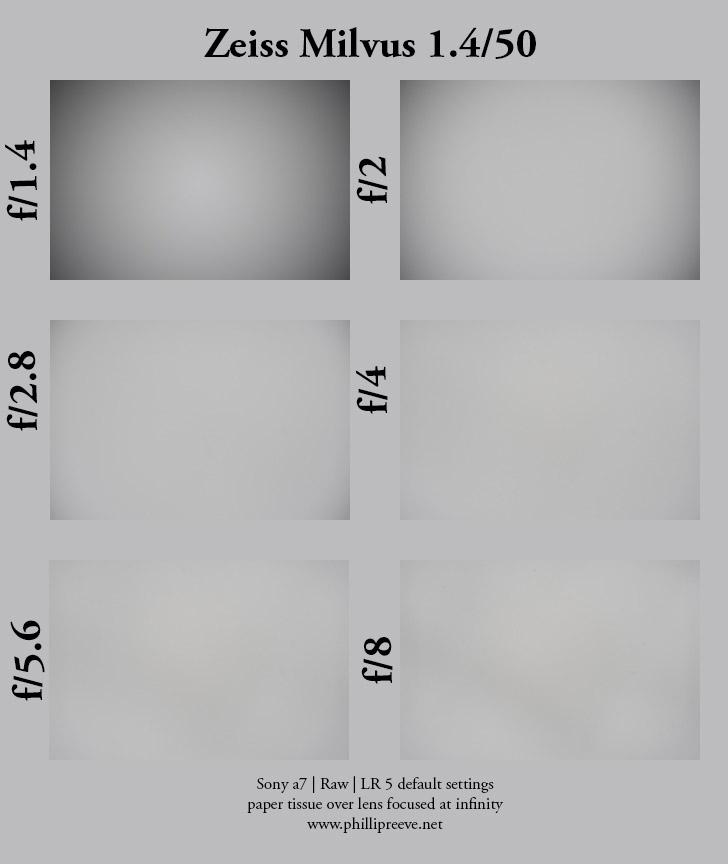
It beats the Sonnar 55/1.8 for its beautiful with 10-point sunstar (similar to heliar 15/4.5), good flare control, low vignetting and great color aberration control.
I agree to most of what you say and my preference would be pretty similar. But I am surprised that yout attest the Loxia vignetting.
Milvus 1.4/50 for comparison:
I never had the opportunity to compare them side by side but my impression was that the Loxia was less flare resistant.
I would love to see a direct comparison showing how they perform regarding out of focus fringing.
I was comparing the Loxia 50/2 to the Sonnar 55/1.8 which performs worse regarding vignetting. I would say the Sonnar vignettes about twice as much even at smaller apertures like f/5.6-8.
The Milvus 50/1.4 is excellent a couple stops down. Thanks for posting the chart.
Fred
I'm looking at changing up my 50mm lens range (currently have FE 55) which is a focal length I don't use all that often, but like having in my bag, and I'm hoping to kill two birds with one stone since I currently lack a macro lens (which I also don't use a lot, but like to have). I'm considering selling my 55 and getting the Milvus 50/2, or, leaving the macro out of the equation for now and getting the Loxia 50/2. Any feelings on the IQ differences between the two? I like having lenses with more than one strong point, so the 50mm focal length with macro is very appealing, but the compactness and integration of the Loxia's with the A7 cameras is also a very nice feature.
I'm discovering that I much prefer manual focus lenses for what I shoot and the manual focus feel of the focus-by-wire is not something I enjoy. Give me hard stops on close up and infinity and I'm a happy camper (I ultimately intend to have only the FE 28/2 and Batis 85/1.8 as my autofocus lenses when I'm done realigning my kit).
I have read this same complaint about the placement and/or the width of the aperture rings on the Loxias, and, frankly, I don't get it. For me, it was just something to get used to, and now that I have, I never even think about it.
Rob
stonejoint wrote:
My problem with this lens is aperture ring is so close to body. Well I don't change aperture much but this is being a problem for me when you can't use ergonomically such a great lens. Other than that, this lens is fantastic. I have only one lens and this is loxia 50mm. But if I find something manual with this quality and proper aperture ring position. I may start thinking selling my Loxia.
I'm discovering that I much prefer manual focus lenses for what I shoot and the manual focus feel of the focus-by-wire is not something I enjoy. Give me hard stops on close up and infinity and I'm a happy camper (I ultimately intend to have only the FE 28/2 and Batis 85/1.8 as my autofocus lenses when I'm done realigning my kit).
Jon
Jon,
Just so you know, the hard stop on the long end of the Loxia 50 is slightly past infinity focus. This is by design to give the lens some flexibility under different temperatures.
I would tend to agree. Again you get use to it but what irritates me about Zeiss RF and the loxia lenses is why they have to have the aperture ring rotating from wide open to stopped down in the opposite direction to my Leica, Voigtlander and Canon RF lenses robgo2 wrote:
I have read this same complaint about the placement and/or the width of the aperture rings on the Loxias, and, frankly, I don't get it. For me, it was just something to get used to, and now that I have, I never even think about it.
robgo2 wrote:
Jon,
Just so you know, the hard stop on the long end of the Loxia 50 is slightly past infinity focus. This is by design to give the lens some flexibility under different temperatures.
Rob
This seems to be going round, but what evidence is there that this is 'by design'? Rather than sloppy adjustment or an out of adjustment camera? Such allowances are not normally there on well made manual focus standard and wideangle lenses, all my Leica and Nikon mf lenses of 90mm or less have accurate hard infinity stops and its a useful 'feature'.
Mine goes slightly past at infinity and though I would like it to be spot on I believe they are designed like this. Yes my Leica lenses stopped at infinity when they were well calibrated but my summilux 50 asph had to go back 3 times because the infinity stop kept going out (and it was the lens not the camera)
What is up with the "by design" offset infinity point? If it's a long telephoto, it's understandable since you have more surface area exposing to the sun heat; I was surprised by how much infinity slack Leica added to their 280/4 APO. This slightly off infinity is always a pain in the field where you have to make sure you are at infinity every single time. I have had first hand experience with a slight shift due to temperature, but that was with a 1.2 lens. IMO, there is not a good reason for this sloppiness.
Back in the day when I shot aircraft takeoffs and landings on airport runways with Nikons 600mm F4 the thermals where a big issue and you needed to go past infinity. Not sure it is really needed with much shorter focal lengths. That was with film not sure digital would be different.
hiepphotog wrote:
What is up with the "by design" offset infinity point? If it's a long telephoto, it's understandable since you have more surface area exposing to the sun heat; I was surprised by how much infinity slack Leica added to their 280/4 APO. This slightly off infinity is always a pain in the field where you have to make sure you are at infinity every single time. I have had first hand experience with a slight shift due to temperature, but that was with a 1.2 lens. IMO, there is not a good reason for this sloppiness.
Yes, I don't have many exotica, but the 'worst' lens I have for this is a 180/2.8 Nikkor ED, but I can understand that with such lenses with lots of metal to heat/cool. And its rare that you could get away with scale focussing such a lens anyway. The 50mm asph Summilux seems to have been 'troublesome' to get the focus right but its a FLE lens so complex things are going on when you focus, although since performance utterly depends on that working right and register being spot on too its most important.
I regularly scale-focus my Leica and Nikon mf lenses of shorter focal lengths, it saves time when in a hurry and sometimes its too dark to do it any other way. I've done it on film for decades, and do it on the A7 with shimmed adapters even up to the 90 Elmarit, mostly for infinity landscape.
Its a feeble excuse for Zeiss I think, and if its made at Cosina they used to turn out 25mm lenses for the Leica with no r/f coupling for a very cheap price, and mine was accurate.
This lens costs 998USD compared to the Canon EF 50/1.4 at 329USD. These copy variation issues are crazy at that price.
GMPhotography wrote:
Back in the day when I shot aircraft takeoffs and landings on airport runways with Nikons 600mm F4 the thermals where a big issue and you needed to go past infinity. Not sure it is really needed with much shorter focal lengths. That was with film not sure digital would be different.
My new to me Nikkor 300/2.8 EDIF and 500/4 P both intentionally go past infinity for this reason.
robgo2 wrote:
Jon,
Just so you know, the hard stop on the long end of the Loxia 50 is slightly past infinity focus. This is by design to give the lens some flexibility under different temperatures.
Rob
Thanks for this Rob. This now appears to have started an "infinity and beyond" discussion.
gyoung143 wrote:
This seems to be going round, but what evidence is there that this is 'by design'? Rather than sloppy adjustment or an out of adjustment camera? Such allowances are not normally there on well made manual focus standard and wideangle lenses, all my Leica and Nikon mf lenses of 90mm or less have accurate hard infinity stops and its a useful 'feature'.
Gerry
I read this somewhere from a Zeiss person, but I certainly am not going to guarantee its validity. However, if someone is going to accuse Zeiss of sloppy design, the burden of proof falls upon him.
I read somewhere (don't recall) that Sony didn't have to engineer for tight tolerances given all AF is done off the sensor - this allows them to relax tolerances on the mount and AF lenses to reduce cost and complexity and let sensor based AF compensate. I'm no engineer but sounds sensible and believable as I imagine they weren't prioritizing 3rd party manual focus and legacy glass support in the A7 system development.
Wish they had as I have both the 35 and 50 Loxia lenses and this is a mild annoyance for me...
robgo2 wrote:
I read this somewhere from a Zeiss person, but I certainly am not going to guarantee its validity. However, if someone is going to accuse Zeiss of sloppy design, the burden of proof falls upon him.
Rob
I didn't accuse Zeiss of sloppy DESIGN, but merely that the lens might be out of adjustment. Theres not much point IMHO in having a focussing scale if its not accurate, and then the DoF scale becomes useless too. It can be coped with easily, but why should we?
So far we have secondhand hearsay, both about a Zeiss design decision to go beyond infinity, and also Sony possibly being not fussy about register, although the first could be a consequence of the second. It would be good to know if others find that Loxias go beyond infinity in general, I can't remember any comment in tests of the lenses.
My two E mount cameras, a Nex 6 and an A7, purchased about a year apart appear the same, I have shimmed three adapters to give correct infinity focus with Leica M and Nikon F mf lenses, two were done by measuring the extension difference between a lens focussed at 'infinity' on the screen and when the lens is at its infinity stop, the third (for Nikon F) was shimmed simply by adding the adapter length to the register figure for E mount and shimming the adapter to make up the shortfall. All can be used on the two cameras with no difference visible. Its only a small sample of cameras, maybe someone with more cameras can comment?
gyoung143 wrote:
So far we have secondhand hearsay, both about a Zeiss design decision to go beyond infinity, and also Sony possibly being not fussy about register, although the first could be a consequence of the second.
There is more than just secondhand hearsay.
The following text is written in the Loxia 50 manual:
'To compensate for temperature fluctuations and tolerance limits of the camera body's flange focal distance, the focusing ring is equipped with an over-travel mechanism, parcticularly for lenses with longer focal lengths.
This means depending on the camera and the environmental conditions at hand, the best focus for a motif in the infinity range is usually achieved BEFORE the focus ring is moved into the mechanical stop position.'
It's pretty clear that it was a design choice by Zeiss to allow focus past infinity and it seems that nobody reads manuals anymore