A couple of bridge shots of my own from the weekend (Missouri River at Kansas City, Missouri). Experimented with some long exposure HDRs. The first one was an 8-minute exposure on the brightest bracket - lots of hot pixels, so I need to refine my process for dealing with those.
KKFung wrote:
David, great shots! Your photos remind me the 11-24 I forgot to buy
Thanks! I am living a post-TS-E life now. In the past I would have used the TS-E 24 II (for the top one) and the TS-E 17mm (for the bottom one) with shift to get parallel vertical lines, but with these I leveled the camera (front-to-back and side-to-side) just the same as I would have with the TS-Es and cropped off any excess image as needed in post. 50.6 MP is a tremendous asset in that scheme.
darbo wrote:
Thanks! I am living a post-TS-E life now. In the past I would have used the TS-E 24 II (for the top one) and the TS-E 17mm (for the bottom one) with shift to get parallel vertical lines, but with these I leveled the camera (front-to-back and side-to-side) just the same as I would have with the TS-Es and cropped off any excess image as needed in post. 50.6 MP is a tremendous asset in that scheme.
True, especially with 16:9 frame, the 11-24 may do it more easier
darbo wrote:
Thanks! I am living a post-TS-E life now. In the past I would have used the TS-E 24 II (for the top one) and the TS-E 17mm (for the bottom one) with shift to get parallel vertical lines, but with these I leveled the camera (front-to-back and side-to-side) just the same as I would have with the TS-Es and cropped off any excess image as needed in post. 50.6 MP is a tremendous asset in that scheme.
Wouldn't the TS-E's also allow you to shoot @ 5.6 allowing for a shorter exposure which introduces less hot pixels and no diffraction?
therealthings wrote:
Wouldn't the TS-E's also allow you to shoot @ 5.6 allowing for a shorter exposure which introduces less hot pixels and no diffraction?
The 11-24mm does f/5.6 as well.
Regarding shorter exposures: I am learning the limits of my camera - I can't know what to avoid if I don't cross the line.
Regarding diffraction: I am comfortable shooting the 5DS and 5DS R at f/11.
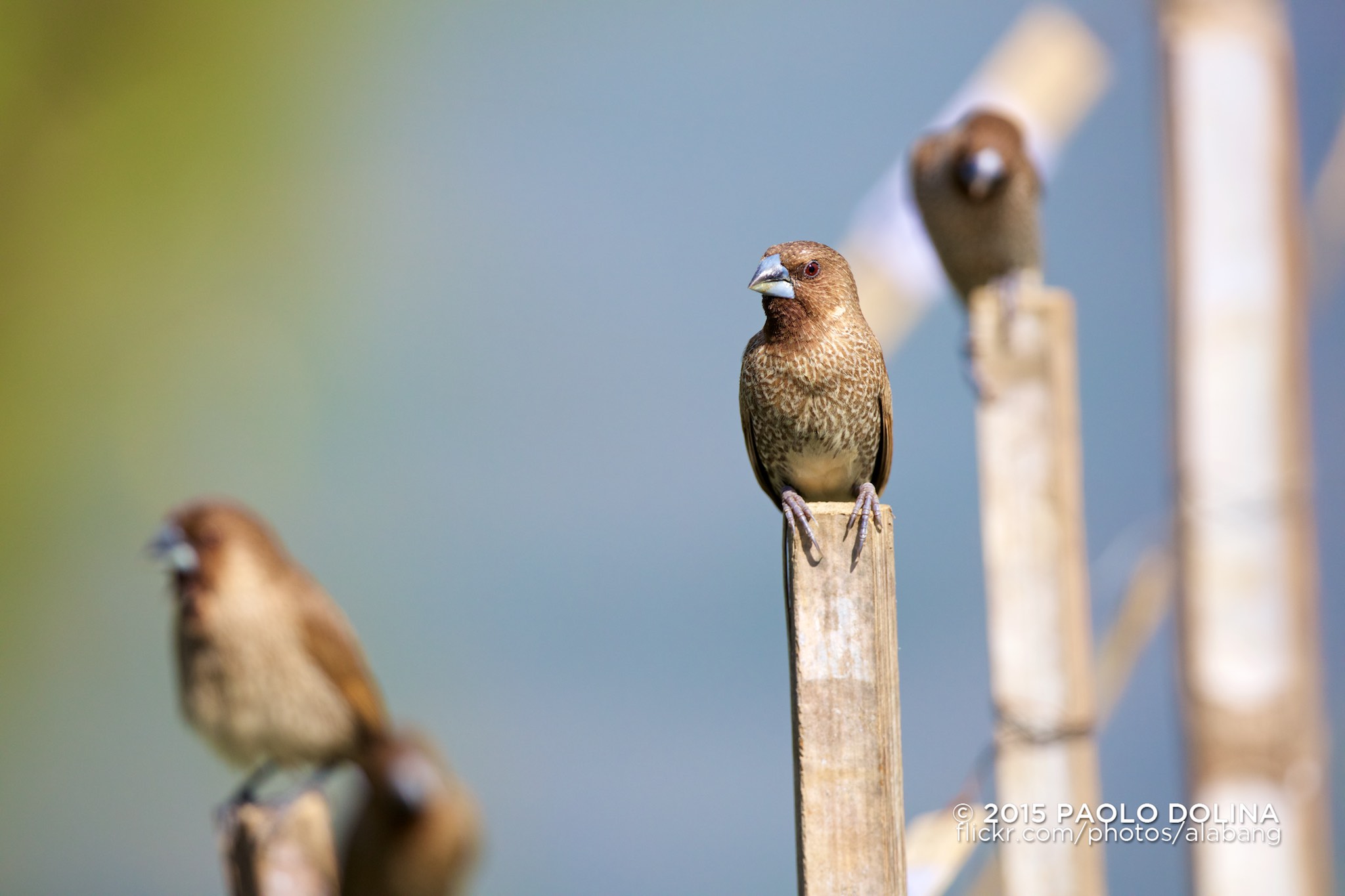
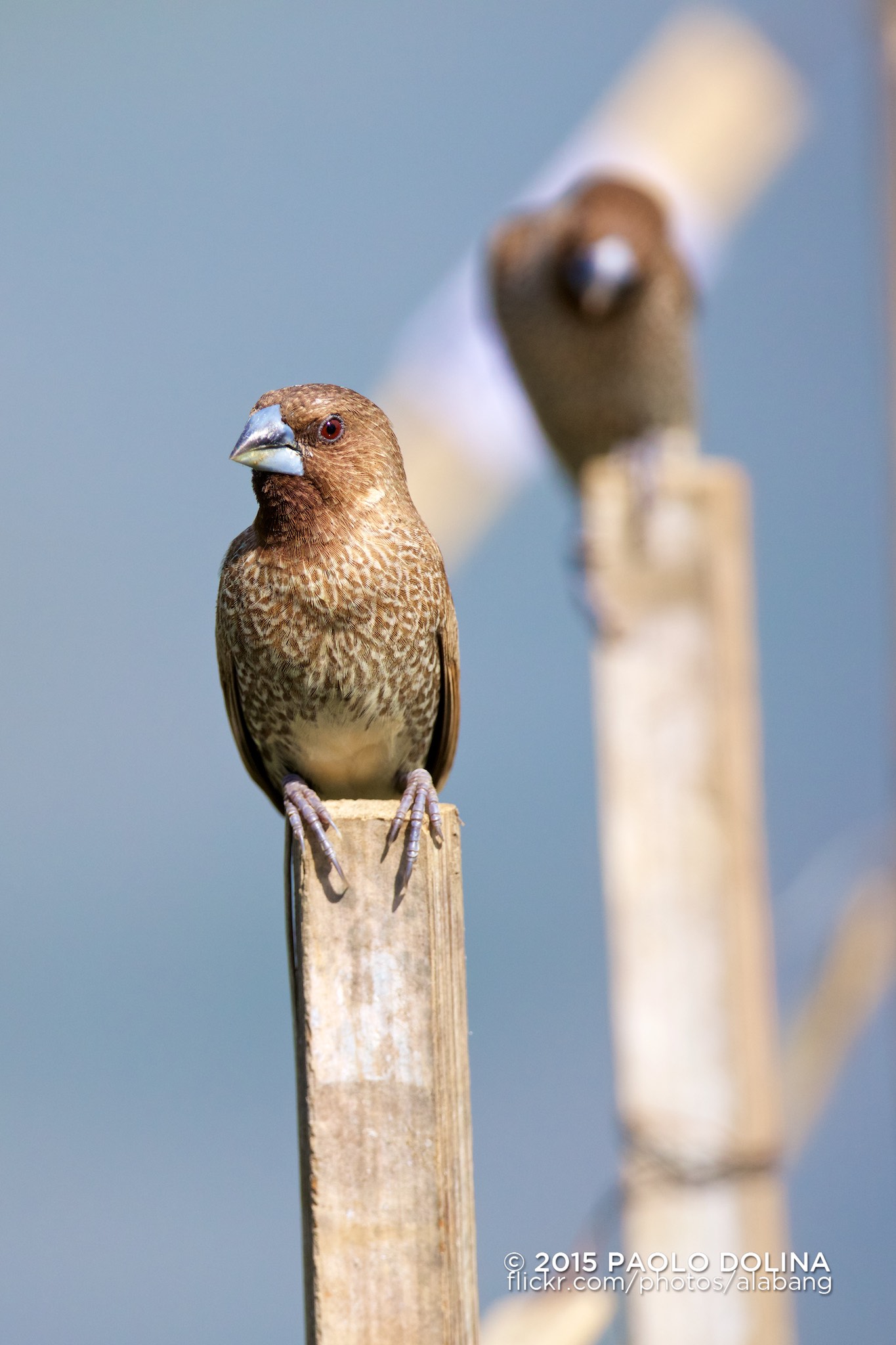
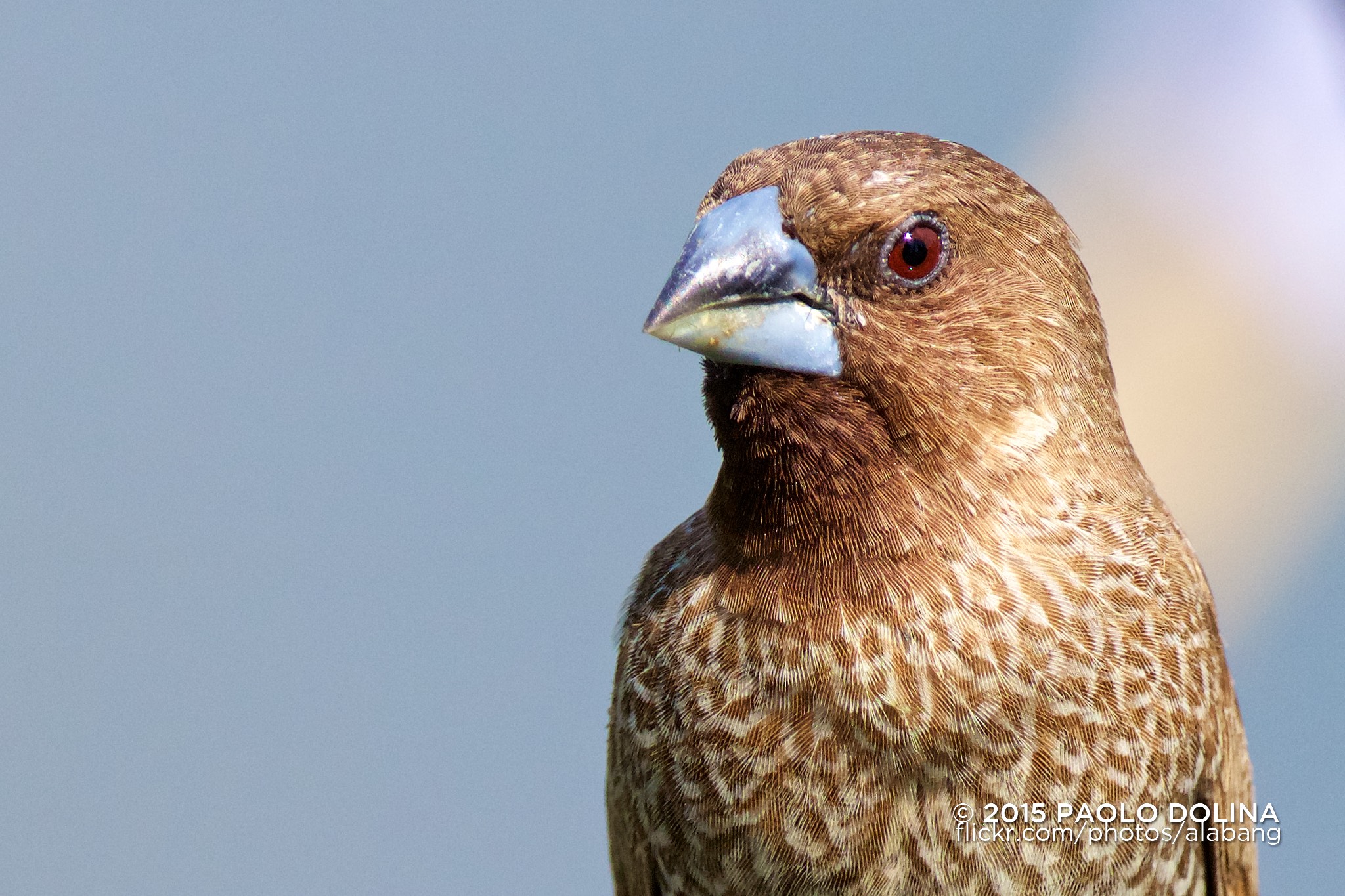
The scaly-breasted munia or spotted munia (Lonchura punctulata), known in the pet trade as nutmeg mannikin or spice finch, is a sparrow-sized estrildid finch native to tropical Asia. A species of the genus Lonchura, it was formally described and named by Carl Linnaeus in 1758. Its name is based on the distinct scale-like feather markings on the breast and belly. The adult is brown above and has a dark conical bill. The species has 11 subspecies across their range and differ slightly in size and colour.
This munia eats mainly on grass seeds apart from berries and small insects. They forage in flocks and communicate with soft calls and whistles. The species is highly social and may sometimes roost with other species of munias. This species is found in tropical plains and grasslands. Breeding pairs construct dome-shaped nests using grass or bamboo leaves.
The species is endemic to Asia and occurs from India and Sri Lanka east to Indonesia and the Philippines. It has been introduced into many other parts of the world and feral populations have established in Puerto Rico and Hispaniola as well as parts of Australia and the United States of America. The bird is listed as of Least Concern by the International Union for Conservation of Nature (IUCN).
The scaly-breasted munia or spotted munia (Lonchura punctulata), known in the pet trade as nutmeg mannikin or spice finch, is a sparrow-sized estrildid finch native to tropical Asia. A species of the genus Lonchura, it was formally described and named by Carl Linnaeus in 1758. Its name is based on the distinct scale-like feather markings on the breast and belly. The adult is brown above and has a dark conical bill. The species has 11 subspecies across their range and differ slightly in size and colour.
This munia eats mainly on grass seeds apart from berries and small insects. They forage in flocks and communicate with soft calls and whistles. The species is highly social and may sometimes roost with other species of munias. This species is found in tropical plains and grasslands. Breeding pairs construct dome-shaped nests using grass or bamboo leaves.
The species is endemic to Asia and occurs from India and Sri Lanka east to Indonesia and the Philippines. It has been introduced into many other parts of the world and feral populations have established in Puerto Rico and Hispaniola as well as parts of Australia and the United States of America. The bird is listed as of Least Concern by the International Union for Conservation of Nature (IUCN).
ggreene wrote:
Impressive shot Hatch! It would appear the 5Ds has plenty of resolution for fine details.
Many thanks. Still very happy with the setup. I highly recommend buying this camera or the "R" if you or anyone else is in the market. It's pretty amazing.
Jeff Nolten wrote:
So David, now that you have and use both what are the noticeable differences? Is the R worth $200 and the longer wait more than the mere S? Thx.
I got both cameras via canon price watch and actually paid less for my 5DS R than my 5DS.
I had a good reason for getting the 5DS first. I am an architectural shooter and buildings frequently have repeating patterns subject to moire issues - whether a distant louver or brick/tile wall or roof shingles, to medium-distant perforated metal and fritted glass panels, to nearer still fabric panels and fine screens, and on and on. But, I also shoot organic subjects as well - landscapes - and they pose less risk of moire and for those I like the 5DS R.
But, let me throw something entirely pragmatic (and ridiculous!) your way that has absolutely nothing to do with the actual value of each of these bodies (which I deem to be exactly equal): I had the 5DS posted "priced to sell" here and on POTN for nearly a week and got no takers (a few interested PMs, but no "I'll take it!"). I could be wrong, but based on all the activity I have been seeing it just seems that most people think in terms of 5DS R. It's totally wrong, but I get the sense that a lot of people view the 5DS as a less-than camera compared to the 5DS R. For sheer prudence's sake (from a re-sellability the 5DS R might be a better value).
Thanks David. Yes, there is a lot of hype about the R and its cancelled filter, at least on this forum. Most FMers purchased the R on the assumption that its better. And a couple have the non-R to avoid moire or on the assumption that its all they need. Both cameras have been out long enough now that I'm curious if you or anyone else has used both bodies enough to have seen if:
A) The R shows noticeably more moire, or
B) The R is noticeably sharper/more detailed after post processing.
Jeff Nolten wrote:
Thanks David. Yes, there is a lot of hype about the R and its cancelled filter, at least on this forum. Most FMers purchased the R on the assumption that its better. And a couple have the non-R to avoid moire or on the assumption that its all they need. Both cameras have been out long enough now that I'm curious if you or anyone else has used both bodies enough to have seen if:
A) The R shows noticeably more moire, or
B) The R is noticeably sharper/more detailed after post processing.
I have only used my "R" model. (I've inspected and printed a few non-R sample images.)
So far my feeling is that both are fine cameras if the 5Ds/5DsR concept is right for the photography one is doing. Both are capable of producing very high quality images if one takes the necessary care at the time of exposure and knows how to tailor post-processing for the slightly different sharpening needs of the two models.
While we can see some slight differences in resolution when comparing 100% crops side by side, the fact is that these differences are so small (especially after tailored post-processing) that they are almost certain to not be noticed in even a large print. So, score one for the 5DsR, but it is a very small point!
A non-anti-aliasing sensor cannot help but be more susceptible to aliasing. However, the incidence of aliasing is extremely small for most photographers. I have yet to encounter an example on my 5DsR. (And cameras with anti-aliasing filters are not immune — the filters decrease the potential but do not eliminate it.) And in many of the cases where you might get aliasing the effect can be handled well in post. Given that more and more of the high resolution sensor camera systems are going AA-filter-free, I think it is safe to assume that the problem is less than a major one. Note that Nikon, who initially also offered the option with the D800 and D800e, now has eliminated the choice and only offers the D810 without AA-filtering. Note also that the wonderful Fujifilm X-trans cameras are AA-filter free, as are a lot of MF digital cameras and backs.
I continue to expect that photographers will find less and less reason to want AA filtering in high MP cameras and that manufacturers will more and more dispense with them there.
I just shot a commercial job with the 5DSR - a job photographing custom made art quilts of varying sizes, and mostly with the uber sharp Sigma 50mm ART lens and the Canon 100mm Macro, and there was no evidence of any moiré anywhere, just some really sharp images. Now that's not to say that it will never produce moiré, but only that I haven't seen it yet.
What I did notice however, on the seven quilts made with commercially available fabric, the color correction was almost perfect just doing a gray balance in Capture One and a very small tweak to the saturation of the reds and yellows. One the one quilt made with hand dyed fabric, the color response wasn't as linear and needed more selective control to match the originals, but overall, much faster and easier on the color matching than with the 5D3.
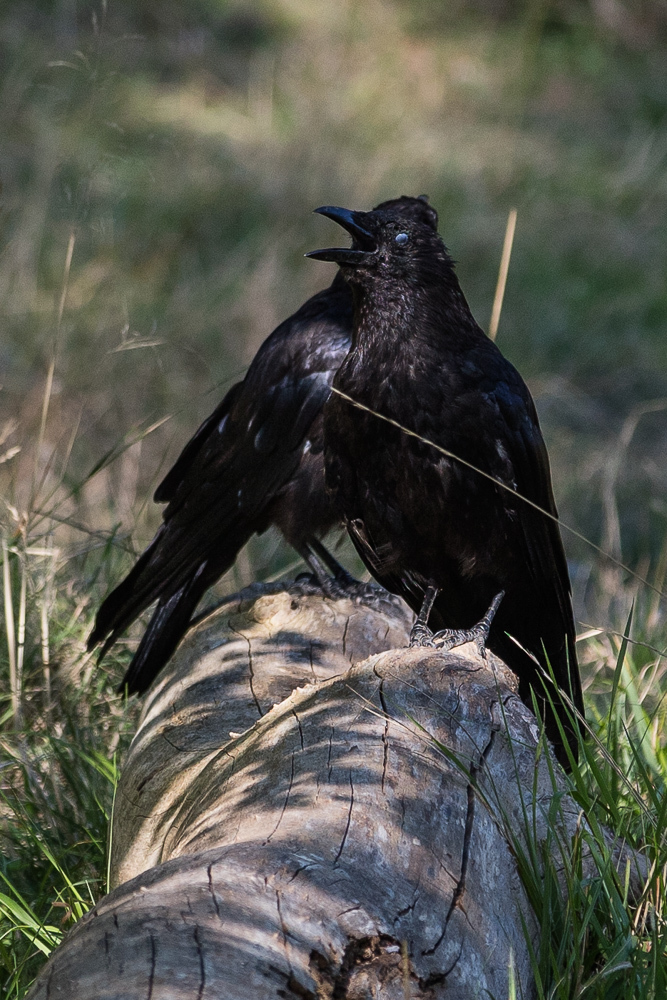
Potshot this this afternoon, expecting nothing, especially in the light and shadows, but now I'm a bit astonished at what came out. This camera looks the same as the 5D3/7D2 on the outside, but is behaving like a different animal, better than both, from the inside. Can't quite put my finger on how the metering and AF are so much better...yet...but I'm bedoozled by the resolution and trying to find a knew orientation to the FOV and all my lenses.