RustyBug wrote:
+1 ... and it takes more time and effort to better understand than many (general population) are willing to give to it.
Consistent color in the production/capture lighting is a key factor to being able to produce consistent color in post production most readily. Temperature matched, controlled studio lighting is on one end of the spectrum for consistency ... mixed lighting sources of varying color (some beyond our control) on the other hand tends to make things a bit more challenging.
Color correction efforts (technical or artistic/aesthetic) can be well served by first knowing whether the lighting was of a consistent vs. inconsistent color throughout. If/when we know we were in mixed lighting, we can adjust our corrections accordingly (masks, gradients, etc) based on our assessment/knowledge of the lighting color(s) illuminating our subject/scene and our desired output to be revealed.
Can you expand on your thoughts of what Daido is trying to suggest here.
I'm not certain that I align with that ... except that it seems to suggest that quality is a comparative and (gross paraphrase) without more junk to compare, the good stuff won't be noticed as good. I don't expect that to be the intent, but I'm not a big fan of Daido, despite his large following that he carved. Cook enough noodles and keep throwing enough spaghetti at the wall and sooner or later you'll find something good will stick ... that seems to be the suggestion that quality is dependent upon quantity (not something I really agree with). Blind dogs do find bones too, but for me quality is about understanding and control to produce a quality product (of any kind).
The other thought that comes to mind ... is that the quantity of experience is required to further develop a valuation of quality. To this end, the master/apprentice relationship comes to mind, which I much better align to ... having seen the quality advance in virtually all disciplines as people gain more experience.
Two very different perspectives regarding the quality / quantity relationship (and others could be presented / derived also) ... some education / clarification regarding Daido's quote would be welcome.
For the record, I am not a fan of Daido Moriyama but a fan of enlarging my vision on all imaging and imagery levels.
Daido Moriyama was indeed asked to clarify what he meant in the quantity for quality and he kindly explained that you need to put the hours behind any endeavour to succeed and master it.
He was a big advocate of learning while shooting and waiting in the street and walking for long hours and spending time in the darkroom/digital later, to be able to transfer his vison into the photographic realm.
We went on to discuss how the classic painters do not paint the canvas with the brush out of sheer creativity and pigments mixing techniques but they research the subject and test it and draw an outline as a template and even repaint over their painting sometime to save the price of a new canvas and sometimes to execute a different image.
What Daido Moriyama is saying that execution mastery needs to be mastered with hard work.
I tend to agree and I add that in our photography world, you need passion, creativity and technique.
You can learn technique but you are born with passion and creativity.
You either have the eye or you don't.
Everybody is creative in his or her own way. How this creativity is translated in it's intensity makes the difference.....in all fields.
Thanks, that helps a lot. You just advanced my appreciation for Daido by volumes ... even if I'm still not into his work atm.
+1 @ you gotta do the work ... thus I continue to do the work. When or if I will ever "master" it, not sure. But it is the goal of developing TOWARD a mastery that drives the continuation to grow and learn the facets involved ...merging them to readily be available for "command & control" implementation of your vision.
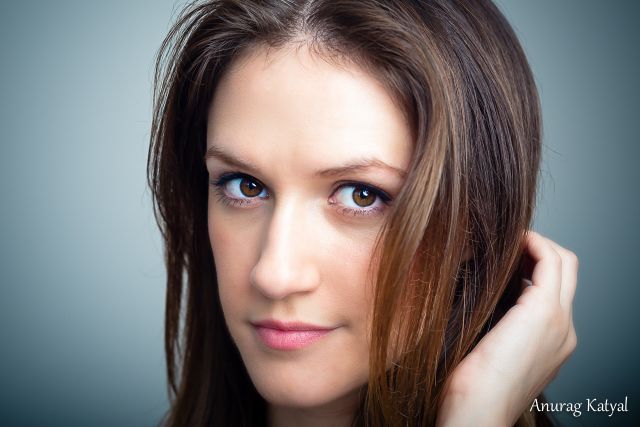
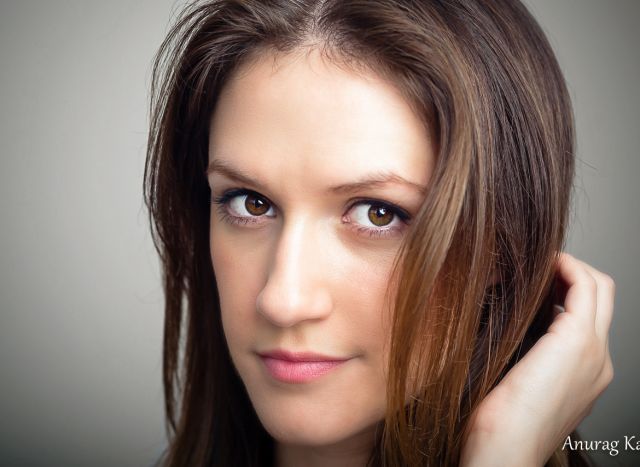
Many good technical aspects of this one. Good color for the 85mm portrait, but you still got in close enough for perspective distortion. On a full-frame for most subjects I'd recommend using a 135mm to keep sufficient distance to avoid too much perspective distortion and still be a tight head shot.
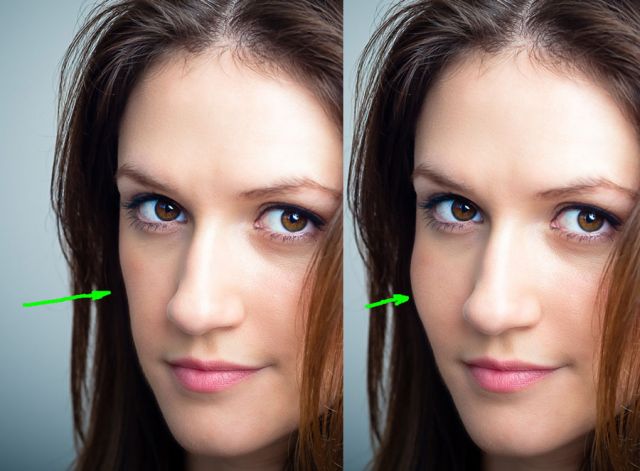
When a portrait photographer says they examine and evaluate a face to determine how best to pose a subject, they may mean they examine the shape of the bone structure, the asymmetries, blemishes, shapes of the chin, nose and ears, eyes and forehead. They also may evaluate skin for several considerations. When evaluating bone structure, it's especially useful to pay attention to the cheek bones. If cheek bones are small or minimal, certain poses and types of lighting should usually be avoided because they place emphasis on it. Similarly, quite large and high cheek bones may require careful posing and lighting to compensate.
One unfortunate effect of the pose chosen is to emphasize the subject's small cheek bones. The pose would be fine for a subject with larger cheek bones. Choosing a flattering pose and good makeup is important for a flattering portrait. In the following comparison I'm note suggesting you use the liquify filter/tool to make the subject look like someone else. I'm attempting to illustrate that the pose would be more flattering for a subject with different bone structure.
I've been looking/lurking this thread for awhile now. I can't give you any processing technique or criticism and I don't know who Daido Moriyama is.
But the one thing that has been bothering me about this image is that the pose just seem "awkward". The model/subject is attractive, the lighting etc. aren't 'bad' (much better than I could do), but the pose seems forced. It's like I would never expect to see her in these positions if the camera wasn't around. It feels uncomfortable...
Not sure how to fix that, but thought I'd put it out there.