Old School DX Image Thread
p.2 #1Old School DX Image Thread

Nikon D40, 55-200 VR, ISO 200, 1/4000sec

Nikon D5000, the often-maligned 18-55 VR, ISO 200, F8, 1/160sec

waterfall in the pouring rain, Nikon D3000, Nikon 105mm 2.5, ISO 100, 2 sec
Aug 21, 2014 at 02:25 AM
p.2 #2Old School DX Image Thread
I've noticed some shots here from a few old manual focus lenses on bodes like D40 and D3000 which don't, as I understand it, meter at all. My wife has a D3200 and I've never tried my Ai lenses on it, I save those for my D300/D700. I'm guessing you just shoot, look at the LCD... if it's too dark open it up a stop, until you get the exposure. Is that it?
Aug 21, 2014 at 05:20 AM
p.2 #3Old School DX Image Thread
jbouchard wrote:
I've noticed some shots here from a few old manual focus lenses on bodes like D40 and D3000 which don't, as I understand it, meter at all. My wife has a D3200 and I've never tried my Ai lenses on it, I save those for my D300/D700. I'm guessing you just shoot, look at the LCD... if it's too dark open it up a stop, until you get the exposure. Is that it?
A combination of that and the Sunny 16 rule (ie in bright sunlight your exposure is f16 and a shutter speed of 1/ISO). You can get pretty good at guessing exposure this way. I taught myself this with the D50 and have used it to shoot Velvia successfully (just about the trickiest thing out there to expose).
One major reason to do this is that until the arrival of the Df, the only Nikon digital bodies you could safely mount non-AI lenses to were the D40 and its successors, due to the type of switch used to detect minimum aperture setting on AF and AF-D lenses (the D70, D100 and D50 used a sliding switch which could be damaged, the D40 and successors used a push switch which would not be damaged).
Aug 21, 2014 at 05:25 AM
p.2 #4Old School DX Image Thread
 Galley Food Market by Mawz, on Flickr
Nikon D200, 16-85VR
Aug 21, 2014 at 05:26 AM
p.2 #5Old School DX Image Thread
Gardener wrote:
Katjubu : Beautiful colours on the cars : Are the colours out of camera, or did you enhance in PP
Thanks Gardener. I was shooting raw and did PP in Lightroom. I tried to get the colors pretty close to how I remembered the actual car and not over process though.
Katjubu : Beautiful colours on the cars : Are the colours out of camera, or did you enhance in PP
Thanks Gardener. I was shooting raw and did PP in Lightroom. I tried to get the colors pretty close to how I remembered the actual car and not over process though.
Aug 21, 2014 at 09:27 AM
p.2 #6Old School DX Image Thread
jbouchard wrote:
I've noticed some shots here from a few old manual focus lenses on bodes like D40 and D3000 which don't, as I understand it, meter at all. My wife has a D3200 and I've never tried my Ai lenses on it, I save those for my D300/D700. I'm guessing you just shoot, look at the LCD... if it's too dark open it up a stop, until you get the exposure. Is that it?
Actually it's not that difficult once you've practiced doing it awhile. You get to the point where once you get used to how your camera processes a scene you can guesstimate fairly accurately what ISO, shutter speed and aperture are going to be required to capture the moment in front of you. I'll often take one or more trial shots when going to a park, for example, and once I've established a baseline for myself I can adjust my settings to compensate for changing light conditions.
Aug 21, 2014 at 09:34 AM
p.2 #7Old School DX Image Thread
jbouchard wrote:
I've noticed some shots here from a few old manual focus lenses on bodes like D40 and D3000 which don't, as I understand it, meter at all. My wife has a D3200 and I've never tried my Ai lenses on it, I save those for my D300/D700. I'm guessing you just shoot, look at the LCD... if it's too dark open it up a stop, until you get the exposure. Is that it?
I guess you're younger than me
My first two cameras, the Adox Golf IA and the Rolleiflex Baby, both came without a meter. The Rollei had a table on the back, suggesting exposure under different circumstances, but one quickly learned to estimate that based on experience. This is the problem with technology: Some arts simply disappear.
Aug 21, 2014 at 11:03 AM
p.2 #8Old School DX Image Thread
Hello, everyone:
This is my post at FM but been a very long time reader.
A couple with the D40 and 105mm f/2.5 AI. These were taken at the US Open Tennis Championships last year, shot @ f/4. I'm probably one of a handful that still uses the D40 on a regular basis.
I am new at this so hope this works.
http://www.dpreview.com/galleries/6974927576/photos/2898129/dsc_2040r
http://www.dpreview.com/galleries/6974927576/photos/2898150/dsc_2039r
Serge
Aug 21, 2014 at 11:27 AM
p.2 #9Old School DX Image Thread
mawz wrote:
Still shooting an older Nikon body? Still digging CCD colour, or Pro DX? Or heck, even the D300 and D90 are welcome
Post your images here.
https://farm4.staticflickr.com/3918/14792272699_a5e9d40859_c.jpgThe Ace by Mawz, on Flickr
Nikon D200, 16-85VR
What the hey? That's me, only it isn't. It looks like me like you wouldn't believe. Same profile, same hair, same glasses. Weird to have an doppelganger...
Aug 21, 2014 at 11:37 AM
p.2 #10Old School DX Image Thread
Dusted off the D80 + 80-400D. Like the big pixels but still happy I upgraded to the D7100 + 300f4

Aug 21, 2014 at 11:49 AM
|
p.2 #11Old School DX Image Thread
Well, I just got my second body, a D300. I have the D7000 as well. Wow, the D300 sensor, maybe the picture profile in general, seems to produce that mico-contrast, film look. With this shot, I was shooting in Neutral profile. Even off the LCD screen, it has more micro contrast than my D7000, same lens used.
 DSC_2799 by vracing, on Flickr
Aug 21, 2014 at 04:30 PM
p.2 #12Old School DX Image Thread
Jorgen Udvang wrote:
I guess you're younger than me
My first two cameras, the Adox Golf IA and the Rolleiflex Baby, both came without a meter. The Rollei had a table on the back, suggesting exposure under different circumstances, but one quickly learned to estimate that based on experience. This is the problem with technology: Some arts simply disappear.
Maybe. After the Baby Brownies that I had as a kid, my junior high had a Yashica TLR with a separate meter. My first SLR was a Mamiya/Sekor 500 TL which had a meter. To me that was heaven having an on board meter. That was 30+ years ago, and my light estimating skills were never really well honed.
jbouchard wrote
I've noticed some shots here from a few old manual focus lenses on bodes like D40 and D3000 which don't, as I understand it, meter at all. My wife has a D3200 and I've never tried my Ai lenses on it, I save those for my D300/D700. I'm guessing you just shoot, look at the LCD... if it's too dark open it up a stop, until you get the exposure. Is that it?My first two cameras, the Adox Golf IA and the Rolleiflex Baby, both came without a meter. The Rollei had a table on the back, suggesting exposure under different circumstances, but one quickly learned to estimate that based on experience. This is the problem with technology: Some arts simply disappear.
Maybe. After the Baby Brownies that I had as a kid, my junior high had a Yashica TLR with a separate meter. My first SLR was a Mamiya/Sekor 500 TL which had a meter. To me that was heaven having an on board meter. That was 30+ years ago, and my light estimating skills were never really well honed.
Aug 21, 2014 at 04:33 PM
p.2 #13Old School DX Image Thread
 Seventh Sister by Mawz, on Flickr
Nikon D200, 16-85VR
Aug 22, 2014 at 05:22 AM
p.2 #14Old School DX Image Thread
D70s shooting the newer bodies....
 Nikon by [email protected], on Flickr
Aug 22, 2014 at 05:53 AM
p.2 #15Old School DX Image Thread

Nikon D90, Vivitar 70-210 3.5, ISO 320, F8, 1/200sec

Nikon D90, Vivitar 70-210 3.5, ISO 320, F3.5, 1/200sec
.jpg)
Nikon D90, Nikon 105 2.5 AI, ISO 200, F8, 1/40sec
Aug 23, 2014 at 12:54 AM
p.2 #16Old School DX Image Thread
 In a Hurry by Mawz, on Flickr
D200, 16-85VR
Aug 23, 2014 at 05:57 AM
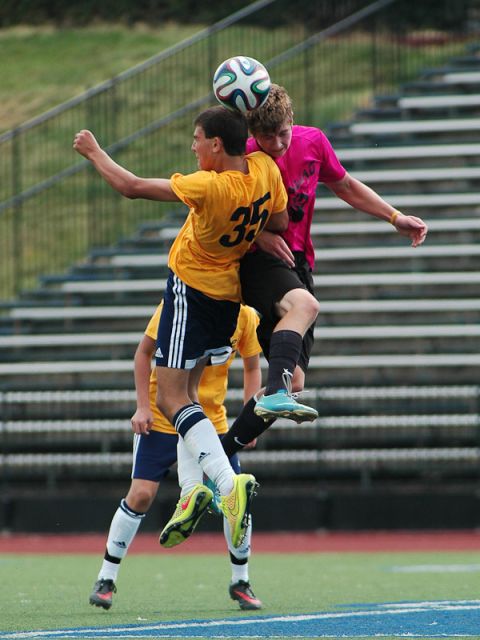
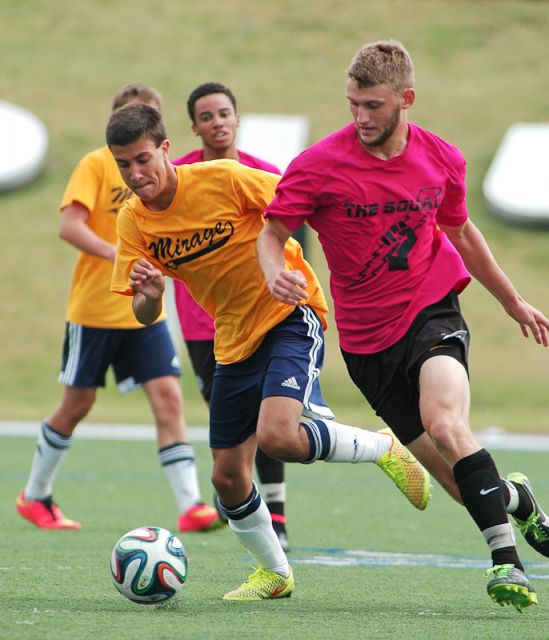
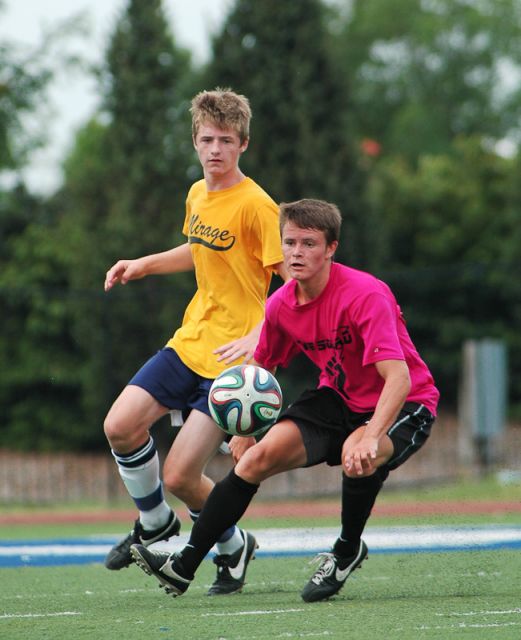

p.2 #18Old School DX Image Thread
All these are on Nikon D1 in June 3, 2000 at the Milwaukee mile. Pure 2.7MP CCD in NTSC color space. It took me until CS5 to finally get the colors not to look like they came out of a video camera
Greg Moore with the 180mm f/2.8

Kenny Brack with the 180mm f/2.8

Dan Wheldon, taken with with 20-35mm f/2.9

Gil de Ferran, Mid Ohio Sports Car Course August 20, 2000, 80-200mm f/2.8

Jimmy Vasser in Ohio 2000, 80-200mm f/2.8 with TC

Really didn't like the camera at the time, because it forced me to carry Nikon lenses in addition to all my Canon film gear. But it was so superior to anything else digital at the time we had to have one for this kind of work.
Greg Moore with the 180mm f/2.8
Kenny Brack with the 180mm f/2.8
Dan Wheldon, taken with with 20-35mm f/2.9
Gil de Ferran, Mid Ohio Sports Car Course August 20, 2000, 80-200mm f/2.8
Jimmy Vasser in Ohio 2000, 80-200mm f/2.8 with TC
Really didn't like the camera at the time, because it forced me to carry Nikon lenses in addition to all my Canon film gear. But it was so superior to anything else digital at the time we had to have one for this kind of work.
Aug 23, 2014 at 07:39 AM
p.2 #19Old School DX Image Thread
D300s and the Sigma 18-35mm.

LR3-2393 by Ben in San Diego, on Flickr

LR3-2349 by Ben in San Diego, on Flickr
LR3-2393 by Ben in San Diego, on Flickr
LR3-2349 by Ben in San Diego, on Flickr
Aug 23, 2014 at 11:15 AM
p.2 #20Old School DX Image Thread
Still using the D90 (and 50 f1.8). Took this recently at Canyon Creek lower falls.
 Canyon Creek Lower Falls by PeterDSims, on Flickr
Aug 23, 2014 at 01:21 PM