This topic is in the 2014 archive. You can read it and like its posts here. It is read only.
Archive 20142 AK Landscapes - PP help/ideas
p.1 #12 AK Landscapes - PP help/ideas
I've always really enjoyed photography but I never really started to 'learn' it until recently. I really feel comfortable with the camera but I have always struggled with processing images.
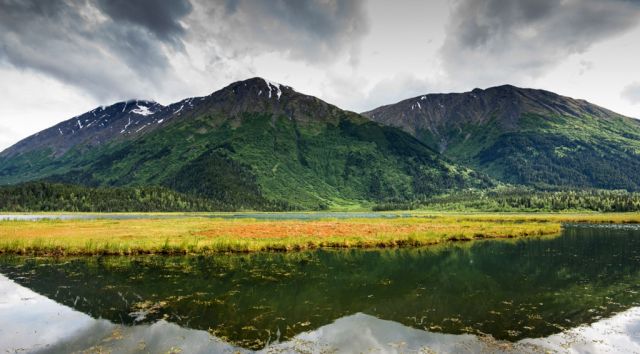
I recently look these two pictures while on vacation in Alaska. I feel that there is a lot more to these than what I'm presenting.
What I've done already:
Processed in LR
Made a few small adjustments to exposure and levels
Selective exposure on the skies (-2ev as they were mostly blown out)
Any ideas, criticism, links to tutorials, etc would be greatly appreciated. I'm always trying to watch tutorials or read during my free time but I'm still pretty 'green'..
Thanks for looking!
http://i61.photobucket.com/albums/h49/IonCannon/AK%202014/b978b05a-7dfa-424a-b930-c190b22a50dd.jpg
http://i61.photobucket.com/albums/h49/IonCannon/AK%202014/fde51026-b97c-4e5d-a1a2-279b6911440f.jpg
Aug 06, 2014 at 12:35 PM
p.1 #22 AK Landscapes - PP help/ideas
As a general rule, reflections are darker than what is reflected. I would darken the reflection of the first image and maybe crop out the water just slightly below the reflected mountains. I also feel like the black point is not dark enough.
The second one holds less interest for me. The man made stuff at the left, the notch created by side mountains (always a hard problem with such scenes). The water clutter in the foreground is also a bit of a problem.
Sort of like this.
The second one holds less interest for me. The man made stuff at the left, the notch created by side mountains (always a hard problem with such scenes). The water clutter in the foreground is also a bit of a problem.
Sort of like this.
Aug 06, 2014 at 12:56 PM
p.1 #32 AK Landscapes - PP help/ideas
Ben,
Thanks for the feedback. When I was first processing the imagine I was trying to process the sky to be just slightly lighter than the reflection. Reviewing the imagine now, I agree that I probably went to far with the sky without darkening the reflection.
That's an interesting idea for cropping out the water just below the mountain. I hadn't even considered that but, now that you mention it, might improve the image.
I felt the second image was less interesting, too, but was hoping for ideas. I might try a tighter crop on the center of the picture and see how that looks (just showing the windy river and far mountains).
Aug 06, 2014 at 01:13 PM
p.1 #42 AK Landscapes - PP help/ideas
I have a scene like that which I do every spring. I have done it all the way from 14mm to over 70. It has a pretty decent mountain in the center and when I zoom in on it, I get better results even though I really like the reflections in the wider image. I will see if I can find them to show as an example.
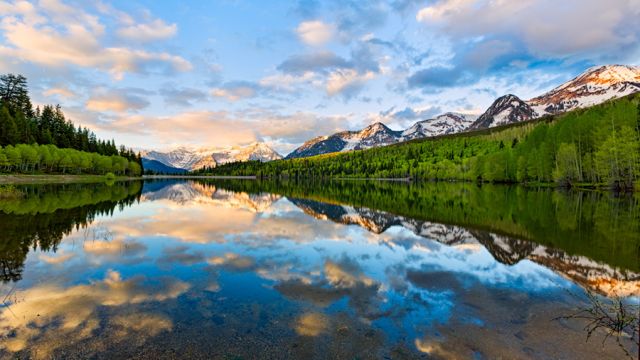
wide
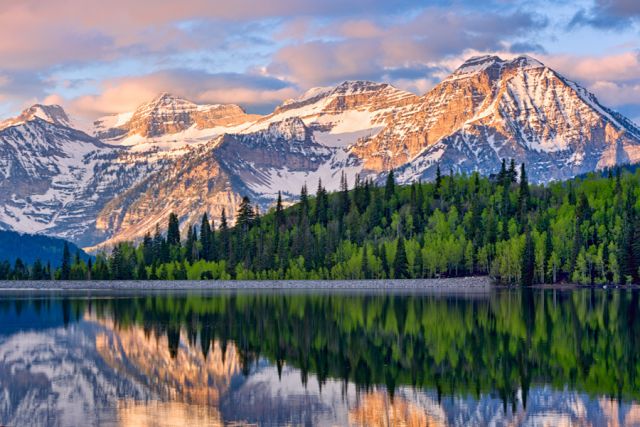
long
wide
long
Aug 06, 2014 at 01:41 PM
p.1 #62 AK Landscapes - PP help/ideas
Wildcats_Fans wrote:
Beautiful spot Ben
Thanks, I did not want to step on the post, but wanted to show an example of the problem with shooting into a v shaped horizon.
Beautiful spot Ben
Thanks, I did not want to step on the post, but wanted to show an example of the problem with shooting into a v shaped horizon.
Aug 06, 2014 at 02:11 PM
p.1 #72 AK Landscapes - PP help/ideas
ben,
No toes stepped on here. I appreciate your contributions. Those are both very pretty, and inspiring, pictures. It makes me wish I had taken a little more time and changed lenses to something longer.
No toes stepped on here. I appreciate your contributions. Those are both very pretty, and inspiring, pictures. It makes me wish I had taken a little more time and changed lenses to something longer.
Aug 06, 2014 at 02:48 PM
p.1 #82 AK Landscapes - PP help/ideas
Bilateral Grain Extract/Grain merge technique, but you have to do a lot of cleanup and blends so cannot explain the technique further other then it's my preferred way to add drama/dynamic range to landscapes. 

Aug 06, 2014 at 03:11 PM

p.1 #102 AK Landscapes - PP help/ideas
I like Ben's edit of #1. Tough scene because of the debris in the water being distracting.
Maybe next time try a long exposure so the debris in the water is blurred out?
I agree that #2 has less interest... The interesting thing there would be the mountains, and they are very small in the frame.
Maybe next time try a long exposure so the debris in the water is blurred out?
I agree that #2 has less interest... The interesting thing there would be the mountains, and they are very small in the frame.
Aug 06, 2014 at 10:29 PM

p.1 #112 AK Landscapes - PP help/ideas
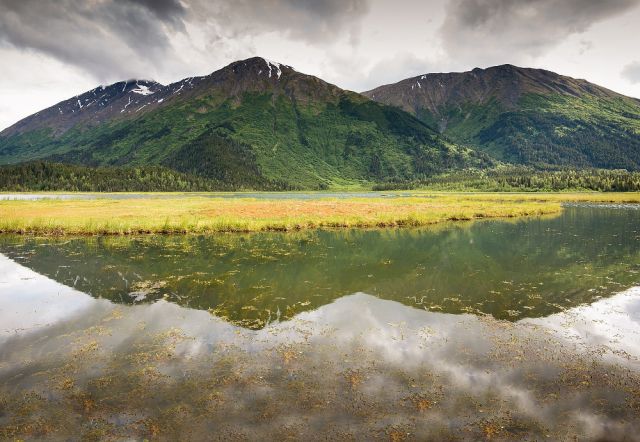
I'd suggest less cooking that others have illustrated. For the first my principle suggestion is to generally avoid placing the waterline in the center of the frame. PP possibilities:
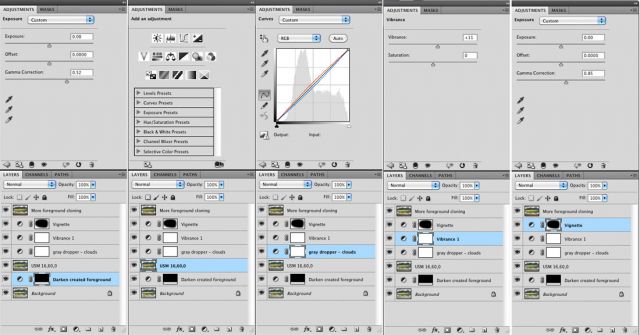
Aug 07, 2014 at 12:16 AM
p.1 #122 AK Landscapes - PP help/ideas
I'm familiar with that lake at the junction on the way down to Kenai. If you can find some lines/shapes created by the reedy vs. watery areas, I think you'd have a much stronger composition with a wide angle. Or zoom in to draw attention to the far snowy mountain.
Aug 07, 2014 at 07:26 PM

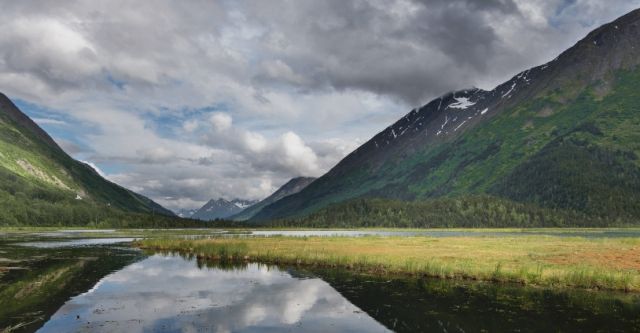

p.1 #152 AK Landscapes - PP help/ideas
I really appreciate all the ideas. I'm going to tinker with these a bit and see what I can do. I have a lot of others I'm tinkering with too..
That crop (from RustyBug) looks surprisingly good. Thanks again!
That crop (from RustyBug) looks surprisingly good. Thanks again!
Aug 08, 2014 at 02:51 PM
p.1 #162 AK Landscapes - PP help/ideas
I think the two main obstacles for these two photos are:
1.) image looks very flat
2.) the vegetation in the water.
There isn't much you can do about #2 besides some cropping but take a good look at what AuntiPode posted to help with #1. In particular The USM of 16,60,0. Using unsharp mask with a low amount (16) and a large radius (60) really helps landscapes like this. You'll notice how the vegetation on the mountain side really has depth to it now. Other times sharpening using a high pass filter will work out a little better.
One last thing is that it generally takes a very particular scene for a vertically centered horizon to work. Here it causes a bit of "blandness" I think.
Aug 08, 2014 at 03:14 PM
p.1 #172 AK Landscapes - PP help/ideas
rbn920 wrote:
One last thing is that it generally takes a very particular scene for a vertically centered horizon to work. Here it causes a bit of "blandness" I think.
Indeed. A centered element, such as a horizon or waterline, give an image a static feel. Sometimes the intent of an image is to say "static" or "symmetry". If that's the message, centered elements can be essential. However, for other intents, most of the time, a dynamic composition does a better job of delivering the intent. You can give a landscape more foreground or more sky. When the sky has problems, more foreground may be a better choice. When the foreground has issues, consider more sky.
Aug 08, 2014 at 04:52 PM
p.1 #182 AK Landscapes - PP help/ideas
Hope you don't mind a little play; just couldn't help myself. Only providing a link.
http://imageshack.com/a/img536/4402/YKSzN1.jpg

http://imageshack.com/a/img536/4402/YKSzN1.jpg
Aug 08, 2014 at 06:04 PM
p.1 #192 AK Landscapes - PP help/ideas
My observation would be this. I dont think that either image works that well as a 'reflection' photo (including the centered horizon. Because of the vegetation in the water especially at the waters edge you end up with a 'sort of reflection'.
This is why I much prefer 'Rustybugs' cropping of the image that turns it into a 'landscape' rather than a reflection. And something similar with the other image would work better.
This is why I much prefer 'Rustybugs' cropping of the image that turns it into a 'landscape' rather than a reflection. And something similar with the other image would work better.
Aug 09, 2014 at 08:07 PM