pinholecam wrote:
Julian, your eye for the shot just never fails to amaze me.
Things that I would have just passed off as 'nothing special', just comes to life with your composition, eye for lighting and processing knowing the strengths/limits of the Foveon sensor.
Thank you. You are by far not the first to say this but quite honestly I just find things of interest and attempt to photograph them as best as possible.
pinholecam wrote:
Wow! Cool!
Kamakura is not as often explored by the international tourist, who will typically head for the BIG one (ie. Kyoto)
So I'm really surprised that there is a fellow DPxm user on here who has also been there.
I adore Kamakura and have been there 3 times. It is such an awesome getaway when in Tokyo.
This thread is the best endorsement of the DP Merrill cameras that Sigma could hope for. The excellent work here shows what the cameras are capable of and I couldn't help buying a DP3M. I've only had it a few days and I can tell I'm going to love using it. Thanks for the inspiration!
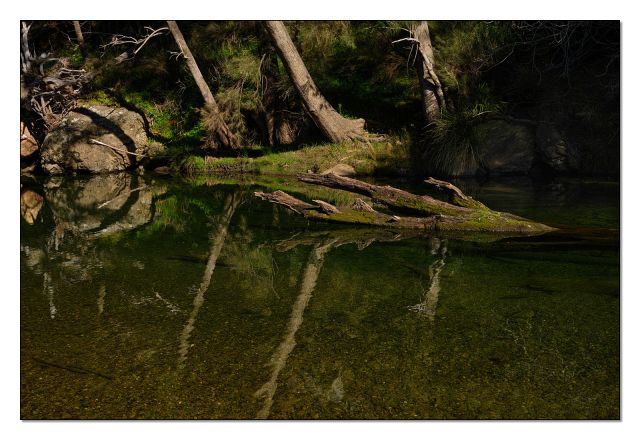
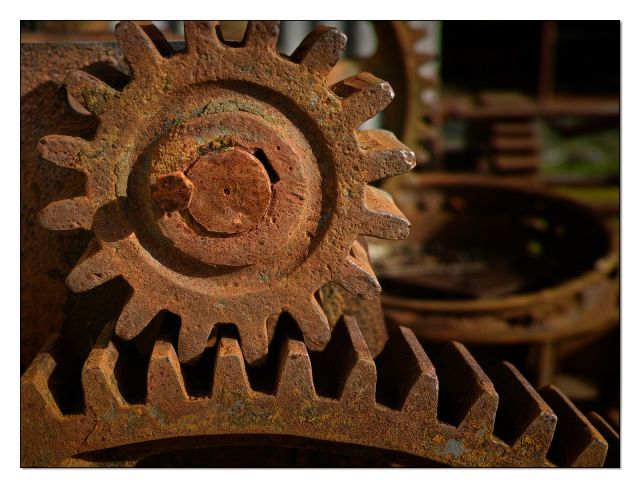
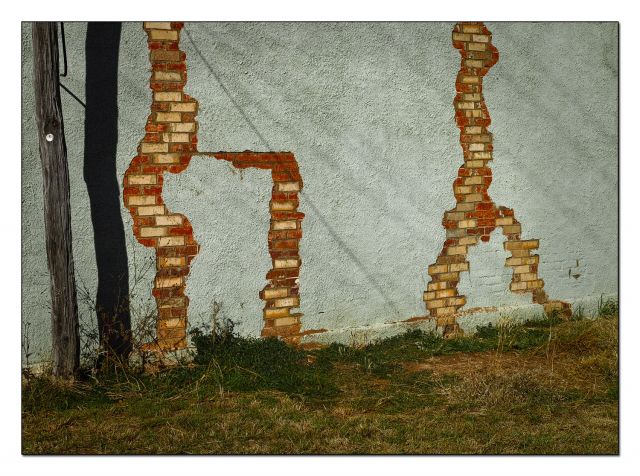
Thank you, juju58 and Dougo. Both of yours above are superb. The colors in the landscape are amazing and the rendering of the machinery incredible. Here are two more from yesterday:
rtallent wrote:
Julian, that's a very nice composition with beautiful tones. Would you mind sharing your monochrome processing work flow? Thanks.
Robert
Robert it was very straight forward. I use SPP in monochrome to get the look desired.Obviously there are only the basics in there. Then export as Tiff into Cs6, where from memory I simply played with the midtones and the blacks through levels. Then resize to 2000pixel long end. No sharpening or noise reduction. It was a very gloomy late afternoon so the light itself had more influence than the processing maybe.
Thank you, Julian. That sounds a lot like how I'm handling color images. While I'm asking questions: I read that the Sigma gives good high iso image quality in b&w but when I set the camera to monochrome and iso 1600, the camera's display showed a very grainy image. Do you know a method for getting good higher iso monochrome images? Thanks for your help with the newbie questions! BTW - lovely monochrome above.
Robert This image is shot at iso 1600. It only needs to be in B+W mode if shooting in Jepeg, which I never do by the way. Shoot Raw and you can convert the image to either B+W or colour in SPP.
This image has no noise reduction at all. Shot Raw in colour. Then into SPP and processed in Monochrome mode within SPP. This gives you the colour wheel in the palette, the wheel has the Red/ Blue and Green, Each represents the layers of the sensor itself. To put it simply, each layer of the sensor records the luminance and not colour, it is the corresponding thickness of each layer that can measure and determine the colour and measure the spectrum, which then allocates the desired outcomes. But because the layer that sits at the bottom, that measures the luminance values for the red spectrum, the light that gets to it is at it's weakest and therefore needs to be amplified the most, it is the amplification in any sensor that creates the noise. The middle layer that converts the greens is still quite noisy , but the top layer which measures the Blues has the least amplification and hence the signals and interpretations are very noise free, This is a simplification of the process.
In the practical world when in SPP in Monochrome processing, take the high iso raw image and with the colour picker choose from that Red Green and Blue wheel the point which measures 100% blue.
You'll find 1600 to 3200 iso images are very clean in Monochrome.
Robert to add the Lcd screen on the camera is not a high resolution and difficult to determine an image from. The opposite of my EM-5 where the lcd shows an image often far superior to the outcome, the Dp cameras are the opposite the result is always far better than the viewed screen.
Thank you for taking the time to write such a clear and practical explanation. The monochromes I've seen from the Merrills are what I am most interested in the camera for, though the color can also be very nice, so I am really looking forward to using this technique.