Is it the one you have? You also mentioned you have an
"M" adapter from Voigtländer. Is it the one from the
link? Are you happier with the Novoflex adapter or the
Voigtländer adapter?
NO i think you misunderstood. I don't have the Voigt close up adapter. I have the Voigt M to E and two Nikon adapters --metabones and Novoflex. For the Leica M screwmount i have a cheap 10 dollar adapter from Amazon made in China.
wfrank wrote:
Ulff, you got me curious. In what ways do you think the Ricoh are much better than the Zeiss CY(-s)? Assuming you mean other things than the size.
To clarify: I was talking about the 28 2.8 (not the 2.0). The copies I tried of this lens on full frame where all exceptional good in the center but very weak toward the edges until stopped down to at least f5.6, better f8.0. I like the CY a lot for it's center performance and size on cropped bodies, but on full frame I often need better edge performance at f4.0 for example. The GR has all that: very very good wide open and at f4.0 the center is hard to distinguish from the corners. The rendering of the GR lens is as good as many Leica M lenses on Leica bodies and the GR has no AA filter.
I am curious about the specifics of the Nikon 28 AIS. I have seen others state very positive comments but no specifics ebrandon wrote:
Funny, I just finished shooting & looking at all my 28mm lenses on the A7R; then fired up FM and saw this thread.
The lenses I tested are:
Canon EF 28mm f2.8 IS
Canon FDn 28mm f2.8
Canon FDn 28mm f2
Contax G 28mm f2.8
Konica m-mount 28mm f2.8
Minolta CLE 28mm f2.8
Nikon AiS 28mm f2.8
Nikon AiS 28mm f2
Olympus OM 28mm f2.8
I shot a landscape at infinity from wide open to f8 at each intermediate f-stop with each lens.
My findings:
The best three, all pretty similar in performance, and all pretty good, were the Canon EF 28mm f2.8 IS, Contax Yashica Zeiss 28mm f2.8, and Olympus OM 28mm f2.8. On the Canon it performed better with the IS OFF at 1/125 sec.
I think highly of the FD lenses, but they performed so poorly in my test I plan to retest them with different adapters. I have to believe the adapter I was using let the lenses down.
The Nikon lenses were acceptable on the A7R, but not as good as the three above.
None of the rangefinder lenses performed acceptably in the edges & corners. Not even close.
Some overall thoughts.
I think it's very confusing trying to figure out what works and what doesn't because the A7 and the A7R probably give people quite different results with the same lens, and adapter variation also give people conflicting results.
Also, the A7R is ruthless at exposing any lenses weakness -- when you peer into the edges & corners of these 36 megapixel files at 100% very few lenses make you jump with joy. When do you find one that works really well, it's pretty amazing.
One last note -- I have and love the Ricoh GR and its lens is definitely as good as it gets in 28mm equivalents. But the sensor is not in the same league as the A7R, especially above ISO 1600. ...Show more →
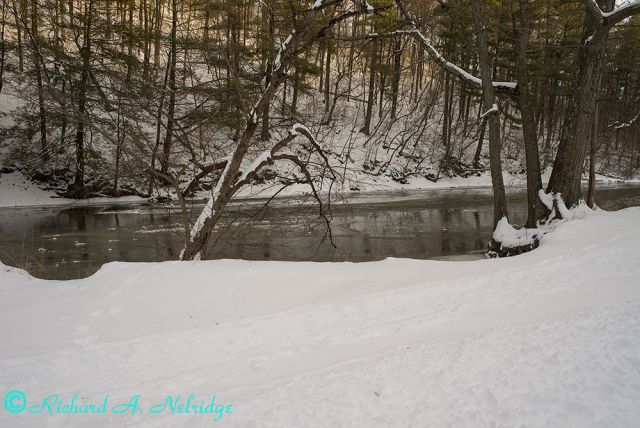
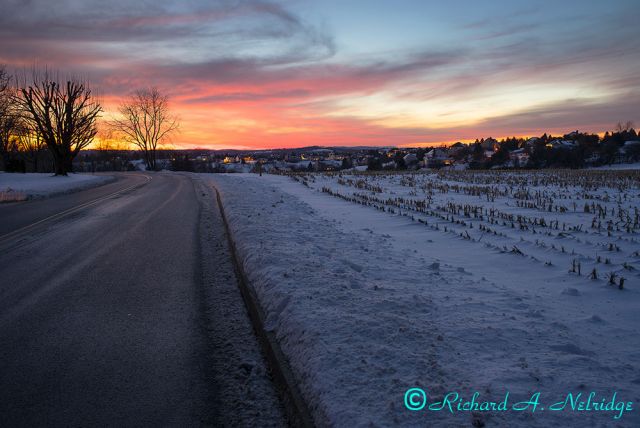
Here are some images taken January 4, 2014 with my tripod mounted A7r with my Leica R 28mm f2.8 Elmarit V2 lens. Images shot at about f8 due to DOF and processed in LR5.3.
mark1958 wrote:
Those comparisons were on the Nikon D800 and not the Sony A7r, and all wide open. For landscapes stopped down a bit would be of interest.
i don't know why you think there will be a significant difference between the d800e and a7r. as long as you have a good adapter performance should be nearly identical since they have the same basic sensor. i believe there is probably an infinity comparison elsewhere in that thread, but the leica is more noticeably better at infinity (on any camera).
Jan 23, 2014 at 02:26 PM
Steve Spencer Offline • • • • • • • Upload & Sell: On
naturephoto1 wrote:
Here are some images taken January 4, 2014 with my tripod mounted A7r with my Leica R 28mm f2.8 Elmarit V2 lens. Images shot at about f8 due to DOF and processed in LR5.3.
Rich
Richard, I am glad to see the lens is obviously working for you. Those are lovely shots.
Steve Spencer wrote:
Richard, I am glad to see the lens is obviously working for you. Those are lovely shots.
Steve,
Thank you. Leica USA/North America gave my lens a clean bill of health. They indicated that the rattling was a known issue with many of these lenses and it was OK. They also indicated that the lens is in very good working order (looks mint or almost like new). There is a little bit of drag in couple of places in focus but Leica suggested that I use the lens as it is and get a CLA in the future. At the apertures that I have used to this point the lens is extremely sharp and a great performer.
The position/distance of the lens to the sensor can make a difference. This will be affected by a few parameters including the specific adapter. In terms of the adapters-- using an R lens with an adapter designed to fit Nikon vs the Sony E brings in an additional variable. In addition, I do not think it is absolutely agreed that there are no differences in the two sensors. This is discussed on another website.
I agree that there is less likely to be an issue with the 35mm DSLR lenses between the inherent camera it was designed for and the A7R compared to what is being observed with the rangefinder lenses for example.
sebboh wrote:
i don't know why you think there will be a significant difference between the d800e and a7r. as long as you have a good adapter performance should be nearly identical since they have the same basic sensor. i believe there is probably an infinity comparison elsewhere in that thread, but the leica is more noticeably better at infinity (on any camera).
mark1958 wrote:
I decided to try a Nikkor 28mm AIS. Someone had posted somewhere i read that it was an outstanding performer on the A7r.
On the A8r I have been shooting both the Nikkor 28/2.8 AiS and the Contax Zeiss 28/2.8 Distagon. On balance I prefer the Distagon but not just for optical performance, I just like the feel of my Contax lenses over my Nikkors.
The 28/2.8 Distagon delivers somewhat better micro-contrast than the Nikkor.
I'm using a cheap adapter with no issues that I care to think about; it's actually performing better than a 100$ metabones Nikon/E mount adapter, truth be told.
I wouldn't go switching lenses based on this report, I've done very little with both... so far. Will post some comparison photos in the next couple days if no one beats me to it.
mark1958 wrote:
The position/distance of the lens to the sensor can make a difference. This will be affected by a few parameters including the specific adapter. In terms of the adapters-- using an R lens with an adapter designed to fit Nikon vs the Sony E brings in an additional variable. In addition, I do not think it is absolutely agreed that there are no differences in the two sensors. This is discussed on another website.
I agree that there is less likely to be an issue with the 35mm DSLR lenses between the inherent camera it was designed for and the A7R compared to what is being observed with the rangefinder lenses for example. ...Show more →
i'm not saying the sensors are identical, they obviously have different toppings and processing circuitry. they are close enough though that any real difference in lens performance will be due to your adapters. you'd see more difference in lens performance from switching film on a nikon film camera than switching between these cameras. extrapolating performance from one to other should be more useful than extrapolating performance from the d600 to the d800.
if you see a major difference it means you need to adjust replace your adapters. i believe both these lenses have a floating element. this means the adapter needs to nail infinity focus at the infinity stop otherwise performance will suffer (to what extent who knows). then of course you need to make sure there is no tilt...
Not going to look any further than my current Olympus OM 28/2 MC. It's small, well built, gives colors nicer than almost anything, gives good local contrast over the entire frame even wide open, but lacks in resolution outside the middle until stopped down. Distortion and vignetting is very low for such a fast and small wide angle lens.
Like Fred mentioned, the difference is in the adapter. I use two Metabones R to E mounts for my crons and both focus at infinity when at the infinity mark on the lens. Now, whether they are sharp across the entire frame is another question. :P
If you're ok with inexpensive and not terribly fast, the OM Zuiko 28mm f/3.5 is pretty good.
None of these pics are from a Sony, but they are 35mm full frame and seem pretty good even into the corners. My only complaint is that it is not very flare resistant.
Sorry it's taken me some time to respond to the inquires about the Nikon 28mm AiS lenses.
Please don't judge any of the samples below for their artistic merit -- I was just taking test shots on my way home from picking up my new Craigslist 28mm f2.
First, I tried the AiS 28mm f2 on a Nikon D600. First shot was to test its reputation as unusually resistant to flares, ghosts and veiling -- and it did well.
Some observations:
- I was amazed how much more detail there is in the shopping cart in the A7R image than the D600
- I was amazed how much more color I could bring back in the sky by turning down the highlights slider with the A7R than with the D600
- BUT it looks like the very same lens has much more field curvature on the A7R than on the D600. Is that even possible?
Next a couple of sample shots with the AiS 28mm f2 on the A7R.
They're not terrible, but not as good as some other 28's I tried, especially on the sides. I plan to retest them with some different adapters to see if that makes a difference.
However these lenses end up faring on the A7R I'm no hurry to get rid of them because they're both terrific on the D600.