p.4 #2 · Quick Release Clamp: Lever Release or Screw Knob Release?
Mike K wrote:
I fully agree with sjms. I find the lever clamps safer in that they are very positive in their locking movement and cannot be closed if the camera or lens plate is not properly aligned.
I once had a screw clamp tightly close on a camera L plate at an angle. Thinking the camera was secure I went to adjust the ball head and the camera fell to the ground. Fortunately the lens hood hit first and the body came to rest on soft dirt, but lesson learned. Lever clamps only ever since for me.
Mike K
I dully snagged the lever in the bush and my camera hit the dirt hood first as well. Now I stick to screw clamps! I guess it's possible to mess up just about anything...
p.4 #5 · Quick Release Clamp: Lever Release or Screw Knob Release?
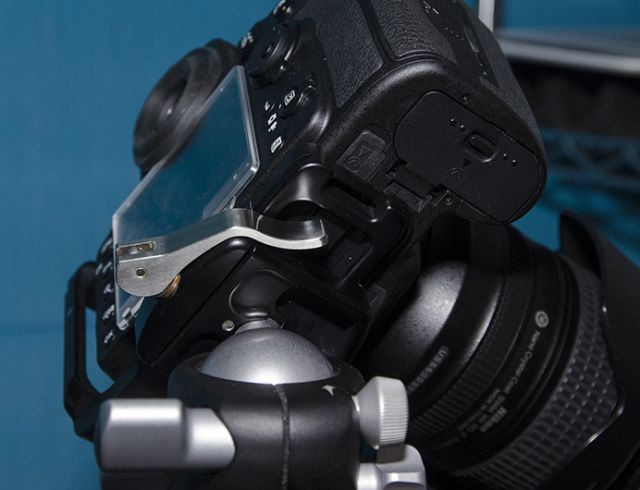
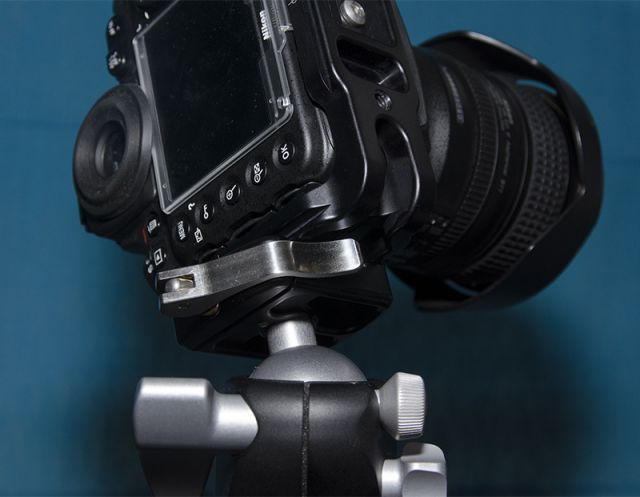
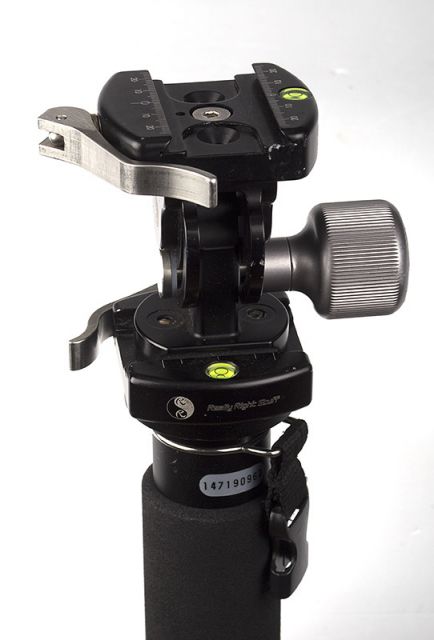
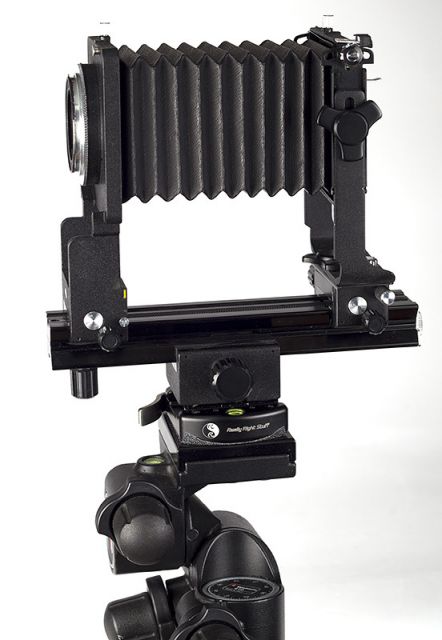
Sure, in your setup above that lever seems to be protected. But not everyone has things setup like that, at least, not all the time. That lever can easily be a *lot* more exposed depending on your camera configuration, e.g., small body camera directly on clamp.
With the evidence being anecdotal and circumstances not controlled (in the experimental/scientific sense) for pretty much anything, from personalities to other aspects of the gear, we cannot say very much about *how* much of a risk it is, but we can definitely say that it is possible, and probable enough to have occurred to three out of however many people are participating in this thread.
p.4 #6 · Quick Release Clamp: Lever Release or Screw Knob Release?
Much of a muchness between the two. I have used both, but currently use the lever clamp, it's fractionally faster, but it's robustness concerns me, particularly if you dont lock it down after removing the camera (or it gets caught on something and unlocks itself)
p.4 #7 · Quick Release Clamp: Lever Release or Screw Knob Release?
jeetsukumaran wrote:
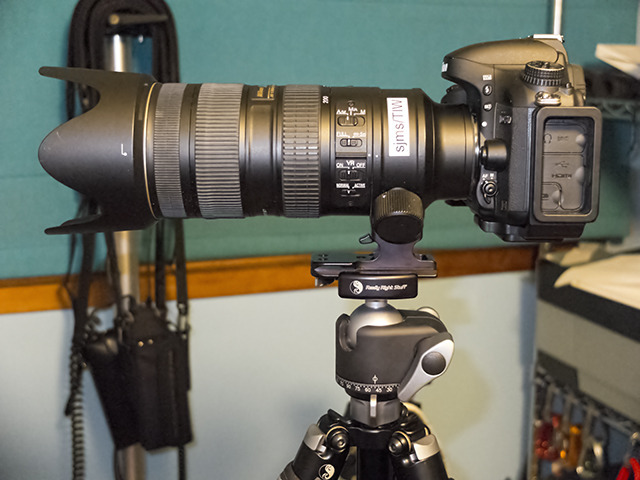
Sure, in your setup above that lever seems to be protected. But not everyone has things setup like that, at least, not all the time. That lever can easily be a *lot* more exposed depending on your camera configuration, e.g., small body camera directly on clamp.
With the evidence being anecdotal and circumstances not controlled (in the experimental/scientific sense) for pretty much anything, from personalities to other aspects of the gear, we cannot say very much about *how* much of a risk it is, but we can definitely say that it is possible, and probable enough to have occurred to three out of however many people are participating in this thread....Show more →
p.4 #8 · Quick Release Clamp: Lever Release or Screw Knob Release?
At a conference right now, so away from my gear. Will be happy to share a pic of the setup when back.
But it is not difficult to imagine the lever being exposed with an ungripped 5D, and, pretty much any moderate size lens. And, as I noted, because the lever interferes with the knobs and movements of the TS-E 24 f/3.5, I am forced to mount the camera with the lever facing backwards, which removes any "protection" given to the lever by the lens body (and, since the terminal end of the lever always protrudes out from under the lens body, there is nothing protecting the lever from beginning to flip open even if lens body protects the lever from flipping open all the way, so that perceived protection is actually quite misleading for the type of accidents described here, i.e. partial opening).
Photograph evidence and speculation as to how easy or not easy it is to flip open the lock, non-withstanding, I am not lying or hallucinating when I said that I have flipped open the lever accidentally! As are the cases, I presume, with other folks here reporting similar incidents.
p.4 #9 · Quick Release Clamp: Lever Release or Screw Knob Release?
Alex Nail wrote:
Much of a muchness between the two. I have used both, but currently use the lever clamp, it's fractionally faster, but it's robustness concerns me, particularly if you dont lock it down after removing the camera (or it gets caught on something and unlocks itself)
Show me. To unlock one of the RRS models you must exert at minimum 5lbs of pull force before it moves to break over. If you missed that and made it happen it will then go to a partial open position which if you have a plate with safety stops on it still won't cut loose but will slide. There is also the 2in long stainless steel lever sticking out perpendicular to the clamp itself which should tell you something.
I can drop on and balance a lens/camera setup on an open clamp whether it be lever or screw and forget to close it. Well then who or what is at fault.? The lever will at least indicate it its open and it will not go to a full open state w/o further conscious action. What indication does the screw give for its state?
We can go through this "discussion" back and forth but in the end it comes down to the user not the tool. The tool is designed to function and react in a specific manner. It is referred to especially in my world as SITUATIONAL AWARENESS.
I have used screws from my days with the AS B1 and my Markings M10 (changed over later when the lever was introduced). Now I work with the levers because in my business we use this basic design in a few locations and it has worked for many years right along with the visual indication. So we come to a parting of the way in opinion and that's the way things go diversity and divergence
p.4 #10 · Quick Release Clamp: Lever Release or Screw Knob Release?
What indication does the screw give for its state?
It doesn't! But that's where situational awareness comes in: one checks the lock to see if the camera/lens combo slips after clamping the camera/lens to the ballhead. For the record, I do this with the lever as well, visual feedback non-withstanding, as I am sure that almost everyone else does.
Both, and for that matter, any, system is prone to user error. I personally have never had an issue (yet!) with make sure camera and lens are locked in with either the knob or the lever system. I have had the lever flip open accidentally. I have not had this happen with the knob. I have no doubt that other folks might have entirely different or opposite experiences. I do not for a moment buy any of these anecdotal reports, mine included, as statistical evidence for the safety of one over the other. For the record, I do not believe that lever offers anything more in safety than knob (the visual feedback of the 1/0 lock state is absolutely true, but, as I noted, I have not yet had the experience of mistaking a the lock/unlocked state with the knob clamp, however non-obvious this state might be visually, so do not think that is a real issue in practice for me).
As you say, though, to each his own. My own take: variation in individual personalities and behavior using the equipment totally swamps out any of the real, if non-significant, differences between the two as far as safety goes.
p.4 #11 · Quick Release Clamp: Lever Release or Screw Knob Release?
Now we all no and or realize that there are those who live at other locations on the curve of self enlightenment. So situational awareness is not in their vocabulary. And it has been demonstrated many a time here. We all swing on that pendulum to some degree.
p.4 #13 · Quick Release Clamp: Lever Release or Screw Knob Release?
Mr Colwell, admittedly they are out in the open and you are correct that situational awareness is lacking in some nd the setup becomes irrelevent. But then that falls true for the knob as well, especially with that last setup. this could go on forever to and fro.
Image 1- snicker snicker
Image 2- yep you got me but I could argue a point for the knob too.
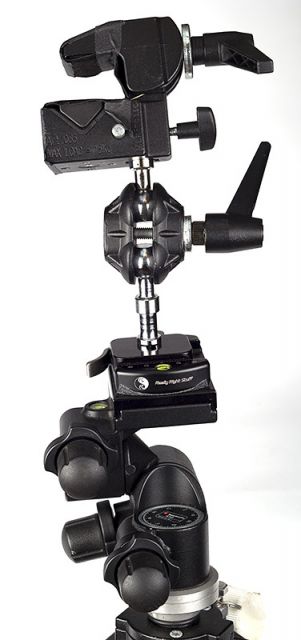
In the last one could you have piled it any higher? With so many knobs to choose from to turn. I wouldn't go near that setup as is so it would be safe from me. I love the absurd
p.4 #16 · Quick Release Clamp: Lever Release or Screw Knob Release?
P.S. I actually use the 1. and 2. cases quite often. I have A-S clamps on the top of two monopods; (i) the Feisol shown above, and (ii) a Manfrotto Neo-Tec monopod. I prefer using the Neo-Tec with large lenses and in tight quarters (e.g. theatre performance), because its one-handed action is very user friendly. OTOH, the Neo-Tec is heavy and way too long (when closed) for travel, and that's where the Feisol shines. Also, I sometimes use both monopods with no 'head', and so the multiple configurations.


 For the record, I do this with the lever as well, visual feedback non-withstanding, as I am sure that almost everyone else does.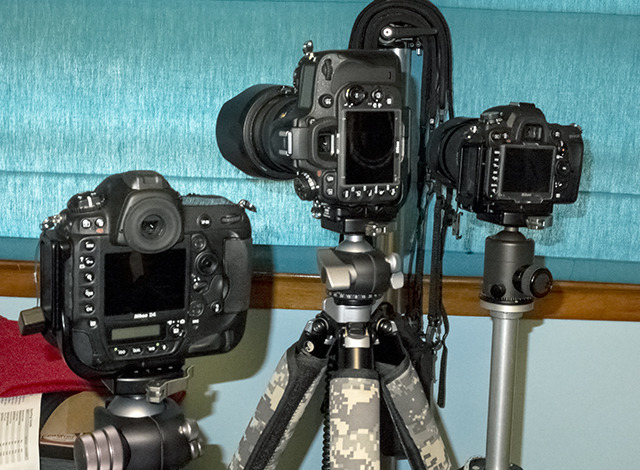

 so versatile