sebboh wrote:
the difference is certainly there, but i don't think it's that big. i think if someone with access to the raws (ron?) normalized color and contrast between the two and either upsized or the leica or downsized the sony so they were equal sizes the difference would appear much smaller.
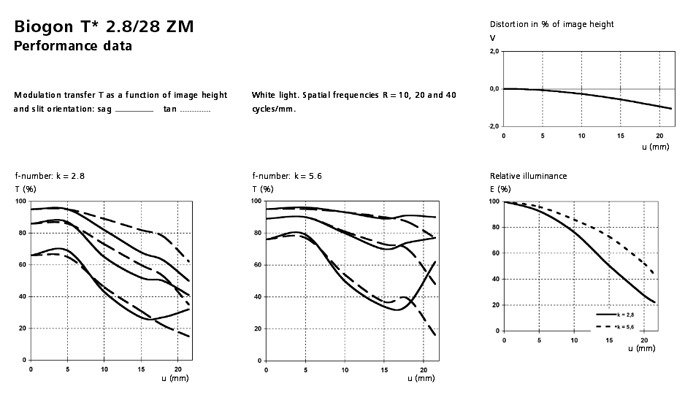
It's there, i guess it is about 1.5 times resolution drop at edges. Lux turns to cheap $25 lens. Too bad. So, these FF cameras certainly not for RF lenses. Not buying them for this reason. I hope for the new tech that will work better. I hope for panasonic: it caught sony with their gx7' sensor and there were rumours about organic sensor that is being developing by fuji-panasonic alliance. I would love to see gx7 alike FF camera with electronic shutter, swivel EVF, touchscreen and FF organic sensor that handles oblique rays much better compared to CMOS by its design.
Lee Saxon wrote:
I'm not understanding all the comments in the last few pages about the fact that Leica has optimized their lenses for digital while keeping them small so so-and-so should be able to as well, the question of why Leica lenses perform better on Leica cameras than the A7/r, etc.
We know that's not true. Their cameras have compensation profiles that hide how digital-unfriendly their lenses are. That has been objectively proven. What are people talking about?
Smearing of detail in the borders/ corners. That's a problem not corrected by profiles that compensate for color vignetting and an issue that is showing up much more on the A7r's as compared to Leica M digital's. Color vignetting issues can be corrected, smearing cannot.
Lee Saxon wrote:
I'm not understanding all the comments in the last few pages about the fact that Leica has optimized their lenses for digital while keeping them small so so-and-so should be able to as well, the question of why Leica lenses perform better on Leica cameras than the A7/r, etc.
We know that's not true. Their cameras have compensation profiles that hide how digital-unfriendly their lenses are. That has been objectively proven. What are people talking about?
Tariq Gibran wrote:
Smearing of detail in the borders/ corners. That's a problem not corrected by profiles that compensate for color vignetting and an issue that is showing up much more on the A7r's as compared to Leica M digital's. Color vignetting issues can be corrected, smearing cannot.
Leica required their sensor suppliers to optimize sensor design around their existing lens line up. Since Sony is starting pretty much from scratch with this mount, at least for short register distance lenses, they're going more the other way - keeping sensor design fairly standard while designing new lenses for the new system requirements. The consequence is other short register distance lenses that can be adapted to FE aren't guaranteed to work well with the system.
Regarding the crops of my 50 Lux ASPH... as I noted in my blog post, the M9 images are a different day, weather, slightly different framing, etc. They were also RAW conversions vs. in-camera a7 Jpegs. I haven't yet spent the money to upgrade to LR5, therefore haven't bothered to explore RAW conversion options for the a7 files. If someone wants to give it a try themselves, send me a PM and I'll provide a link to the RAWs from both cameras with the 50 Lux ASPH. Posting of the results online is fine with me, just keep the RAW files to yourself (not that they have that much value other than to the gear-head purposes discussed here)...
Kinda big @ original, but kinda telling if you open / click / magnify it to full size.
Note the transition of the stonework on the right. Other areas notable also.
sebboh wrote:
the difference is certainly there, but i don't think it's that big. i think if someone with access to the raws (ron?) normalized color and contrast between the two and either upsized or the leica or downsized the sony so they were equal sizes the difference would appear much smaller.
I have a different hypothesis about the 50 Lux Asph. I think it might be very sensitive to having an excellent adapter. It has a floating element and it is certainly true that for SLR lenses having a floating element means that adapter thickness is much more important. The 50 lux Asph seems to look good on the Sony cameras at times and not so good at other times and I am guessing it is the adapter. So of course it will have an advantage on the M9 unless it has an excellent adapter.
Steve Spencer wrote:
I have a different hypothesis about the 50 Lux Asph. I think it might be very sensitive to having an excellent adapter. It has a floating element and it is certainly true that for SLR lenses having a floating element means that adapter thickness is much more important. The 50 lux Asph seems to look good on the Sony cameras at times and not so good at other times and I am guessing it is the adapter. So of course it will have an advantage on the M9 unless it has an excellent adapter.
i think that definitely might be playing a role, it does seem to be a sensitive lens even for m9 users. i doubt that the adapter and FLE is all we're seeing though. i played with the raws from Ron's shoot a bit and made a quick effort to normalize the a7 color and contrast to better match the m9 files. it's really impossible since the light for the m9 was much better and there was a low fog (rain?) in the distance for the a7 shots. in any event here's some edge comparisons between the two where i gave the a7 a little extra sharpening (since it has an AA filter) and downsized it to an m9 sized file. framing isn't identical so i took crops from the same part of the frame rather than trying to match the subject as that would have put the midzone dip in shots from one camera but not the other.
Agree Ron, Sony might find it a little harder to try to design and compensate for a whole world of lenses than just your 20-30 on your years-in-development Leica digital camera. Then there is your own E and ZA lenses, and C/N to cater for. I would also wager that Zeiss were kept close in the dev phase, to the point of developing and testing prototype lenses.
Effectively, adapters and legacy lenses have enabled Sony to release a new product line maybe six months earlier than if they had to develop enough lenses to please the market. Even so it is an audacious camera, and deserves to succeed for that reason alone.
Adapters are presently imperfect and are really just commencing their heaviest development phase...I think all lenses need high quality adapters, which is why I am happy to use a factory developed Sony LA-EA3 for legacy A mount lenses until CZ blow us away with the next year's output that needs no adapter at all.
You are already down on precision compared to an RX1 with any ILC, and an adapter on a fussy and unprecedented design such as FE...much better to use system lenses...I have no doubt at that other makers will be at work on FE lenses right now. CV are missing a large business opportunity if they do not.
Soon a smart person will compare adapters and report back with results. Roger may wish to replicate his recent work, but with an a7r using novoflex, metabones, voigtlander. You need to remove 'extraneous variables' from the study design...so a known good sample of the test lens(es) would be a good idea, along with repeated procedures and data capture observations, so you can check the range of the distribution results to gain insights into the issues.
The a7r will however become primarily a system camera with its own custom lenses over the next 9-12 months, with some craft use of alt lenses at the (albeit large) margin. That's what I expect to happen..Zeiss will have, by June 2015, everything most people will ever want. And an alt lens that can compete with them sitting on an adapter will be rare. It will look the ZEF range in miniature with equal or better quality for similar money. It's already that way for the two FE primes..
I'm not really interested in lenses wider than 35mm, so I don't know if this is bordering off topic. Has anybody seen any promising samples from 35mm RF lenses, and more specifically: has anybody seen any samples of the Voigtländer 35mm F1.4 Nokton?
I found a couple here: http://siammirrorless.com/board/index.php?topic=1644.msg13525#msg13525
But as usual in all the samples circulating, the corners are not in focus or resolution is too low. So although it looks promising (not much radial blurring or color shifts on the cat pic or loss of detail in the foliage in the in focus upper right corner of the temple pic), it's hard to tell.
The M35/2 ASPH is looking pretty good on the A7r. I've not uploaded anything yet but the results so far look good. I prefer 50mm myself and the M50/2 impresses slightly less on first impression.
Steve Spencer wrote:
I have a different hypothesis about the 50 Lux Asph. I think it might be very sensitive to having an excellent adapter. It has a floating element and it is certainly true that for SLR lenses having a floating element means that adapter thickness is much more important. The 50 lux Asph seems to look good on the Sony cameras at times and not so good at other times and I am guessing it is the adapter. So of course it will have an advantage on the M9 unless it has an excellent adapter.
sebboh wrote:
i think that definitely might be playing a role, it does seem to be a sensitive lens even for m9 users. i doubt that the adapter and FLE is all we're seeing though. i played with the raws from Ron's shoot a bit and made a quick effort to normalize the a7 color and contrast to better match the m9 files. it's really impossible since the light for the m9 was much better and there was a low fog (rain?) in the distance for the a7 shots. in any event here's some edge comparisons between the two where i gave the a7 a little extra sharpening (since it has an AA filter) and downsized it to an m9 sized file. framing isn't identical so i took crops from the same part of the frame rather than trying to match the subject as that would have put the midzone dip in shots from one camera but not the other.
i think the m9 looks better at the edge till f/11. the a7 looks better (to me) in the center at all apertures btw. ...Show more →
Thanks for posting these Derek. Would you mind putting up the center crops too? I'm curious...
Also, yes, unfortunately the weather was very murky the morning I had the a7.
Guys, huge images and incomplete links drive the poor phone people crazy.
Much more polite to just link to the huge stuff and post smaller----and check your links--long ones don't work here.
I have an apple cinema so it's not hurting me much, but cmon.
Check this nice post from Mflenses, by Bernhardas:
Somebody was going on about how the old glass just was not going to keep up with 36mp:
"I am not sure, but I seem to have it in my head that due to Nyquists principle you would need the sensor actually resolve at least double as good as the lens to get the perfect quality the lens can deliver?
I am not sure on what basis people assume that the lens should resolve equal or higher than the sensor?
In the film days film did indeed out-resolve lenses by a margin. THAT is the reason for all the lens tests of the magazines at the time. If it would have been the other way round the difference in quality of lenses would not have mattered, as the film would anyway have been out-resolved by both lenses and you would have seen many more film tests. (The film tests were more about color and density curve than resolution.)
In the early digital days the relation was reversed as the early digital sensors did indeed resolve lower than film. And consequently we saw a lot of sensor comparison tests, while the lens tests moved always to the "best" sensor available. But frankly a lens test on a Nikon D1 is for me questionable.
With the last generation of high density APS and FF sensors we reached an approximate equilibrium.
I think with this new and the next sensor generations we simply will have to get used to the film situation again by which the sensor will out-resolve the lenses by a margin.
For me it looks like we have then simply come full circle.
P.S. and with the next sensor generation hopefully delivering double resolution of my lenses I will be able to see their full beauty!"
uhoh7 wrote:
Guys, huge images and incomplete links drive the poor phone people crazy.
The broken links are likely the fault of this site's CMS, or Flickr's fault for deciding to use an @ in their URLs -- just copy the full text of the URL and paste it into your browser.
Personally, I kind of *want* an adapter -- if I'm going invest in expensive lenses that are glass and metal and capable of working for many years, I want to be able to mount them on many systems -- I pretty much assume Canon or Nikon or Ricoh or Fuji will put out FF mirrorless. FE feels kind of dead-end to me.
turnstyle wrote:
The broken links are likely the fault of this site's CMS, or Flickr's fault for deciding to use an @ in their URLs -- just copy the full text of the URL and paste it into your browser.
Personally, I kind of *want* an adapter -- if I'm going invest in expensive lenses that are glass and metal and capable of working for many years, I want to be able to mount them on many systems -- I pretty much assume Canon or Nikon or Ricoh or Fuji will put out FF mirrorless. FE feels kind of dead-end to me.
I very much doubt that the FE line is Dead-end. Sony probably has a year head start if not more on most of the other makers at this point. Canon, Nikon, Ricoh, or Fujifilm are all going to have to come up with a new camera line and quite possibly new mount to accommodate the mirrorless FF designs. Unless Canon, Nikon, and Ricoh make new cameras accounting for the elimination of the mirror box and making the camera bodies shallower they will have build extra length into their new design lenses or just use their existing FF lenses which are much larger and heavier than they need to be.
Whether Fujifilm can use the X-mount size as is is another question. They have already indicated that it is not. But, they too will need to release a new line of lenses.
turnstyle wrote:
By dead end, I mean: will only ever work on Sony bodies.
I agree. For now, it is the fact that I can use all of my existing glass (except for a few M-mount WAs) via adapters that makes the A7R so interesting to me. But I honestly think the age of lenses with manual aperture control is coming to an end (see e.g. Zeiss Otus). I'm afraid the Leica M-system and different of MF/LF-systems will be the only ones seeing new lens designs with manual apertures in the future...
uhoh7 wrote:
Guys, huge images and incomplete links drive the poor phone people crazy.
turnstyle wrote:
The broken links are likely the fault of this site's CMS, or Flickr's fault for deciding to use an @ in their URLs -- just copy the full text of the URL and paste it into your browser.
Maybe Fred could chime in to help us reduce the number of broken links (and/or imbedding protocols) some of us seem to be having a bit of trouble with. I for one am not sure how the changes Fred made with the magnifying glass work to allow a different protocol for various sizes of images. Clarification of propriety would be appreciated.
uhoh7 wrote:
In the film days film did indeed out-resolve lenses by a margin. THAT is the reason for all the lens tests of the magazines at the time. If it would have been the other way round the difference in quality of lenses would not have mattered, as the film would anyway have been out-resolved by both lenses and you would have seen many more film tests. (The film tests were more about color and density curve than resolution.)
philip_pj wrote:
Agree Ron, Sony might find it a little harder to try to design and compensate for a whole world of lenses than just your 20-30 on your years-in-development Leica digital camera. Then there is your own E and ZA lenses, and C/N to cater for. I would also wager that Zeiss were kept close in the dev phase, to the point of developing and testing prototype lenses.
Effectively, adapters and legacy lenses have enabled Sony to release a new product line maybe six months earlier than if they had to develop enough lenses to please the market. Even so it is an audacious camera, and deserves to succeed for that reason alone.
Adapters are presently imperfect and are really just commencing their heaviest development phase...I think all lenses need high quality adapters, which is why I am happy to use a factory developed Sony LA-EA3 for legacy A mount lenses until CZ blow us away with the next year's output that needs no adapter at all.
You are already down on precision compared to an RX1 with any ILC, and an adapter on a fussy and unprecedented design such as FE...much better to use system lenses...I have no doubt at that other makers will be at work on FE lenses right now. CV are missing a large business opportunity if they do not.
Soon a smart person will compare adapters and report back with results. Roger may wish to replicate his recent work, but with an a7r using novoflex, metabones, voigtlander. You need to remove 'extraneous variables' from the study design...so a known good sample of the test lens(es) would be a good idea, along with repeated procedures and data capture observations, so you can check the range of the distribution results to gain insights into the issues.
The a7r will however become primarily a system camera with its own custom lenses over the next 9-12 months, with some craft use of alt lenses at the (albeit large) margin. That's what I expect to happen..Zeiss will have, by June 2015, everything most people will ever want. And an alt lens that can compete with them sitting on an adapter will be rare. It will look the ZEF range in miniature with equal or better quality for similar money. It's already that way for the two FE primes.....Show more →
Philip, I could not have said it any better. You have summed it up. +1