p.4 #1 · Sony A7 and A7r Full Frame with Canon Lenses
Robin Smith wrote:
"Why do you come onto a thread and slag others that can use the extra pixels and dynamic range."
It's a free country: my view is as valid as anyone else's - this my opinion. I think that you will find your landscape photos almost entirely unchanged going from, say a 5D3, to the new Sony 36 MP. Any differences seen will be entirely by you when pixel peeping. This is perhaps important to you, but I doubt anyone else would see the differences unless they join you in studying your monitor. If the high ISO performance is radically improved then you might see some noticeable change, but I doubt this will be the case and as far as I know high ISO is not usually the style for a landscape shooter....Show more →
Living in a "free" country means the government can't prevent you from saying things. That doesn't mean that what you are saying is valid... indeed, much of what you say is outright foolish. If you've never processed and printed a D800 file to 24x36 or higher (landscape or otherwise), you should try it before chastening others for "studying" their "monitor."
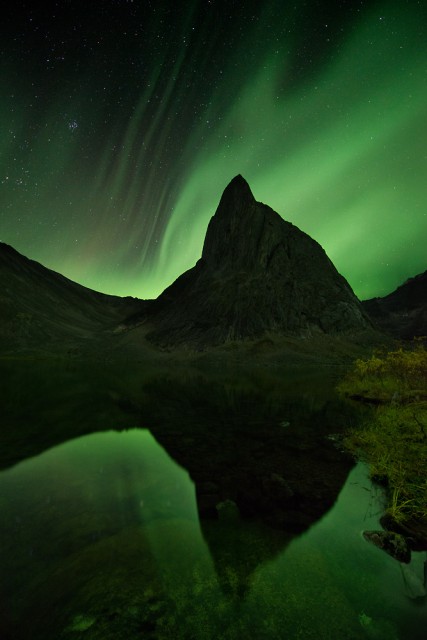
And your knowledge doesn't extend very far if you don't think high ISO is a usual "style" for a landscape shooter. ISO 1600-12,800 is my base ISO range for shooting nightscapes (a very usual subject for me and many others), and for some recent work I did with Northern Lights in Canada.
p.4 #2 · Sony A7 and A7r Full Frame with Canon Lenses
jctriguy wrote:
Have to keep in mind that you are paying $2300 (not 2200 as most are saying) for a camera back. Great for landscape and product shooters, but probably not many other people. Would be terrible for action or wildlife and probably not a great setup for wedding shooters either. So, $2300 for a high MP back for landscape sounds like a great deal as a second body for a specific part of your needs. Most, probably all, Canon users will keep another Canon body to natively use their lenses in situations that the Sony isn't suited for. I can't see many people switching their full system to Sony. The new cameras use the same mount but the old lenses won't cover the FF view, so you would need the new ultra expensive Zeiss lenses or yet to be announced Sigma lenses.
With that in mind, I would prefer one body that handles all my needs. So, a Canon can be priced higher since you wouldn't need multiple bodies to meet your needs. But, maybe my needs are more niche than the group that is happy to have multiple bodies and lens systems. I think Sony was clearly targeting the adapter crowd with this body, not trying to convert people to a full Sony system....Show more →
Agree that Sony targets less people vested in Sony gear with this camera but more so people already vested in other lenses from Nikon and Canon for example. Time will tell how successful this mirrorless Sony 7A(R) body will be, but I think many from other camps like Canon and Nikon will add it to their existing gear (at least I am contemplating this). For me it will be the perfect walk-around and hiking camera with 1-2 lens bodies to carry with me. I already carry two camera bodies with me - one lighter, less bulky and well performing resolution-wise camera body like the 7AR would be perfect for my usage at least. As you might know from earlier statements, I am not interested in fast fps or super fast AF either.
I don't think that this camera targets wildlife and sports shooters, also it will be less in demand with wedding photographers. But for scenery/landscape, street photography, architecture and fine art photography it is currently a perfect addition which is quite a big crowd, too. I am sure all those photographers will have a closer look at the specs and future reviews of this camera.
p.4 #3 · Sony A7 and A7r Full Frame with Canon Lenses
Rickuz wrote:
^ Fair enough, but I'm having a hard time seeing the "big expense" here.
It's a $2.200 mirrorless FF (The worlds smallest and lightest) with high resolution and high dynamic range, that will accept your EF lenses through an adapter. It will also take lenses from Sony, Leica, and pretty much every other mount in existence.
You'll need an adapter for the EOS M as well, so what's the difference?
Adapted lenses aside, there will be 12 new lenses from Zeiss next year, especially designed for the A7 and A7R.
Expense would be items like the body, native lenses, flash, adapters and other accessories. Think $5,000 +. Putting my FF Canon lenses on this with an adapter is pointless for me, but may make sense for you. I would just rather carry my 5D3 once I hit a size weight threshold. One difference with a camera like the M is that the M is small and the native lenses are small and that is pretty much the point of mirrorless to me. I can appreciate and respect others that place more emphasis on the sensor and attaching a broad range of lenses to the camera. Especially landscape shooters or others that need the increased resolution. These A7's are probably great cameras and I would hope the lenses are good, it is just more than I want to commit to a secondary system right now to improve portability.
p.4 #5 · Sony A7 and A7r Full Frame with Canon Lenses
Arka wrote:
And your knowledge doesn't extend very far if you don't think high ISO is a usual "style" for a landscape shooter. ISO 1600-12,800 is my base ISO range for shooting nightscapes (a very usual subject for me and many others), and for some recent work I did with Northern Lights in Canada.
p.4 #6 · Sony A7 and A7r Full Frame with Canon Lenses
No. I have not printed an image 4'x7' and I can almost guarantee that fewer than 1% (0.1% or fewer!) photographers here ever do this. You are clearly an exception. Perhaps you do this as a professional for large atria or such like? In which case, my comments do not apply to you. I also agree that for you the pixel difference will matter. Why are you not using an MF system as a matter of interest?
The same applies to Arka and his 12,800 ISO images. However, even you two would acknowledge that your requirements are by no means a normal requirement, not even for professional photogs. I assume both of you must be professionals or professional artists otherwise you must have large venues to print out prints this size and with these demanding requirements?
My point, is that most people are obsessing about these differences and it has no impact on the end result of their photography. You now know exactly what I suggesting, so there's no need to lambast my intelligence.
p.4 #7 · Sony A7 and A7r Full Frame with Canon Lenses
Stoffer wrote:
You're all writing about how well suited it is for our EF lenses, but I haven't seen any adapters announced? What am I missing? Are we just assuming that there will be good quality adapters? Or...
Watch The Camera Store video. He uses the A7R with a 17-40L. Full AF and metering.
p.4 #10 · Sony A7 and A7r Full Frame with Canon Lenses
jj_glos wrote:
AF is slow though, fine for static I suppose.
Have you used the adapters? I've never heard of anyone using it apart from the TCS guys. If anyone is using Canon for landscapes primarily, this A7R is a good move, but that's it. I'd never replace one of the most versatile D/SLR's (5D3) with this Sony, but I may buy it in addition.
p.4 #11 · Sony A7 and A7r Full Frame with Canon Lenses
Fred Miranda wrote:
I just preordered the a7r, grip, extra battery, and the EF metabones adapter for my Canon lenses.
Sounds good Fred. I'm still waiting for Sony Store Canada to update their website to allow preorders. 36MP and the T/S lenses will be something special.
p.4 #12 · Sony A7 and A7r Full Frame with Canon Lenses
Rickuz wrote:
It's the new Canon body! High-resolution, high dynamic range, and you can put EF lenses in front of it and still retain autofocus.
That it's made and sold by someone else is a secondary issue.
Let's hope this is an eye opener for Canon.
I will get the A7R for sure!
It would be a tempting upgrade for landscape work (assuming the lenses adapt well, LR did some stuff that implied that alignment is so tricky that usually you end up with a decentered mount). You can still use all your Canon lenses. Keep a 5D3 for ML RAW video and for action and general stuff and then use this as a specialized landscape camera.
Hopefully this is the final straw to push Canon. It is ridiculous considering how far ahead their tech was not so long ago that they let their marketing and business droids milk them into catch-up players at best. You could totally see it coming from how they were talking though (anyone who pointed it out was called a Nikon/Sony troll though).
p.4 #13 · Sony A7 and A7r Full Frame with Canon Lenses
Robin Smith wrote:
"Why do you come onto a thread and slag others that can use the extra pixels and dynamic range."
It's a free country: my view is as valid as anyone else's - this my opinion. I think that you will find your landscape photos almost entirely unchanged going from, say a 5D3, to the new Sony 36 MP. Any differences seen will be entirely by you when pixel peeping. This is perhaps important to you, but I doubt anyone else would see the differences unless they join you in studying your monitor. If the high ISO performance is radically improved then you might see some noticeable change, but I doubt this will be the case and as far as I know high ISO is not usually the style for a landscape shooter....Show more →
DR differences could easily be seen (Canon is WAY behind here at low ISO) and if you do any cropping at all, in prints for detail too. Of course one unfortunate thing is the AF will be likely too slow to be good for wildlife so you probably can't get the added bonus of extra reach out of it all that often.
p.4 #14 · Sony A7 and A7r Full Frame with Canon Lenses
Arka wrote:
And your knowledge doesn't extend very far if you don't think high ISO is a usual "style" for a landscape shooter. ISO 1600-12,800 is my base ISO range for shooting nightscapes (a very usual subject for me and many others), and for some recent work I did with Northern Lights in Canada.
p.4 #15 · Sony A7 and A7r Full Frame with Canon Lenses
UCSB wrote:
For me, I don't see enough to take on a new system and all of the expense.
For static/non-flash work, the thing is there isn't a new system expense in this case. It takes Canon EF lenses with an adapter (of course it does remain to be seen if the adapter is able to keep things flush enough to not toss off one edge or another, especially when using wide angles). So THE only expense is for one adapter (and perhaps one spare battery).
p.4 #17 · Sony A7 and A7r Full Frame with Canon Lenses
Bones74 wrote:
Have you used the adapters? I've never heard of anyone using it apart from the TCS guys. If anyone is using Canon for landscapes primarily, this A7R is a good move, but that's it. I'd never replace one of the most versatile D/SLR's (5D3) with this Sony, but I may buy it in addition.
p.4 #19 · Sony A7 and A7r Full Frame with Canon Lenses
Scott Stoness wrote:
I am likely to buy this camera for landscape if it works well with eos-m short lens, while waiting and hoping for canon to produce a high dynamic range, high mpx camera.
Hopefully this will provide Canon a incentive to provide a response to d800 and ar7. The d800 they could ignore because it would not use the canon lens, but this one will be harder.
A 36mpx camera with high dynamic range that works with the TS17 is what I have been waiting for from Canon.
Then it will be ar7 for landscape and 5diii for wildlife and family. And eos-m for hiking....Show more →
Why keep the EOS-M? Seems redundant with A7(R). A7(R) light enough and as long as you aren't carting the 70-200 f/4, compact enough.
p.4 #20 · Sony A7 and A7r Full Frame with Canon Lenses
cineski wrote:
Maybe this is why Canon has been so quiet with the M? Caught with their pants down by Sony?? If they can give me a full frame mirrorless that I can put my EF lenses on and didn't kill the price I'd buy it.
As long as the adapter allows full AF, and IS to work. No half measures.