This topic is in the 2013 archive. You can read it and like its posts here. It is read only.
Archive 2013"MF Nikon Glass" shooters shooting AF !!
p.57 #1"MF Nikon Glass" shooters shooting AF !!
Zichar wrote:
An image more than 4 years in the making...
First encountered on a light plane buzz around Flinders Range
Where the shining plane of light blinded us for a moment
Over the crackling headset Rob replied
Lake Torrens probably, Eyre to the North, Gairdner to the West
A large flat salt lake, no inlet no outlet
Sometimes it's wet, at times dry
Don't venture out the lakes unprepared, his voice sombre
A couple got stuck, man wanders out for help, walked in circles
HIs body found barely a hundred metres away from the car
Stay out, lotsa water, fuel up, spare tyres
Fast forward ahead, I planned our detour all...Show more →
Very nice, reminiscent of Misrach,
good stuff
Sep 14, 2013 at 01:06 PM
p.57 #2"MF Nikon Glass" shooters shooting AF !!
pburke wrote:
and another 24-85mm VR full 360 degree panorama - 15 frames at 24mm vertical this time, all somewhere around f/8.0 and 1/200s with circular polarizer.
The place is just north of Forester Pass, at the very south end of Kings Canyon National Park, and more or less on top of the rock I called submarine rock a few posts higher up - the trail actually makes its way right on top of it going the long way around the back.
http://didnt.doit.wisc.edu/photo/forum_pix/fredmiranda/24-85mm/forester_north_360_pano_web.jpg
Deep Zoom version here, for a properly projected 216 megapixel version of it.
I really enjoy your vistas and I admire the will to do those treks, but the unevenness of the polarizer really irks me a little. Is there a reason why you decided to shoot these with a pol?
I've taken a look at the amplified views and there is some very interesting geology going around there. It's gotta be on my bucket list.
Thanks and happy shooting
Sep 14, 2013 at 01:09 PM
a.RodriguezPix
Offline
Activity
[X]
Details
p.57 #3"MF Nikon Glass" shooters shooting AF !!

a.Rollei.Brujo.rodriguez by aRolleiBrujo, on Flickr
Sep 14, 2013 at 01:33 PM
a.RodriguezPix
Offline
Activity
[X]
Details
p.57 #4"MF Nikon Glass" shooters shooting AF !!
a.Rollei.Brujo.rodriguez by aRolleiBrujo, on Flickr
Sep 14, 2013 at 01:33 PM
a.RodriguezPix
Offline
Activity
[X]
Details
p.57 #5"MF Nikon Glass" shooters shooting AF !!
SOCCER YOGA, IT'S NOT FOR EVERYONE!

SOCCER YOGA, IT'S NOT FOR EVERYONE! by aRolleiBrujo, on Flickr
SOCCER YOGA, IT'S NOT FOR EVERYONE! by aRolleiBrujo, on Flickr
Sep 14, 2013 at 01:45 PM
p.57 #6"MF Nikon Glass" shooters shooting AF !!
Guari wrote:
I really enjoy your vistas and I admire the will to do those treks, but the unevenness of the polarizer really irks me a little. Is there a reason why you decided to shoot these with a pol?
I've taken a look at the amplified views and there is some very interesting geology going around there. It's gotta be on my bucket list.
Thanks and happy shooting
I shoot with the polarizer because it gives me cleaner colors.
And now the long answer:
When you look at the deep zoom version, you get the view in relatively normal perspective (i.e. not everything at once) and suddenly there's nothing "uneven" - that's what the sky looks like in a 360 degree sweep. It is darker in some directions. The only time you get an even sky is when there are clouds and everything is under a softbox,
Why don't we react "irked" by the fact that half of the image is back lit and the other half isn't? The sky will react in a similar way. Sky that is above you and faces away from the sun much darker than anything seen towards the sun. And at 13000 feet elevation, what is above you, even without a polarizer is really really dark blue, but a 24mm in vertical orientation will pull that into the top of the frame. Perhaps we are used to a more consistent sky in front of our narrow normal field of view, while whatever is on the ground is full of shadows and reflections that can go in all directions?
Simply put - these images are not how we see the world, so to perceive them as odd is expected - it's a bent reality and has little to do with how you experience view in that place when you actually stand there. The projection in the deep zoom viewer is really why I take these panoramic images, as that comes much closer to the experience of standing there, especially once you zoom in a few clicks on the mouse wheel to what may be a 50mm lens crop. However, I do like the way software can take a cylindrical 360 view and print them flat on my screen.
As for the geology - just some long gone glaciers leaving their mark in what is predominantly one huge slab of granite that got tilted and raised (main Sierra crest) and is slowly eroding away. The last ice age is what caused most of the bigger features in the landscape. A pretty young mountain range that is still growing. Forester Pass can be reached in a day to a day and a half from Kearsarge Pass Trailhead on Owens Valley near Independence. One of the more accessible places we walked through. The deep zoom has a link to a map showing where I took the photo.
here's a view of the sky that same morning at about 11,800 feet, a little earlier, single frame, looking somewhat up to the top, which gives you a better idea of what I mean with the sky being dark above. Sun is to the right of me, and I didn't do anything to change the brightness levels in the sky. More humid air is low and that reflects more light, the higher you look, the less moisture between you and black space. This was also frame number 5000 of my D600
http://didnt.doit.wisc.edu/photo/forum_pix/fredmiranda/24-85mm/DSC_5000_web.jpg
Sep 14, 2013 at 03:27 PM
p.57 #7"MF Nikon Glass" shooters shooting AF !!
pburke wrote:
I've taken a look at the amplified views and there is some very interesting geology going around there. It's gotta be on my bucket list.
Thanks and happy shootingI shoot with the polarizer because it gives me cleaner colors.
And now the long answer:
When you look at the deep zoom version, you get the view in relatively normal perspective (i.e. not everything at once) and suddenly there's nothing "uneven" - that's what the sky looks like in a 360 degree sweep. It is darker in some directions. The only time you get an even sky is when there are clouds and everything is under a softbox,
Why don't we react "irked" by the fact that half of the image is back lit and the other half isn't?...Show more →
Wow. Thanks for the thorough response P.
I am sure that we all do what makes us happy. I am truly awed with the views but at the same time, I could relate to the use of a polarizer with a WA. It's just I remember the same thing used to happen with wide vistas using a dx 12/24 and a pol, and I tried not to do it anymore due to inevitable change in the angle of view relative to the sun, and it's relation to the intensity of polarization. I hadn't considered the atmospheric effects of high altitude shooting as that is not my forte at all.
Thanks for sharing the little insight on the geology. I know you have a Palaeozoic Appalachian front and a younger event on the Rocky side but unsure of how young.
I really have to visit the mid and west part of the US. At some point. I'd also like to be able to visit California, maybe go up all the way to Canada. One day...
Thanks for sharing!
Guari wrote
I really enjoy your vistas and I admire the will to do those treks, but the unevenness of the polarizer really irks me a little. Is there a reason why you decided to shoot these with a pol?I've taken a look at the amplified views and there is some very interesting geology going around there. It's gotta be on my bucket list.
Thanks and happy shooting
And now the long answer:
When you look at the deep zoom version, you get the view in relatively normal perspective (i.e. not everything at once) and suddenly there's nothing "uneven" - that's what the sky looks like in a 360 degree sweep. It is darker in some directions. The only time you get an even sky is when there are clouds and everything is under a softbox,
Why don't we react "irked" by the fact that half of the image is back lit and the other half isn't?...Show more →
Wow. Thanks for the thorough response P.
I am sure that we all do what makes us happy. I am truly awed with the views but at the same time, I could relate to the use of a polarizer with a WA. It's just I remember the same thing used to happen with wide vistas using a dx 12/24 and a pol, and I tried not to do it anymore due to inevitable change in the angle of view relative to the sun, and it's relation to the intensity of polarization. I hadn't considered the atmospheric effects of high altitude shooting as that is not my forte at all.
Thanks for sharing the little insight on the geology. I know you have a Palaeozoic Appalachian front and a younger event on the Rocky side but unsure of how young.
I really have to visit the mid and west part of the US. At some point. I'd also like to be able to visit California, maybe go up all the way to Canada. One day...
Thanks for sharing!
Sep 14, 2013 at 04:11 PM
p.57 #8"MF Nikon Glass" shooters shooting AF !!
Some streets shots from Rome ... all with the D800E & 24-70

DSC_9333-Edit by dean.g., on Flickr

DSC_9380 by dean.g., on Flickr

DSC_9372 by dean.g., on Flickr

DSC_9374-Edit by dean.g., on Flickr

DSC_9280 by dean.g., on Flickr
DSC_9333-Edit by dean.g., on Flickr
DSC_9380 by dean.g., on Flickr
DSC_9372 by dean.g., on Flickr
DSC_9374-Edit by dean.g., on Flickr
DSC_9280 by dean.g., on Flickr
Sep 14, 2013 at 10:30 PM
p.57 #9"MF Nikon Glass" shooters shooting AF !!
Thanks Gustavo
Dean, the third and especially the last are sublime
Dean, the third and especially the last are sublime
Sep 14, 2013 at 11:50 PM

p.57 #10"MF Nikon Glass" shooters shooting AF !!
Zichar wrote:
An image more than 4 years in the making...
First encountered on a light plane buzz around Flinders Range
Where the shining plane of light blinded us for a moment
Over the crackling headset Rob replied
Lake Torrens probably, Eyre to the North, Gairdner to the West
A large flat salt lake, no inlet no outlet
Sometimes it's wet, at times dry
Don't venture out the lakes unprepared, his voice sombre
A couple got stuck, man wanders out for help, walked in circles
HIs body found barely a hundred metres away from the car
Stay out, lotsa water, fuel up, spare tyres
Fast forward ahead, I planned our detour all...Show more →
Very nice Chin, I love the thin white shore line with your choice of border, works well.
Sep 15, 2013 at 03:58 AM
p.57 #11"MF Nikon Glass" shooters shooting AF !!
deang001 wrote:
Some streets shots from Rome ... all with the D800E & 24-70
http://farm8.staticflickr.com/7339/9754566451_4da8670ae9_b.jpg
DSC_9333-Edit by dean.g., on Flickr
http://farm8.staticflickr.com/7455/9754561272_780970434e_c.jpg
DSC_9380 by dean.g., on Flickr
http://farm8.staticflickr.com/7335/9754793795_f15064aa5e_b.jpg
DSC_9372 by dean.g., on Flickr
http://farm8.staticflickr.com/7290/9754586042_7ac28c24ca_c.jpg
DSC_9374-Edit by dean.g., on Flickr
http://farm8.staticflickr.com/7366/9754803376_a5a346782f_b.jpg
DSC_9280 by dean.g., on Flickr
Outstanding Dean, from the composition to the post work. The last one is a killer!
Sep 15, 2013 at 03:59 AM
p.57 #12"MF Nikon Glass" shooters shooting AF !!
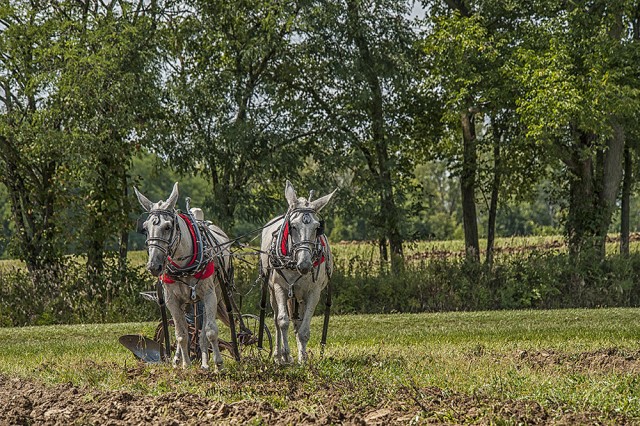
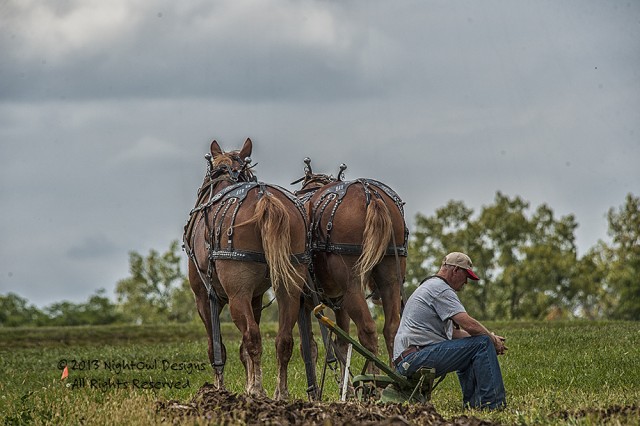
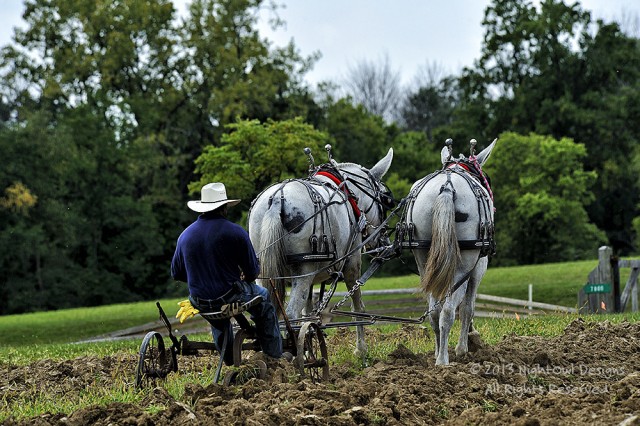
Processed these for class, Adobe Bridge/Camera Raw/Photoshop. Constructive Critiques welcome
 |
||
 © NightOwl Cat 2013 |
||
|
|
||
 © NightOwl Cat 2013 |
||
|
|
||
 © NightOwl Cat 2013 |
||
|
Sep 15, 2013 at 08:28 AM
p.57 #13"MF Nikon Glass" shooters shooting AF !!
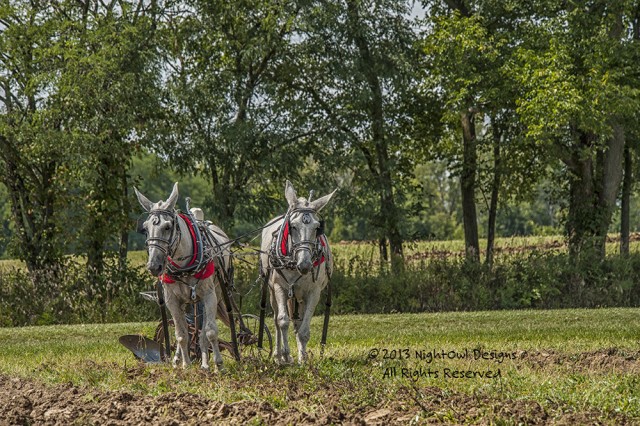
I love these Laura, but I'm not sure about the first one. I think it may be a little over-sharpened for my taste, but I don't know what look you were going for.
Sep 15, 2013 at 08:34 AM
p.57 #14"MF Nikon Glass" shooters shooting AF !!
NightOwl Cat wrote:
Processed these for class, Adobe Bridge/Camera Raw/Photoshop. Constructive Critiques welcome
I see some dust bunnies on the second image, which I think is the best one in the set.
Looking at the image, it appears to have some artifacts from the processing that changed the out of focus leaves in the background. At least it is something I have seen before, and it looks like Camera Raw and not just lens bokeh is responsible for the fringing around the leaves in the background.
One thing I like to do with that type of shot, where the increase of contrast and clarity affects out of focus bokeh negatively, is to use the adjustment brush and remove clarity from these areas. All those leaves in the back have probably a much more pleasant look to them without the processing you needed for the foreground.
It gets more difficult to selectively correct things if this isn't just a result of a push on the clarity slider. Global exposure adjustments with highlights, shadows, whites, and blacks in camera raw to stretch the contrast range are great for the horses and person, but not the background. That cannot be fixed locally with any adjustment brush available, nor can removal of clarity always take care of the effect of those changes.
In those cases I sometimes run the same raw file twice through camera raw, once processed only for the foreground or part of main interest, then another one to replace those areas of the image that were pushed too far or in the wrong direction. Then use Photoshop to stack/blend the layers with masks. Lots of work, but you can get a very pleasant background while still pushing the dynamic range apart for the area of interest.
In the end it comes down to what look you like. You can tweak images beyond recognition. The trick is to keep it all subtle enough to not draw attention to the changes you made.
Sep 15, 2013 at 09:21 AM
p.57 #15"MF Nikon Glass" shooters shooting AF !!
Thanks, retrying the first one without sharpening Sundays are the only days I have "off" anymore...
Sundays are the only days I have "off" anymore... |
||
 © NightOwl Cat 2013 |
||
|
Sep 15, 2013 at 09:25 AM
p.57 #16"MF Nikon Glass" shooters shooting AF !!
and try two of #2 I appreciate the comments, Thanks Leighton and Peter. PS is alien to me 
I appreciate the comments, Thanks Leighton and Peter. PS is alien to me |
||
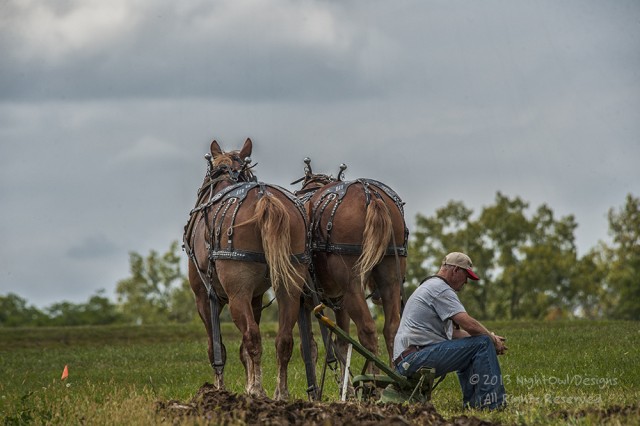 © NightOwl Cat 2013 |
||
|
Sep 15, 2013 at 09:53 AM
p.57 #17"MF Nikon Glass" shooters shooting AF !!
NightOwl Cat wrote:
and try two of #2 I appreciate the comments, Thanks Leighton and Peter. PS is alien to me
https://www.fredmiranda.com/forum/ufiles/24/862324.jpg
The first one looks better now.
In this one, I'd clone out the little red survey flag. Again, just my opinion.
and try two of #2
I appreciate the comments, Thanks Leighton and Peter. PS is alien to me https://www.fredmiranda.com/forum/ufiles/24/862324.jpg
The first one looks better now.
In this one, I'd clone out the little red survey flag. Again, just my opinion.
Sep 15, 2013 at 10:28 AM
p.57 #18"MF Nikon Glass" shooters shooting AF !!
Thanks Leighton. The flag is part of the contest, it marks off the area each team is supposed to plow. The furrow to the far right is supposed to be straight, as little grass as possible showing, and the furrow on the left, about 1/3 way in, should also be as straight as possible. I got the courage to ask one of the judges what the parameters were to the contest
Sep 15, 2013 at 10:34 AM
p.57 #19"MF Nikon Glass" shooters shooting AF !!
Loving these photos Laura. My vote is for the last one
Sep 15, 2013 at 11:32 AM
p.57 #20"MF Nikon Glass" shooters shooting AF !!
Here's some shots from the Kennedy Space Center using the D600 and 24-85 VR
 |
||
| http://raysteele.zenfolio.com/img/s10/v110/p2025220415-5.jpg | ||
|
|
||
| http://raysteele.zenfolio.com/img/s10/v105/p1889407808-5.jpg | ||
|
|
||
| http://raysteele.zenfolio.com/img/s9/v18/p1969971478-5.jpg | ||
|
|
||
| http://raysteele.zenfolio.com/img/s4/v68/p2041894925-5.jpg | ||
|
Sep 15, 2013 at 11:35 AM