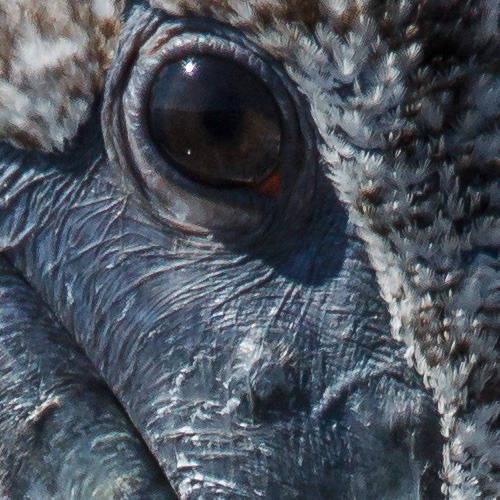
StarNut wrote:
I'll happily use a doubler when I deem it useful, and I am perfectly happy with the results.
Here's one; taken from the top of a tiny boat, bobbing in the waves, very flat, poor light, hand-held. This is a very significant crop (down to about a quarter linear measure); the birdie was a long, long way away, having lunch of another birdie. I didn't have my long lens, and couldn't have controlled it under the circumstances anyway.
Canon 7D, wide open (f/5.6), 70-200 f/2.8 IS II at 200 (so 400mm focal length on the shot), 1/1000, ISO 1600:
Tiny pixels shot at high ISO. Wide open aperture. A doubler on a zoom. A moving platform.
I occasionally use a 2xTCII with the 300F2.8IS.
I've found that the keeper rate is not stellar, however I think I could get it a few notches higher by improving my technique when using it.
Does anyone use this combo with a Wimberly?
How much of an improvement is the 2xTCIII over the 2xTCII?
Here's a shot taken at maybe 2500-3000ft distance.
e.s.sandusky wrote:
Canon 300 f2.8 vrsI with 2x vrsIII camera 5DIII .......
brimull wrote:
I'm with the others who don't prefer to use it. HOWEVER, when you need the reach, I've found the newer Canon 2X very effective. If it happens to be on in a less than ideal situation, it can still work. Moving targets are tough with sluggish focus, especially with the 7D.
All taken with Canon 300mm 2.8L IS II plus Canon 2x III extender.
Looks like both old and new versions of the 300 2.8 IS work very well with a 2x TC III. Well done, very sharp captures, e.s. and Brian!
Will Patterson wrote:
On my 1DX, it basically works like this - if focus is close to the subject, it locks on and will stay there during AI Servo (as with the race cars coming towards or going away from me). The AF in this case actually works fairly quickly, as compared to when the lens is way off focus. When you look through the viewfinder and everything is very blurry like the focus ring had been turned a good amount, then you half press the shutter button to tell the camera to autofocus, the lens works very slowly, moving the focus slowly until it suddenly is within range of the subject and it'll lock on and it's almost like the lens then wakes up and starts moving quickly again and will stay locked on. Basically, whenever I took the camera down from my eye, I tried not to touch the focus ring so it wouldn't hunt, or if I was in one spot for a while I'd assign a focus preset to help the lens pick up and lock on.
But the IQ from the 2x III with both my 70-200 II and 300 2.8 II was very good, I was impressed with the photos as well as how the combo performed....Show more →
I just picked up a version III 2x TC. I'll be testing it out in the coming weeks on my 70-200 2.8 VerII. I don't have anything else that will AF with it right now. There are some impressive results here, although many are done with a lens/body combo that cost anywhere from 14,000- 17,000 dollars and are pretty much the best equipment of that type in the world. This has to be a factor considered in judging the efefctiveness of the 2x TC.
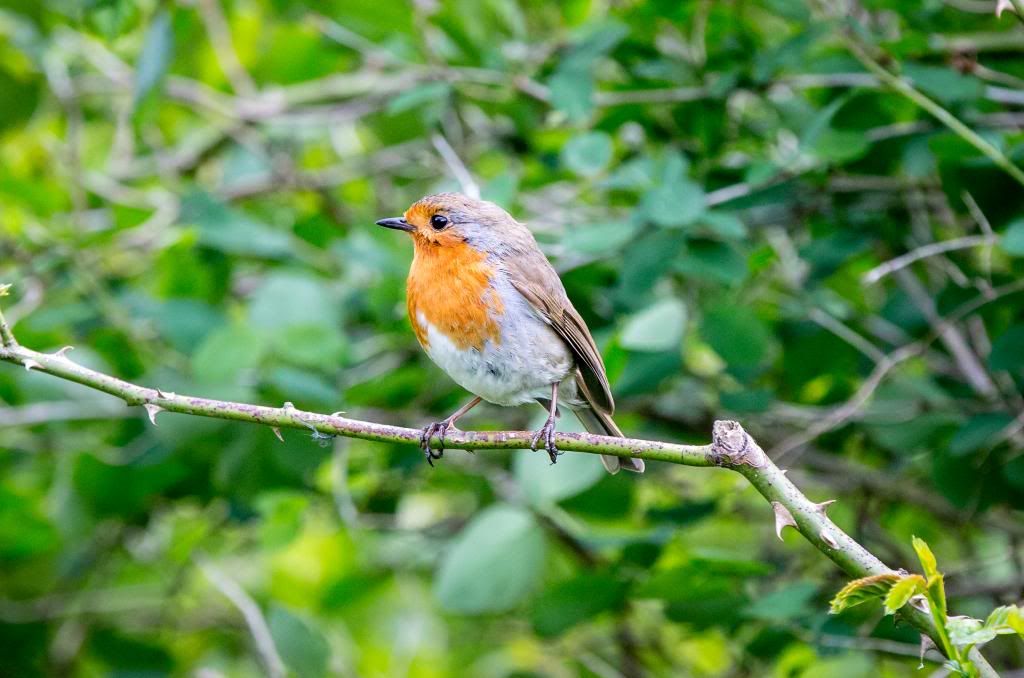
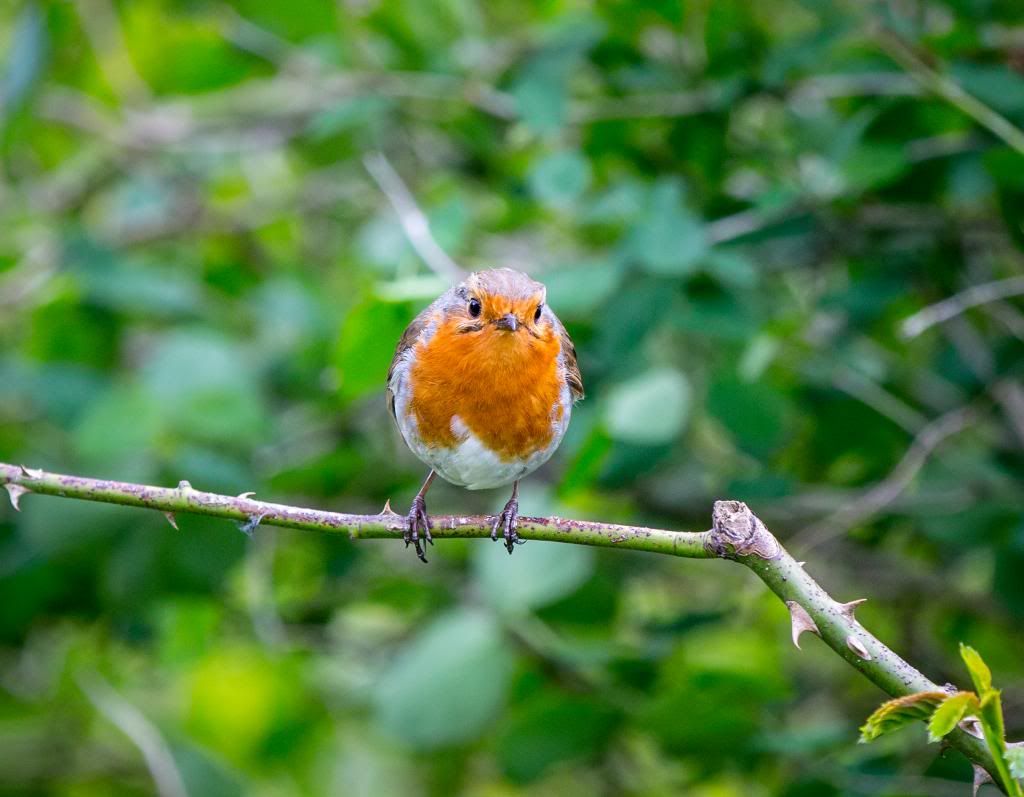
I recently purchased a 2X TC version III. I bought it to fit on my 70-200 2.8II. I was worried I would loose some sharpness but on its first try out this little chap posed for me! I must admit I'm very impressed with the sharpness, these were at 400mm hand held.
The body used was a 1DX in these photos, I've not had a chance to use it for fast moving objects yet to test out the AF with it on.
I'm using photobucket to upload these, they don't seem as sharp as the originals though.
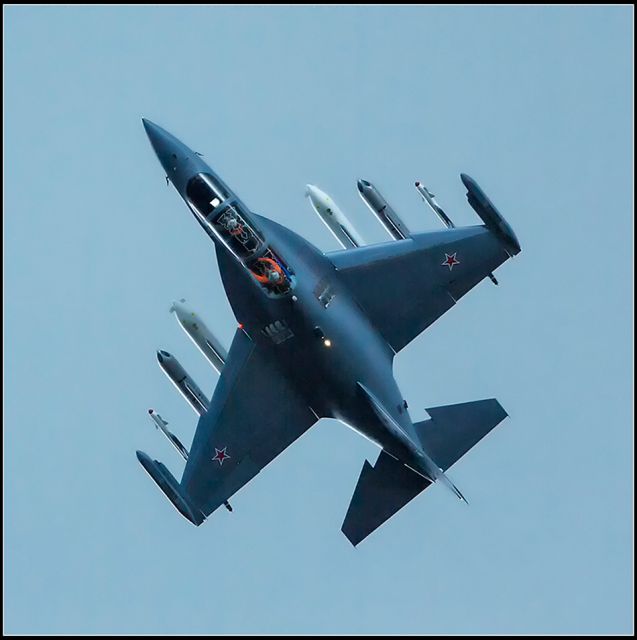
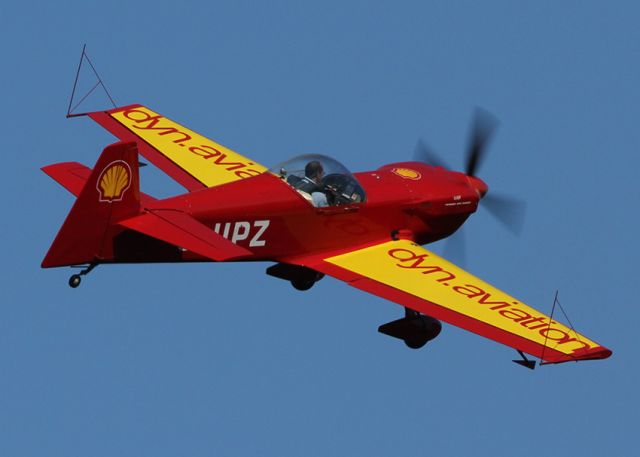
I use the 2xIII converter all the time with my 300 F2.8 Mk2 for aircraft shots. The jet was taken at Farnborough Air Show 2012 whilst the light aircraft was actually taken at an Andy Rouse -run aircraft photography day last autumn (fall) when HE was using the new 200-400!
Niall
I'm seeing a lot of great samples, thanks everyone for posting!
Steven Campbel wrote:
There are some impressive results here, although many are done with a lens/body combo that cost anywhere from 14,000- 17,000 dollars and are pretty much the best equipment of that type in the world. This has to be a factor considered in judging the efefctiveness of the 2x TC.
IMHO, even modest glass (and body) can benefit from a doubler (or two) if more reach is needed.
40D + 100-400 L IS + Canon 2x II TC + Sigma 2x TC, 1600 mm, f/28, ISO 320, 1/25 sec
Here are 2 samples:
The first is with the 400mm f/2.8L IS II + 2x III extender @f/5.6 and the second with the 500mm f/4L IS II + 2x III extender @f/8.
So both wide-open. They were also both handheld.
Liquidstone wrote:
Wow.... those are outstanding samples, Skibum and Will!
With the slowish AF of the 2x TC, I never expected it to be that good at action (I for one seldom uses it at BIFs).
The ironic thing is that when used with my 5D3 (300 2.8 + 2x TC) for BSS (birds sitting still) it tends to fail a lot. I wonder what AF settings are best. I get such darty action where a nearly still bird and focus is on front in back on target in back in front. (Oddly too for soccer some of the worst misses were when Hope Solo would slowly jog the ball out and then yet when Alex Morgan would be making a charge more were in perfect focus! In this case I am not talking 2x TC but only 5D3 (with bare lenses) so I guess this is getting a bit off the topic now.)
PetKal wrote:
A fine topic Romy, and excellent pictures Romy and all.
The little egret I haven't seen before, and I think that's one of your best shots, pare.
Here's a couple of shots with handheld 1DX + 400 f/2.8 IS MkII + 2xTC MkIII.
Bones74 wrote:
Andy Rouse is a very opinionated and colourful character as we can see from his review. I've met him a couple of times and he's a good guy, but he his opinions can be contentious. For example during the seminar I attended he said that if he saw someone shooting a flower he would go over and stomp all over it because no one should be taking shots of flowers. Riiigghhhttt.....
I use my 2 x ext iii quite a lot. Its how I get my "reach" currently.
Liquidstone wrote:
Unbelievable detail in both crops!
Let me post a wide open sample from the 300's older brother.
Lowland White-eye (Zosterops meyeni, a near Philippine endemic, 4 inches total length)
Canon 1D MIV + 400 2.8 IS + Canon 2x TC II, 800 mm, f/5.6, ISO 1600, 1/320 sec, 475B/516 support, manual exposure in available light, near full frame resized to 1500x100