_julian_ wrote:
I recently read a IC/industry publication that stated that the cost of manufacturing a full frame sensor was around $350 (I din't save the citation saved unfortunately). But I agree that the real cost is integrating the sensor APIs with the rest of the hardware/software and employing the engineers and consultants to sort this out. But as a best case example, imagine if in a year or two, if SONY offered their complete sensor/display/software stack from the RX1 (excluding the lens) to Zeiss as a complete unit, in the same manner that they offered the NEX7 to Hasselblad. In this case the engineering requirements to produce a digital FF rangefinder become mostly about body layout and are largely mechanical. Something that could be contracted to Cosina for example. I suggest in a year or two, because SONY almost certainly want to try and use their competitive advantage on the RX1 while they can charge a premium for a completely unique product.
I think the glimmer of hope here, is that there is a big incentive to make those sensors work with high-incidence lenses because it is advantageous for native lens designs as well. A common complaint against SONY is that they have nice small bodies but that their lenses are 'too big' when compared with the competition. I think it likely that there is pressure internally within SONY to see these issues sorted out at the sensor level. Additionally as far as I can see, the engineering challenges are mostly understood - a thin CFA, and protruding perhaps non-spherical microlenses (According to Leica/CMOSIS) .
Anyway lot's of ifs, and best case scenarios. And the fact that the RD1 enjoyed only marginal success would have to make a product manager pause, and that's where the real decisions get made....Show more →
I'm not sure there's really anything about the RX1's sensor/display/software stack that makes it more eligible than the A900's from a few years ago. If Sony had wanted to build a FF rangefinder, or send some of the parts to another maker, they could have already done it. One has to wonder what Sony is charging Hasselblad for the NEX-7 unit.
I've also seen that FF sensors cost around $350-$500 a piece, but I don't know if that's at bulk order prices. I've also seen that aps-c sensors are something like 10x-20x less expensive.
It'll be interesting to see how Leica's new microlens arrangement performs. Does CMOSIS have a patent on that?
carstenw wrote:
I don't think this is a question of necessity. FF sensors will always have an advantage in at least one of: high ISO performance, pixel count, dynamic range, depending on what the sensor characteristics are, but APS-C sensors are already good enough that except for extreme cases, they are good enough in all these three areas for almost anyone. Where FF cannot be matched is in look. Larger sensors yield different-looking images, and I would not replace my FF system with an APS-C system, because I love this look. It was the same in film days, incidentally.
+1
I actually think that as the cost to manufacture full frame sensors become more affordable for dslr, the aps-c size sensors will disappear except for the mirror less systems or systems that require more compact package. It won't completely go away as there will always be a market for a cropped sensor for sporting photography.
edwardkaraa wrote:
I guess only Leica can be crazy enough to put a FF digital sensor in a 1925 antique body
NOT 1925. My 1937 Model AF is not a rangefinder.
I'm not sure there's really anything about the RX1's sensor/display/software stack that makes it more eligible than the A900's from a few years ago.
You're right of course. I only thought of the RX1 because I imagined that the circuitry boards would be nice and small when compared with the A900, but I really have no idea. In any case, I doubt that Zeiss could or would want to build up a new system from just a bare sensor. It's taken Leica all their resources to transition to digital and to produce the m8/9/M and they have a much better brand/marketing for this stuff. There also seems to be a bit more distance between Zeiss and SONY, given they've decided to produce new lenses for NEX on their own terms.
carstenw wrote:
I don't think this is a question of necessity. FF sensors will always have an advantage in at least one of: high ISO performance, pixel count, dynamic range, depending on what the sensor characteristics are, but APS-C sensors are already good enough that except for extreme cases, they are good enough in all these three areas for almost anyone. Where FF cannot be matched is in look. Larger sensors yield different-looking images, and I would not replace my FF system with an APS-C system, because I love this look. It was the same in film days, incidentally.
While I mostly agree, much of this "look" is at wider apertures, is dependent on lens and print size, and is mostly appreciated by us forum nerds. At mid aperture, I find it difficult to distinguish between my NEX cameras and A900 in 13x19 prints. I haven't printed from my M9, yet, so I'm not sure in that regard.
The problem is that there aren't comparable lenses for the aps-c format to give us fair comparisons. If someone designed native, f0.9 lenses for these aps-c sensors, it would be interesting to compare them to f1.4 lenses on FF. I'd bet the look would be pretty close at most print sizes, but the size and price of the lens would negate any advantage of the smaller format, so I don't see that happening.
Either way, at least in terms of interchangeable mirrorless, Fuji and Sony both seemed to be pretty committed to aps-c as the compromise between size, IQ and price. For DSLRs, where size is less of an issue, FF makes more sense. In fact, I'm not sure I'd ever consider buying a non-FF DSLR again.
Of course, the Leicas are small and FF, which is awesome.
douglasf13 wrote:
I think a FF X-Pro1 is as unlikely as a FF digital rangefinder. Fuji already touts X-Trans as competing with FF quality, and the lens size for FF mirrorless will be pretty large. Even their aps-c lenses aren't exactly small (neither are Sony's.)
As aps-c technology improves more and more, I think FF will become less and less necessary to most shooters.
Totally agree on this and think this seldom gets discussed. Maybe we (including myself) get too caught up with cameras need a full frame. I'm really loving my switch from D700 to mirrorless. I'd love to get into a M9 system, but not quite sure I'm ready to have a MF only camera.
From a pure technical point of view the Leica doesn't offer more than other camera manufacturers do. In fact the Leica management decided a long time ago to purposely offer less than other camera makers do. That is a philosophy that makes shooting Leica a kind of experience that is unique. I think John Ricard explains quite well what this Leica experience is. The problem is, the market for this "less is more" type experience is very small and the use of labour intensive manufacturing of the rangefinder mechanics drives cost high. Until today the Leica M is not an example of modern rational production methods. This philosophy was for a great part the reason why Leica, just like some other German competitors, lost the market to competing Japanese camera manufacturers. Leicas and their mechanisms are easy to copy. This has been done many times before by Canon, Nikon, Zorki and so many others. But the fact remains that too many people want something different than a rangefinder. Back in the 60-ies it was the single lens reflex type camera that the photographic masses wanted. Today the paradigm is shifting from the D-SLR to EVF and OLED screen based mirrorless cameras with connectivity built in. The minimalist Leica M experience is a niche for a happy few, now and in the future.
eosfun wrote:
From a pure technical point of view the Leica doesn't offer more than other camera manufacturers do. In fact the Leica management decided a long time ago to purposely offer less than other camera makers do. That is a philosophy that makes shooting Leica a kind of experience that is unique. I think John Ricard explains quite well what this Leica experience is. The problem is, the market for this "less is more" type experience is very small and the use of labour intensive manufacturing of the rangefinder mechanics drives cost high. Until today the Leica M is not an example of modern rational production methods. This philosophy was for a great part the reason why Leica, just like some other German competitors, lost the market to competing Japanese camera manufacturers. Leicas and their mechanisms are easy to copy. This has been done many times before by Canon, Nikon, Zorki and so many others. But the fact remains that too many people want something different than a rangefinder. Back in the 60-ies it was the single lens reflex type camera that the photographic masses wanted. Today the paradigm is shifting from the D-SLR to EVF and OLED screen based mirrorless cameras with connectivity built in. The minimalist Leica M experience is a niche for a happy few, now and in the future....Show more →
eosfun wrote:
From a pure technical point of view the Leica doesn't offer more than other camera manufacturers do. In fact the Leica management decided a long time ago to purposely offer less than other camera makers do. That is a philosophy that makes shooting Leica a kind of experience that is unique. I think John Ricard explains quite well what this Leica experience is. The problem is, the market for this "less is more" type experience is very small and the use of labour intensive manufacturing of the rangefinder mechanics drives cost high. Until today the Leica M is not an example of modern rational production methods. This philosophy was for a great part the reason why Leica, just like some other German competitors, lost the market to competing Japanese camera manufacturers. Leicas and their mechanisms are easy to copy. This has been done many times before by Canon, Nikon, Zorki and so many others. But the fact remains that too many people want something different than a rangefinder. Back in the 60-ies it was the single lens reflex type camera that the photographic masses wanted. Today the paradigm is shifting from the D-SLR to EVF and OLED screen based mirrorless cameras with connectivity built in. The minimalist Leica M experience is a niche for a happy few, now and in the future....Show more →
Exactly. Spot on. There's a reason why rangefinders died out to (almost) extinction and that reason is still around, but driven by mirrorless, not SLR's.
eosfun wrote:
From a pure technical point of view the Leica doesn't offer more than other camera manufacturers do. In fact the Leica management decided a long time ago to purposely offer less than other camera makers do. That is a philosophy that makes shooting Leica a kind of experience that is unique. I think John Ricard explains quite well what this Leica experience is. The problem is, the market for this "less is more" type experience is very small and the use of labour intensive manufacturing of the rangefinder mechanics drives cost high. Until today the Leica M is not an example of modern rational production methods. This philosophy was for a great part the reason why Leica, just like some other German competitors, lost the market to competing Japanese camera manufacturers. Leicas and their mechanisms are easy to copy. This has been done many times before by Canon, Nikon, Zorki and so many others. But the fact remains that too many people want something different than a rangefinder. Back in the 60-ies it was the single lens reflex type camera that the photographic masses wanted. Today the paradigm is shifting from the D-SLR to EVF and OLED screen based mirrorless cameras with connectivity built in. The minimalist Leica M experience is a niche for a happy few, now and in the future....Show more →
Actually, Leica only came up with its "less is more" when it resigned itself to being a boutique maker, which really wasn't until the 1990's. Just look at the R8/R9 designs, which were very feature-laden (Much like the similar Contax RTSIII). Leica quite simply kept failing when it tried to come up with a more modern design (see M5, R3/R4/R5) or killed off successful modern designs when they threatened the flagship M (CL). Quite frankly a lot of Leica's blather about 'Less is More' is excuse-making for 40 years of failing at introducing a proper successor to the M3, Leica most certainly does use 'Less as More' today in its designs, but that is only something they've recently arrived at with the current ownership (who quite frankly gets the Leica mystique in a way that the previous owners & management hadn't since Nikon supplanted them as the go-to option for the working PJ way back in the early 1960's when the market shifted to SLR's).
I'll admit to not being a Leica fan. I understand the attraction, but I don't share it. The single best minimalist camera I've worked with is the NEX-7, which can be operated in a far more minimalist manner than an M9, unless you absolutely must have labelled dials. And yes, I've used an M9. Nicely built but it doesn't justify the cost despite my work and style being overall well suited to it (and I strongly dislike being forced to focus & recompose rather than just focusing manually where I want focus). That said, I'd like Leica to succeed as it's good to have niche makers like them in the market.
Yep. More of a user experience tha anything else with using a Leica. So I'm thinking we will all be craving vintage FF DSLRs with "optical" viewfinders in 30 years. Imagine the looks that you will get bringing out one of those with a big honkin' piece of glass hanging off of it.
Weasel_Loader wrote:
Yep. More of a user experience tha anything else with using a Leica. So I'm thinking we will all be craving vintage FF DSLRs with "optical" viewfinders in 30 years. Imagine the looks that you will get bringing out one of those with a big honkin' piece of glass hanging off of it.
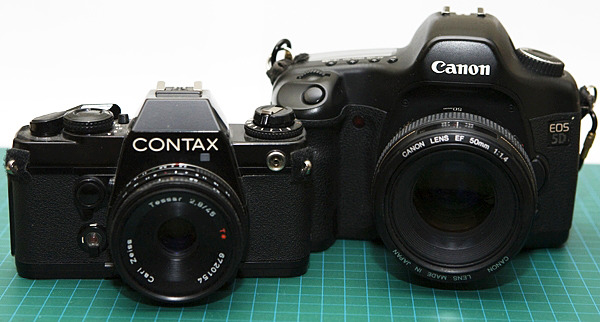
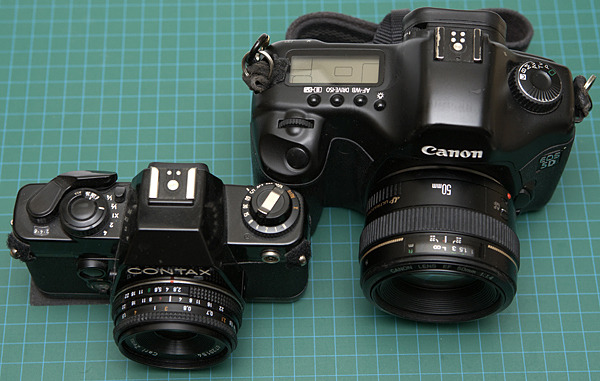
Make me a proper 'vintage' SLR today and I'll be scrounging the cash. But it has better be similar in size and capability to an FM2n. I don't need todays boat-anchor DSLR's (and yes, even the 'small' 6D, D600 and A99 are boat anchors in terms of size compared to an FM2n)
Weasel_Loader wrote:
Yep. More of a user experience tha anything else with using a Leica. So I'm thinking we will all be craving vintage FF DSLRs with "optical" viewfinders in 30 years. Imagine the looks that you will get bringing out one of those with a big honkin' piece of glass hanging off of it.
mawz wrote:
Make me a proper 'vintage' SLR today and I'll be scrounging the cash. But it has better be similar in size and capability to an FM2n. I don't need todays boat-anchor DSLR's (and yes, even the 'small' 6D, D600 and A99 are boat anchors in terms of size compared to an FM2n)
Actually, Leica only came up with its "less is more" when it resigned itself to being a boutique maker, which really wasn't until the 1990's.
I know what you try to say, but it's not true. Long before that the Leica management decided already to a high quality minimalism for almost all of their camera lines. The Leica SL, predecessor of the R cameras was a carrier of this minimalist design philosphy as well. In that time Leica was the inventor and owner of patents of the first autofocus mechanisms. But the Leica product management decided that the Leica users wanted to focus themselves and do it better than any Af mechanism could do. As a result of this minimalism, they sold the patents to Minolta, that brought the AF in mainstream with their 7000 model a few years later. The kind of mistake like IBM made when they outsourced their operating system to Microsoft.
Make me a proper 'vintage' SLR today and I'll be scrounging the cash. But it has better be similar in size and capability to an FM2n. I don't need todays boat-anchor DSLR's (and yes, even the 'small' 6D, D600 and A99 are boat anchors in terms of size compared to an FM2n)
Sure, this is a challenge and an opportunity for innovation in the D-SLR market right now. We got used to huge cameras the last decade. We have gone beyond the level of the camera industry in the mid 70-ies when the Nikkormats and Nikon F2, the Canon Ftb and others had become the fatboys in town. Than suddenly Olympus introduced the OM1 rapidly followed by Pentax and it's MX/ME models. This forced Nikon, Minolta, and Canon to bring more compact and lightweight models too. When AF got into the cameras they got bigger again until the obesitas of todays DSLR has made our cameras ridiculously big. This is I'm convinced one of the reasons why the OM-D and NEX series have become attractive to many serious photographers. The big cameras are over the top. My prediction is we are going to see more compact APS-C and full frame based D-SLR and mirrorless bodies in the near future.
mawz wrote:
Make me a proper 'vintage' SLR today and I'll be scrounging the cash. But it has better be similar in size and capability to an FM2n. I don't need todays boat-anchor DSLR's (and yes, even the 'small' 6D, D600 and A99 are boat anchors in terms of size compared to an FM2n)
Yeah, I think at least part of the desire of the M9 is born from the fact that there aren't any simple, small, fullframe DSLRs with the build and OVFs from the best SLRs of the past. A digital FM2n would be great.
mawz wrote:
Actually, Leica only came up with its "less is more" when it resigned itself to being a boutique maker, which really wasn't until the 1990's. Just look at the R8/R9 designs, which were very feature-laden (Much like the similar Contax RTSIII). Leica quite simply kept failing when it tried to come up with a more modern design (see M5, R3/R4/R5) or killed off successful modern designs when they threatened the flagship M (CL). Quite frankly a lot of Leica's blather about 'Less is More' is excuse-making for 40 years of failing at introducing a proper successor to the M3, Leica most certainly does use 'Less as More' today in its designs, but that is only something they've recently arrived at with the current ownership (who quite frankly gets the Leica mystique in a way that the previous owners & management hadn't since Nikon supplanted them as the go-to option for the working PJ way back in the early 1960's when the market shifted to SLR's)....Show more →
Most of this is pure conjecture, and some of it is really not right. The M5 was Leica's only attempt at a complete overhaul of the M, that is true. Since then, they have understood their market well, and have embraced it. No failure there.
The R line is different. The niche that they were trying to sit in turning out barely to exist, and so they killed it.
The single best minimalist camera I've worked with is the NEX-7
ROTFL! The NEX-7 is NOT a minimalist camera. You can operate it like that if you want, but that would be the same for a Nikon D4
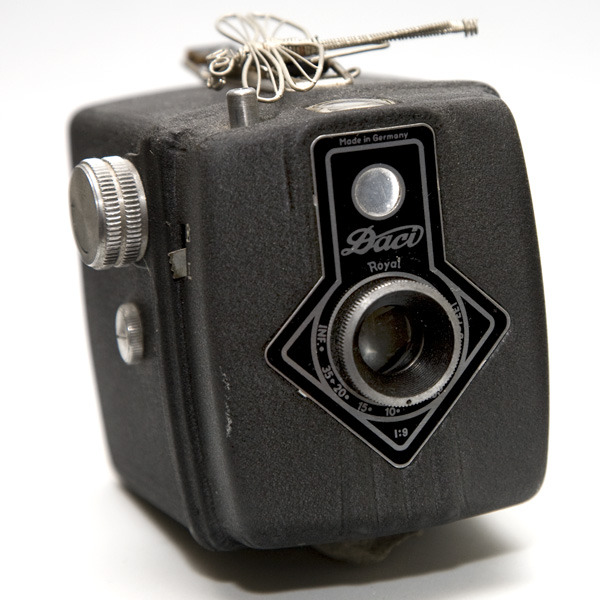
Here's the most minimalist camera that I've used. It still has a roll of 120 in it, partially used. I'll get it developed some day, if I can remember how to get the card out!?!


 At mid aperture, I find it difficult to distinguish between my NEX cameras and A900 in 13x19 prints. I haven't printed from my M9, yet, so I'm not sure in that regard.