Samuli Vahonen
Offline
• • • •
Upload & Sell: Off
|
 p.2 #11 · Zeiss Distagon T* 35mm f/1.4 and f/2 at each other's best p.2 #11 · Zeiss Distagon T* 35mm f/1.4 and f/2 at each other's best | |
andrenth wrote:
Hello, first post here 
I've been reading the forums and browsing flickriver for days trying to make a decision between these two lenses, and like others here I'm coming to the conclusion that the lenses are just, different and one can't be considered better than the other.
However, I can only justify the funds to get one of them, as is usually the case, and it doesn't help that my main interests for this focal length seem to require both :P I plan to use the lens for environmental portraits (for which the f/1.4 with its creamy drawing is fantastic) and street photography (for which the f/2 with its "3d" look and lower weight would be a best match).
So I had this idea of asking for photos from each of the lenses doing what the other one is known to be good at, i.e. photos with that "3d" effect (hate that term but whatever...) from the f/1.4 and wide open portraits taken with the f/2.
Does anyone have any photos to share? Any other considerations regarding the f/1.4 vs the f/2 would be very much welcome, especially since a few forum members seem to have experience with both.
Thanks a lot,
Andre...Show more →
Andre, I have both, but got the 1.4 version just this week so comments just based to initial experience of few hundred pictures analyzed. Based on what I have seen on my own pictures and pictures here if FM from people whom I know how they process their photos I would recommend the f/1.4 version.
When shoot at same aperture it seems that the 1.4 version is always better e.g.:
1. bokeh quality - both can have horrible bokeh, but 1.4 @ f/2 is quite good on most situations and @ f/2.8 it's very difficult to produce weird and ugly bokeh (have to be remembered that when shoot at same apertures 1.4 vignettes lot less and the mechanical vignetting in corners is less likely cause ugly stuff to bokeh)
2. 1.4 is better avoiding veiling flare and flare artifacts
3. CA - I'm not so sure why people talk so much about CA, I find it problem extreme rarely even I shoot all the time lenses prone to cause CA or similar symptoms (e.g. MP 2/100)
4. sharpness & resolution seems better in 1.4 (I doubt you see differences on A3 size prints, in A2 size you may see slight differences, pixel peepers can naturally talk all day these differences, but to me it's very irrelevant since I won't shoot larger than A2 - or if I do I prefer to stitch anyway)
To me the main difference between lenses is the apparent DOF thickness and DOF-to-bokeh transition. 2/35 has one of the widest apparent DOFs on mid distances I have seen, while with 1.4 you can get photos, which apparent DOF looks almost tele lens caused. Many people call 2/35 "thick DOF"-lens. Naturally this combined with one stop wider maximum aperture it's no brainer for shallow DOF shooting.
Personally I don't see any reason why I would shoot anything with 2/35, except to prevent aperture to get stuck while storing it... or if I need shot with polarizer (or other filter, which I don't own, but if I need will be cheaper to buy 58mm than 72mm), since I don't have 72mm polarizer.
I don't publish people images to web, so no samples from 2/35, but here are few 3Dish from 1.4/35:
f/2.2 - larger
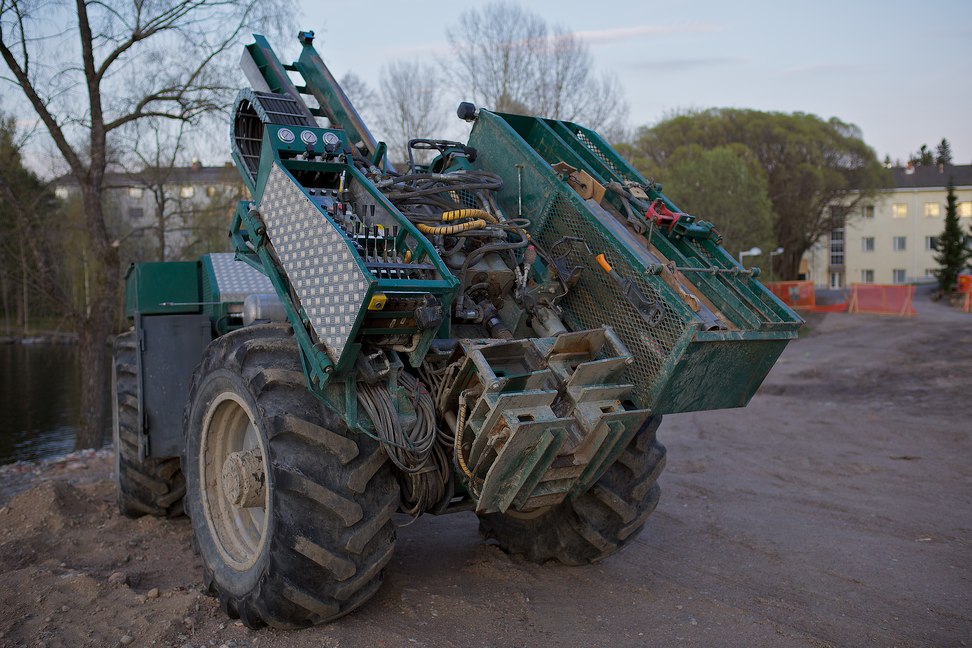
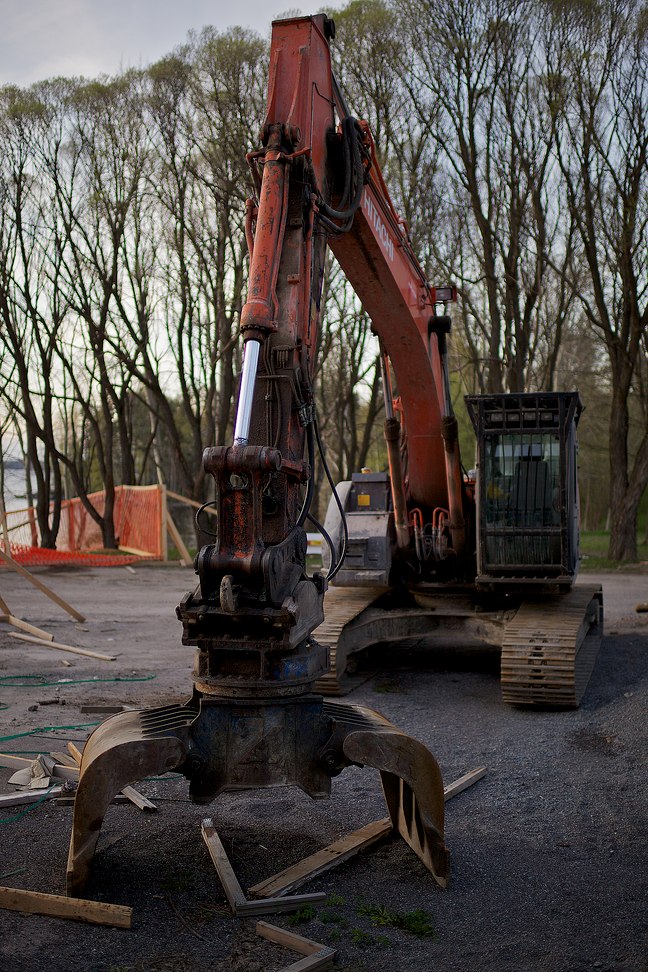
f/1.4 this image also shows how ugly the bokeh can be - 2/35 is capable of producing as ugly bokeh but it happens on closer focusing distance - larger
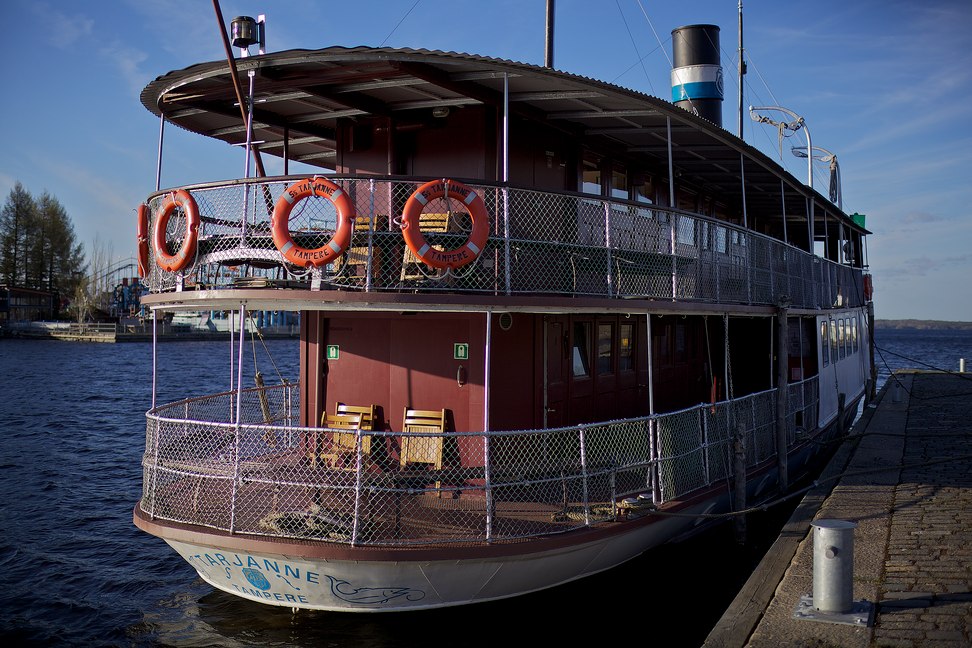
Since CA is so much discussed here, here is the worst case scenario with 1.4 @ f/1.8 (1/4000s maximum for live view, could not shoot f/1.4): boat which "fence" (keeping people in boat, whatever this is called in English) and support structures are silver spray painted (or some other paint what was very rough and very shiny), much much much more difficult CA scenario than the usual "branches against sky". Naturally I have turned off all the CA and magenta blooming correction, so if you do some example pics of CA do the same or your pics are just waste of internet bandwidth..Most modern RAW processors apply some of these automatically, so you actually see less CA than your lenses produce. - larger
Samuli
|


