p.1 #1 · Question: Off-camera Flash Bracket and flash stands.
Formerly all I shoot is (available light) landscape, now with a 7 months old, I am shifting more towards portraits.
I am planning on getting a pair of Canon Speedlite 600 EX-RT to start, but have some question about the other related equipment.
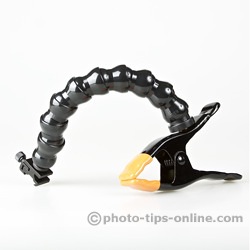
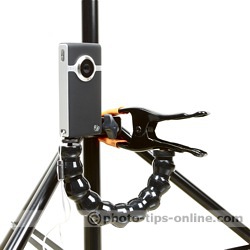
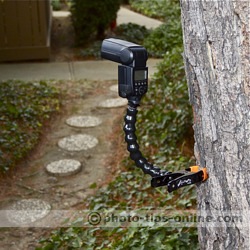
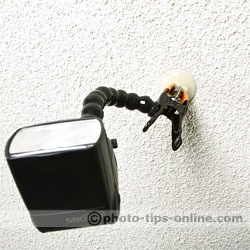
Which off-camera flash bracket would you recommend? that is all around for portrait/macro/events
Think of getting at least one stand for the flash (and possibly leaving the other flash on the camera bracket for now)
What kind of flash stand would you recommend?
Apollo softboxes are designed for Speedlites/Speedlights, and are retro-firing designs; the other Westcott softboxes are designed for studio strobes, and are fire-through designs. Either kind of box can be made to work with either kind of light, but the Apollos are easier to use with Speedlites, in my opinion.
The umbrella shown is a Photoflex 60" Convertible:
p.1 #7 · Question: Off-camera Flash Bracket and flash stands.
I recently bought the RRS WPF-QR for some events where I wouldn't be able to use bounce flash and it works great. Of course you have to have an L-plate on your camera for it to mount but it's a simple,well made design that folds up to fit in your pocket when not in use.
p.1 #8 · Question: Off-camera Flash Bracket and flash stands.
Wait about a year and you'll be running to catch up with your kid and will want a portable solution, not a static portrait studio. With that in mind since you found my web site I suggest you try the approach I've long used for candid shooting and informal portraits: one flash on a bracket, one on a stand.
Before throwing money at the problem think about whether you'll be shooting PJ style on the go or studio shots. Shooting landscapes you likely have a good feel for using natural light. Using flash effectively is mostly a matter of duplicating the same direction of natural light. Outdoors when shooting with flash the best strategy is to put the sun at the back of the subject and light from the front at the same downward angle as the skylight. A flash on a bracket does that automatically wherever you point the camera. In most cases outdoors one flash on a bracket is all you'll need.
Indoors you if you move flash off axis to create key lighting the fill either needs to come from ambient (usually a different color), flash bounced off the ceiling and walls with a diffuser, or second flash used over the lens as fill. You can put the fill anywhere mind you, but it will not reach all the shadows if moved too far off center. When two flashes are used together, key over fill, you don't need huge modifiers. Yes they are better for things like portraits, but aren't logistically feasible for things like shooting your kid's first birthday party...
..or the fifth where the best strategy will be to put your slave in the corner out of the way as rim light and follow the action around with your key light on the camera...
I shoot 99% of my indoors speedlight shots with two flashes and small diffusers and bouncing because it's easier than dragging round two stands. Keeping the fill on the bracket is a compromise in some ways, but it puts the flash where it's ideal for single flash grab shots and for fill with dual flash automatically. I can switch from single flash to dual flash in seconds without missing a shot. Case in point was when the friends (who own the 5 year old) dropped by the show off her new dance costume. I had the camera with flash on bracket handy so plopped her in a white chair to get a neutral background and grabbed this shot...
Seeing she was in the mood to cooperate I ran and grabbed my off camera light, also with a small diffuser, flipped the switch to "master", dialed in the A:B ratio of 1:1 creating a 2:1 reflected ratio, and got this...
30 seconds later she slipped out of the chair onto her butt and was crying. End of photo session.
You'll learn dad that the window of opportunity for photos with kids is brief and what makes them great when you can catch them is the expressions, not fancy lighting. Some the best shots you'll get are candid ones where they forget you are there with lights and a camera and just do kids stuff.
When I photograph kids with studio lighting I keep the lighting simple and centered, very similar to light on bracket, and let them goof off first to relax like I did here for a Christmas card shot for my neighbors.
I've found that kids will do things spontaneously that reflect the sibling relationship that I wouldn't think of or as a stranger even be aware of. For example the brother grabbed his sister's hat. Seeing it I later used it as a set-up pose coaching them with regard to position and expression..
With kids you'll also find you can't pose them with verbal instructions until they are about 2 at which point they refuse to follow anything you say on principle. For the next few years they will be cooperative little models, if they have fun doing it. Letting them goof off helps in that regard. Then they will reach their teens and once again refuse to follow anything you suggest on principle. All of this argues for a portable lighting solution and an ambush PJ strategy vs. setting up a static studio. Mind you it's great to have both if you can afford it and have the space, but if you don't then think about what gear strategy will improve the majority of the shots you take.
p.1 #9 · Question: Off-camera Flash Bracket and flash stands.
Jling wrote:
Are there any feature I should look out for (or avoid) on the adapter between the stand (Manfrotto combi or Promaster LS-3) to Canon Speedlite. ...I noticed that Promaster make a Universal Light Stand Adapter as well. http://www.promaster.com/products.asp?product=6776
Some tilting adapters use only friction to hold their angle, others have ratcheted teeth on the mating surfaces. Of the ones that use only friction, some work better than others. The worst ones won't stay put no matter how hard one turns the lever.
I haven't tried the Promaster adapter, but from your link it appears to be the ratcheting kind that I like. Ones of both types I've used that I like are availalbe from Manfrotto, Lastolite, and RPS Studio.
Jling wrote:
...That Westcott Apollo looks interesting, what adapter did you use to house the Speedlite in there?
It's a Westcott product meant for use with the Micro Apollo, but it was perfect for what I wanted to do, which was to get the light centered in the box and further from the back. I'm going to shorten the vertical section so I can reverse it on the shaft to get the flash head above the shaft.
For mounting two Speedlites I wanted to get the Brewer Bracket El Doble, but the company seems to be out of business, so I'll need to find something else.
p.1 #10 · Question: Off-camera Flash Bracket and flash stands.
Thank you for additional pointers, they are a great preview of situations soon to come.
Pretty much decided to go with the portable (2) speedlite solution (one on bracket, 2nd on stand), when I chanced upon your threads here and your website.
Got a little hung up on the basic lighting equipment, as they are brand new to me. (Thanks BrianO)
Since diffused light are most forgiving, I thought of adding a soft-box to my equation for the more formal family portraits,
without incurring too much cost.
Luckily when the family get tired of me snapping pictures of them, the bracket and speedlite will be dual use for macro.
(now if I can just get myself to make two of your diffusers)
p.1 #11 · Question: Off-camera Flash Bracket and flash stands.
Jling wrote:
Since diffused light are most forgiving, I thought of adding a soft-box to my equation for the more formal family portraits, without incurring too much cost.
That's true, but it's also true that diffusion of a poorly placed light which is creating unflattering shadows is like shooting yourself in the foot then covering the damage with a bandage. The better strategy, all things considered is to not shoot yourself in the foot to begin with
What that means in terms of lighting is avoid strategies that will create poorly placed unfilled shadows. One way to do that is to used centered strategies whenever you can't point the noses on at the key light — the nose creates the most obvious shadow — and when you do move the key flash off axis keep the fill centered and physically closer to nose than side of face and ears so the nose shadow winds up being the lightest and least distracting shadow on the face. Why obsess over the appearance of the nose? Because if it is being noticed it will be at the expense of the more important eyes and mouth.
The design of a speedlight with enclosed flash tube result in a SB working differently than with a bare bulb studio light that radiates in all directions. There's less internal mixing of the light because it's focused forward by the flash head. I took that into account when designing my DIY diffusers. It sits on top of the vertical flash and change the direction of 100% of the light output. I experimented with putting a diffusion panel on the front of it but found it cut output in half without any significant change in the character of the light. I also experimented with larger sizes...
The larger size produced slightly smoother highlights but the there's no significant "wrap" with either size at typical shooting distances and both create a similar amount of bounced "spill fill". The differences weren't work the logistics of wrangling the larger size.
In most situations where speedlights are used the bounced spill fill is a good thing because it helps lighten the shadows. So in that regard unless you want very precise control over the lighting using an umbrella, in addition to being cheaper, may produce better results. One in the range of 36 - 48", white with a removable black cover so you and use it for shoot through with lots of spill fill, or with the cover to cut the spill would be a good investment even if you decide to get a SB.