You folks got me interested again in medium format. So, yesterday I went out to my collection to see how it was. I haven't handled it in around a year.
I was shocked how bulky, heavy, and awkward the RB67 Pro SD is with KL lens and prism finder -- a monster. Absolutely not going to be hand held by me! The image looked great through the 90KL, 65KL, 75KL, and 127 "C". I didn't bother with the 50 "C" or the longer 180 and 250. What a beast. I'm considering now putting it up for sale, except it isn't fetching anything these days.
Next I looked at the old Pentax 67II. It's been at least two years since it had film in it, and the batteries flashed that they were dead. Looked through the 75/2.8 and 105/2.4, and was impressed with the image in the viewfinder and the ease of handling, even without the wood grip. This one is a keeper, especially with the electronics and AE prism. Now I need some CR123 batteries!
I could probably get rid of a few of the Pentax lenses, like the 200/4 and 120/3.5 SF. But again, these don't fetch prices anywhere equal to their quality, so it's a shame to sell anything. But, like everyone else, who wants to be buried with it?
I had hoped to find an inexpensive scanner, but so far the Scitex looks the best, and it's not cheap. Without a scanner, the whole affair falls apart pretty quickly.
I've pretty much switched to MF as my main format for serious shooting, mostly using a Mamiya 645 Super although I did shoot some with an original Pentax 6x7 last summer and will likely get a 67II in the future.
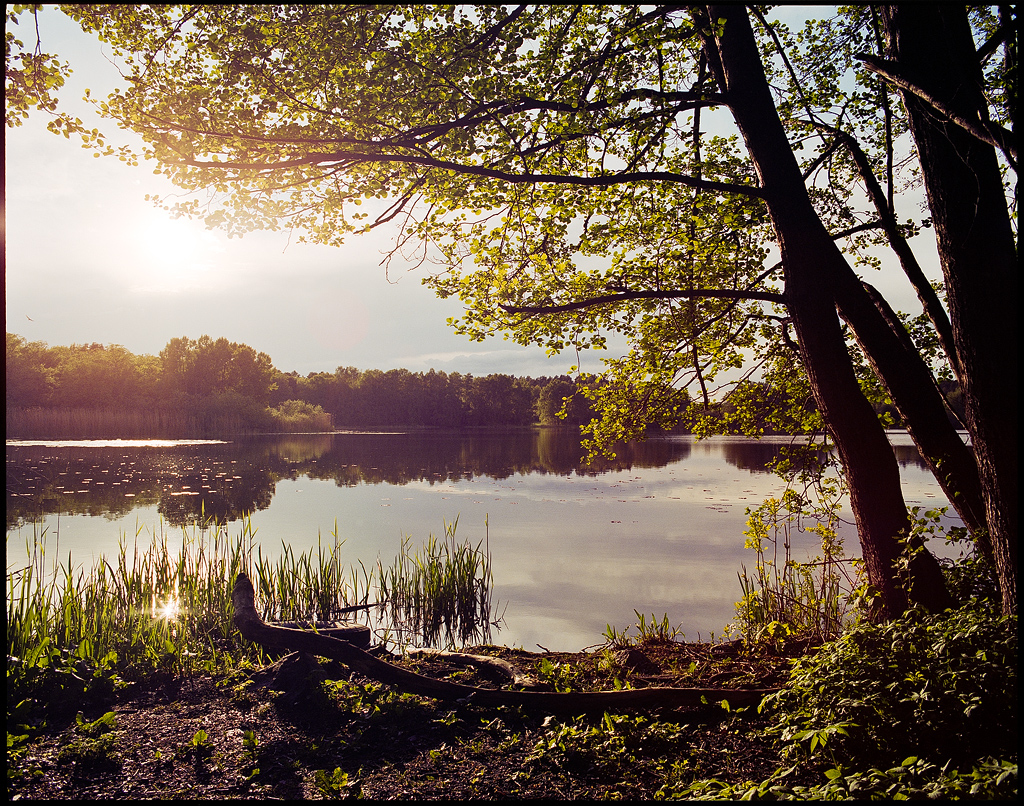
Here's some recent stuff, from cogitech's usual haunt in High Park in Toronto.
Ed Sawyer wrote:
I'd be surprised if tetnal is selling flammable chemicals for that purpose...
I can assure you that the bottle contains propane and butane, as it says so on the back. There's a "highly flammable" warning sign there too.
argon is heavier than air, which is the key. The chems shouldn't react with the O2, just displace it.
Propane is almost exactly as heavy as argon, and the mix with lighter butane will still be heavier than air. I think the whole thing is that the oxygen shall react with those gasses, if it leaks in (which it will, sooner or later).
Anyway, it's probably no problem just leaving the air in there as long as you don't intend to store the chemicals for a very long time.
----------------
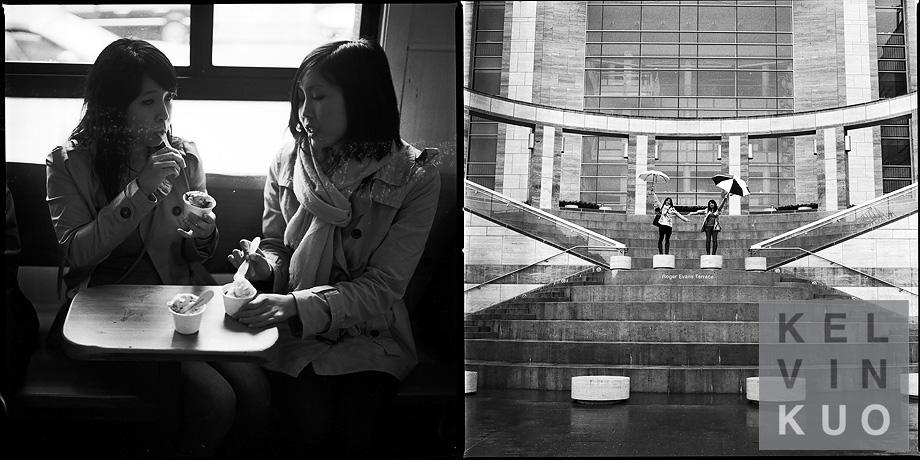
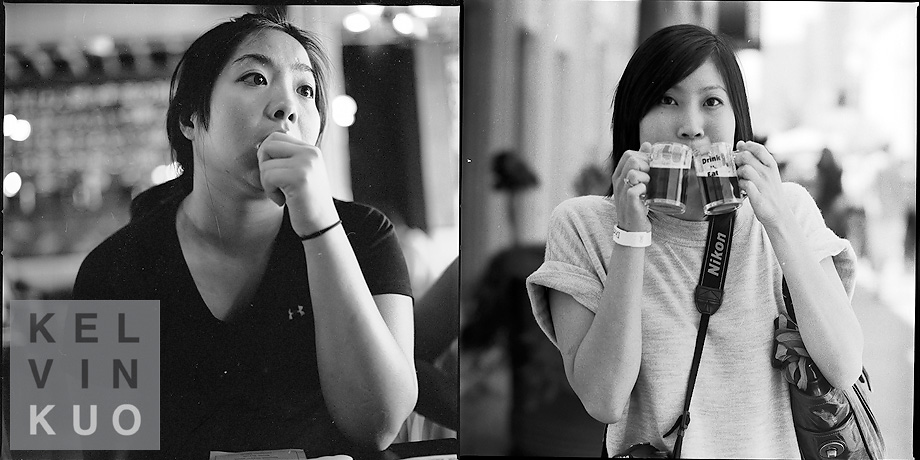
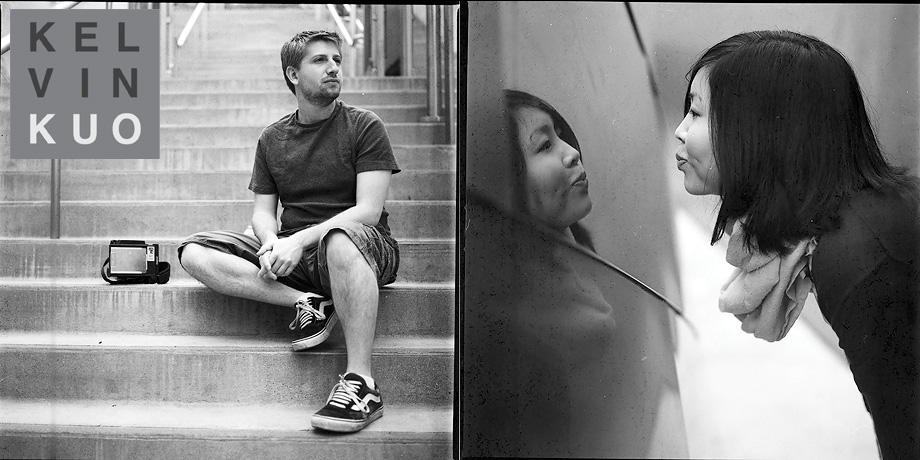
More images! These are from my newly aqcuired SMC 6x7 55/4 on the Pentax 67II, with some Tmax 400...
Yes, Makten, gorgeous! My favorite part is the starburst reflection of the sun off the water in the lower left corner.
What C-41 kit chems do you use? Also, are you using a JOBO or hand processing? Is it hard to do for you? I've not done color yet, but think I might try soon. Not sure I want to invest in a whole other setup though ... think I might try to use my B&W setup with color chems.
I've recently taken up shooting film, and trying to develop myself. There was a problem when I had a lab develop, there are spots! What do you think they are caused by? Here are some shots.
sorry about the water mark. I noticed its better to just host smaller images due to the square format for my blog.
KatieInTexas wrote:
Yes, Makten, gorgeous! My favorite part is the starburst reflection of the sun off the water in the lower left corner.
Thanks Ricardo and Katie!
What C-41 kit chems do you use? Also, are you using a JOBO or hand processing? Is it hard to do for you? I've not done color yet, but think I might try soon. Not sure I want to invest in a whole other setup though ... think I might try to use my B&W setup with color chems.
I use the Tetenal "Colortec C-41" 1 liter kit, and I develop the film in a simple Paterson 1-roll tank with plastic reels. You don't need a new setup, just some bottles for the chems. I recommend glass bottles, since they actually warm up much quicker than plastic bottles.
What I do is put the bottles (including a stop bath which isn't included in the kit, but keeps the blix less contaminated with developer) in a plastic tray and fill it with ~50°C water so that most of the bottles are covered. I usually do this when I'm about to take a shower, because during the 5 minutes I shower, the bottles heat up very much perfectly to 38°C, and any dust in the air will disappear with the moisture too, which is good.
When the temperature is about right (you need a good thermometer!), I temper the tap water to 38°C and fill the development tank for the presoak. I then put the hose into the tray and let it flow slowly, so that the temperature in the tray stays fairly constant.
Development itself takes just 3:20 minutes, but I keep the tank in the tray inbetween agitations. This is the only tricky part, but after you've poured the developer back into its bottle and poured in the stop bath, there's nothing that can go wrong really. You've got plenty of time to wash the funnel if you need it for the blix and check your temperature again.
One thing though! Don't do this in your kitchen. The blix is very toxic and you want to be able to just wash everything with the shower hose afterwards. And you will heat up the room, so being naked in the bathroom is a good idea.
nismoxr34 wrote:
I've recently taken up shooting film, and trying to develop myself. There was a problem when I had a lab develop, there are spots! What do you think they are caused by? Here are some shots.
Nice shots! The spots are probably just dust, which is a concern when you develop at home too. The film must be allowed to dry slowly if you don't have a dryer, and during that time the film emulsion is so gummy that any dust will stick on it and cause specs when scanning (I don't think it's the same problem if you do optical prints with an enlarger). You could try rewashing the film and dry it over again.
I dont worry too much about the blix being contaminated with developer, I mean thats its job, to neutralise the developer. Should I worry
And keep the windows open if you shower in the same room with these things, they're not the best thing to inhale!
nismoxr34 these spots might also be salt from the water, when you wash your film put a drop of dishwashing liquid and make sure to leave some soap water on the film when you dry it.
Wayne, medium format colour slide film aka E6 used to be reckoned to contain around 12Mp of high quality digital for the same size, but of course it hwas a hot debate, with good points on both sides.
6x7 is around 4.4 times that size, and some of the lenses are magnifico (Mamiya 7/ Hass CZ), so you get a lot of data out of a well-exposed and scanned 6x7 transparency. For a personal view, I am only now seeing medium format like res out of the A900, but it needs the 21/2.8 to get there, and enlargability is always on film's side - film looks fantastic printed large, digital goes: good, good, good, oh no!
Black and white, no contest, none at all. B&W is seriously in another league for resolution.
^^ I tend to agree. In my experience a high mp FF DSLR = medium format film in resolution (with equal ISOs, equally good lenses and decent scans). I got no scientific experiments to back this up, just how it looks to me.
But to me that's a moot point, because I really dont like looking at digital files blown up and printed. With film I dont mind, in fact there are some types of photos and some types of film (mostly b&w) that the more I crop and blow it up the better it looks. But thats an aesthetic preference, I think if we talk strictly resolution you're better off with digital, all other things being equal.