My only negative so far is flare performance. I'd say it's similar to the 12-24/4 where I often see some ghosting in the frame whenever the sun is around or in the frame.
The 24-105G has high contrast and resolution is incredible for a zoom. Again, similar to what I get with 12-24G. It's optimal from 24-85mm 'wide-open' (center to edge) but 105mm looks great with a mere stop down.
Color aberrations (lateral and axial) are well corrected and I don't see much color errors on my images.
Gotta watch for field curvature at 24mm and 28mm though but it's only moderate. When focusing on the edges at these focal lengths, I am getting superb results. (perhaps approaching Loxia 21 but I have to check). It would make sense though as the 12-24G @21mm was already close to the Loxia's resolution performance.
All in all this is definitely a keeper. I'm starting to believe the very slight loss in resolution from stopping the lens down is a mix of diffraction and focus shift. It's minimal but since I'm testing this lens, I just wanted to report it. Today I tested it focusing at f/5.6 and got exact same IQ center to edge when stopping it down to f/8.
What I find remarkable is how good the lens is wide open at f/4. Stopping it down does not really increase resolution anywhere in the frame...and I'm checking at 2:1.
Fred Miranda wrote:
Yes, I'm still not sure but I think it's a combination of factors. I'm starting to think it's not really diffraction since there is still a slight improvement in the center.
Here is what I know so far:
1) It looks like the periphery gets more astigmatic as the lens is stopped down from wide open without refocusing.
2) There is some field curvature at the affected focals lengths.
3) There is no resolution improvement and actually a deterioration in the periphery as the lens is stopped down at the wide range.
4) When focusing on the corner at f/7.1, the corner no longer deteriorates and shows no visible astigmatism. Therefore focus shift plays a role.
It looks like field curvature that is affected by focus shift, perhaps with an increase in astigmatism towards the periphery.
Is this only happening on this copy? I would guess it's a characteristic of this lens but it would be great if someone could run some infinity tests to confirm it. Just use the 35mm focal length (seems to be the most affected), focus at center at f/4 and without refocusing, stop down to f/5.6 and f/8. Check the corners and see if they become more astigmatic.
If this is confirmed to be a lens characteristic, is it bad? I would say it's not.
I'm just testing the lens and checking the corners at 1:1 and 2:1. I noticed this behavior but doubt it would be very noticeable in real images.
How to avoid it? I'm still not sure since this seems to be a bit more complex than just field curvature. I would say focus the lens at f/5.6 and forget about it. ...Show more →
So if one is to focus at working aperture, there will be no corner issues shooting stopped down?
This entire thread has made for compelling reading! Thanks to everyone, and Fred in particular, for all the tests, observations, and conjecture. As a landscape photographer, what might I expect stopping-down this lens, whose sweet spot appears to be petty close to wide-open, to my usual f11 through about 16? Could I anticipate results similar to the 24-70 GM or the Sigma 24-105 I used in a Nikon system a few years ago, at least in term of diffraction? Focus-stacking is something I do from time to time, but much prefer to try to get the image with one exposure. Like so many, I want maximum depth of focus along with stellar IQ. How might this lens match my needs? Thanks . . .
Fred Miranda wrote:
My only negative so far is flare performance. I'd say it's similar to the 12-24/4 where I often see some ghosting in the frame whenever the sun is around or in the frame.
The 24-105G has high contrast and resolution is incredible for a zoom. Again, similar to what I get with 12-24G. It's optimal from 24-85mm 'wide-open' (center to edge) but 105mm looks great with a mere stop down.
Color aberrations (lateral and axial) are well corrected and I don't see much color errors on my images.
Gotta watch for field curvature at 24mm and 28mm though but it's only moderate. When focusing on the edges at these focal lengths, I am getting superb results. (perhaps approaching Loxia 21 but I have to check). It would make sense though as the 12-24G @21mm was already close to the Loxia's resolution performance.
All in all this is definitely a keeper. I'm starting to believe the very slight loss in resolution from stopping the lens down is a mix of diffraction and focus shift. It's minimal but since I'm testing this lens, I just wanted to report it. Today I tested it focusing at f/5.6 and got exact same IQ center to edge when stopping it down to f/8.
What I find remarkable is how good the lens is wide open at f/4. Stopping it down does not really increase resolution anywhere in the frame...and I'm checking at 2:1....Show more →
I was shooting directly into the sun yesterday evening and a little off at an angle and to be honest, was surprised at how well the flare was kept under control. I have one little area, that if I wanted to or needed to, could be worked out of the image. And the rest of the image held up, maintaining good contrast and color, not being wiped out by internal reflections.
jamato8 wrote:
I was shooting directly into the sun yesterday evening and a little off at an angle and to be honest, was surprised at how well the flare was kept under control. I have one little area, that if I wanted to or needed to, could be worked out of the image. And the rest of the image held up, maintaining good contrast and color, not being wiped out by internal reflections.
With a zoom, it really depends on the focal length though. I also don't see any veiling flare because the Sony G coating is actually great. I think flare is ok for a zoom but it does not match its high resolution/contrast performance.
May I suggest performing the 'kasson' lens test. I have done this with the new FE G 24-105 lens. But only at F4 and F5.6 I shall repeat at other apertures soon.
Wow, that test looks like a royal PITA and subject to a lot of variables. I don’t know because I haven’t performed the test, but my Six Sigma training alarm system is going off. If you performed this test a million times, would you only fail 3.4 times or less? Haha, I just kidding, Six Sigma has ruined everything for me.
I’ve had my 24-105 Sony since just after Thanksgiving, and haven’t had a ton of experience outside of a lot of family pictures, limited landscapes (it was below zero Fahrenheit for two weeks) and some video, but the lens meets my expectations for my intended use. Great all around lens, fast focus, with nice video capabilities.
Fred Miranda wrote:
With a zoom, it really depends on the focal length though. I also don't see any veiling flare because the Sony G coating is actually great. I think flare is ok for a zoom but it does not match its high resolution/contrast performance.
Fred thanks for your test. impressive for an objective of this kind. at the moment only a problem. Sold out for weeks. and the new delivery date is a month or more. the demand seems to be very big.
From what everyone is saying and seeing this truly appears to be a great addition to the FE zoom line up and if I didn't need f2.8 I would definitely go for it.
marathon wrote:
May I suggest performing the 'kasson' lens test. I have done this with the new FE G 24-105 lens. But only at F4 and F5.6 I shall repeat at other apertures soon.
Thanks. I will repeat my plea for people who find that their lens is misassembled or misadjusted to contact me so that I can look at their raw files. I don't have nearly enough "bad" examples. PM me if you think your lens is wonky.
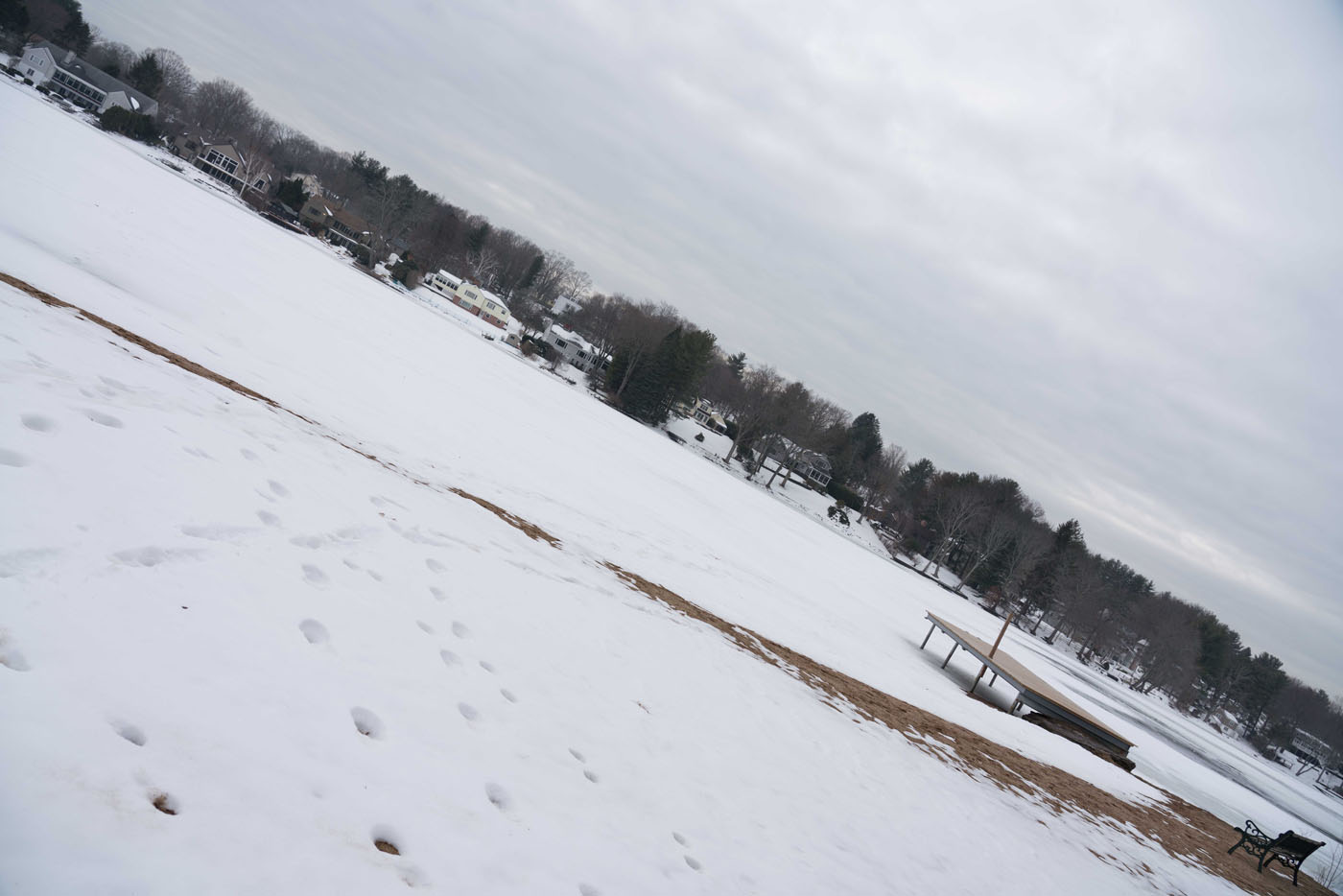
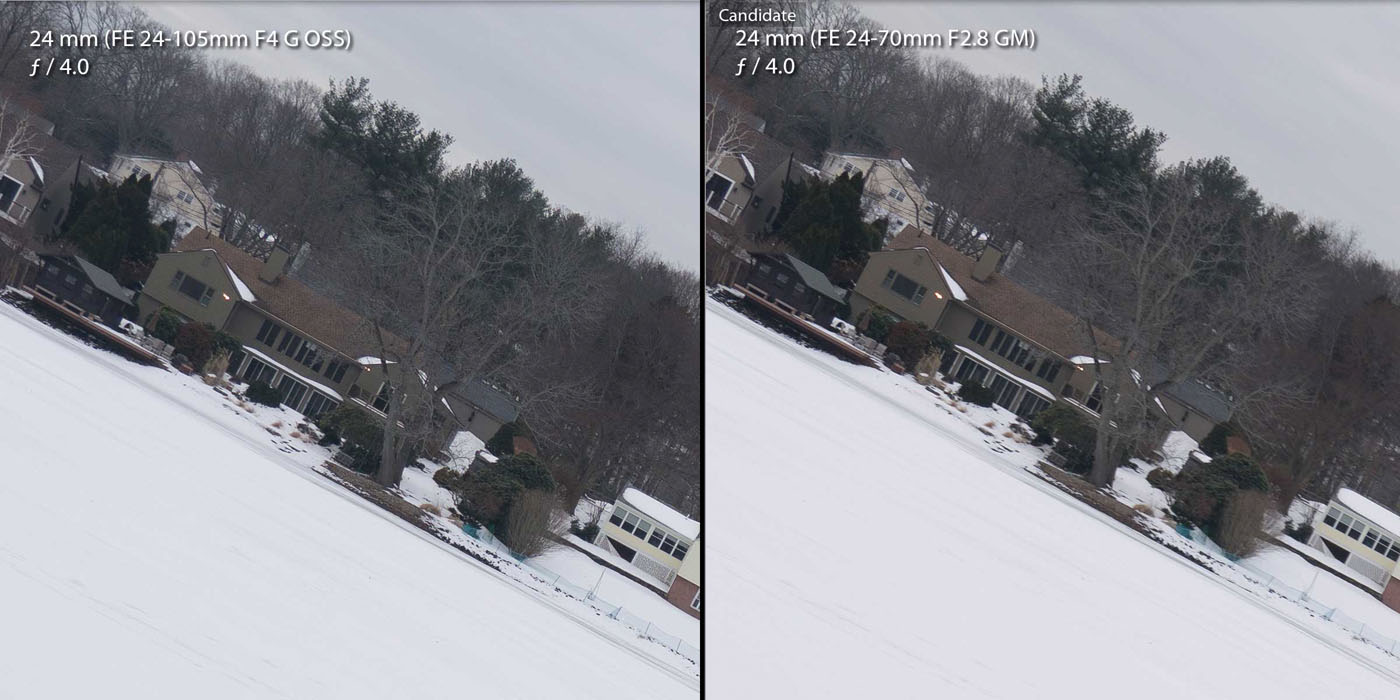
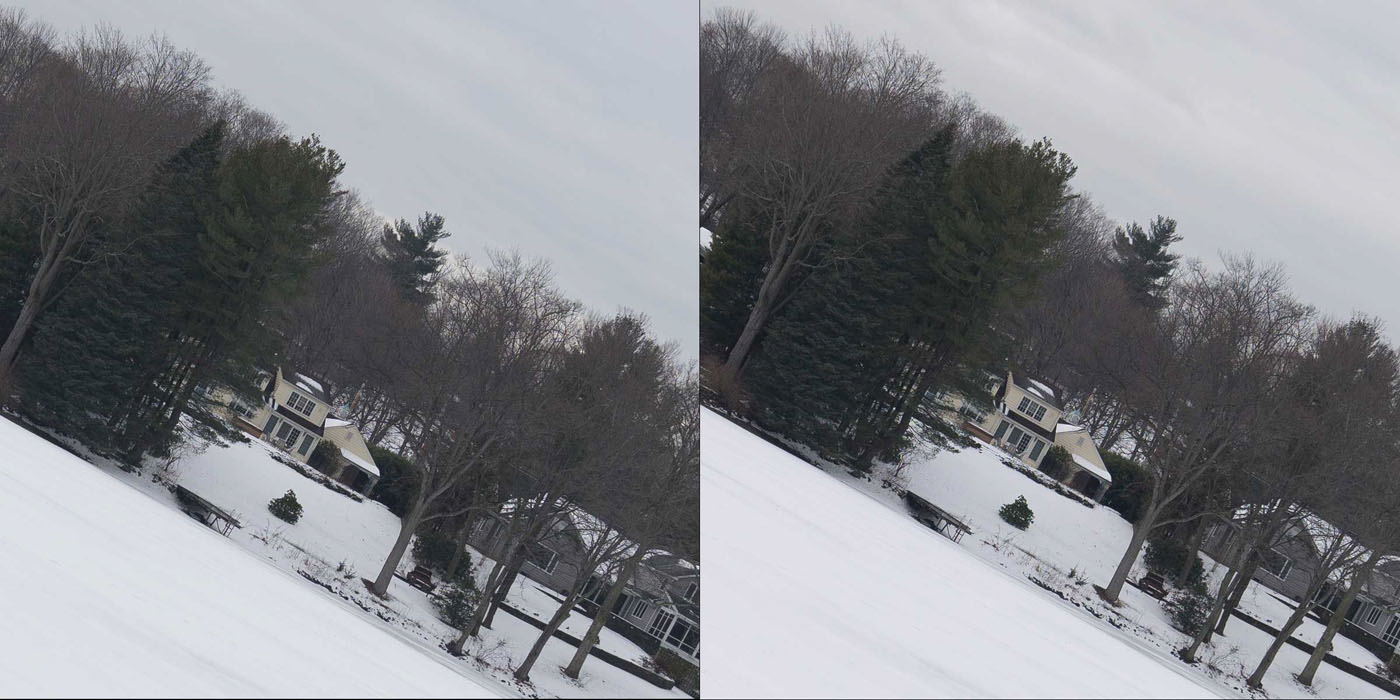
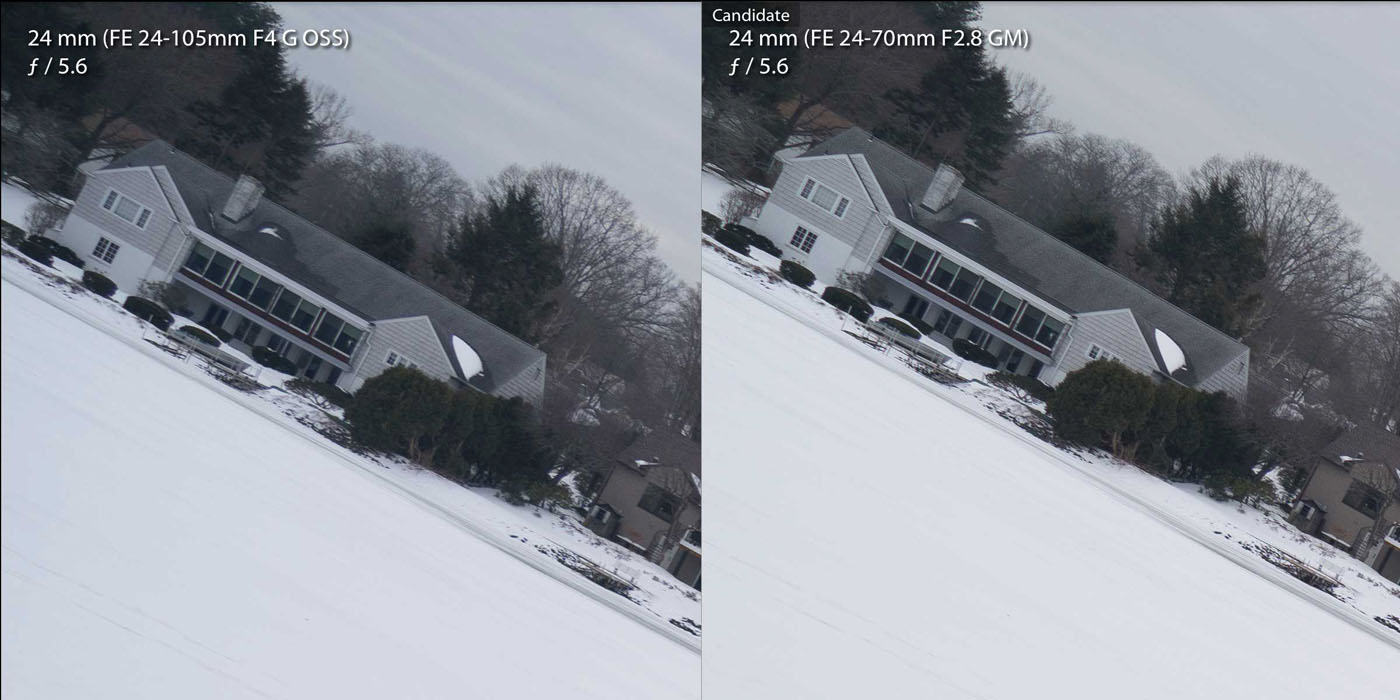
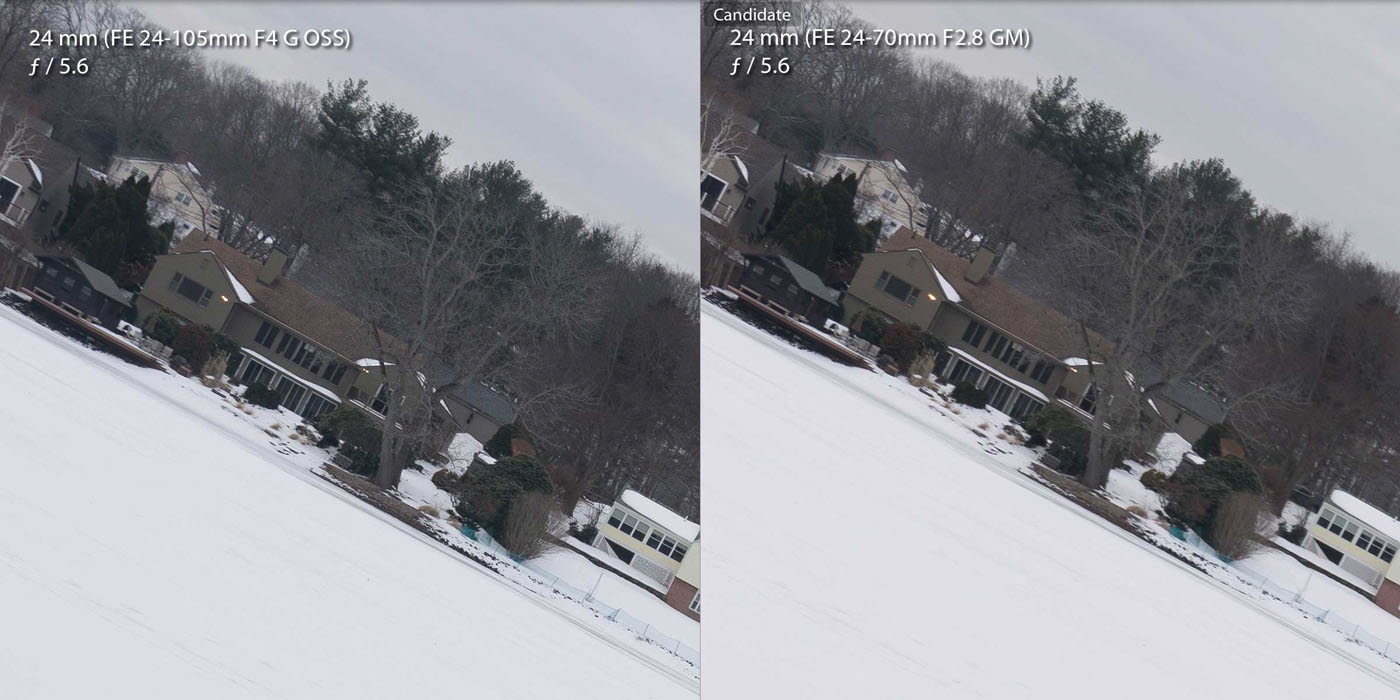
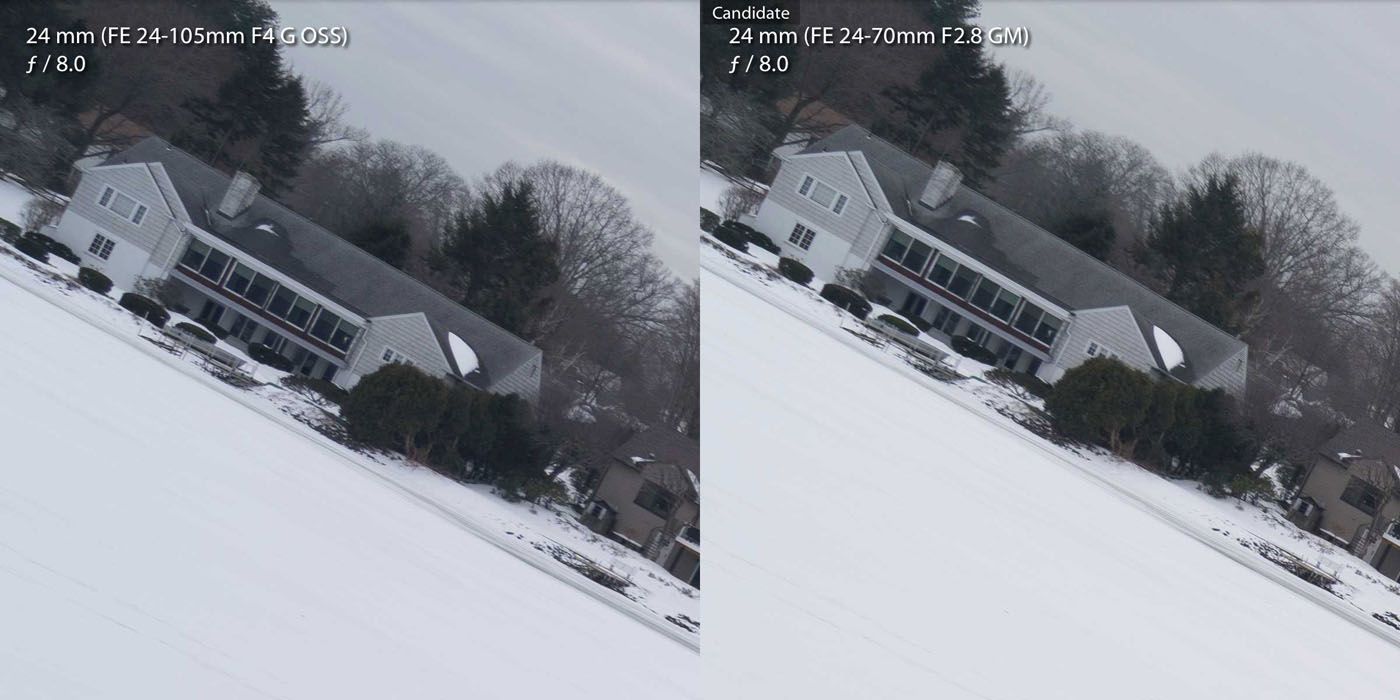
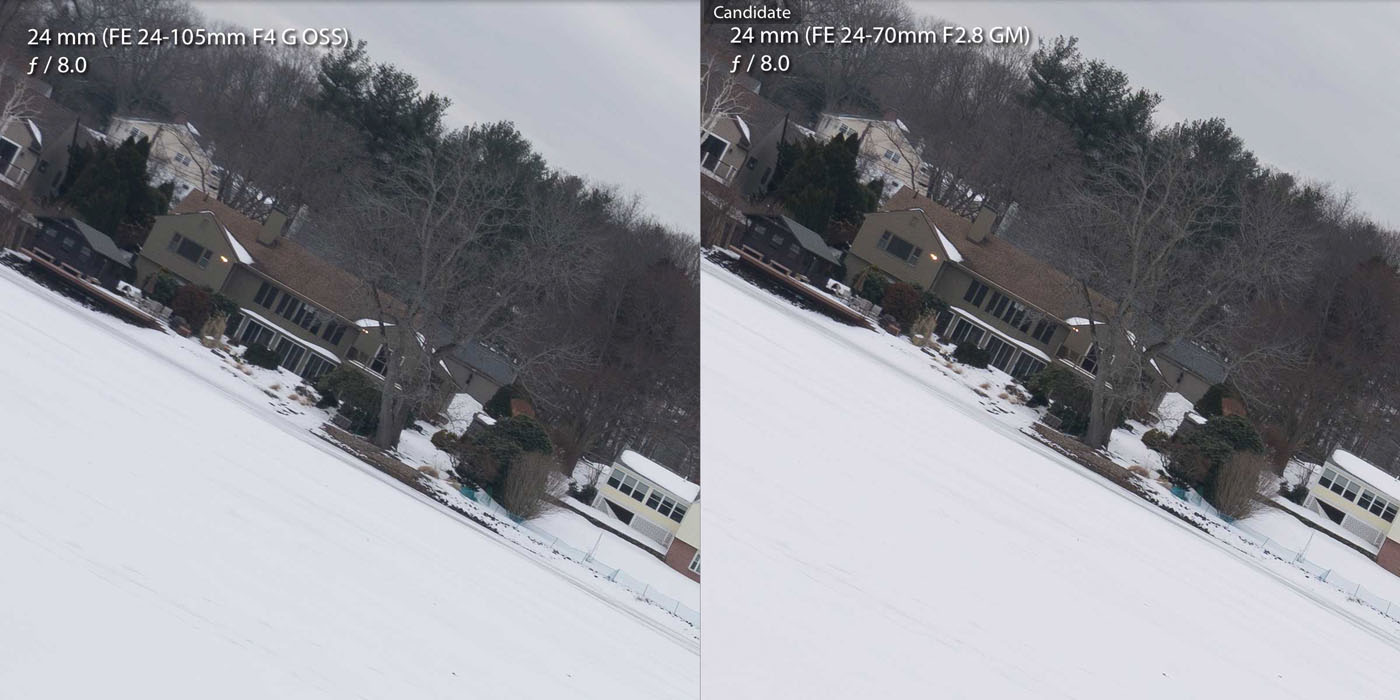
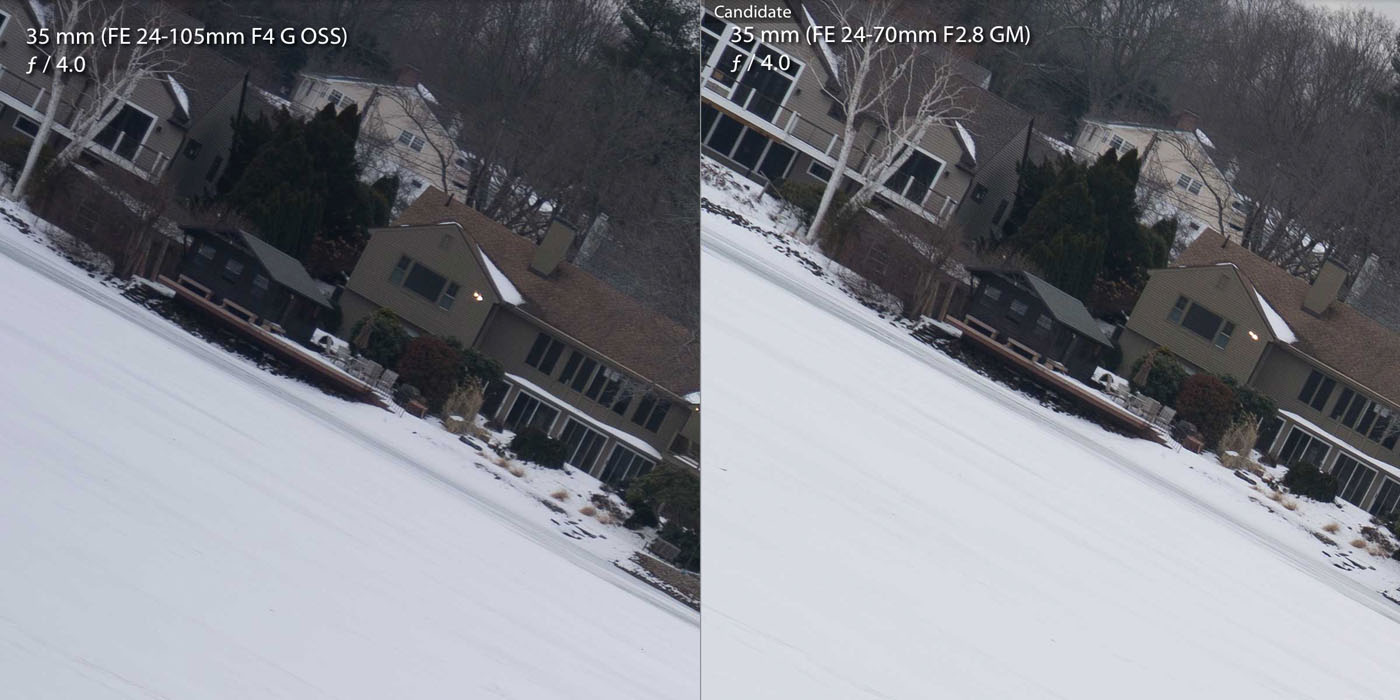
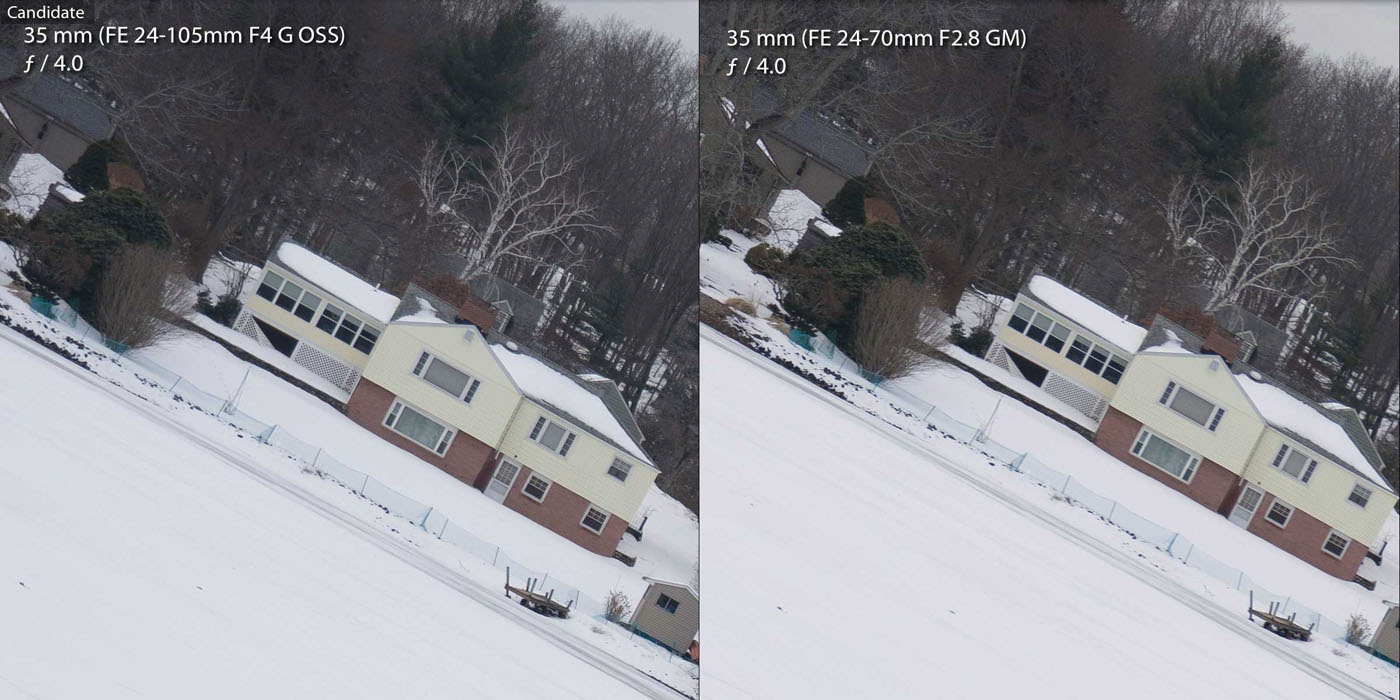
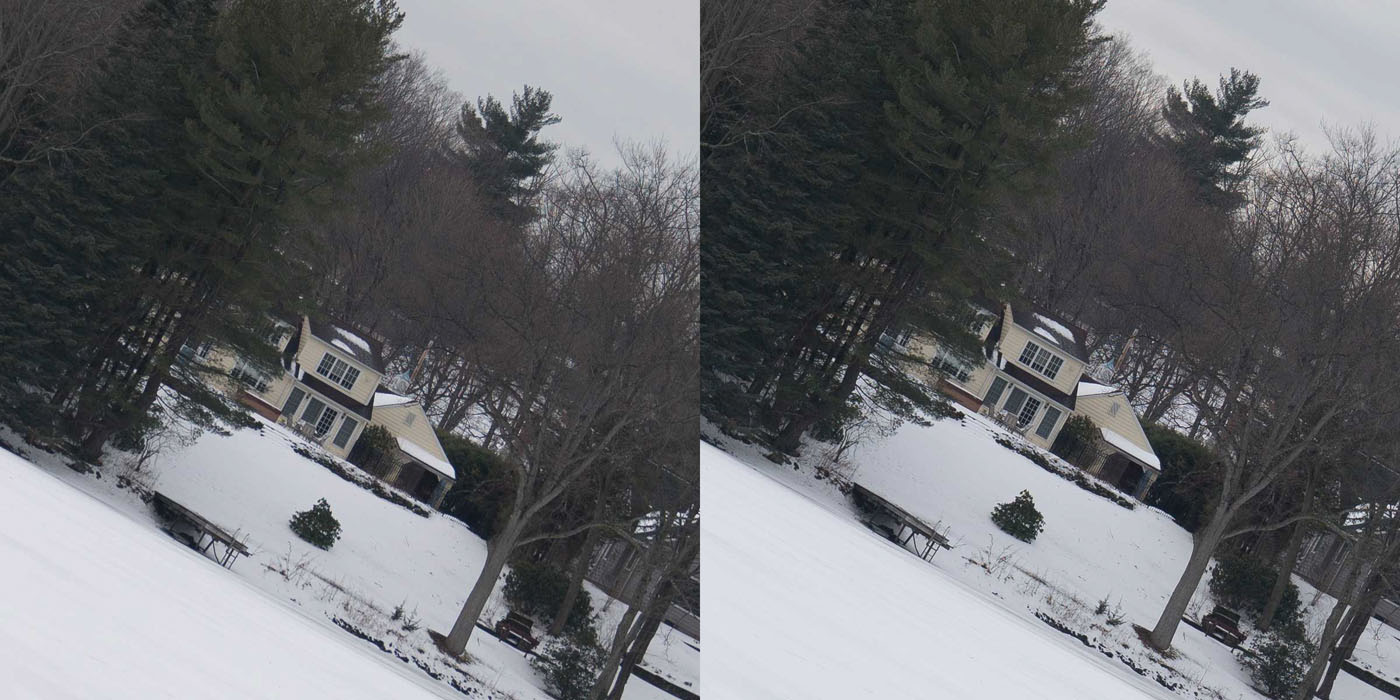
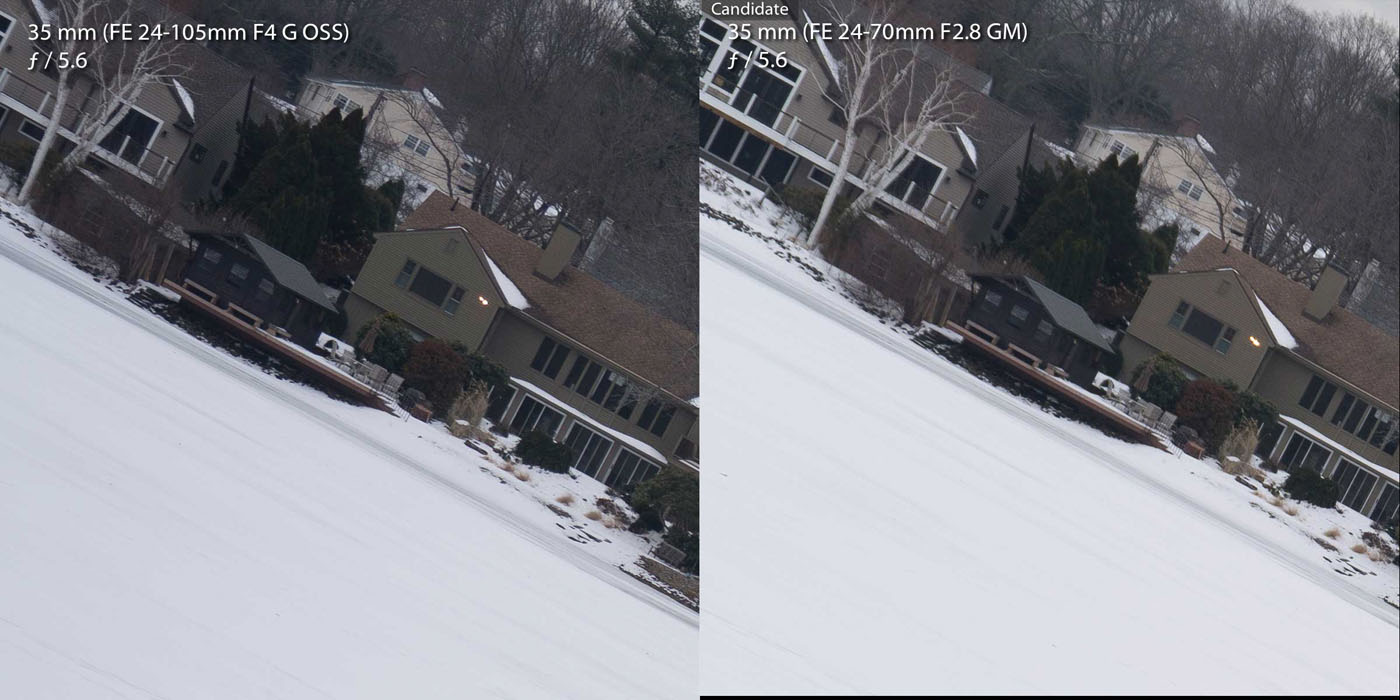
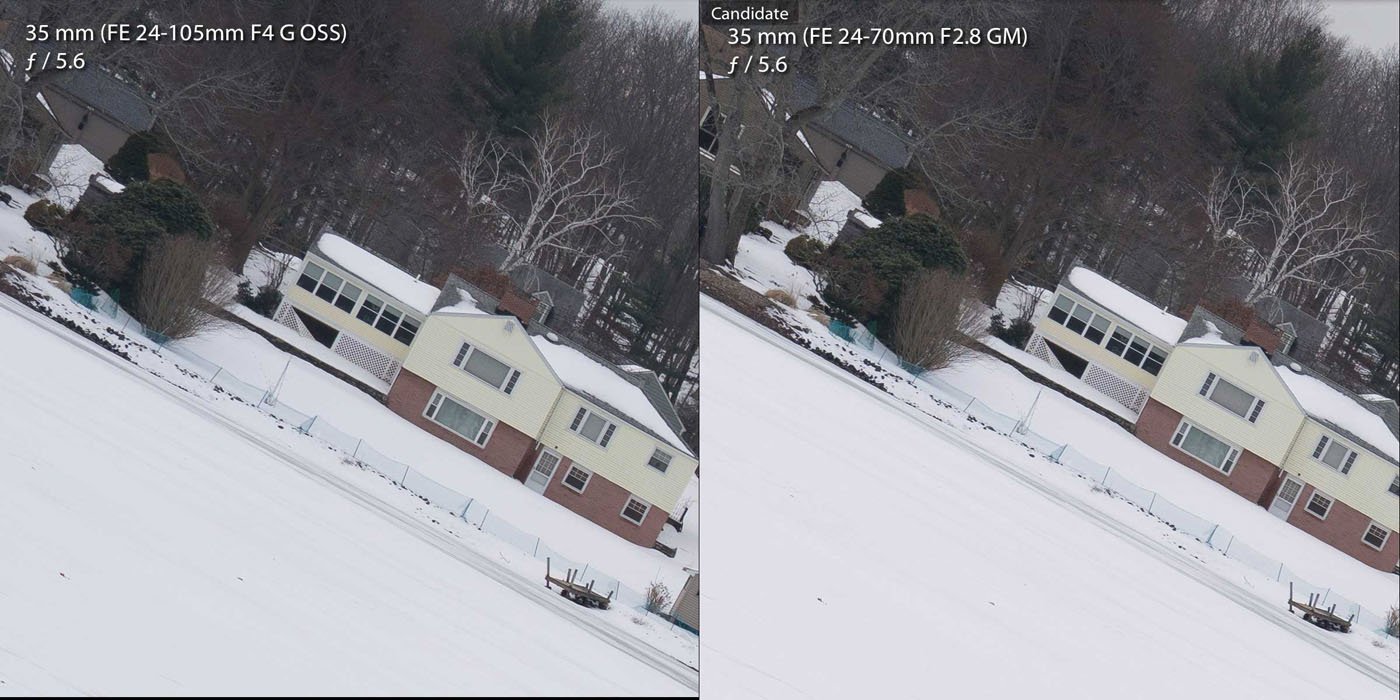
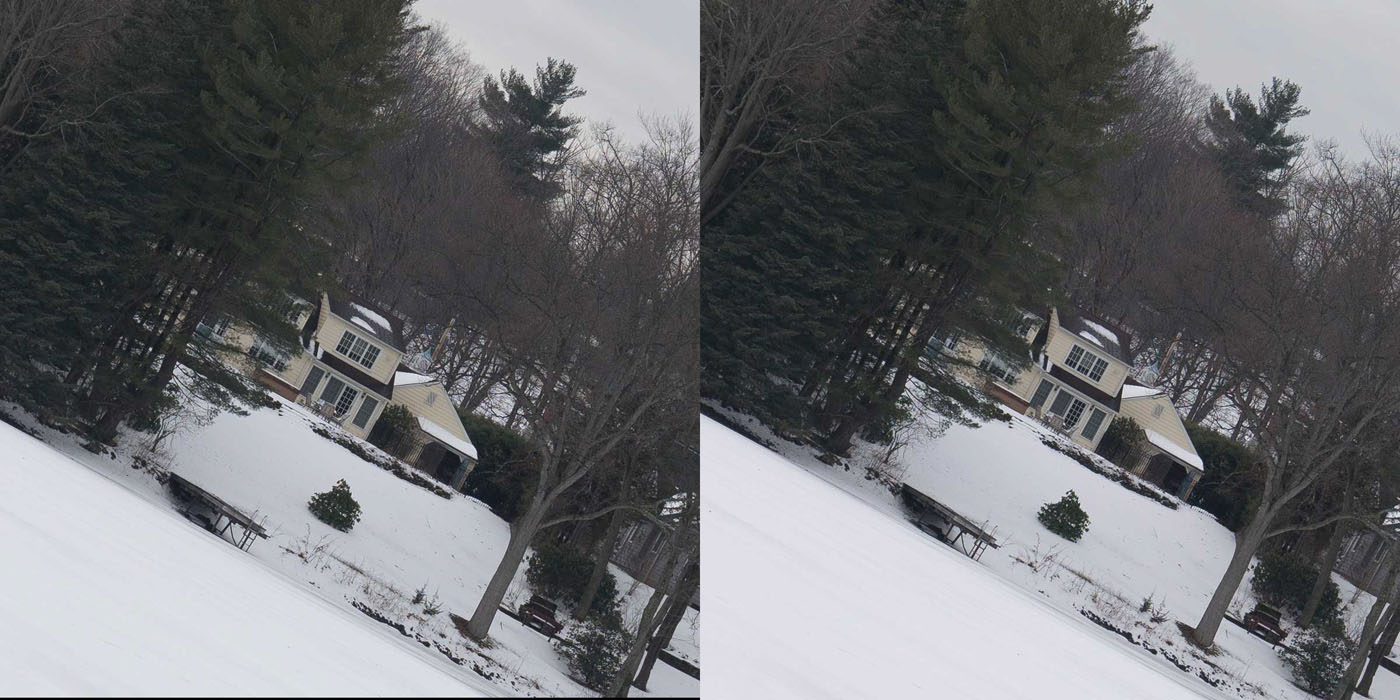
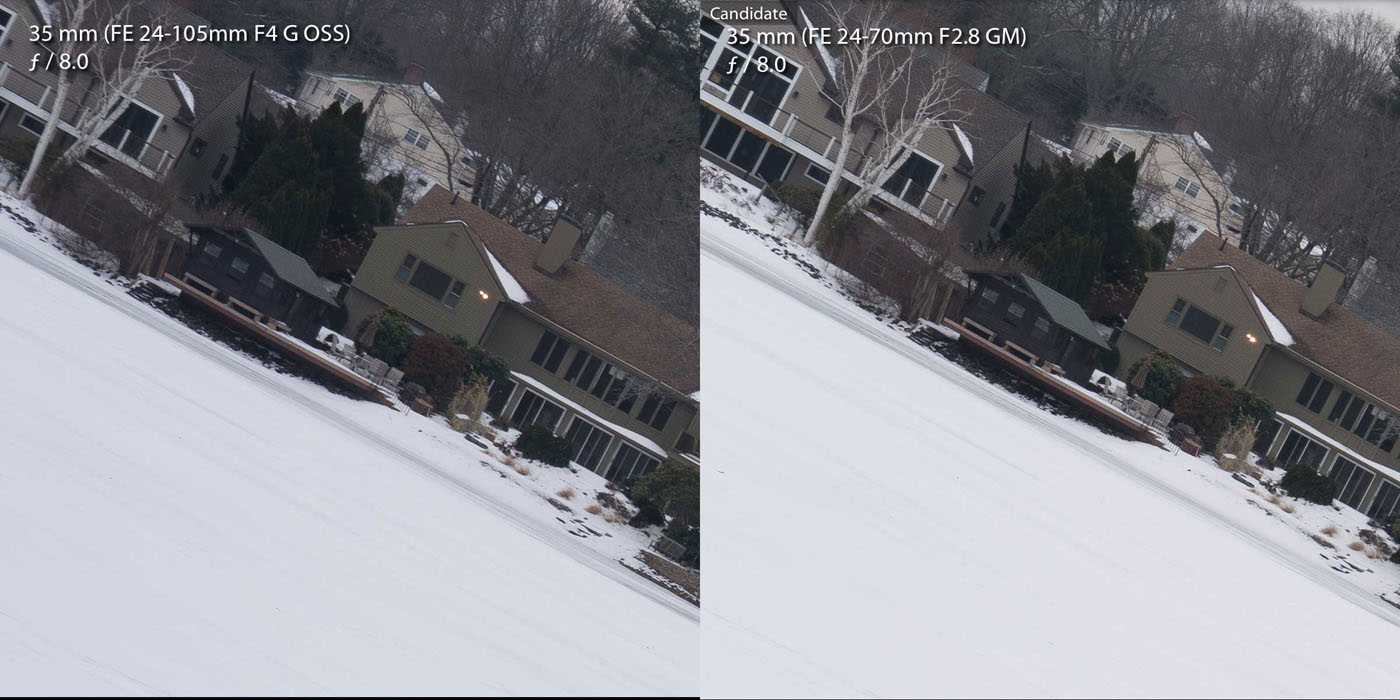
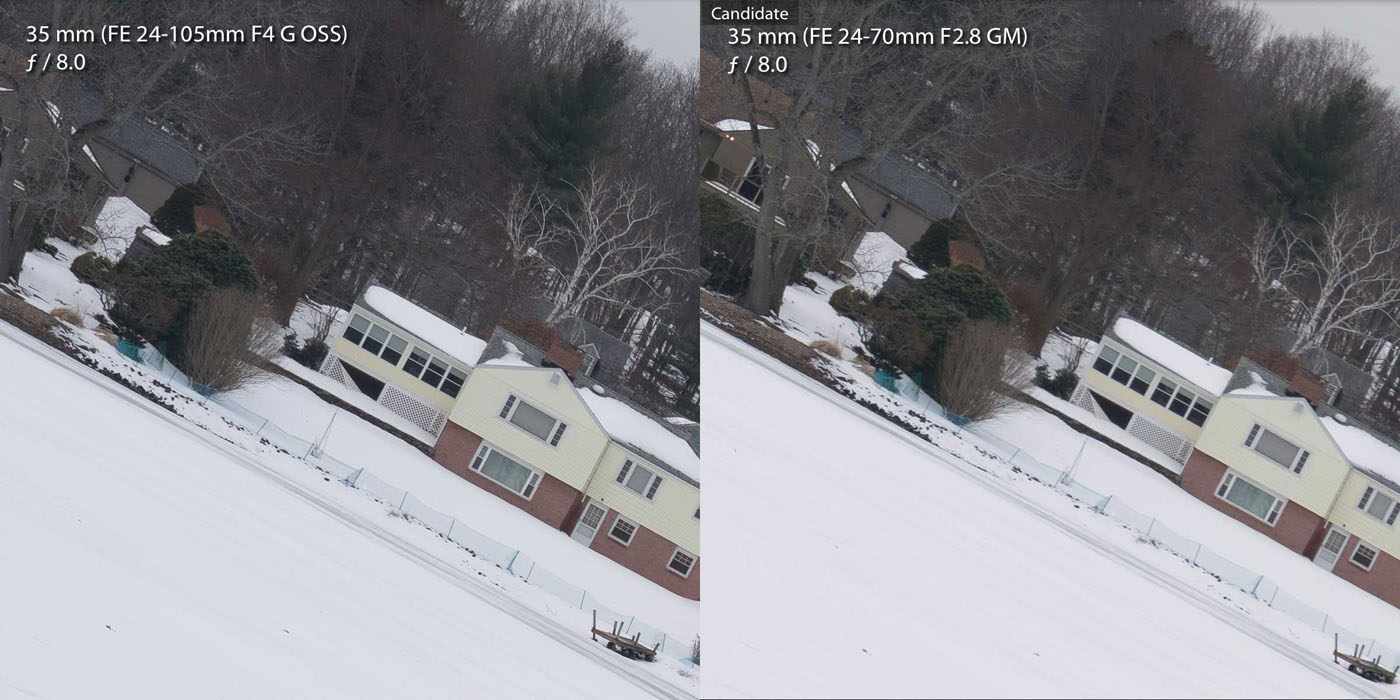
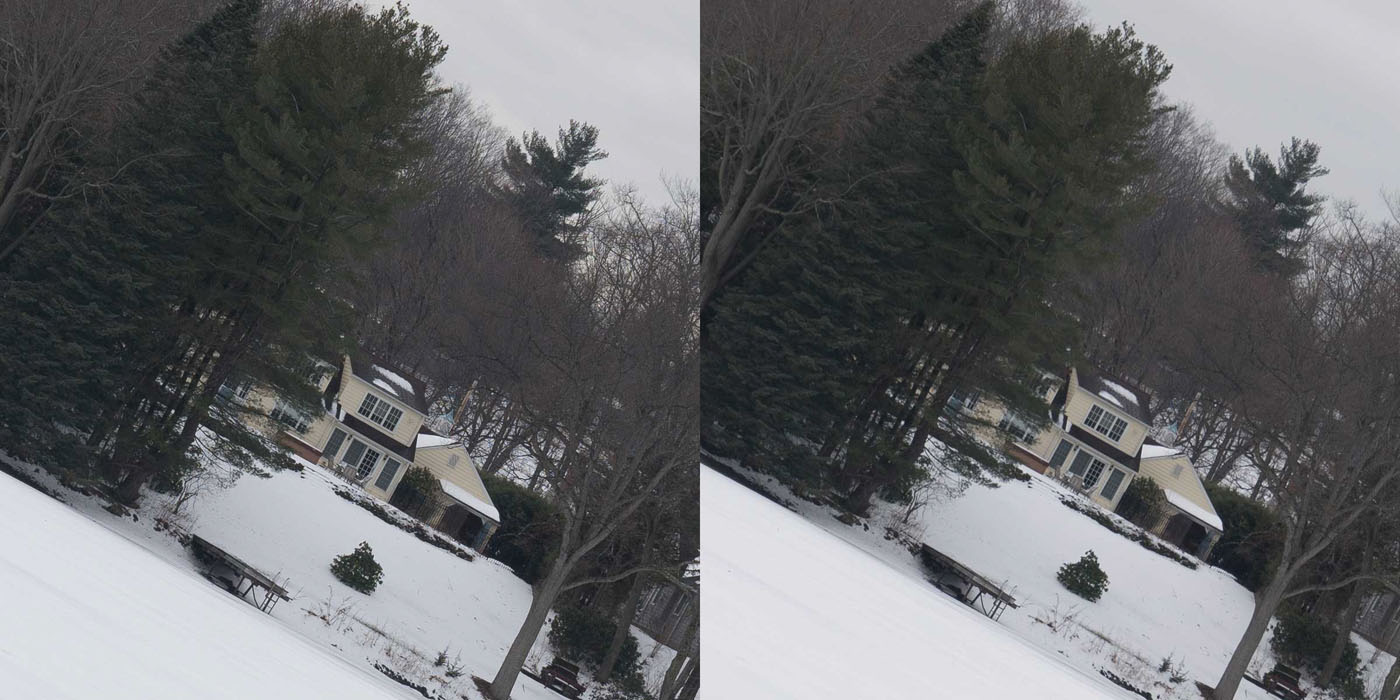
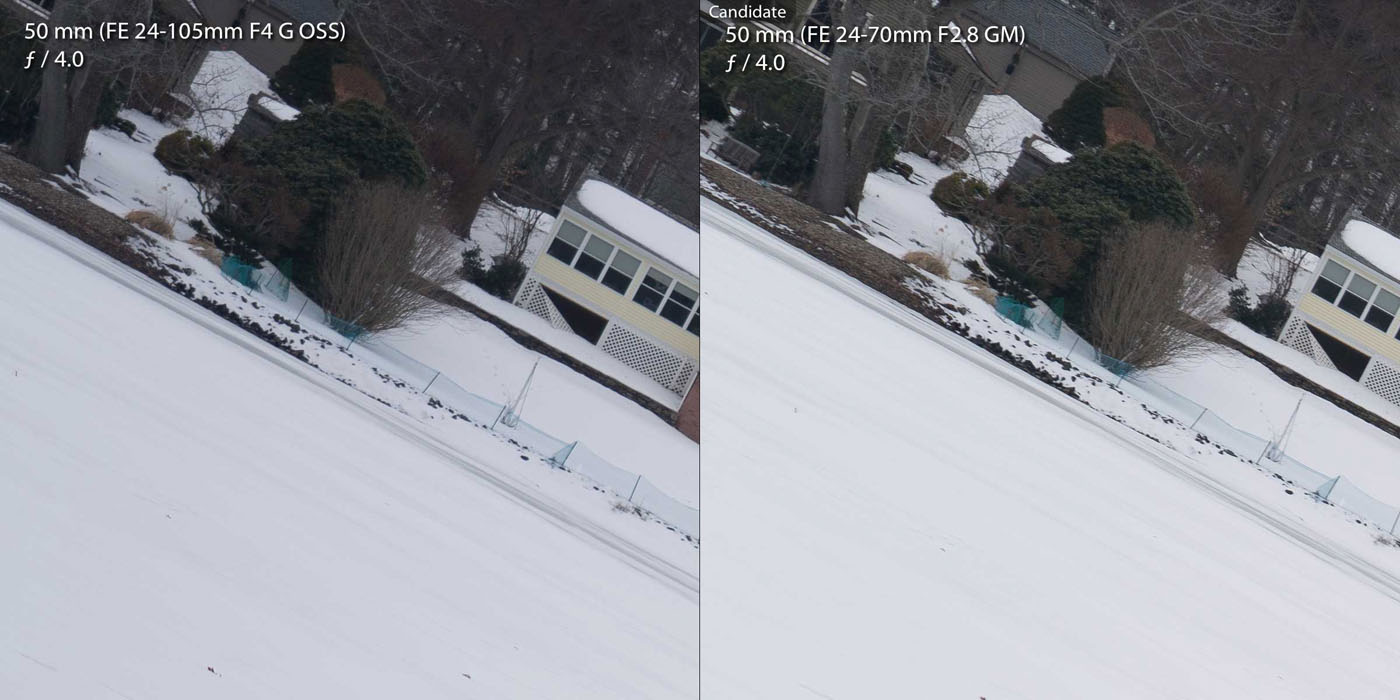
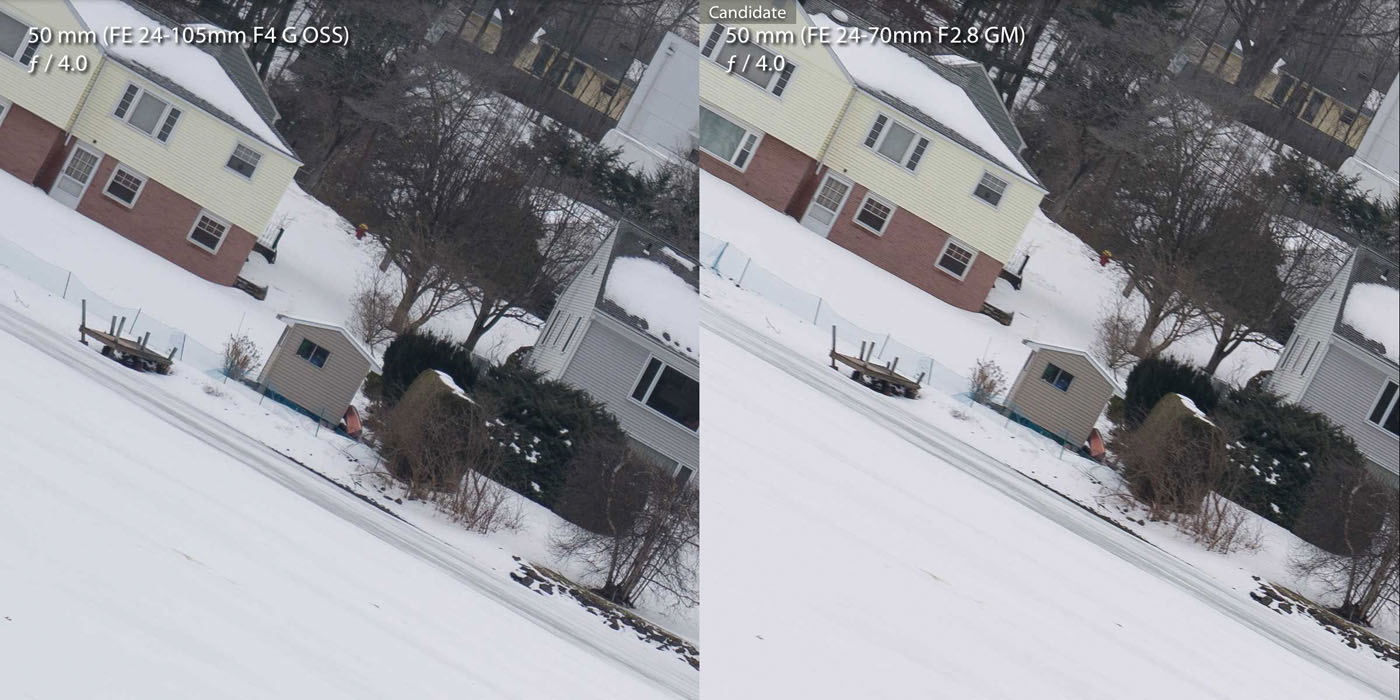
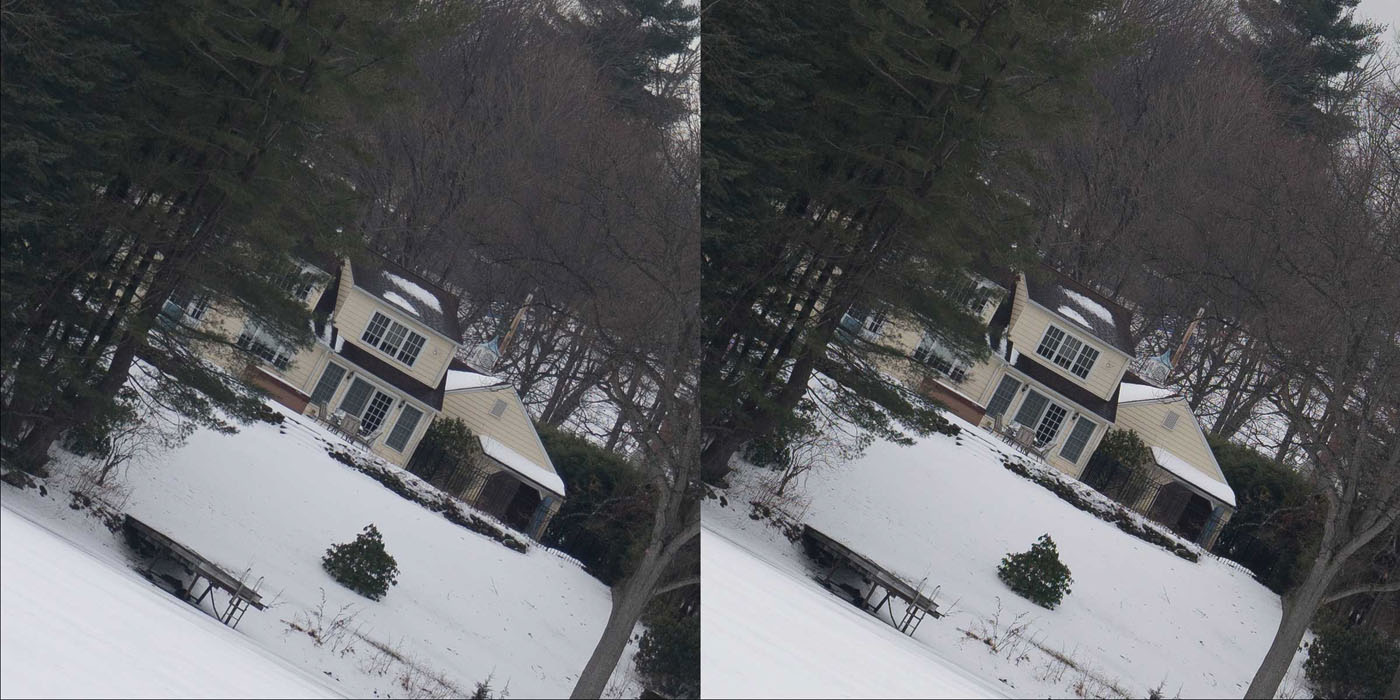
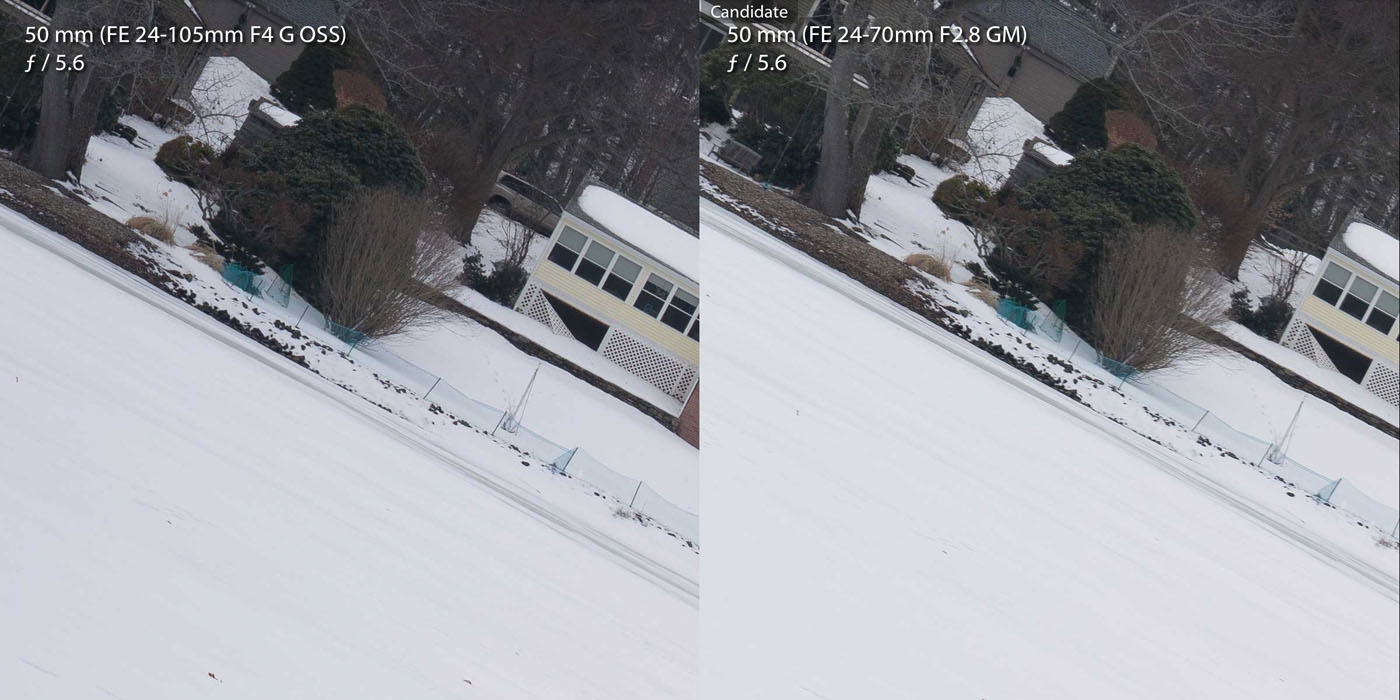
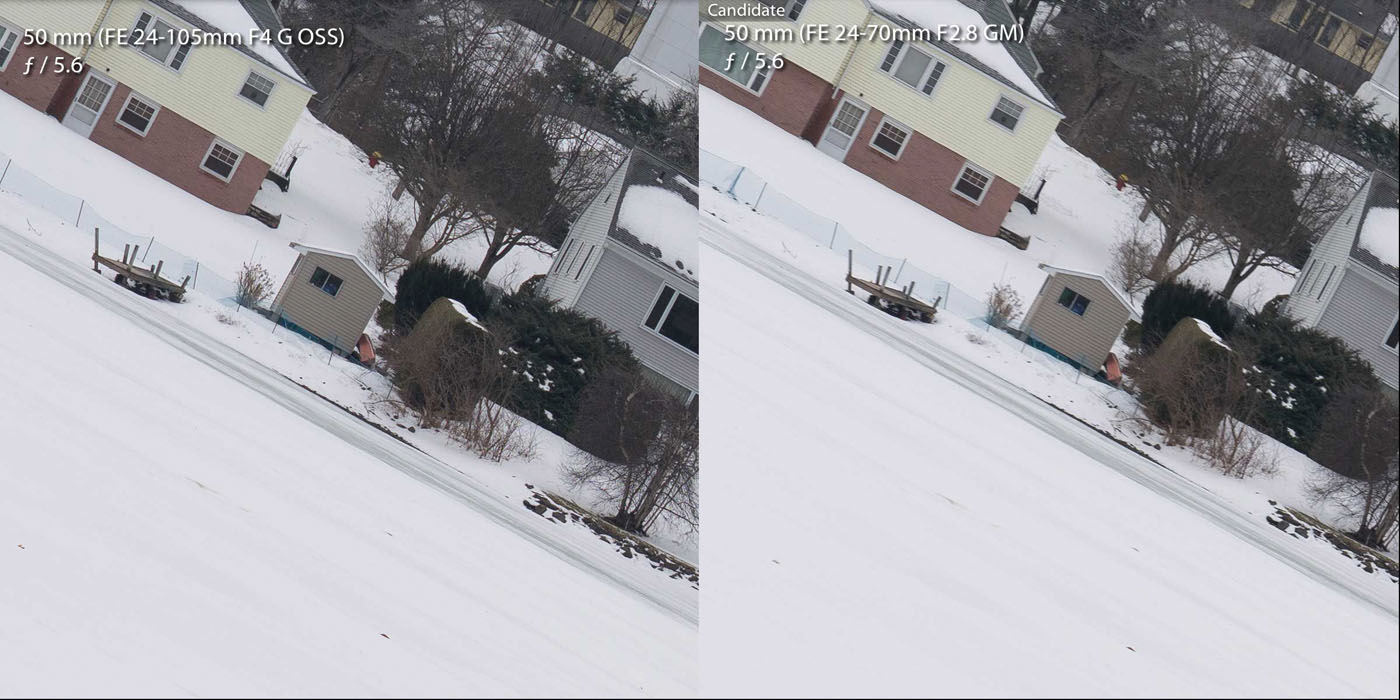
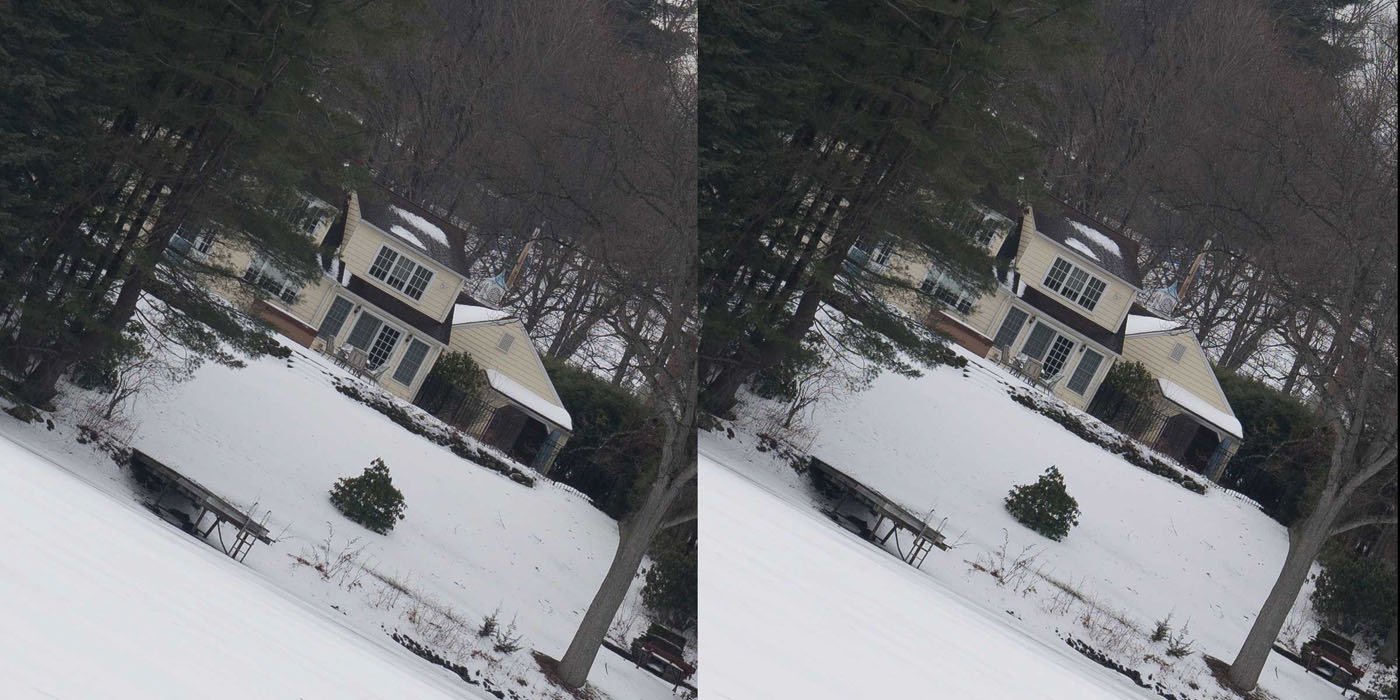
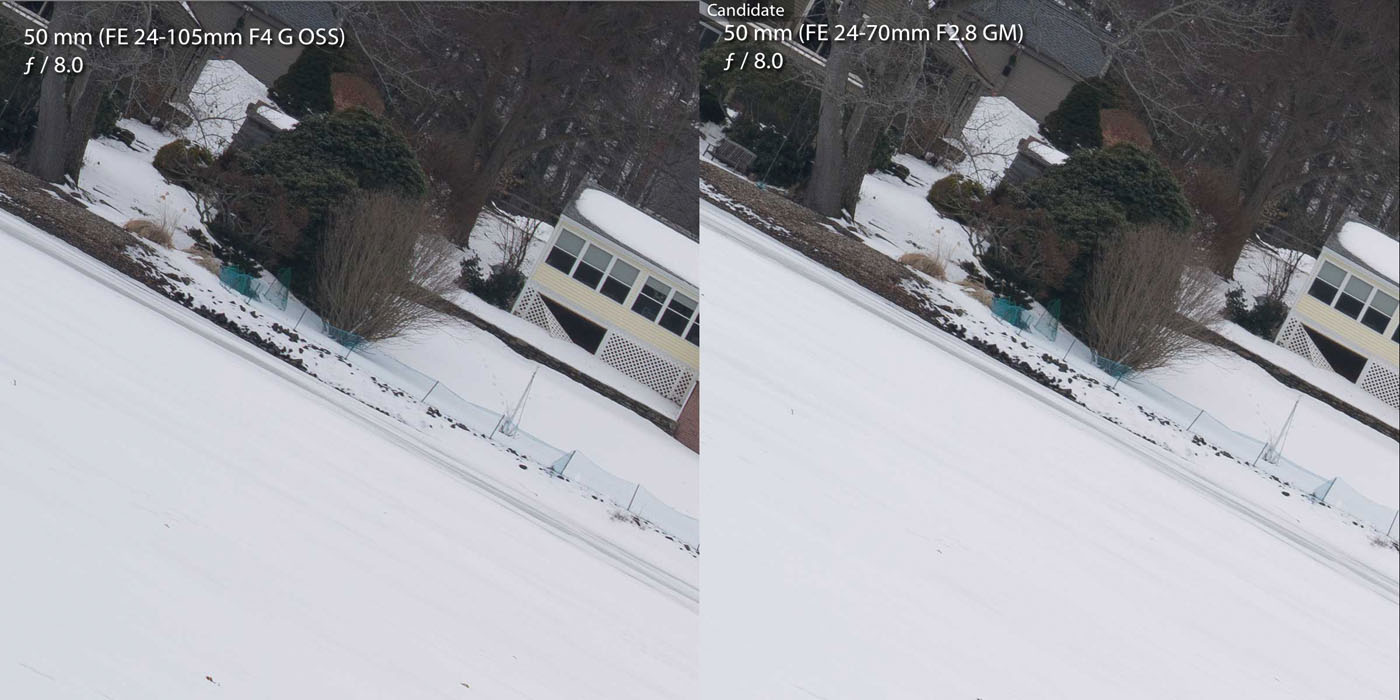
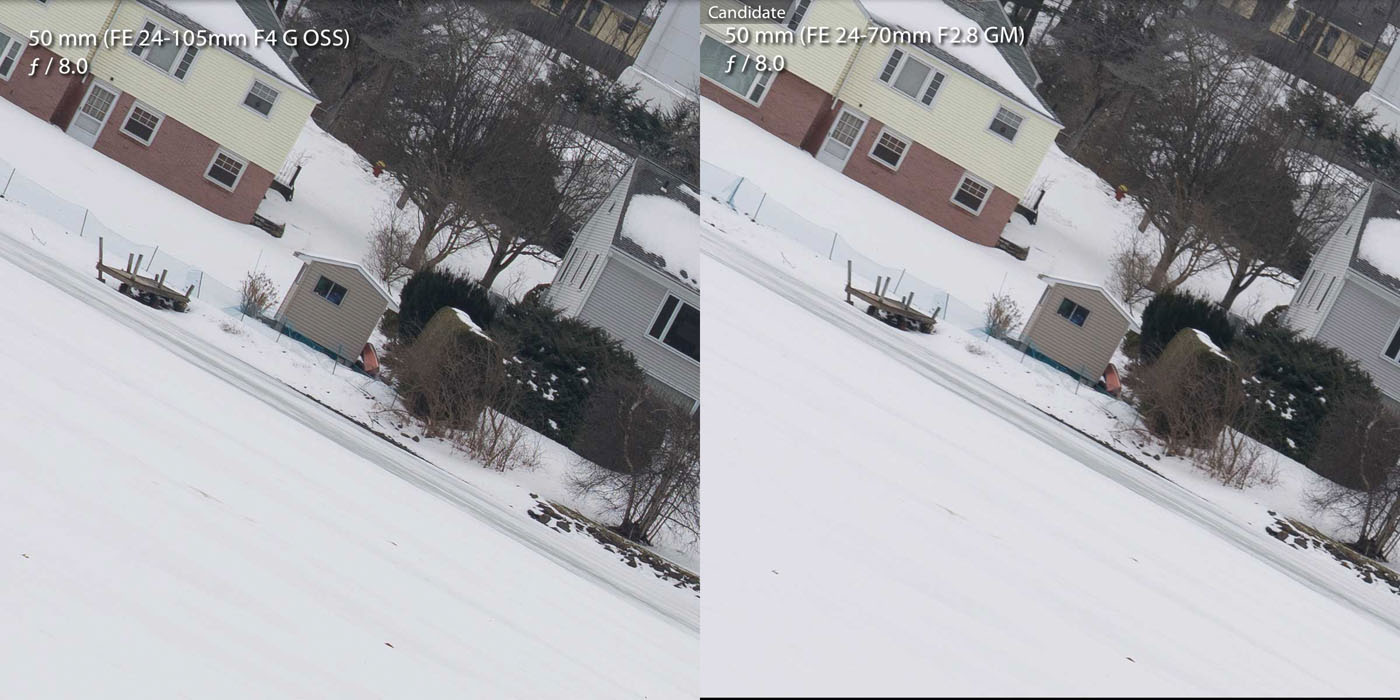
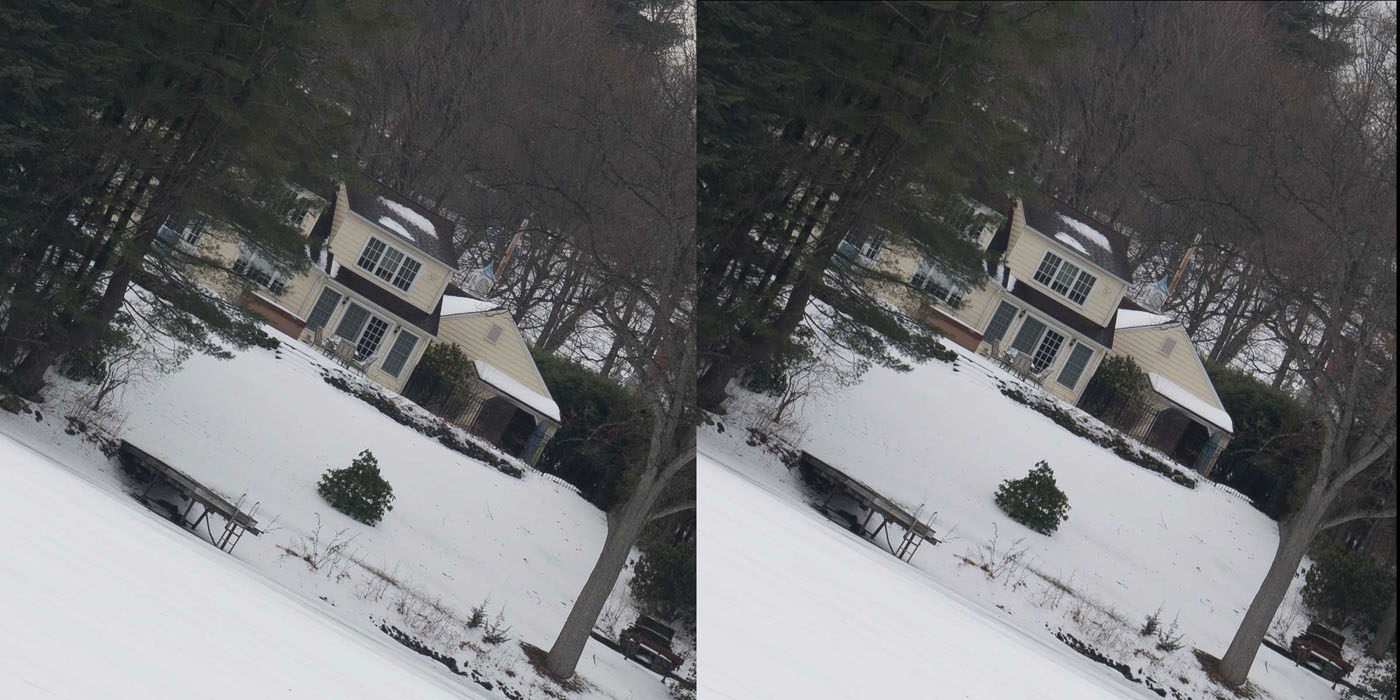
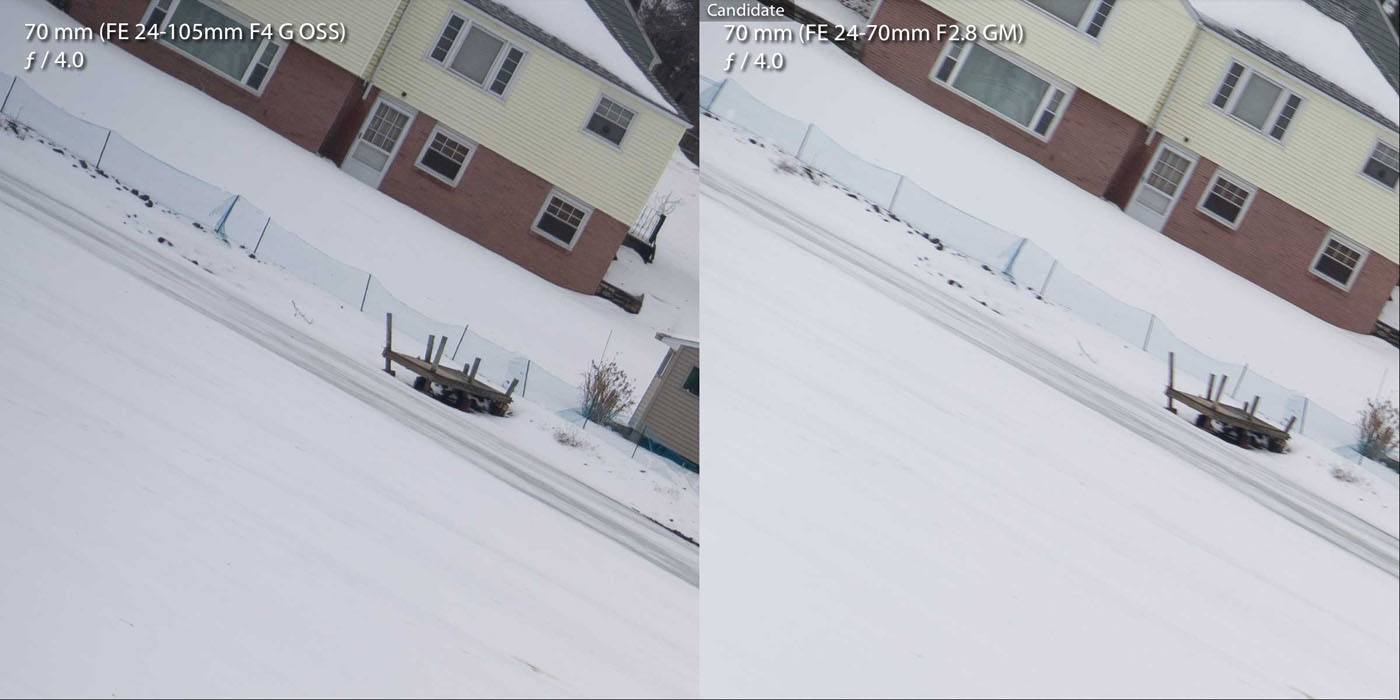
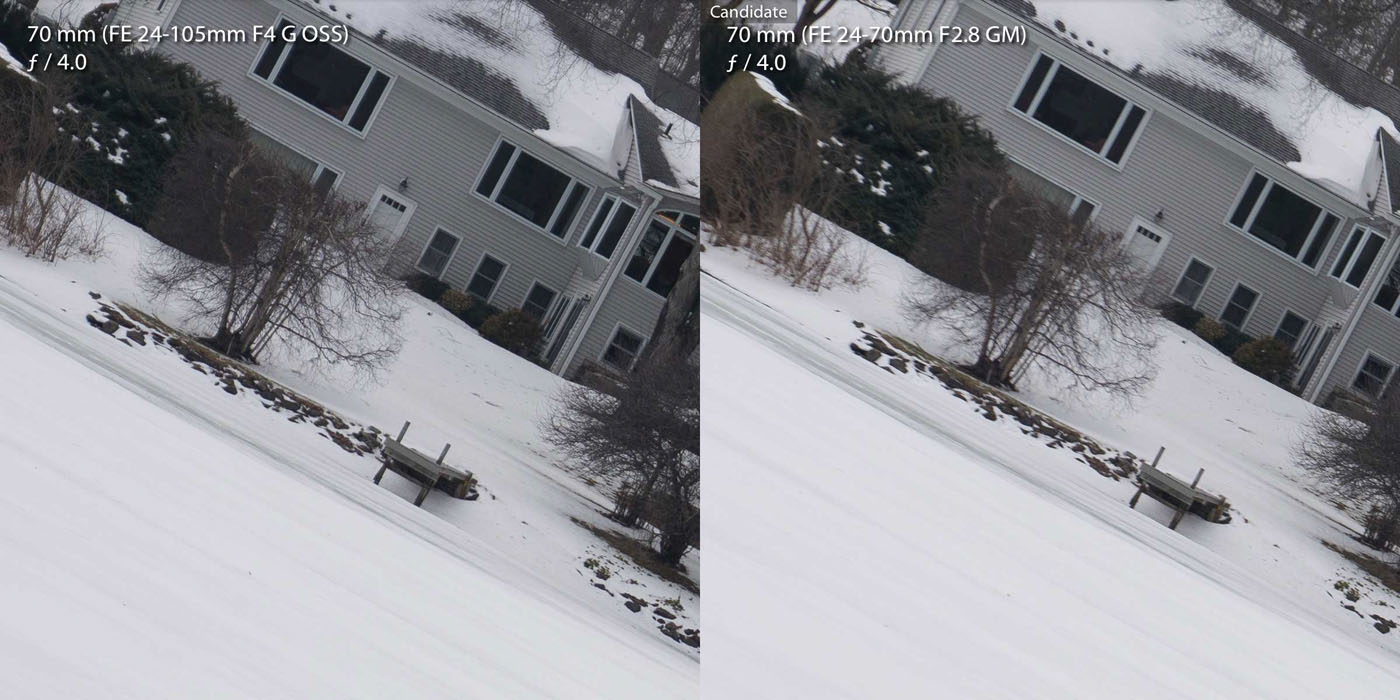
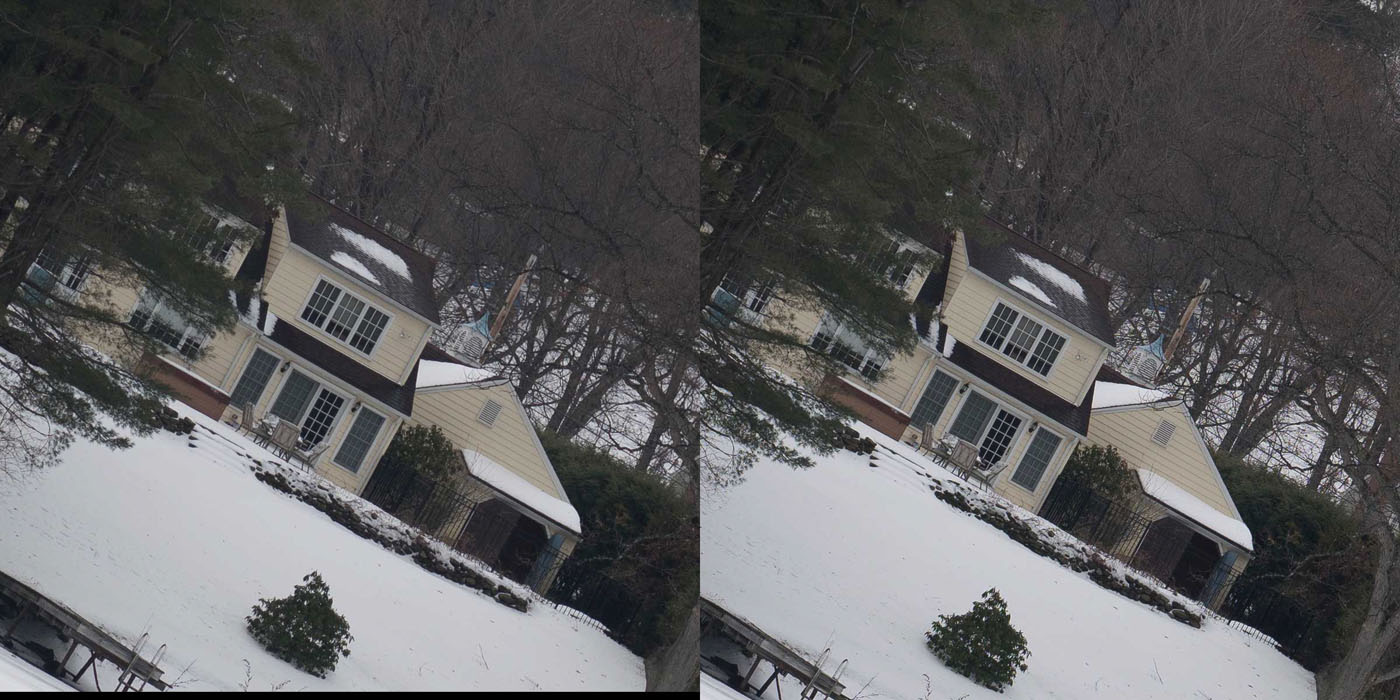
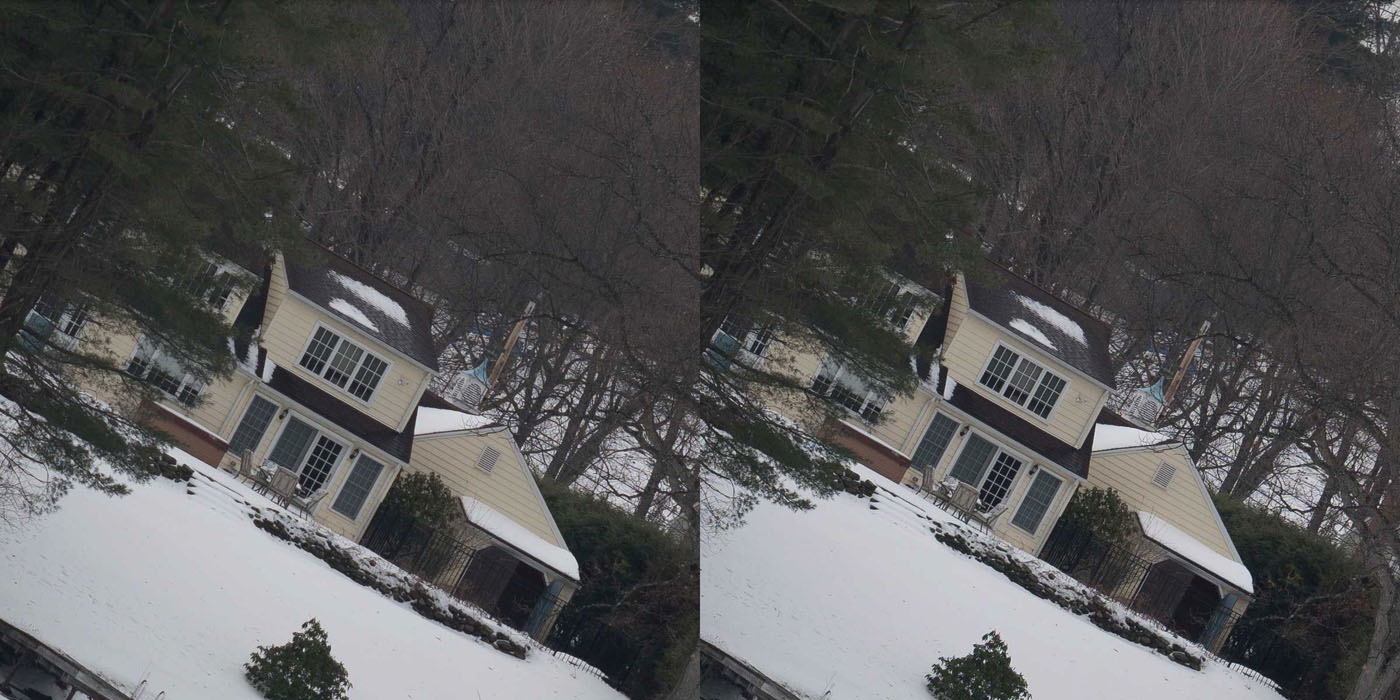
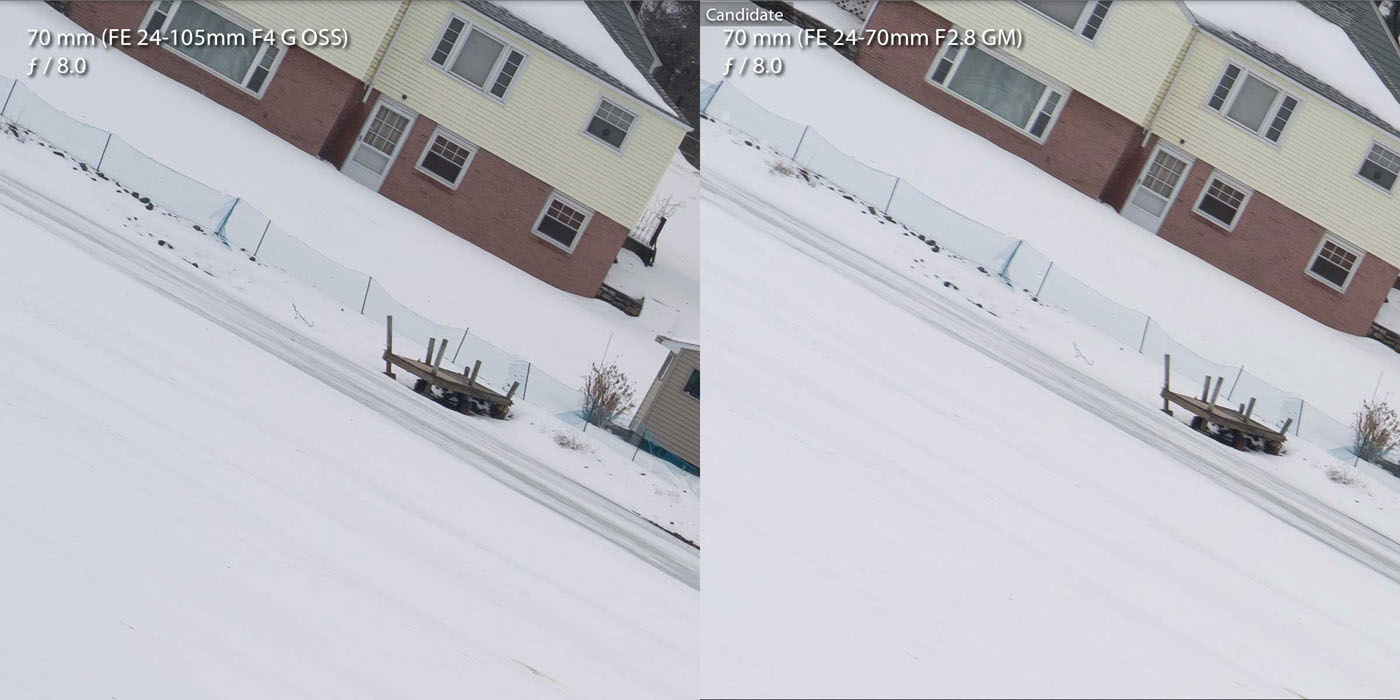
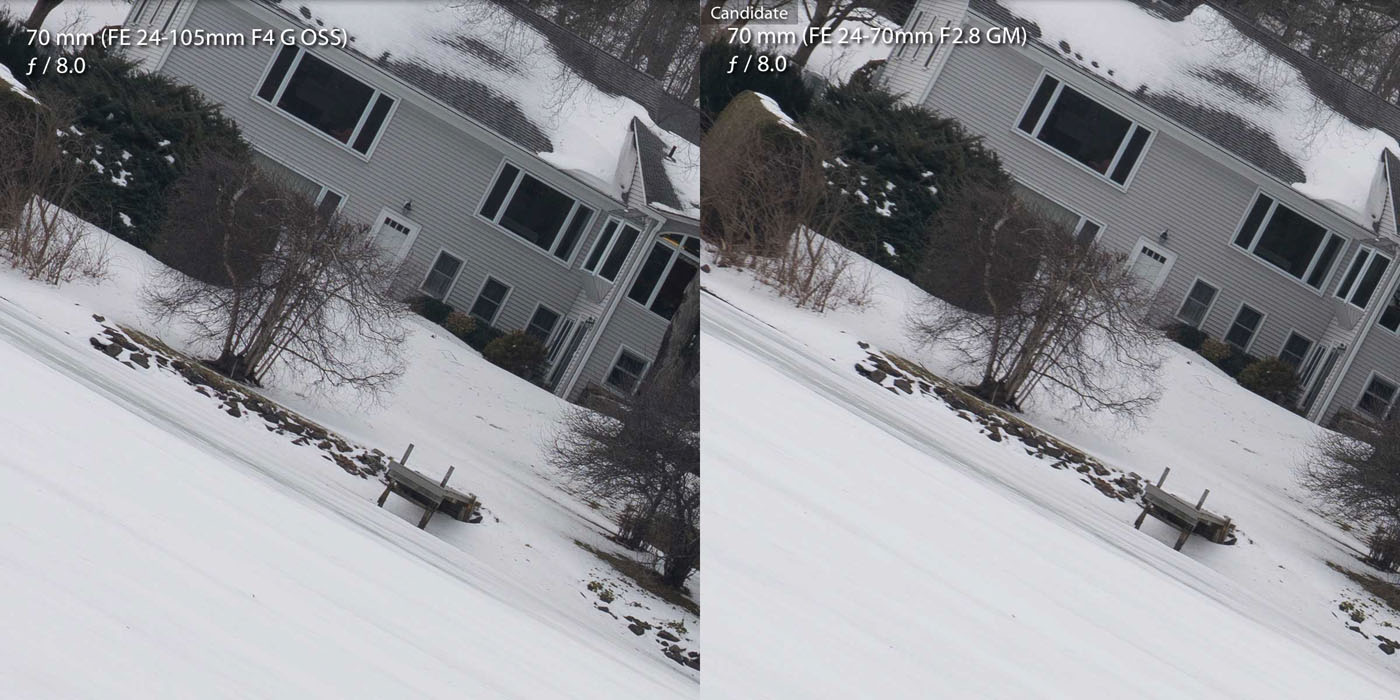
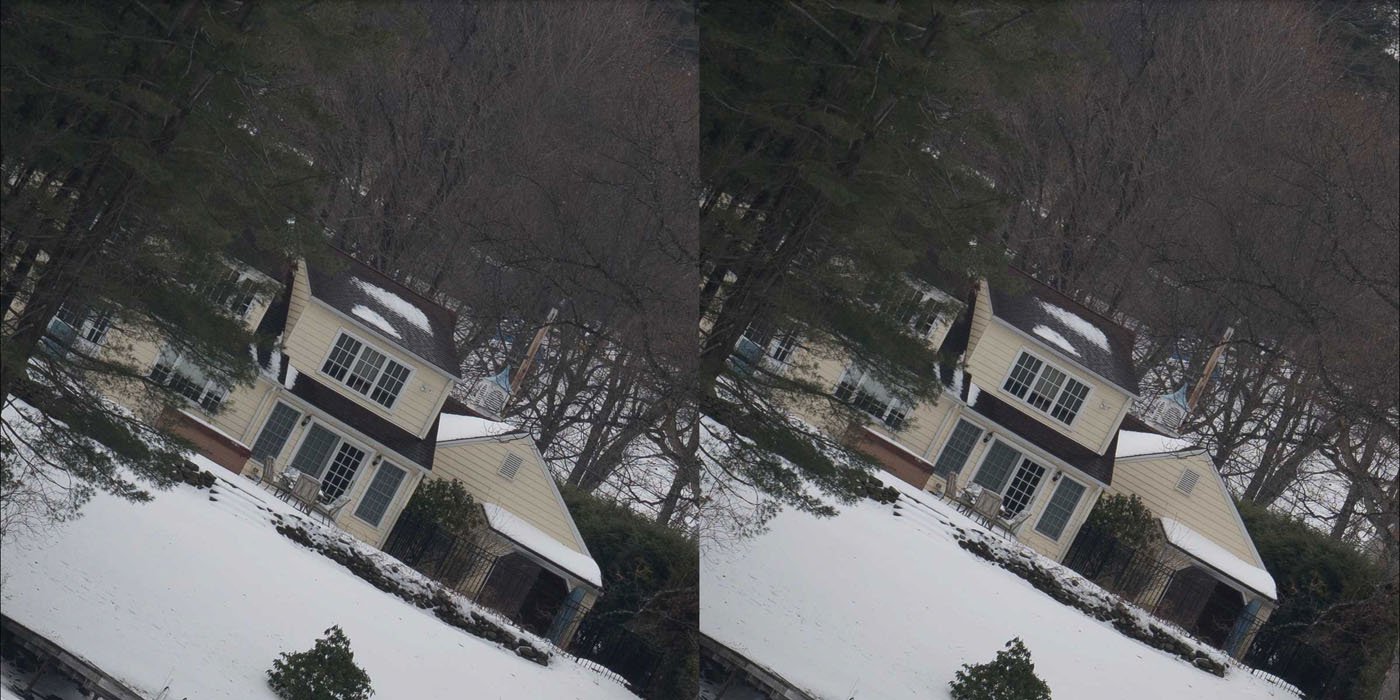
I finally had a chance to test my 24-105 G against my 24-70 GM. The weather warmed up from single digits and negative wind chill to a balmy 22 degrees. So I went down to my local lake and took some infinity test shots. The light was very blah totally overcast and a bit of light fog/haze from the temperature warming up so dramatically. So I wouldn't look too much at the rendering as much as the sharpness between these two fine zooms. The snow-covered lake bed in the foreground doesn't lend itself to testing the sharpness very well but the opposite shoreline with the homes and trees are the main show and they are at infinity distance.
These are straight out of the camera RAW files with only some light capture sharpening applied in LRCC (40, 0.8, 50, 0). I thought about tweaking the tone curve a bit as the light was changing a bit but decided to just let it go. I shot these on a tripod with cable release and no Steady shot. I selected the est of 3 images manually focused at each aperture. I have to say the manual focusing with the 24-105 G and A7R3 was very good. Much better than any focus-by-wire lens I've ever used.
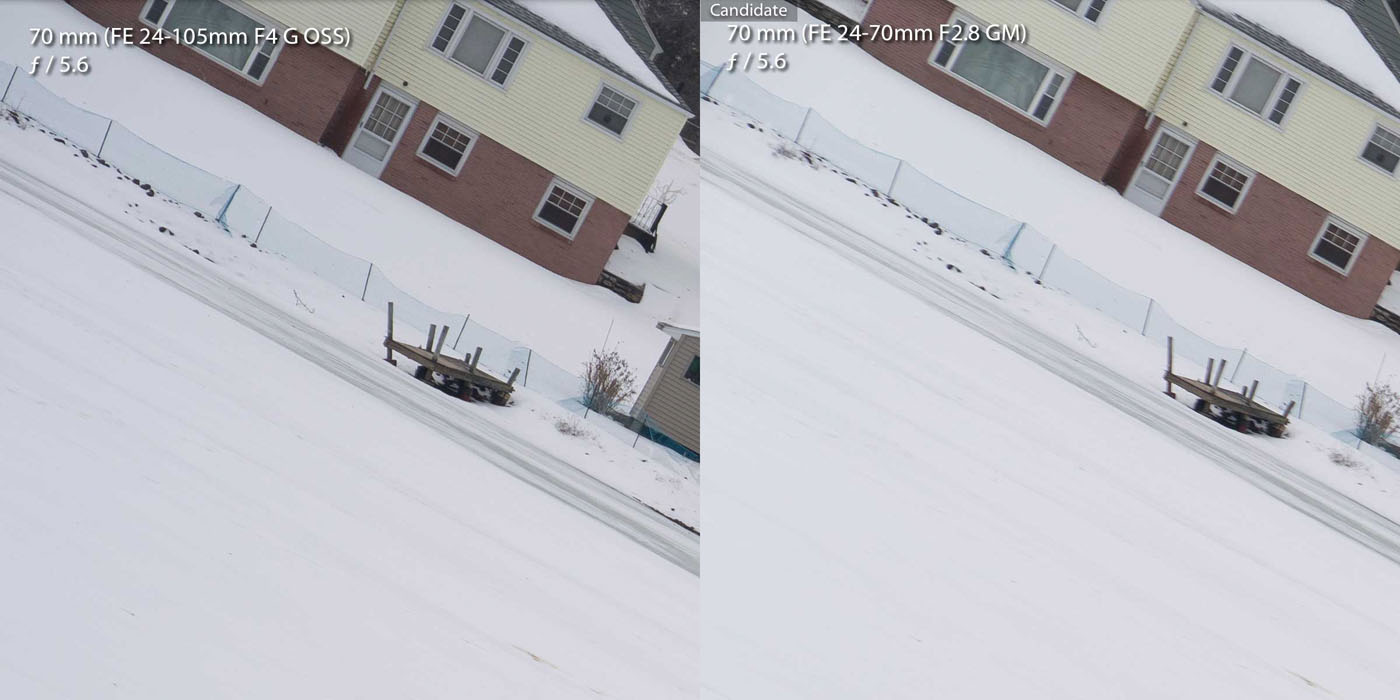
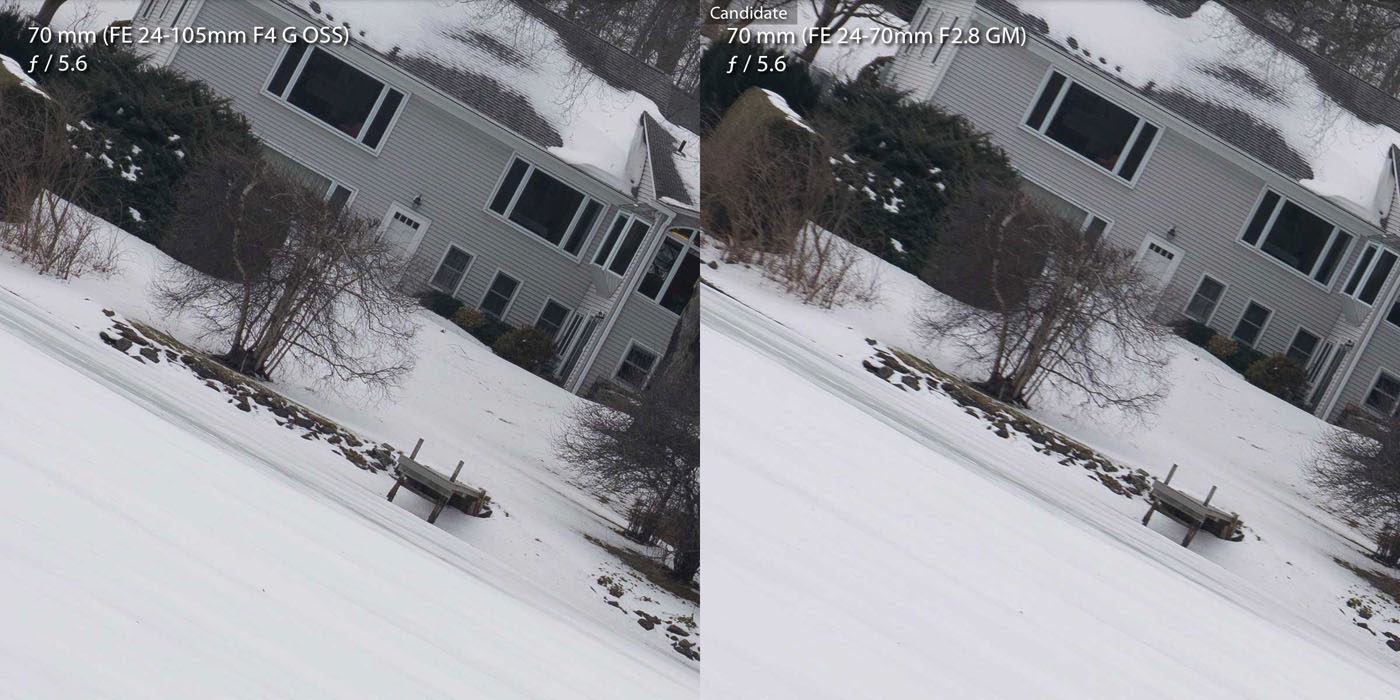
My goal was to determine if the 24-105 G can hold it's own at 24mm, 35mm, 50mm, and 70mm at f/4, f/5.6 & f/8. This is what a primarily shoot my landscape images at with the 24-70 GM. I focus stack at f/5.6 and f/8.0 80+ % of the time when doing any serious landscape shooting. I'm happy to give up the f/2.8 and heavier weight for the flexibility of lighter weight and the increased focal length at 105mm.
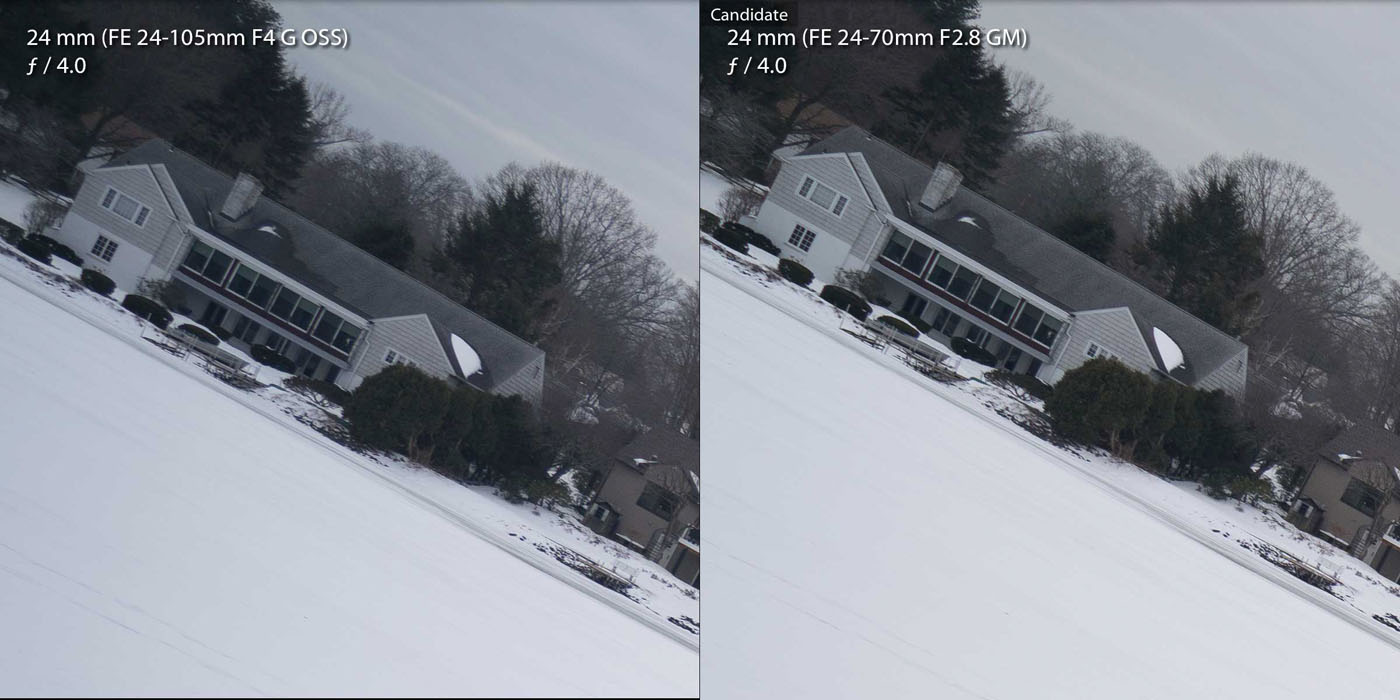
My overall impression is that the 24-105 G handles very nicely these focal lengths and apertures when compared to the 24-70 GM. I tested my 24-70 GM against some of my primes including a Batis 25, 35 ZA, 50 ZA, and Loxia 50 and it performed very well against these primes. So I'm thrilled with the performance of this 24-105 G.
As Fred has said in his testing the 24-105 G is sharp wide open center to corner. I do see some very slight improvement when stopping down to f/5.6 and f/8. At 24mm and 35mm the GM is very slightly sharper in the extreme corners at f/4 but the G catches up and is comparable at f/5.6 and f/8. At 50mm and 70mm I give the extreme corners and mid-frame to the G over the GM. The centers at 50mm and 70mm are very similar and I would say a draw.
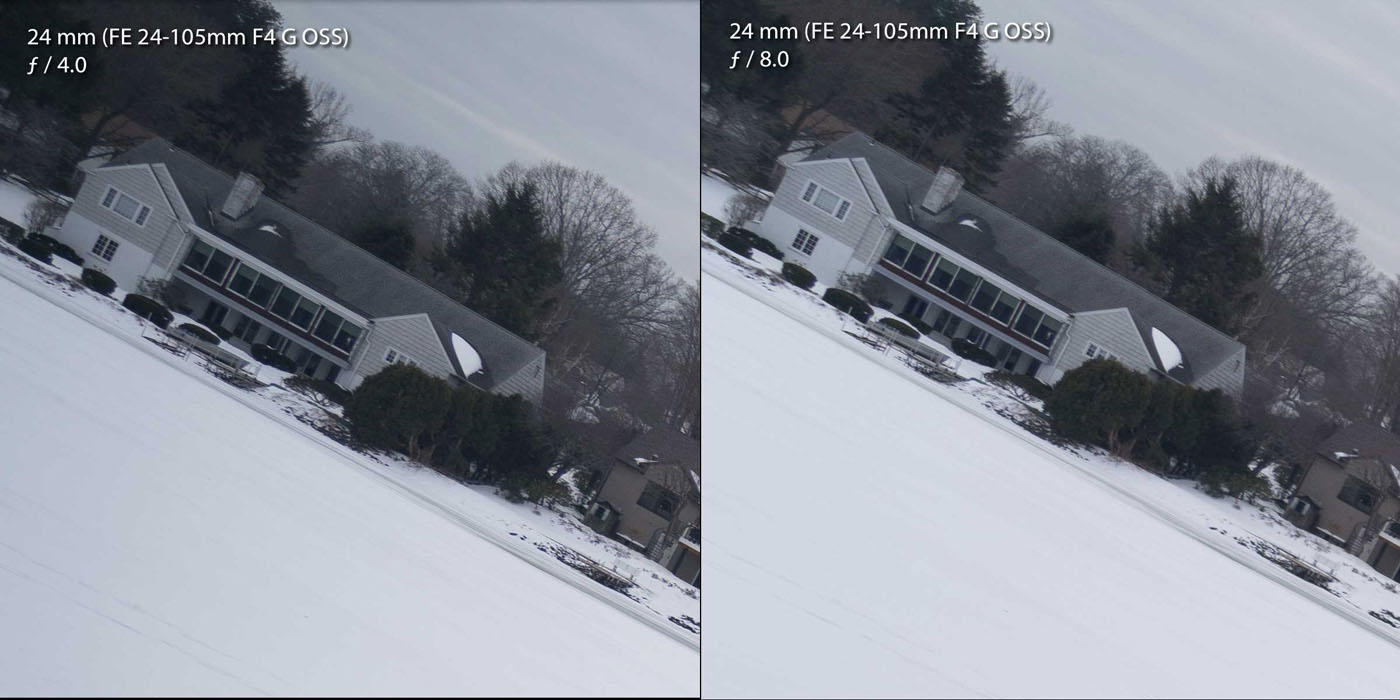
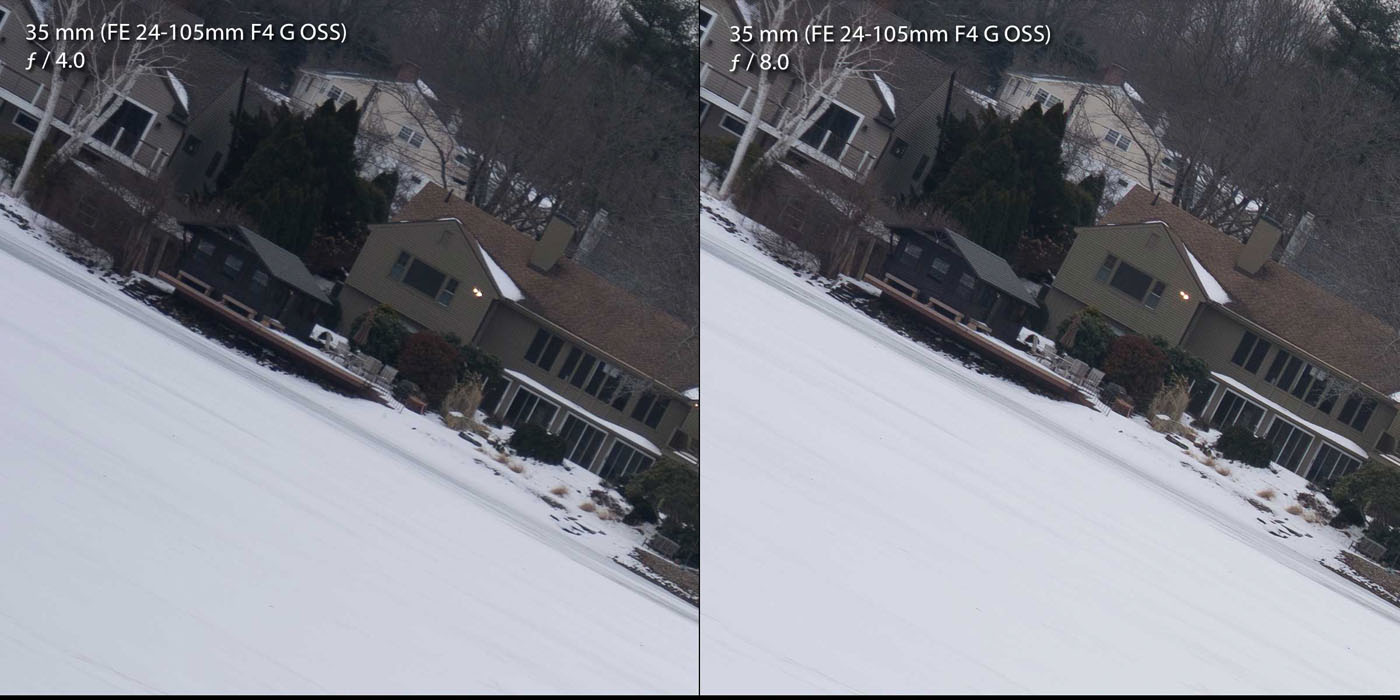
Fred, I'm not sure I'm seeing the same issues you had with the 24mm and 35mm test? I do see some slight improvement when I stop down from f/4 to f/5.6 and f/8.0. I focused all of these at the scene's center and infinity. When I have focus stacked shoots with both lenses the mid-frame and corners do show some improvement. Not sure if that is due to field curvature or just depth of field?
Except the first two which are comparisons of wide open to f/8 at 24mm and 35mm for the 24-105 G all the rest have 24-105 G on the left side and 24-70 GM on the right side.
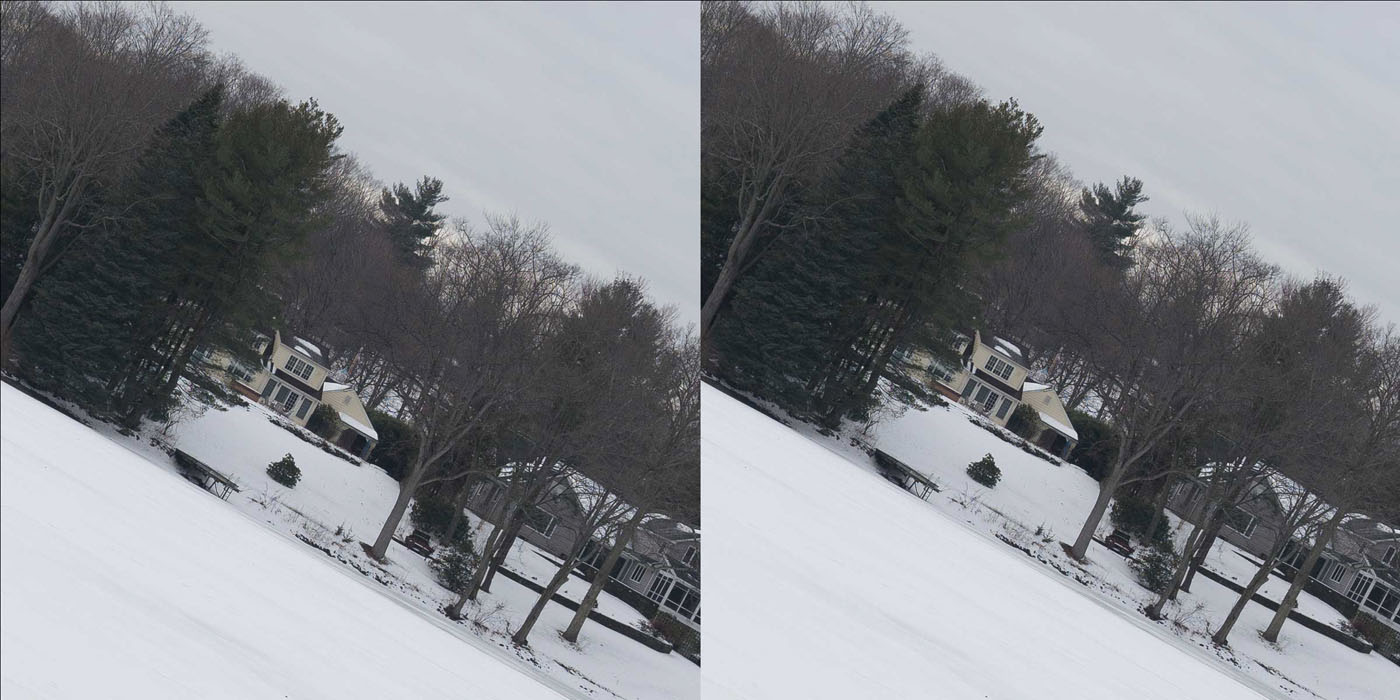
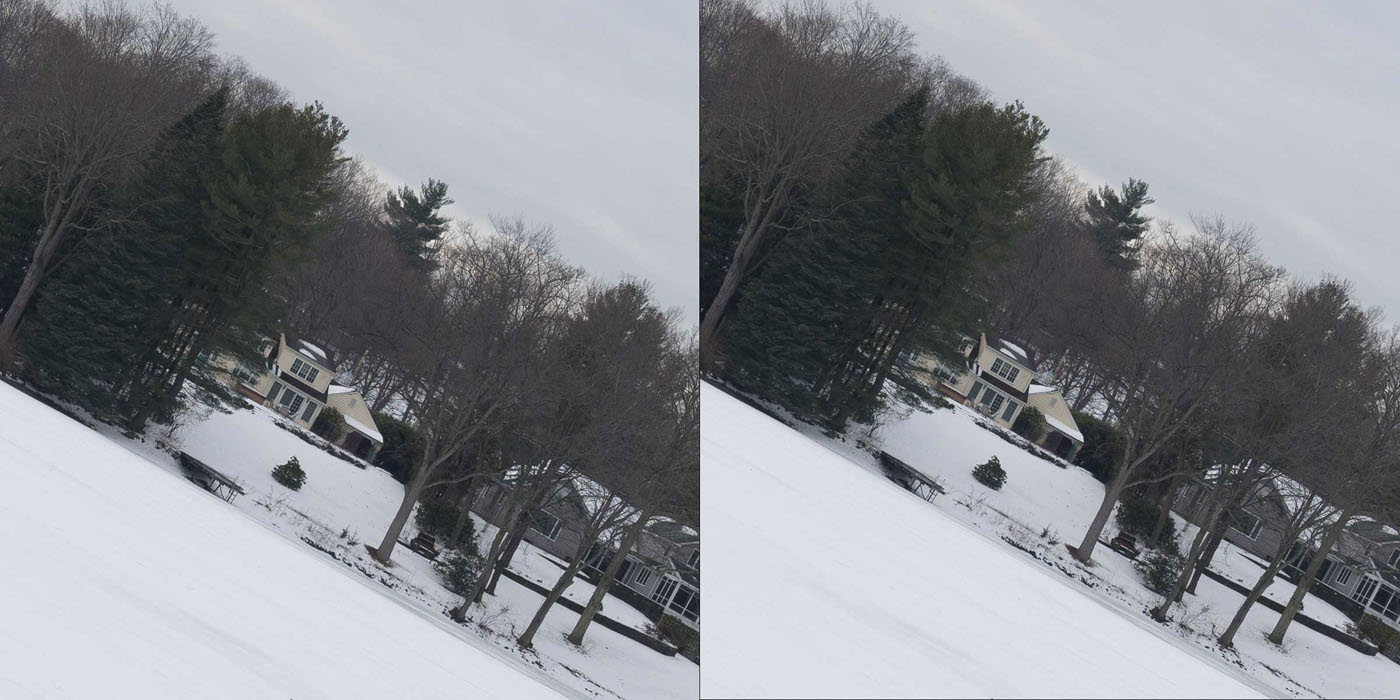
Full scene at 24mm
For Fred - 24mm f/4 vs f/8 Corner - just the 24-105 G
For Fred - 35mm f/4 vs f/8 Corner - just the 24-105 G
Thanks for the crops Chuck. I really like your examples because you seem to test this the exact same way I do.
At 24mm I can see a slight softening going from f/4 to f/8 but 35mm at f/8 looks better compared to wide open. With my copy, the 24-105/4G never improves from f/4, so it's sharp from wide open at the corners and stopping down does not make it better. I don't know what to make of this.
How did you focus the first 2 crops? Did you focus at f/4 on center and just stepped it down without refocusing? Let me know.
Fred