I\'ve been totally digging close-up filters for many years now!
For people wanting to get into macro photography think about a $25 close up lens first. There are two basic types. Single element multi-coated ones often designated by an MC printed on the barrel and multi-lens high grade achromatic ones often designated with an AC printed on the barrel and usually containing aspherical elements. The price difference is usually negligible like $25 for the MC and $45 for the AC or something close to that.
Regardless of the focal length of your camera lens (if it\'s distance reading is set to infinity) focus is obtainable at a point equal to the distance from the tip of the camera\'s lens to the focal length of the close up attachment. Of course adjusting the focus in from infinity will bring it in closer as well! The various focal lengths available from close up attachments are all about the same price and designated usually by a \"No. X\" also printed on it\'s barrel. For example a \"No. 1\" close up lens is 1,000mm and a \"No. 10\" is 100mm. This would mean that with a No.1 the farthest you can (typically) focus out to is 1000mm or about 1 yard and with a No.10 100mm (10 cm) or about 1/3 of a foot. Here\'s a useful table of designate numbers and their typical focal lengths:
The AC types are really recommended as there\'s no fringing or other aberrations that occur with them as opposed to the single lens MC types. At about No. 8 you start seeing some pin cushion (AKA Pillow shaped) distortion on the outer edges for both types. It\'s usually not too bad though depending on the camera\'s lens.
I often read people recommending to buy a set comprised of No.1, No.2, and No. 4 only - saying that by combining them you can get a No. 3 (by adding the No.1 atop the No.2), No. 5 (4+1), No. 6 (4+2), and a No.7 (1+2+4) but I dunno if I would recommend that as aberrations (fringe etc.) and distortions are compounded not to mention that these things are thick so with just 2 of them on the front of your lens you\'ve got about a 1 inch black tube which will cause severe vignetting at the lower end of most zoom lenses. I would get a No. 4 (or 5) and a No. 10 (or 9) if I had limited funds and wanted to play with macro. And probably the No. 4 (or 5) is more generally useful than the 10.
Extension tubes are \"OK\" too but far less convenient IMO, usually more expensive, and now we\'re exposing our sensor to dust every time we attache or remove it.
Here\'s some examples of AC grade close-up filters:
$20 (AC) achromat close-up filter (№ 3) at 200 mm, f/3.5
$22 (AC) achromat close-up filter (№ 4) at 101 mm, f/5.6
$22 (AC) achromat close-up filter (№ 4) at 200 mm, f/8.0
(this little guy is about 1cm in length)
$22 (AC) achromat close-up filter (№ 4) at 200 mm, f/8.0
All of the above created with an #8 achromatic close-up filter attached to a 200mm macro capable lens. For the images with \"Macro\" designated in their embedded EXIFs the 200mm lens was also in macro mode. Here and in: https://www.fredmiranda.com/forum/topic/700113
I have many more examples of AC and non-AC (only MC) close up lenses at various lengths 20mm ~ 400mm so if anyone wants to see more examples just give a yell.
I\'ve been totally digging close-up filters for many years now!
For people wanting to get into macro photography think about a $25 close up lens first. There are two basic types. Single element multi-coated ones often designated by an MC printed on the barrel and multi-lens high grade achromatic ones often designated with an AC printed on the barrel and usually containing aspherical elements. The price difference is usually negligible like $25 for the MC and $45 for the AC or something close to that.
Regardless of the focal length of your camera lens (if it\'s distance reading is set to infinity) focus is obtainable at a point equal to the distance from the tip of the camera\'s lens to the focal length of the close up attachment. Of course adjusting the focus in from infinity will bring it in closer as well! The various focal lengths available from close up attachments are all about the same price and designated usually by a \"No. X\" also printed on it\'s barrel. For example a \"No. 1\" close up lens is 1,000mm and a \"No. 10\" is 100mm. This would mean that with a No.1 the farthest you can (typically) focus out to is 1000mm or about 1 yard and with a No.10 100mm (10 cm) or about 1/3 of a foot. Here\'s a useful table of designate numbers and their typical focal lengths:
The AC types are really recommended as there\'s no fringing or other aberrations that occur with them as opposed to the single lens MC types. At about No. 8 you start seeing some pin cushion (AKA Pillow shaped) distortion on the outer edges for both types. It\'s usually not too bad though depending on the camera\'s lens.
I often read people recommending to buy a set comprised of No.1, No.2, and No. 4 only - saying that by combining them you can get a No. 3 (by adding the No.1 atop the No.2), No. 5 (4+1), No. 6 (4+2), and a No.7 (1+2+4) but I dunno if I would recommend that as aberrations (fringe etc.) and distortions are compounded not to mention that these things are thick so with just 2 of them on the front of your lens you\'ve got about a 1 inch black tube which will cause severe vignetting at the lower end of most zoom lenses. I would get a No. 4 (or 5) and a No. 10 (or 9) if I had limited funds and wanted to play with macro. And probably the No. 4 (or 5) is more generally useful than the 10.
Extension tubes are \"OK\" too but far less convenient IMO, usually more expensive, and now we\'re exposing our sensor to dust every time we attache or remove it.
Here\'s some examples of AC grade close-up filters:
$20 (AC) achromat close-up filter (№ 3) at 200 mm, f/3.5
$22 (AC) achromat close-up filter (№ 4) at 101 mm, f/5.6
$22 (AC) achromat close-up filter (№ 4) at 200 mm, f/8.0
(this little guy is about 1cm in length)
$22 (AC) achromat close-up filter (№ 4) at 200 mm, f/8.0
I have many more examples of AC and non-AC (only MC) close up lenses at various lengths 20mm ~ 400mm so if anyone wants to see more examples just give a yell.
I\'ve been totally digging close-up filters for many years now!
For people wanting to get into macro photography think about a $25 close up lens first. There are two basic types. Single element multi-coated ones often designated by an MC printed on the barrel and multi-lens high grade achromatic ones often designated with an AC printed on the barrel and usually containing aspherical elements. The price difference is usually negligible like $25 for the MC and $45 for the AC or something close to that.
Regardless of the focal length of your camera lens (if it\'s distance reading is set to infinity) focus is obtainable at a point equal to the distance from the tip of the camera\'s lens to the focal length of the close up attachment. Of course adjusting the focus in from infinity will bring it in closer as well! The various focal lengths available from close up attachments are all about the same price and designated usually by a \"No. X\" also printed on it\'s barrel. For example a \"No. 1\" close up lens is 1,000mm and a \"No. 10\" is 100mm. This would mean that with a No.1 the farthest you can (typically) focus out to is 1000mm or about 1 yard and with a No.10 100mm (10 cm) or about 1/3 of a foot. Here\'s a useful table of designate numbers and their typical focal lengths:
The AC types are really recommended as there\'s no fringing or other aberrations that occur with them as opposed to the single lens MC types. At about No. 8 you start seeing some pin cushion (AKA Pillow shaped) distortion on the outer edges for both types. It\'s usually not too bad though depending on the camera\'s lens.
I often read people recommending to buy a set comprised of No.1, No.2, and No. 4 only - saying that by combining them you can get a No. 3 (by adding the No.1 atop the No.2), No. 5 (4+1), No. 6 (4+2), and a No.7 (1+2+4) but I dunno if I would recommend that as aberrations (fringe etc.) and distortions are compounded not to mention that these things are thick so with just 2 of them on the front of your lens you\'ve got about a 1 inch black tube which will cause severe vignetting at the lower end of most zoom lenses. I would get a No. 4 (or 5) and a No. 10 (or 9) if I had limited funds and wanted to play with macro. And probably the No. 4 (or 5) is more generally useful than the 10.
Extension tubes are \"OK\" too but far less convenient IMO, usually more expensive, and now we\'re exposing our sensor to dust every time we attache or remove it.
Here\'s some examples of AC grade close-up filters:
$20 (AC) achromat close-up filter (№ 3) at 200 mm, f/3.5
$22 (AC) achromat close-up filter (№ 4) at 101 mm, f/5.6
$22 (AC) achromat close-up filter (№ 4) at 200 mm, f/8.0
(this little guy is about 1cm in length)
$22 (AC) achromat close-up filter (№ 4) at 200 mm, f/8.0
I have many many more examples of AC and non-AC (only MC) close up lenses and various lengths 20 ~ 400 so if anyone wants to see more examples just give a yell.
Oct 27, 2008 at 12:57 AM
Previous versions of Bifurcator's message #6316240 « Don't get caught »


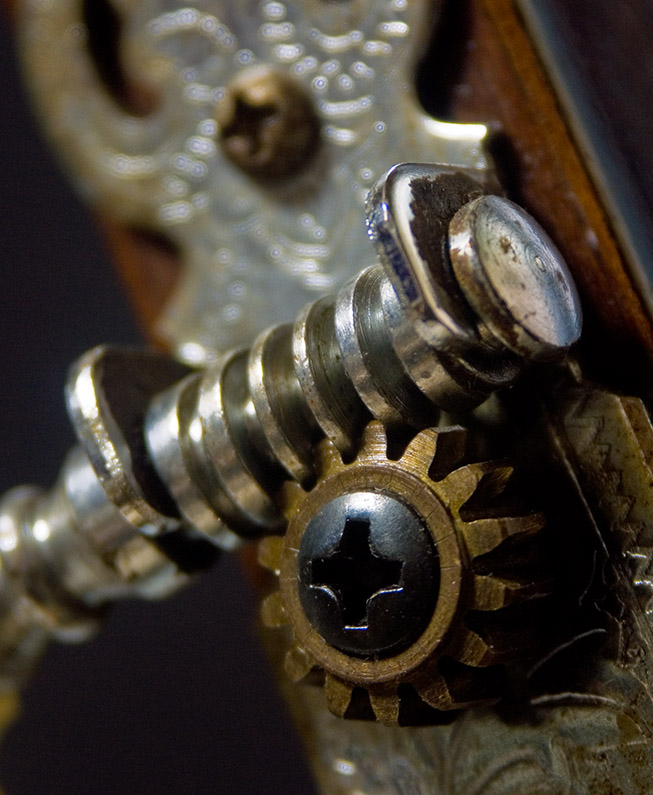


 For the images with \"Macro\" designated in their embedded EXIFs the 200mm lens was also in macro mode. Here and in: