gdanmitchell
Offline
Upload & Sell: Off
|
 Re: Should I Replace My 1Dxll and 5Ds w/The R5? Re: Should I Replace My 1Dxll and 5Ds w/The R5? | |
JohnSil wrote:
I want to be able to post in the R5 images thread!!! LoL
No, just kidding!
Some background...., I saw no need to replace my current cameras with a ML any time soon.
But when shooting sports, mostly bicycle racing with the 1D probably 20% of the time the camera locks focus on the jersey and the face/eyes are soft. If its a really critical shot like a finish line I pre-focus and turn off the AF to be sure I get the shot and use high fps.
A couple of weeks ago I did an outdoor model shoot with the 5s and had my model up against a vertical dirt wall with lots of roots and rocks which were very contrasty. Again, I lost some really nice shots to softness because the camera locked over her shoulder on the tree roots.
With both cameras the focus point was exactly where I had put it, meaning right on the eye.
Also when using some of my fast lenses wide open even in the studio I'll get soft eyes because of the razor thin DOF.
I Micro Adjust my main lenses a couple times a year and even in that process I get variations during that process which means that the lenses are varying a bit in actual use.
My thinking is that all of those issues would resolve themselves!?
The only drawback I see is a lack of weather sealing in the R5 vs the 1D. The R5 would need a raincoat!!
And a question, does the R5 spot meter follow the focus point as in the 1Dx?
I would use my existing EF lenses on a converter for a while and them maybe replace my most used lenses to RF down the road.
So are there any reasons why I should NOT replace those two cameras with one R5?
Thanks so much...., John
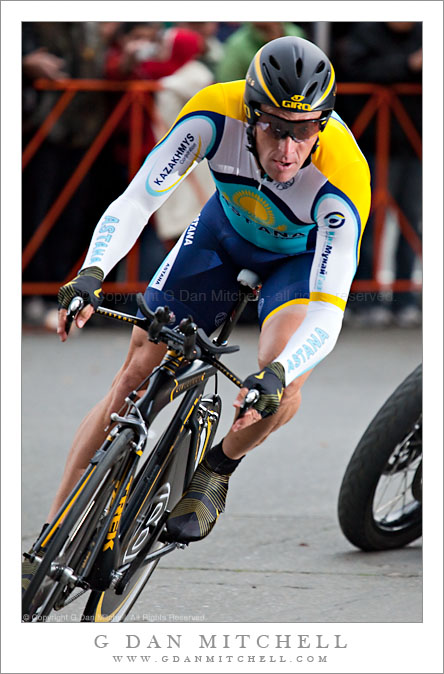
An aside about shooting bicycle racing... I've done a bit of it myself though admittedly not recently. The problem isn't really the camera so much as the nature of the typical framing of a cyclist. Let's say the rider is passing from left to right. You most likely will position the riders head/face above and to the right of the center of the frame, at least if you hope to include his/her body and bike in the frame, too.
So, ideally, you would move the AF area pretty far to the upper right to accomplish this. Indeed, if you leave the AF area more or less in the center of the frame, you will end up focusing on the jersey (or the riders closest arm) or possibly the bike.
There are a few possible solutions, and each has its pluses and minuses... and I think the situation will be similar with either your current camera or a newer mirrorless model:
1. Use a smaller aperture so that precise focus isn't quite as critical. If this means raising the ISO quite a bit, do it. (It is often OK to accept a bit of motion blur in cycling photographs — in fact, done right, they. can contribute to a sense of speed.) One downside is that your background may not be as out of focus as you would like, so try to position yourself so that the background won't be too distracting. (Here, too, a shutter speed slow enough to allow some blur can help — if you pan with the riders the motion will blur and deemphasize details in the background.)
2. Move the AF point to the upper right (in my example, or wherever it needs to be) so that the camera is more likely to AF on the riders' faces. Even just moving it up and keeping it in the center can help. To make this work, you'll need to become adept at quickly moving the AF point around... and keep track of where you have put it.
3. Don't frame the riders quite so tightly, be careful to put the center-positioned AF point on their faces, and be prepared to crop out extraneous stuff in post. (You'll likely end up cropping out stuff above the riders' heads and occasionally missing their lower legs/feet.) The minus of this approach is obvious, but the plus is that with fast-moving action you may not need to frame quite so accurately.
4. Try different ways of composing. If framing that includes the cyclist and bike puts the necessary focus point too high in the frame, then shoot even tighter and focus on the riders' faces using a longer focal length.
Obviously, as you know if you have shot bicycle racing, things move fast and you need to practice a LOT at tracking riders at speed and keeping them under the AF point. That won't be any easier with mirrorless... and the slight display latency of mirrorless systems may make that a big more difficult.
The pre-focus method can work, in particular if you hope to catch a rider coming straight at you at speed. Basically pick the spot, then bust as the rider approaches.
Finally, having a functional camera with decent capabilities helps, but as is so often the case a lot of what makes this work is more about technique than about gear.
Good luck.
Dan
|


