Previous versions of duncang's message #15631900 « Canon R5 vs Sony A1 for Birds »
duncang Offline [X]
Canon R5 vs Sony A1 for Birds
arbitrage wrote: Pius Sullivan wrote:
You did a fair evaluation on the BEAF between the R5 vs A1 then you proceeded to elaborate on other issues with the R5.
What are some of the pitfalls of the A1 or lets just say point of failure for the price range. I can think of a few so you must be more aware then I what they are.... (You can add to the list)
EVF blackouts whilst in sunny environments.
Battery drain is very fast.
IBIS issue. IBIS takes 5 second to stabilize when the camera is moved from hanging on its strap to pictures / video taking position.
Lens Release button...
arbitrage wrote:
The R5 is better at recognizing bird shapes, especially when the bird is not in a normal shape/pose. It will draw the body box when the bird's head is tucked away behind. It will draw a head box when the head is somewhat visible but still turned away. The A1 will just dance the dots in these situations...occasionally drawing some sort of body/head box.
However, once the bird gets into a proper pose with good head angle (ie any time you'd actually want to push the shutter) then I find the two systems are near identical in their effectiveness. I've had both systems struggle in complex surroundings. Getting confused by grass in foreground and background.
The A1 system is more versatile because you can define the "watch" zone for eye-AF from as small as S. Flex Spot all the way up to Wide. The R5 is more limiting because you only have the Single pt or Full frame to "look" from. The A1 gives a pre-display of bird eye-af working before AF is engaged in all modes. The R5 requires a very specific setup to show the white pre-frame and if you set it up that way you can't even get access to the Single point "watch" area. I found having the pre-frame indication very valuable as you know when the system is lost and can go to a non-eye AF mode to get the shot properly. The A1 also has the versatility to only look for the eye in the size of the AF area you are using but then you have the choice to switch to tracking and have the eye tracked over the entire frame or continue to only find it within the selected AF area (like say a Med Spot or Zone etc). This versatility makes the A1 my preferred system if I had to choose one or the other.
As far as showing eye-af indication for flight the R5 does do it more often. The Sony requires very good user technique with a very stable pan speed to have it show up. I've had it show on swallows in flight a number of times now with the A1 when I pan very smooth. The R5 will show eye-af indication with much poorer technique and as you found with the bird smaller in the frame. The thing is that in the end both cameras get the shots in focus and the A9/A1 underlying (non-eyeAF) system has always been uncanny at delivering sharp heads so that doesn't change.
As you discovered the R5 doesn't have any blackout when shooting in 20FPS ES nor 12FPS MS/EFCS. At 20FPS is also is fairly smooth while actively firing and panning. It falls apart if you let go of the shutter mid-burst and then want to keep panning with a BIF. When you let go it jumps back to live-EVF feed and for a fast bird that can be distracting enough to loose your way. Solution is not to let off the shutter during an active panning/burst. At 12FPS it is less smooth when panning as the EVF display is updated at 12FPS and not 20FPS (both use some form of frame insertion but obviously having that at 20 vs 12 is going to be smoother).
As to distortion....wing distortion isn't too common. Hummingbirds will certainly show it and some other very fast wingbeats where the bird also moves vertically in the frame. Of course the larger the bird is in the frame the more likely it will show it. Still I rarely had shots ruined from wing distortion. Where the R5 does show more issues is with leaning vertical lines like trees, grass and reeds in the background. This did ruin shots for me and if I knew I was in a situation where it could happen I'd switch to 12FPS ECFS instead.
The R5 doesn't really fall down for bird photography. IMO it is the best Canon camera ever made for bird photography to date. It would have to be either my #2 or #3 choice out of all cameras available to date for bird photography. And if the R3 is lower MP then for anyone not living in Florida it will likely remain the best Canon bird photography camera. Although the R3 will likely fix all the other small issues I have with the R5 compared to the A1 and then it will end up being a camera that people have to decide between higher MP for cropping of the R5 vs better features with the R3 (derived from the stacked sensor).
Some of my smaller issues with the R5 were too flush buttons making it hard to know which I was pushing, less button customization than I'd prefer, no toggle option for APS-C/FF, no way to vary the FPS in ES and poor IBIS/IS interaction for panning (requiring one to just turn off IBIS/IS all together).
Yes...my post was addressing the OPs interest in the R5 after a brief outing with it. The OP already has the A1 and was regularly participating in the early threads as we waited for the release of the camera. I'm sure he knows by now what limitations or issues the A1 has.
To address your list:
1) EVF blackout is an issue. With some position management and forethought it can be avoided but for sure it needs to be fixed.
2) Battery drain is poor in my opinion compared to previous Sony cameras I owned. The R5 was the second worst camera I owned for battery drain. The A1 battery drain can be greatly improved if one is okay setting a short PowerSave time like 10s or 1min. I prefer not to set a short one as I prefer to just keep it out of PowerSave and have it instantly respond. Most days I get into the 2nd battery on A1 and also did so on the R5. However, I get further through the 2nd A1 battery then I'd be through on the 2nd R5 battery. Anyways....at the end of the session I charge up two batteries via USB-C on either. So really no difference in actual use. If one shoots longer days then a 3rd A1 battery may be needed more often than a 3rd R5 battery. Thankfully even when my A1 battery is at 1% it doesn't start crippling my FPS Although to be fair to the R5 in ES it also doesn't cripple the FPS based on battery %.
3) IBIS issue is for shorter focal lengths and certain lenses according to the video I watched. I've never noticed it with long lenses. I will try to remember to look for it next time I'm out...but if I haven't noticed it yet I doubt my lenses are affected?? At least with A1 I can use OSS/IBIS for BIF where as with the R5 I had to shut both off when panning BIF as they constantly fought each other.
4) Lens release button position is a huge positive for me. I've always regarded that right side placement to be far superior to left side placement when trying to quickly switch TCs or lenses out in the field. Especially when I don't have a place to put the camera/lens down due to a slope or mud etc. I have to deliberately reach under the lens with my middle finger to access the button when I want to. I've never once in 3 years found my finger accidentally resting on the button and worried that I might accidentally push it and release the lens. I also don't recall anyone complaining about this over the many years of Sony MILCs other than TN (most likely to garner the clickbait and create controversy where it doesn't really exist in order to drive traffic).
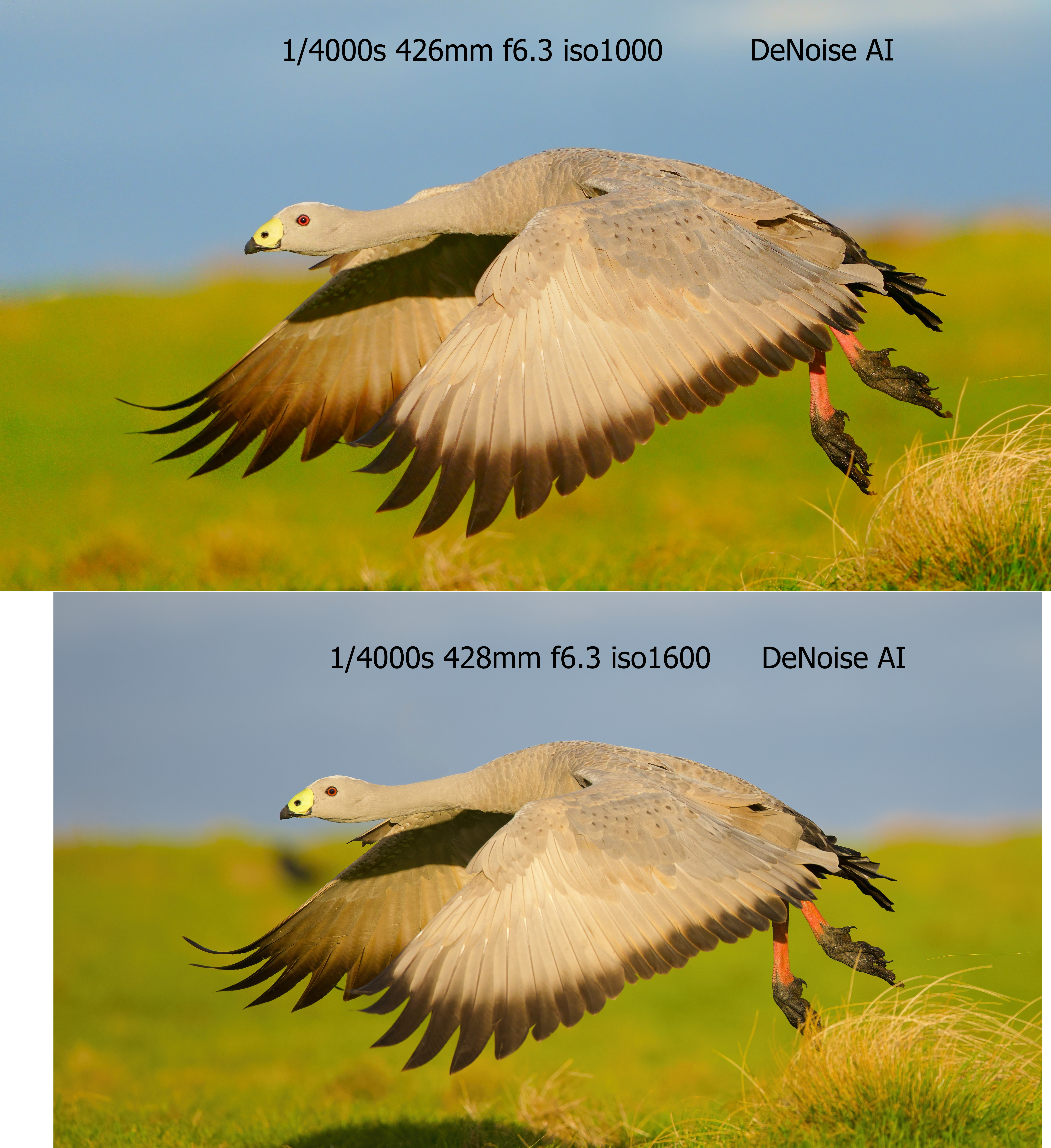
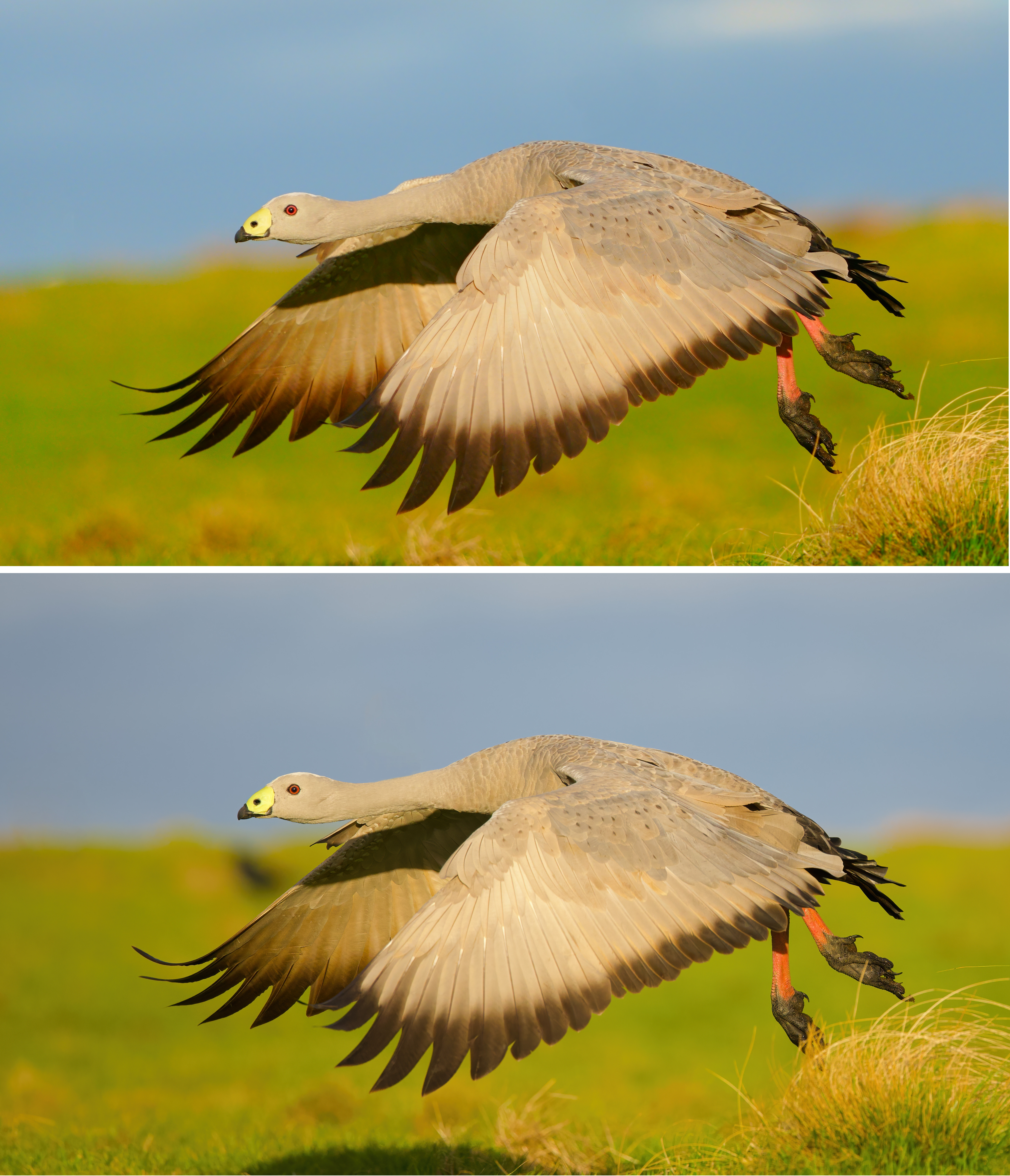
I just got the R5 images - one particular sequence we both shot and the R5 has 50 shots and the a1 75 (or there abouts). 3 of the R5 shots looked like some motion or stabilisation blur with horizontally elongated sun reflection in the eye and 2 of the A1 looked to be just a fraction less sharp than the others.
For the rest they were near identical all tack sharp.
So perhaps the A1 gets 97% and the R5 94% - may as well call that a draw.
Here is one example - A1 was auto iso, R5 was manual iso. Both cropped to 16:9. Size difference presumably due to 45mp and 50mp difference.
Any claim that R5 are much softer I don't believe. Certainly doesn't look like it on a 5K display.
Jun 24, 2021 at 06:32 PM
duncang Offline [X]
Canon R5 vs Sony A1 for Birds
arbitrage wrote: Pius Sullivan wrote:
You did a fair evaluation on the BEAF between the R5 vs A1 then you proceeded to elaborate on other issues with the R5.
What are some of the pitfalls of the A1 or lets just say point of failure for the price range. I can think of a few so you must be more aware then I what they are.... (You can add to the list)
EVF blackouts whilst in sunny environments.
Battery drain is very fast.
IBIS issue. IBIS takes 5 second to stabilize when the camera is moved from hanging on its strap to pictures / video taking position.
Lens Release button...
arbitrage wrote:
The R5 is better at recognizing bird shapes, especially when the bird is not in a normal shape/pose. It will draw the body box when the bird's head is tucked away behind. It will draw a head box when the head is somewhat visible but still turned away. The A1 will just dance the dots in these situations...occasionally drawing some sort of body/head box.
However, once the bird gets into a proper pose with good head angle (ie any time you'd actually want to push the shutter) then I find the two systems are near identical in their effectiveness. I've had both systems struggle in complex surroundings. Getting confused by grass in foreground and background.
The A1 system is more versatile because you can define the "watch" zone for eye-AF from as small as S. Flex Spot all the way up to Wide. The R5 is more limiting because you only have the Single pt or Full frame to "look" from. The A1 gives a pre-display of bird eye-af working before AF is engaged in all modes. The R5 requires a very specific setup to show the white pre-frame and if you set it up that way you can't even get access to the Single point "watch" area. I found having the pre-frame indication very valuable as you know when the system is lost and can go to a non-eye AF mode to get the shot properly. The A1 also has the versatility to only look for the eye in the size of the AF area you are using but then you have the choice to switch to tracking and have the eye tracked over the entire frame or continue to only find it within the selected AF area (like say a Med Spot or Zone etc). This versatility makes the A1 my preferred system if I had to choose one or the other.
As far as showing eye-af indication for flight the R5 does do it more often. The Sony requires very good user technique with a very stable pan speed to have it show up. I've had it show on swallows in flight a number of times now with the A1 when I pan very smooth. The R5 will show eye-af indication with much poorer technique and as you found with the bird smaller in the frame. The thing is that in the end both cameras get the shots in focus and the A9/A1 underlying (non-eyeAF) system has always been uncanny at delivering sharp heads so that doesn't change.
As you discovered the R5 doesn't have any blackout when shooting in 20FPS ES nor 12FPS MS/EFCS. At 20FPS is also is fairly smooth while actively firing and panning. It falls apart if you let go of the shutter mid-burst and then want to keep panning with a BIF. When you let go it jumps back to live-EVF feed and for a fast bird that can be distracting enough to loose your way. Solution is not to let off the shutter during an active panning/burst. At 12FPS it is less smooth when panning as the EVF display is updated at 12FPS and not 20FPS (both use some form of frame insertion but obviously having that at 20 vs 12 is going to be smoother).
As to distortion....wing distortion isn't too common. Hummingbirds will certainly show it and some other very fast wingbeats where the bird also moves vertically in the frame. Of course the larger the bird is in the frame the more likely it will show it. Still I rarely had shots ruined from wing distortion. Where the R5 does show more issues is with leaning vertical lines like trees, grass and reeds in the background. This did ruin shots for me and if I knew I was in a situation where it could happen I'd switch to 12FPS ECFS instead.
The R5 doesn't really fall down for bird photography. IMO it is the best Canon camera ever made for bird photography to date. It would have to be either my #2 or #3 choice out of all cameras available to date for bird photography. And if the R3 is lower MP then for anyone not living in Florida it will likely remain the best Canon bird photography camera. Although the R3 will likely fix all the other small issues I have with the R5 compared to the A1 and then it will end up being a camera that people have to decide between higher MP for cropping of the R5 vs better features with the R3 (derived from the stacked sensor).
Some of my smaller issues with the R5 were too flush buttons making it hard to know which I was pushing, less button customization than I'd prefer, no toggle option for APS-C/FF, no way to vary the FPS in ES and poor IBIS/IS interaction for panning (requiring one to just turn off IBIS/IS all together).
Yes...my post was addressing the OPs interest in the R5 after a brief outing with it. The OP already has the A1 and was regularly participating in the early threads as we waited for the release of the camera. I'm sure he knows by now what limitations or issues the A1 has.
To address your list:
1) EVF blackout is an issue. With some position management and forethought it can be avoided but for sure it needs to be fixed.
2) Battery drain is poor in my opinion compared to previous Sony cameras I owned. The R5 was the second worst camera I owned for battery drain. The A1 battery drain can be greatly improved if one is okay setting a short PowerSave time like 10s or 1min. I prefer not to set a short one as I prefer to just keep it out of PowerSave and have it instantly respond. Most days I get into the 2nd battery on A1 and also did so on the R5. However, I get further through the 2nd A1 battery then I'd be through on the 2nd R5 battery. Anyways....at the end of the session I charge up two batteries via USB-C on either. So really no difference in actual use. If one shoots longer days then a 3rd A1 battery may be needed more often than a 3rd R5 battery. Thankfully even when my A1 battery is at 1% it doesn't start crippling my FPS Although to be fair to the R5 in ES it also doesn't cripple the FPS based on battery %.
3) IBIS issue is for shorter focal lengths and certain lenses according to the video I watched. I've never noticed it with long lenses. I will try to remember to look for it next time I'm out...but if I haven't noticed it yet I doubt my lenses are affected?? At least with A1 I can use OSS/IBIS for BIF where as with the R5 I had to shut both off when panning BIF as they constantly fought each other.
4) Lens release button position is a huge positive for me. I've always regarded that right side placement to be far superior to left side placement when trying to quickly switch TCs or lenses out in the field. Especially when I don't have a place to put the camera/lens down due to a slope or mud etc. I have to deliberately reach under the lens with my middle finger to access the button when I want to. I've never once in 3 years found my finger accidentally resting on the button and worried that I might accidentally push it and release the lens. I also don't recall anyone complaining about this over the many years of Sony MILCs other than TN (most likely to garner the clickbait and create controversy where it doesn't really exist in order to drive traffic).
I just got the R5 images - one particular sequence we both shot and the R5 has 50 shots and the a1 75 (or there abouts). 3 of the R5 shots looked like some motion or stabilisation blur with horizontally elongated sun reflection in the eye and 2 of the A1 looked to be just a fraction less sharp than the others.
For the rest they were near identical all tack sharp.
So perhaps the A1 gets 97% and the R5 94% - may as well call that a draw.
Here is one example - A1 was auto iso, R5 was manual iso. Both cropped to 16:9. Size difference presumably due to 45mp and 50mp difference.
Any claim that R5 are much softer I don't believe. Certainly doesn't look like it on a 5K display.
Jun 24, 2021 at 08:57 AM
duncang Offline [X]
Re: Canon R5 vs Sony A1 for Birds
arbitrage wrote: Pius Sullivan wrote:
You did a fair evaluation on the BEAF between the R5 vs A1 then you proceeded to elaborate on other issues with the R5.
What are some of the pitfalls of the A1 or lets just say point of failure for the price range. I can think of a few so you must be more aware then I what they are.... (You can add to the list)
EVF blackouts whilst in sunny environments.
Battery drain is very fast.
IBIS issue. IBIS takes 5 second to stabilize when the camera is moved from hanging on its strap to pictures / video taking position.
Lens Release button...
arbitrage wrote:
The R5 is better at recognizing bird shapes, especially when the bird is not in a normal shape/pose. It will draw the body box when the bird's head is tucked away behind. It will draw a head box when the head is somewhat visible but still turned away. The A1 will just dance the dots in these situations...occasionally drawing some sort of body/head box.
However, once the bird gets into a proper pose with good head angle (ie any time you'd actually want to push the shutter) then I find the two systems are near identical in their effectiveness. I've had both systems struggle in complex surroundings. Getting confused by grass in foreground and background.
The A1 system is more versatile because you can define the "watch" zone for eye-AF from as small as S. Flex Spot all the way up to Wide. The R5 is more limiting because you only have the Single pt or Full frame to "look" from. The A1 gives a pre-display of bird eye-af working before AF is engaged in all modes. The R5 requires a very specific setup to show the white pre-frame and if you set it up that way you can't even get access to the Single point "watch" area. I found having the pre-frame indication very valuable as you know when the system is lost and can go to a non-eye AF mode to get the shot properly. The A1 also has the versatility to only look for the eye in the size of the AF area you are using but then you have the choice to switch to tracking and have the eye tracked over the entire frame or continue to only find it within the selected AF area (like say a Med Spot or Zone etc). This versatility makes the A1 my preferred system if I had to choose one or the other.
As far as showing eye-af indication for flight the R5 does do it more often. The Sony requires very good user technique with a very stable pan speed to have it show up. I've had it show on swallows in flight a number of times now with the A1 when I pan very smooth. The R5 will show eye-af indication with much poorer technique and as you found with the bird smaller in the frame. The thing is that in the end both cameras get the shots in focus and the A9/A1 underlying (non-eyeAF) system has always been uncanny at delivering sharp heads so that doesn't change.
As you discovered the R5 doesn't have any blackout when shooting in 20FPS ES nor 12FPS MS/EFCS. At 20FPS is also is fairly smooth while actively firing and panning. It falls apart if you let go of the shutter mid-burst and then want to keep panning with a BIF. When you let go it jumps back to live-EVF feed and for a fast bird that can be distracting enough to loose your way. Solution is not to let off the shutter during an active panning/burst. At 12FPS it is less smooth when panning as the EVF display is updated at 12FPS and not 20FPS (both use some form of frame insertion but obviously having that at 20 vs 12 is going to be smoother).
As to distortion....wing distortion isn't too common. Hummingbirds will certainly show it and some other very fast wingbeats where the bird also moves vertically in the frame. Of course the larger the bird is in the frame the more likely it will show it. Still I rarely had shots ruined from wing distortion. Where the R5 does show more issues is with leaning vertical lines like trees, grass and reeds in the background. This did ruin shots for me and if I knew I was in a situation where it could happen I'd switch to 12FPS ECFS instead.
The R5 doesn't really fall down for bird photography. IMO it is the best Canon camera ever made for bird photography to date. It would have to be either my #2 or #3 choice out of all cameras available to date for bird photography. And if the R3 is lower MP then for anyone not living in Florida it will likely remain the best Canon bird photography camera. Although the R3 will likely fix all the other small issues I have with the R5 compared to the A1 and then it will end up being a camera that people have to decide between higher MP for cropping of the R5 vs better features with the R3 (derived from the stacked sensor).
Some of my smaller issues with the R5 were too flush buttons making it hard to know which I was pushing, less button customization than I'd prefer, no toggle option for APS-C/FF, no way to vary the FPS in ES and poor IBIS/IS interaction for panning (requiring one to just turn off IBIS/IS all together).
Yes...my post was addressing the OPs interest in the R5 after a brief outing with it. The OP already has the A1 and was regularly participating in the early threads as we waited for the release of the camera. I'm sure he knows by now what limitations or issues the A1 has.
To address your list:
1) EVF blackout is an issue. With some position management and forethought it can be avoided but for sure it needs to be fixed.
2) Battery drain is poor in my opinion compared to previous Sony cameras I owned. The R5 was the second worst camera I owned for battery drain. The A1 battery drain can be greatly improved if one is okay setting a short PowerSave time like 10s or 1min. I prefer not to set a short one as I prefer to just keep it out of PowerSave and have it instantly respond. Most days I get into the 2nd battery on A1 and also did so on the R5. However, I get further through the 2nd A1 battery then I'd be through on the 2nd R5 battery. Anyways....at the end of the session I charge up two batteries via USB-C on either. So really no difference in actual use. If one shoots longer days then a 3rd A1 battery may be needed more often than a 3rd R5 battery. Thankfully even when my A1 battery is at 1% it doesn't start crippling my FPS Although to be fair to the R5 in ES it also doesn't cripple the FPS based on battery %.
3) IBIS issue is for shorter focal lengths and certain lenses according to the video I watched. I've never noticed it with long lenses. I will try to remember to look for it next time I'm out...but if I haven't noticed it yet I doubt my lenses are affected?? At least with A1 I can use OSS/IBIS for BIF where as with the R5 I had to shut both off when panning BIF as they constantly fought each other.
4) Lens release button position is a huge positive for me. I've always regarded that right side placement to be far superior to left side placement when trying to quickly switch TCs or lenses out in the field. Especially when I don't have a place to put the camera/lens down due to a slope or mud etc. I have to deliberately reach under the lens with my middle finger to access the button when I want to. I've never once in 3 years found my finger accidentally resting on the button and worried that I might accidentally push it and release the lens. I also don't recall anyone complaining about this over the many years of Sony MILCs other than TN (most likely to garner the clickbait and create controversy where it doesn't really exist in order to drive traffic).
I just got the R5 images - one particular sequence we both shot and the R5 has 50 shots and the a1 75 (or there abouts). 3 of the R5 shots looked like some motion or stabilisation blur with horizontally elongated sun reflection in the eye and 2 of the A1 looked to be just a fraction less sharp than the others.
For the rest they were near identical all tack sharp.
So perhaps the A1 gets 97% and the R5 94% - may as well call that a draw.
Here is one example - A1 was auto iso, R5 was manual iso. Both cropped to 16:9. Size difference presumably due to 45mp and 50mp difference.
Any claim that R5 are much softer I don't believe. Certainly doesn't look like it on a 5K display.
Jun 24, 2021 at 08:48 AM
Previous versions of duncang's message #15631900 « Canon R5 vs Sony A1 for Birds »


 (You can add to the list)
 Although to be fair to the R5 in ES it also doesn't cripple the FPS based on battery %.