Steve Spencer
Offline
Upload & Sell: On
|
 Re: Nokishita - Sigma 35mm 1.4 DG DN Art priced at $899 Re: Nokishita - Sigma 35mm 1.4 DG DN Art priced at $899 | |
tsdevine wrote:
Seems like they generally go in pairs....in both scenarios (single vs multiple focus groups.)
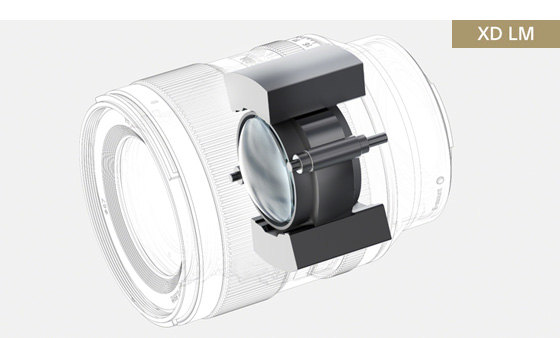
https://www.sony.jp/ichigan/products/SEL35F14GM/
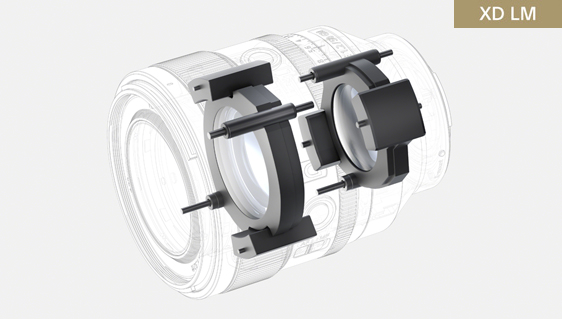
https://www.sony.jp/ichigan/products/SEL50F12GM/feature_1.html
Go to 0:33 and you can see the motors moving the focus groups...
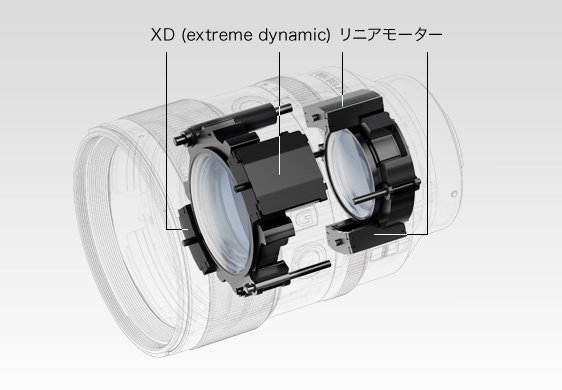
https://www.sony.jp/ichigan/products/SEL135F18GM/feature_1.html
Steve Spencer wrote:
bjornthun wrote:
Steve Spencer wrote:
tsdevine wrote:
And Tamron seems to be introducing lenses with linear motors, because Sony owns a stake in Tamron? I don't think Tamron has much experience historically with audio equipment. Fuji has quite a few lenses now with linear motors as well.
Hard to believe that it's just based on familiarity with linear motors....I mean they have moved TO linear motors with lenses, they didn't start there.
I'm not sure how to prove/disprove your theory/hypothesis though. I don't see where rotation buys you much when moving lens groups, linear does seem well suited to that activity (other than needed more motors to get the torque.) So I started looking at broader benefits of the different types, not specific to lenses. In theory, broader based benefits of one type of a motor vs another should be informative in the context of use within lenses.
I mean if we can't trust Sony (or any manufacturer) when they list benefits, and we can't trust anyone reviewing those lenses (under the theory they are just parroting the manufacturers), and we can't compare lenses, because maybe a manufacturer chose to make their stepper based lens slower (and the one using linear motors chose to make it faster.) How can we prove or disprove anything in terms of use within lenses?
Your theory is based on speculation. I'm not saying it's not founded in some sort of logic, but I don't why we should trust you more than the other sources noted.
I guess it's a mystery, since no valid inferences can be made.
Steve Spencer wrote:
tsdevine wrote:
From Automate.org:
Stepper
Stepper motors have an internal rotor that is influenced by external magnets. After a winding effect produces energy, the teeth of the rotor turn in fixed steps. Because of their incremental movement, stepper motors offer utility as they can change speed and direction.
Linear Motors
As the name suggests, linear motors can be thought of as an unrolled brushless motor. They are designed using the same underlying magnetic theory, but they operate in an open form. One major benefit of using a linear motor is speed.
Rotary motors (plus rotary-to-linear devices) versus linear motors
When choosing between rotary motors or linear motors, be sure to clearly define your goals. The two main considerations should be speed and accuracy, but cost can play a major factor. Linear motors can have substantially greater upfront costs.
I don't know how to "confirm" this beyond a shadow of a doubt though. I'm sure there can be better and worse stepper motors, and better and worse linear motors. But as a category, there must be some tangible benefits of one vs the other, especially if there is a difference in cost. Seems like a more expensive solution would need to yield tangible benefits.
-Tim
Tim, one thing more to know about both linear motors and stepper motors is that they are both old technology borrowed for mirrorless because they have 5 features in common: 1) they are very quiet (this is very useful for video); 2) they are very precise (great for focus accuracy) 3) they are small (small is a goal of many mirrorless systems); 4) it is relatively easy to use more than one motor and coordinate these multiple motors; 5) they are fast (obviously speed is a good thing for focus). Stepper motors were used most extensively in the past is clocks and they rotate, which most lenses have done for focussing for decades. Linear motor were used most extensively in speakers before being used in camera lenses, and do not rotate. I suspect, but have no way of knowing that Sony uses linear motors because they have extensive experience with linear motors in speakers (they did make audio equipment for a long time after all). There may not be clear tangible benefits, but rather Sony may be simply using a technology they know well that other companies do not know well.
Tim, I am not saying my speculations are anything other than speculations. They certainly aren't theories, but while we are at it let me add one possible downside of linear motor and it is just a possible downside and I have no idea if it has an impact in practice. If you move a focussing group with a linear motor you are moving the lenses along just one side and not the other. Can in time this lead lenses to be tilted/decentered? One advantage of rotating lenses is that you are applying force around the whole rim of the sensor as it rotating this means the force should be equally applied at all points in the circumference. That won't be true with a linear motor and the force being applied has at least the potential to create decentering/tilt. No doubt Sony takes that very much into consideration when designing lenses, but it is an issue that linear motor face that rotating motors don't have to deal with or at least it seems to me that is the case.
Sony addresses the potential issue of tilting through using TWO linear motors on the focus group. As per their own web site.
I'm not talking about the 35 f/1.4 GM, but the general issue of linear motors and I think Sony has addressed this issue in a number of ways and probably the most important is mounts most of their focussing units on rails inside the lens to help prevent tilt. Certainly having two motors--one on either side of the lens moving the same focussing group--would be another strategy to reduce tilt. This is just one way to use two focussing motors, however. You could use two motors with one motor each controlling a different focussing group for example as another use of two motors. That may have advantages as well as probably does as it may speed focussing. I am not at all sure how Sony used the two motors in the Sony 35 f/1.4 GM, and regardless two motors opposite of each other just means pressure is being applied on two points on the lens group instead of one which is likely to be better, but still is not the same things as equal pressure being applied around the circumference of the lens.
There are also quite a few lenses with just one (e.g., 24 f/1.4 GM; 55 f/1.8 ZA; 100 f/2.8 GM), but yes when there are two (14 f/1.8 GM; 20 f/1.8; 35 f/1.8; 400 GM; 600 f/4 GM) or more (50 f/1.2; 135 f/1.8) tend to use pairs, although the 90 f/2.8 G appears to be an exception in which the two motors seem to be used each to power a separate focus group. It does appear in more recent lenses that Sony has moved to design more lenses with linear motors in pairs.
|