OM Zuiko 100mm F2 cf. Zeiss ZE Makro Planar 100mm F2
Now the close up depth of field, (before the Bokeh Series.)
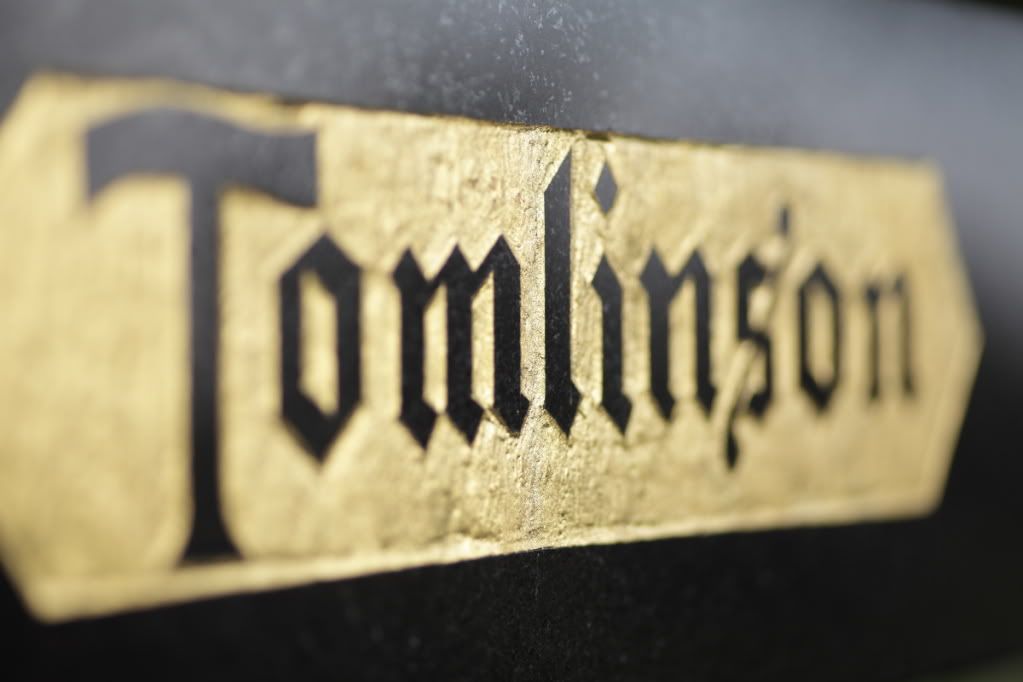
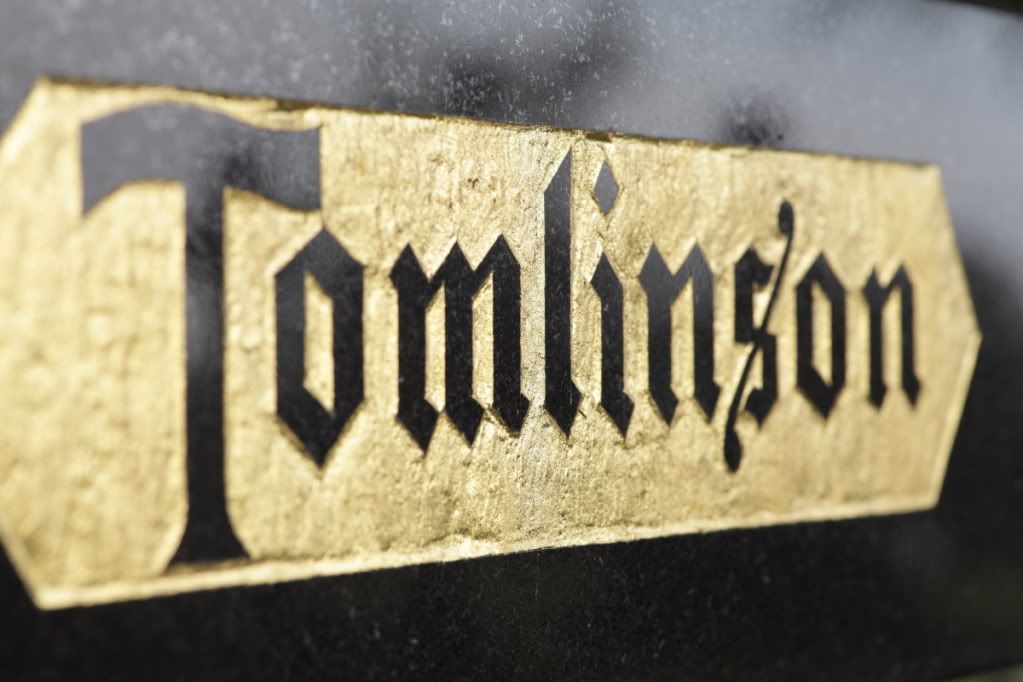
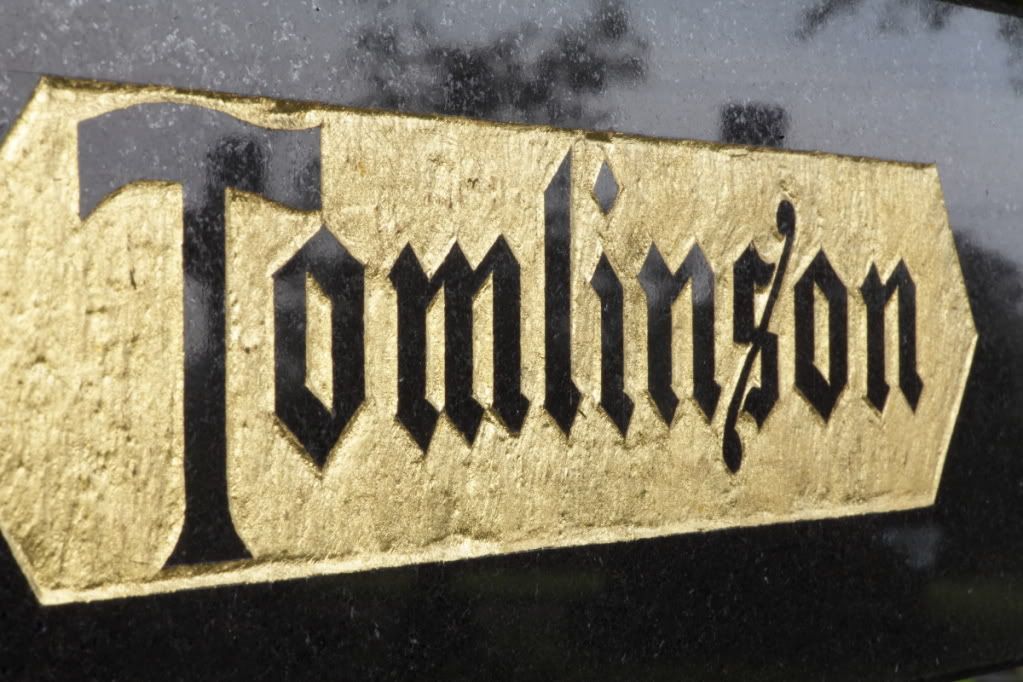
As the Zuiko is not a true macro, but does focus down to 0.68m, 27\", I used it to set the distance.
The subject, a name on a gravestone, is about 8\"-9\" across.
I tried to focus on the leading edge of the \"l\" but again there\'s a slight difference. Also, even though I tried to get exposure equal on the histogram, it does vary.
First fully open:
ZE F2 The fine in-focus line is clearly delineated here by the sharp fall off to out of focus that this lens is famous for.
OM F2 The delineating line may not be as abrupt as the ZE, but overall the depth of field is less here. Also some line doubling on the far \"n\".
Tok F2.8
Next at F8 as that\'s a sweet spot for most:
ZE F8 At this close distance the Zeiss is slightly sharper than the Zuiko, however the zone in focus is still small.
OM F8 Looks very slightly softer than the Zeiss, but the zone in focus is greater, even though the amount of bokeh is greater at the edges!
Tok F8
Finally the smallest stop of each (F22 for the ZE and OM, F32 for the Tokina) As I noted in pt. I, diffraction effect, whilst present, is still acceptable.
OM Zuiko 100mm F2 cf. Zeiss ZE Makro Planar 100mm F2
Now the close up depth of field, (before the Bokeh Series.)
As the Zuiko is not a true macro, but does focus down to 0.68m, 27\", I used it to set the distance.
The subject, a name on a gravestone, is about 8\"-9\" across.
I tried to focus on the leading edge of the \"l\" but again there\'s a slight difference. Also, even though I tried to get exposure equal on the histogram, it does vary.
First fully open:
ZE F2 The fine in-focus line is clearly delineated here by the sharp fall off to out of focus that this lens is famous for.
OM F2 The delineating line may not be as abrupt as the ZE, but overall the depth of field is less here. Also some line doubling on the far \"n\".
Tok F2.8
Next at F8 as that\'s a sweet spot for most:
ZE F8 At this close distance the Zeiss is slightly sharper than the Zuiko
OM F8 Looks a little soft cf the Zeiss
Tok F8
Finally the smallest stop of each (F22 for the ZE and OM, F32 for the Tokina) As I noted in pt. I, diffraction effect, whilst present, is still acceptable.
OM Zuiko 100mm F2 cf. Zeiss ZE Makro Planar 100mm F2
Now the close up depth of field, (before the Bokeh Series.)
As the Zuiko is not a true macro, but does focus down to 0.68m, 27\", I used it to set the distance.
The subject, a name on a gravestone, is about 8\"-9\" across.
I tried to focus on the leading edge of the \"l\" but again there\'s a slight difference. Also, even though I tried to get exposure equal on the histogram, it does vary.
First fully open:
ZE F2 The fine in-focus line is clearly delineated here by the sharp fall off to out of focus that this lens is famous for.
OM F2 The delineating line may not be as abrupt as the ZE, but overall the depth of field is less here. Also some line doubling on the far \"n\".
Tok F2.8
Next at F8 as that\'s a sweet spot for most:
ZE F8 At this close distance the Zeiss is clearly sharper than the Zuiko
OM F8 Still looks a little soft cf the Zeiss
Tok F8
Finally the smallest stop of each (F22 for the ZE and OM, F32 for the Tokina) As I noted in pt. I, diffraction effect, whilst present, is still acceptable.
Now the close up depth of field, (before the Bokeh Series.)
As the Zuiko is not a true macro, but does focus down to 0.68m, 27\", I used it to set the distance.
The subject, a name on a gravestone, is about 8\"-9\" across.
I tried to focus on the leading edge of the \"l\" but again there\'s a slight difference. Also, even though I tried to get exposure equal on the histogram, it does vary.
First fully open:
ZE F2 The fine in-focus line is clearly delineated here by the sharp fall off to out of focus that this lens is famous for.
OM F2 The delineating line may not be as abrupt as the ZE, but overall the depth of field is less here. Also some line doubling on the far \"n\".
Tok F2.8
Next at F8 as that\'s a sweet spot for most:
ZE F8
OM F8
Tok F8
Finally the smallest stop of each (F22 for the ZE and OM, F32 for the Tokina) As I noted in pt. I, diffraction effect, whilst present, is still acceptable.
ZE F22
OM F22 Strangely cooler here.
Tok F32
Sep 10, 2012 at 10:04 AM
Previous versions of timballic's message #10949457 « OM Zuiko 100mm F2 cf. Zeiss ZE Makro Planar 100mm F2 »