j4nu wrote:
I think I have 5+ modern fast 35mms I'd like to test for that elusive 3D pop.
The thing is, I don't have a scene that produces that effect reliably. And without the scene, it's gonna be next to impossible to test which lenses contribute to it.
Even, if that 3D pop is a personal thing...
I would very much like to see such a comparison. All the lenses aren't Sigma, are they?!
Maybe somebody used to see lens induced 3D can come up with an idea about a possible scene?
Stumbled on this old shot a few minutes ago. Does this give you the impression of 3D pop?
https://pbase.com/jhuddle/image/99771641.jpg
Shot back in 2008 when I had a simple two element Leica 560/6.8 that I used adapted on my Canon 5D. I regret letting this unique lens go.
I think there is dimensionality in that shot, but it lacks some blur to make it really pop IMHO.
Just my 2 cents though, my brain / eyes seem to be particularly sensitive to the amount of blur ...
Jonas B wrote:
I would very much like to see such a comparison. All the lenses aren't Sigma, are they?!
Maybe somebody used to see lens induced 3D can come up with an idea about a possible scene?
Sony
Sigma
Viltrox
Voigtlander
Laowa
I'm thinking about adding a second Sigma though ...
I wrote:
I would very much like to see such a comparison. All the lenses aren't Sigma, are they?!
Maybe somebody used to see lens induced 3D can come up with an idea about a possible scene?
j4nu wrote:
Sony
Sigma
Viltrox
Voigtlander
Laowa
I'm thinking about adding a second Sigma though ...
Checking the list... it's obvious you need the new Sigma 35/1.2!! ;-)
Really, like I mentioned, I hope somebody can come up with a good idea about a valid set-up (which isn't impossible for you).
The more I think about the test of all my lenses the more daunting the task gets. Not so much shooting it but how do I share the results. In my mind I share the raw images so that processing is out of the equation. But that's still going to be a lot of images of decent file sizes. Not sure if I have space left where my photo's are hosted to put them all. Have to give this more thought on how to pull it off.
It was supposed to be overcast all day but the sun is burning through right now. So I don't think I'll get a shot at the test today.
The only danger I see in this thread is for people who take the lens portion for 3D pop too seriously. Then you fall into a trap where you think your images are not good or lack 3D because you don't have the right lens instead of working on your skills and other factors to make the image come together.
A lens will do nothing without light. You can create 3D "pop" with a flash where the subject is illuminated and the background dark. You can create 3D pop with color saturation where the subject is highly saturated and the background desaturated. You can create separation with complementary colors. There are many factors and techniques that don't require you to go on some buying spree to find some magical lens.
With that said I am one that does believe that a lens can and does contribute based on design compromises and which aberrations are corrected and how they affect the image. I can tell you that when looking at thousands of images there are patterns that emerge in terms of lenses. Of course, this is my opinion, but because this is the Internet I can declare myself the subject matter expert.
Now who is ready for the 3D pop thread with the subject of poop? Post to this thread? New thread? Who is willing to analyze my poop pictures for 3D pop?
cbass wrote:
You can create 3D "pop" with a flash where the subject is illuminated and the background dark. You can create 3D pop with color saturation where the subject is highly saturated and the background desaturated. You can create separation with complementary colors. There are many factors and techniques that don't require you to go on some buying spree to find some magical lens.
With that said I am one that does believe that a lens can and does contribute based on design compromises and which aberrations are corrected and how they affect the image. I can tell you that when looking at thousands of images there are patterns that emerge in terms of lenses. ...Show more →
Concur.
Physiological response cues exist in a variety of manner.
Lens designs contribute their portion.
cbass wrote:
The only danger I see in this thread is for people who take the lens portion for 3D pop too seriously. Then you fall into a trap where you think your images are not good or lack 3D because you don't have the right lens instead of working on your skills and other factors to make the image come together.
A lens will do nothing without light. You can create 3D "pop" with a flash where the subject is illuminated and the background dark. You can create 3D pop with color saturation where the subject is highly saturated and the background desaturated. You can create separation with complementary colors. There are many factors and techniques that don't require you to go on some buying spree to find some magical lens.
With that said I am one that does believe that a lens can and does contribute based on design compromises and which aberrations are corrected and how they affect the image. I can tell you that when looking at thousands of images there are patterns that emerge in terms of lenses. Of course, this is my opinion, but because this is the Internet I can declare myself the subject matter expert.
Now who is ready for the 3D pop thread with the subject of poop? Post to this thread? New thread? Who is willing to analyze my poop pictures for 3D pop?...Show more →
But isn’t that the same when we discuss any new piece of gear. I need 120fps in order to make my shots. I need pre-capture. I need the latest 8 stop ibis. The beat goes on.
chez wrote:
But isn’t that the same when we discuss any new piece of gear. I need 120fps in order to make my shots. I need pre-capture. I need the latest 8 stop ibis. The beat goes on.
Yes, that's right. One difference, however, is that we have more strange claims in this thread than we usually do.
I am by no means an expert on the subject, but I can still strongly question some of the claims made here. Unfortunately, these issues are never clarified, and some people may start to believe that these claims are true.
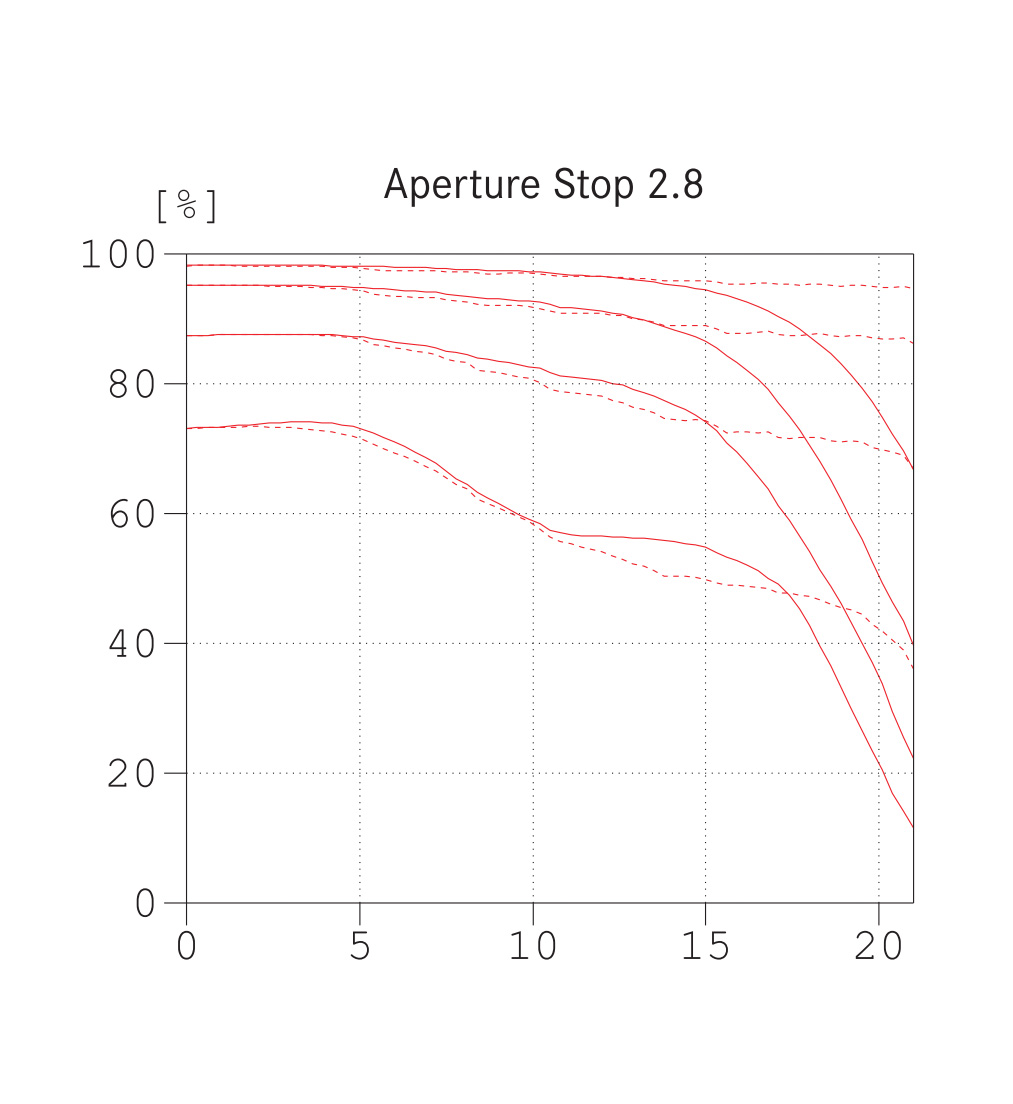
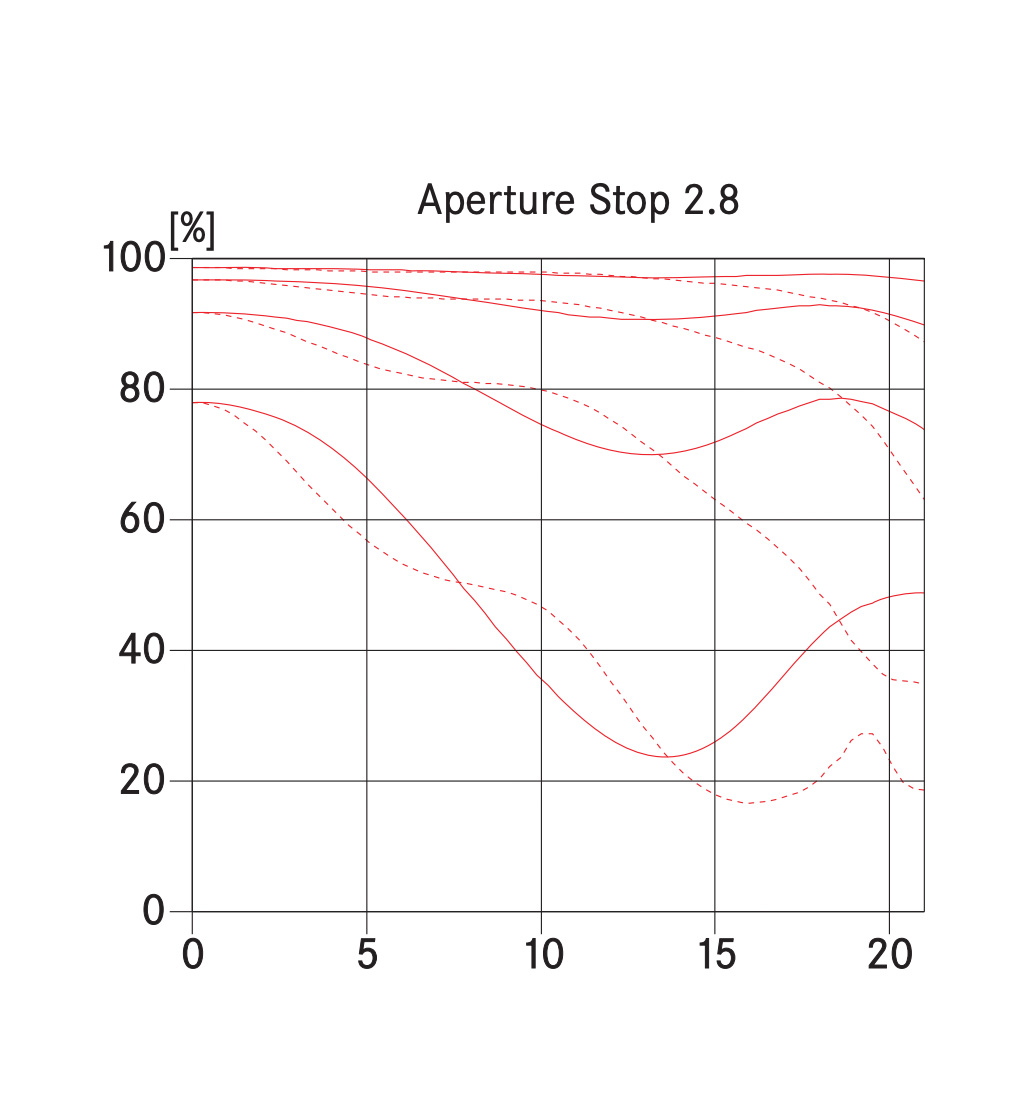
Just a couple of same FL lenses at same aperture ... note the difference in transition rate out of Zone A.
Depending on subject placement / comp ... the differences in transition rates may be helpful (or hindrance) to the cues. Part of optimizing the perception is realizing that the comp and the optic work in concert with one another. Which is why we often times see folks have a very similar comp vibe or shooting distance in their work. They've found the "sweet spot" for that given lens and continue to work with it (to their liking).
Switch lenses and comps from 2 meters to infinity and you may find that the transitions of lens A vs. lens B are not as pronounced in variance. Having subjects that are in Zone A and BG's that are in Zone B / C, the transitions of different lenses may reveal those rates differently ... i.e. how rapid is the "melt".
Bonus points if anyone can suggest which series the MTF's came from.
Jonas B wrote:
Yes, that's right. One difference, however, is that we have more strange claims in this thread than we usually do.
I am by no means an expert on the subject, but I can still strongly question some of the claims made here. Unfortunately, these issues are never clarified, and some people may start to believe that these claims are true.
That’s the nature of the internet. It’s up to every individual to make their own decisions on what they read, nothing new here. There are those in this thread that lay down their information on the subject in clear somewhat scientific language and then there are those that just “shit” all over this information without adding anything new. It’s the latter group that just needs to move on as they have nothing to offer.
RustyBug wrote:
Just a couple of same FL lenses at same aperture ... note the difference in transition rate out of Zone A.
Depending on subject placement / comp ... the differences in transition rates may be helpful (or hindrance) to the cues. Part of optimizing the perception is realizing that the comp and the optic work in concert with one another. Which is why we often times see folks have a very similar comp vibe or shooting distance in their work. They've found the "sweet spot" for that given lens and continue to work with it (to their liking).
Switch lenses and comps from 2 meters to infinity and you may find that the transitions of lens A vs. lens B are not as pronounced in variance. Having subjects that are in Zone A and BG's that are in Zone B / C, the transitions of different lenses may reveal those rates differently ... i.e. how rapid is the "melt".
Bonus points if anyone can suggest which series the MTF's came from.
That's the thing I never understood in these discussions:
how does MTF, which shows lens performance across the sensor, relate to 3D depth or even blur in general?
No Z-axis but an image taken with the second lens (is that a Summilux?) will have less finer details in the midzone. That may give other impression than the same subject taken with the first image (probably another Leica lens) as it will be sharper across the image. Similar but very much less pronounced than the Revuenon image we saw earlier (page 90 post #20).
chez wrote:
That’s the nature of the internet. It’s up to every individual to make their own decisions on what they read, nothing new here. There are those in this thread that lay down their information on the subject in clear somewhat scientific language and then there are those that just “shit” all over this information without adding anything new. It’s the latter group that just needs to move on as they have nothing to offer.
Of course. So, you are not worried about false information in our threads then. OK.
chez wrote:
And you are 100% certain the information is false. If so, why not post a rebuttal to the information presented which clearly shows it’s false.
Silly.
I'm exactly as sure as I already have explained. I have, for example, been questioning the claim about Simera lenses being good at highlight attenuation. I don't think there is such a thing. Do you?
Somehow I don't think the Typoch promotor will explain how this works.
Jonas B wrote:
Silly.
I'm exactly as sure as I already have explained. I have, for example, been questioning the claim about Simera lenses being good at highlight attenuation. I don't think there is such a thing. Do you?
Somehow I don't think the Typoch promotor will explain how this works.
You don’t think…but the other member does think. So you both have differing opinions with no absolute facts. How then can you claim the other members statements are false and yours is fact…when all it is is “you think”
chez wrote:
You don’t think…but the other member does think. So you both have differing opinions with no absolute facts. How then can you claim the other members statements are false and yours is fact…when all it is is “you think”
Where did I claim that?
And again, what do you think about the claim?


 ...
... ...
...