fredmiranda.com
Login

Moderated by: Fred Miranda
  New fredmiranda.com Mobile Site
  New Feature: SMS Notification alert
  New Feature: Buy & Sell Watchlist
  

FM Forums | Leica & Alternative Gear | Join Upload & Sell

1       2       3              57              59              137       138       end
  

which lens has the most 3D POP?


j4nu
Offline
• • • • •
Upload & Sell: Off
p.58 #1 · which lens has the most 3D POP?


Ripolini wrote:
No. It has a blurred background (and foreground).
That doesn't mean that the picture isn't good, that the subject isn't clearly visible and distinguishable, and so on.
This kind of pictures do not necessarily have a 3D look, or pop; these pictures utilize a property of the tool (the wide aperture of the lens) to create an image our eyes will never see. It's a form of creative use of our gear. Creativity is not necessarily linked to 3D illusion.
We know that three-dimensional art was seldom seen before the 14th century; according to Prof. Harper, the reason was that artists (in
...Show more

That's interesting, for me this one presents a bit of 3d pop (the cone "comes out" of the blur). Well, that's just another interesting aspect of this thread I guess ...


Feb 27, 2023 at 11:40 AM
tsdevine
Offline
• • • • •
Upload & Sell: On
p.58 #2 · which lens has the most 3D POP?


My involvement in this thread was based on inquisitiveness. To me whether it's a "good" thing to have a photo exhibit this vs a "bad" thing, doesn't have much to do with my inquisitive nature. And I tried to make the argument above that understanding it better would allow me to better make sure it doesn't happen, if/when it's undesirable (which could be all the time.)

It's fine to say this is unimportant, I spend time on unimportant things, just because I'm intrigued by it. And I wouldn't argue with the lack of importance of it. But I'm still intrigued by it.

If the argument is we shouldn't be having the discussion at all, it's one thing to say it's unimportant....which means that it's okay that it exists for those people who are interested in it....then I don't see what the harm is in having people contribute who are interested in the topic (however unimportant the majority feels it is.) Now if this thread is causing true harm (more than just a small number of people focusing on something that the collective is deemed as not important), of course I wouldn't want people to be harmed by it. I assume no one is saying this discussion is truly "harmful."

But it's tough to have a forum and then draw boundaries on what is deemed "okay' to discuss vs what is a waste of time and a distraction from those things that truly matter. So are we just having constructive comments that this is unimportant, which I probably wouldn't argue with, or are we saying this thread shouldn't exist? I personally don't spend THAT much time on this topic, other than occasionally seeing something in my photos that reminds me of this thread.

A good number of topics here would be candidates for thread locking based on that criteria, if we're saying this thread shouldn't exist (or should be removed.)

So I'm cool with saying that people shouldn't obsess over this, but I'm not cool with saying that no one should have a discussion on it. I don't thing you're saying that, just trying to make sure that no one is saying that.

I will have to look up texture gradients, as that is a tidbit worth pursuing, which probably was mentioned here but I missed it.

So net net....there are better things to focus on in photography. But for those who find this interesting, that's okay....have at it?

Steve Spencer wrote:
Let me remind people of some basic facts. First, almost all our photographs are actually 2D. Second, that means if we see the image as 3D it is an illusion. Third, this particular illusion--seeing a 2D object as 3D--has been studied for over a hundred years and over a dozen cues have been identified that help create the illusion. Fourth, this particular illusion can be created with many types of images and not just photographs.

These basic facts tell us that if the photographer wants to create the illusion, they can do so with basically any equipment if they
...Show more


Feb 27, 2023 at 11:58 AM
airfrogusmc
Offline
• • • • • •
Upload & Sell: Off
p.58 #3 · which lens has the most 3D POP?


Everyone is free to do whatever. But the question becomes what do you want to do with your time? Take photographs of charts, graphs, cones or other tings trying to prove whether a lens had 3D poop or try to make photographs that actually mean something? I know where my time will be spent. Like the great Eranst Hass once said and worth repeating; "The camera doesn't make a bit of difference. All of them can record what you are seeing. But, you have to SEE."-Ernst Haas


Feb 27, 2023 at 12:10 PM
j4nu
Offline
• • • • •
Upload & Sell: Off
p.58 #4 · which lens has the most 3D POP?


Yeah, not sure what's wrong about discussing this. As someone said, it's about learning a trick. How you use it a different matter...
BTW, I still don't know "which lens has the most 3D POP?" .

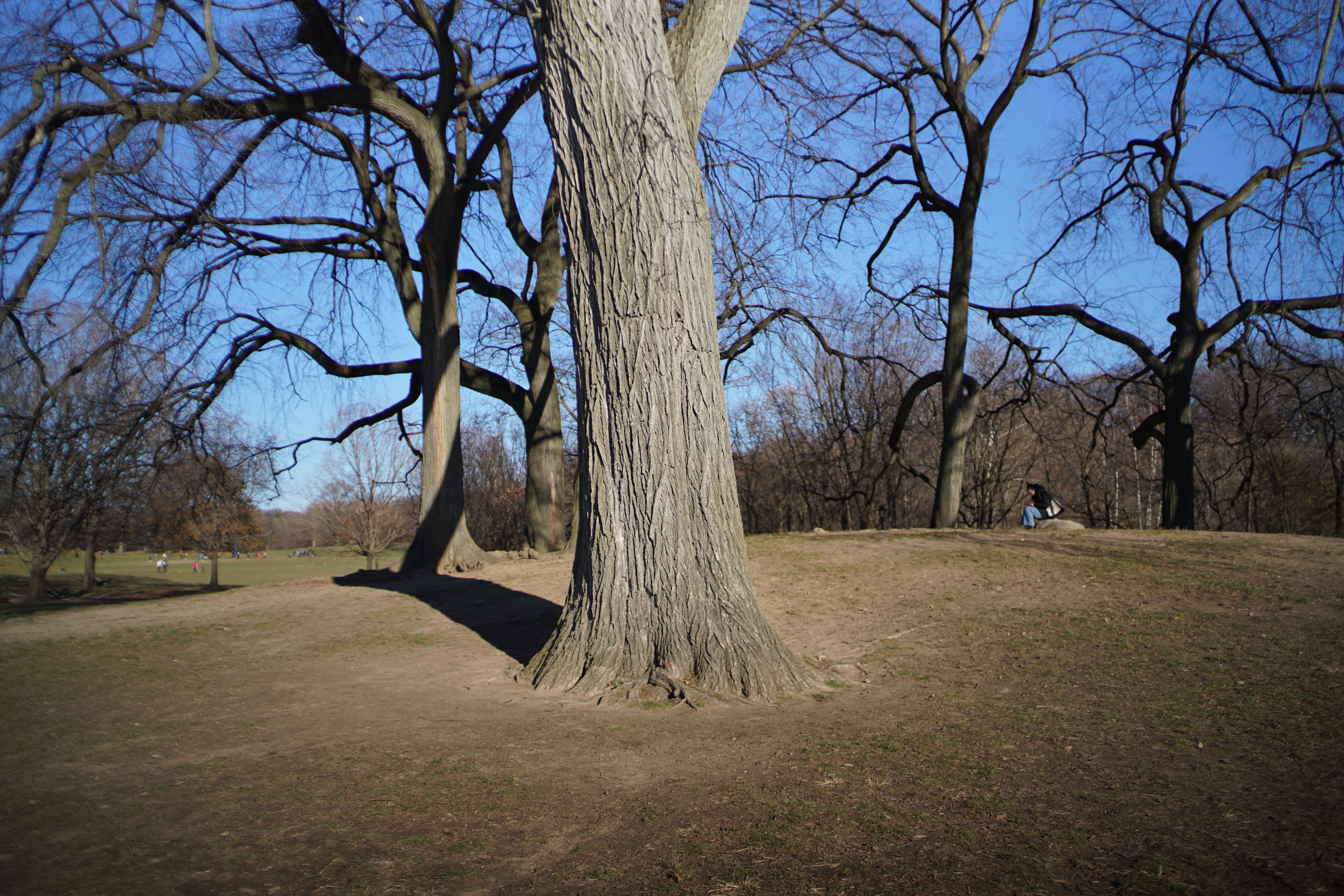
Edit since I've been called to the table: the only reason I took this "cone shot" today is because I wanted to see how it will turn out 3d-wise using that lens and in that light (boring light to be honest).
And maybe few more words on why: this Autumn/Winter, I've been trying to come up with a way to deal with almost incessant bad weather: super overcast or rare super flat winter sun. One of the things I wanted to try is isolating the subject / triggering 3d pop to see if allows to me to take some pictures I will consider at least a bit interesting despite the constant bad conditions.


I still don't see what's wrong about that, are we supposed to create only art?


Feb 27, 2023 at 12:11 PM
airfrogusmc
Offline
• • • • • •
Upload & Sell: Off
p.58 #5 · which lens has the most 3D POP?


One can do whatever one wants to do. Never said if thats what one wants to do that they shouldn't do it. I did said in the end it really doesn't matter. I also said if I only have so much time I would rather put it into trying to make meaningful images. But thats me.


Feb 27, 2023 at 12:41 PM
dieterson
Offline
• •
Upload & Sell: Off
p.58 #6 · which lens has the most 3D POP?


It would make more sense, if somebody (who is interested in this topic) would take a certain number (so many you can bring together) of the same focal length (say 35mm or 50mm or ...), take a tripod and a useful background (with layered subjects) and take photos with the same focus-distance and the same aperture (maybee f2 for primes) and than compare the transition zones. (to have a foundation for the discussion)

But is there already a common agreement about the decision, if a small transition zone has more 3d-pop or a longer transition zone (wich fades about a longer distance)? Some people prefer the small transition zone to see the exact difference, some may prefer the longer transition zone to fix the depth of field faster and more exact?


Feb 27, 2023 at 12:42 PM
j4nu
Offline
• • • • •
Upload & Sell: Off
p.58 #7 · which lens has the most 3D POP?


Steve Spencer wrote:
I believe that composition, lighting, and equipment can make it easier to use certain cues to the illusion, but I also believe the strongest cues to the illusion have nothing to do with composition, lighting, or equipment.

So, what are those strongest cues having nothing to do with composition, lightning or equipment?
BTW, texture gradient seems very composition-like to me.
BTW#2, I also believe equipment is one of the last factors in that 3d pop effect, still it would be useful to identify which lenses or their features contribute to it...


Feb 27, 2023 at 12:44 PM
j4nu
Offline
• • • • •
Upload & Sell: Off
p.58 #8 · which lens has the most 3D POP?


dieterson wrote:
It would make more sense, if somebody (who is interested in this topic) would take a certain number (so many you can bring together) of the same focal length (say 35mm or 50mm or ...), take a tripod and a useful background (with layered subjects) and take photos with the same focus-distance and the same aperture (maybee f2 for primes) and than compare the transition zones. (to have a foundation for the discussion)

But is there already a common agreement about the decision, if a small transition zone has more 3d-pop or a longer transition zone (wich fades about a longer
...Show more

If you read this thread a bit, there's not even a clear agreement on what 3d pop is...


Feb 27, 2023 at 12:50 PM
dieterson
Offline
• •
Upload & Sell: Off
p.58 #9 · which lens has the most 3D POP?


Feb 27, 2023 at 01:02 PM
Steve Spencer
Offline
• • • • • • •
Upload & Sell: On
p.58 #10 · which lens has the most 3D POP?


j4nu wrote:
So, what are those strongest cues having nothing to do with composition, lightning or equipment?
BTW, texture gradient seems very composition-like to me.
BTW#2, I also believe equipment is one of the last factors in that 3d pop effect, still it would be useful to identify which lenses or their features contribute to it...


Texture gradients are really about the background not really composition, lighting or equipment. For a place to start here is a nice article in Scientific American about 3D illusions:

https://www.scientificamerican.com/article/a-perspective-on-3d-illusions/

Note particularly this portion on a specific illusion (The Leaning Tower Illusion):

"The Leaning Tower Illusion—which won first prize in the Neural Correlate Society’s Best Visual Illusion of the Year Contest in 2007— reveals the way in which the visual system uses perspective to help reconstruct 3-D objects. We say “reconstruct” because the visual system has no direct access to 3-D information about the world. Our perception of depth results from neural calculations based on several rules. Such rules include perspective (parallel lines appear to converge in the distance), stereopsis (our left and right eyes receive horizontally displaced images of the same object, resulting in the perception of depth), occlusion (objects near us occlude objects farther away), shading, chiaroscuro (the contrast of an object as a function of the position of the light source) and sfumato (the feeling of depth created by the interplay of in- and out-of-focus elements in an image as well as from the level of transparency of the atmosphere itself). The Leaning Tower Illusion shows that the brain also uses the convergence angle of two reclining objects as they recede into the distance to calculate the relative angle between them."

Note that some of these rules correspond to what we typically do in photography quite well. In particular what the article calls "perspective," is one rule often exploited by composition. What the article calls "chiaroscuro" is a rule that is often exploited with lighting, and the rule the article calls "sfumato" is often exploited by the use of depth of field. But there are other rules like what the article calls "occlusion," that we typical think much less about when creating images although it could be used in composition. We also only use stereopsis as a special case and rarely in photography although it is the basis of 3-D images for movies and video. The specific new rule demonstrated by the Leaning Tower Illusion I have not seen any photographer consciously try to use in through composition but I think it is one that could be used.

I think, although I am not sure that lenses with very fast transition zones from in focus to out of focus will exploit the "sfumato," rule more effectively.


Feb 27, 2023 at 03:21 PM


Search in Used Dept. 

RustyBug
Offline
• • • • • • •
Upload & Sell: On
p.58 #11 · which lens has the most 3D POP?


Sticking to the topic of the LENS ...
per the thread title question:

Lenses with larger exit pupils, relative to their focal length, and/or vs. their exit pupil : entrance pupil ratio, exhibit greater 3D-ishness than their counterparts with smaller exit pupils.

The rate of transition from the focal plane ... away from the focal plane, is different. The more rapidly that rate of transition is, the greater the perception of relative depth variance is discernible.

This is not the same thing as shallow dof, but rate of transition. Which to a certain degree can also be generated via pp to adjust the rate of change. Field curvature designs of different lenses can also be a factor that influences the rate of change, in conjunction with focal plane / subject placement. Other pieces of the puzzle contribute (lighting, ortho, etc.) , but as it pertains to the lens design, this is what I was able to correlate.

Looking for 3D-ish inducing lenses ... start by looking at their exit pupils size.

This is the summation of my studies on lenses that were stronger producers vs. weak producers over a decade ago.


Edited on Feb 28, 2023 at 07:58 AM · View previous versions


Feb 27, 2023 at 03:56 PM
j4nu
Offline
• • • • •
Upload & Sell: Off
p.58 #12 · which lens has the most 3D POP?


Steve Spencer wrote:
Texture gradients are really about the background not really composition, lighting or equipment. For a place to start here is a nice article in Scientific American about 3D illusions:

https://www.scientificamerican.com/article/a-perspective-on-3d-illusions/

Note particularly this portion on a specific illusion (The Leaning Tower Illusion):

"The Leaning Tower Illusion—which won first prize in the Neural Correlate Society’s Best Visual Illusion of the Year Contest in 2007— reveals the way in which the visual system uses perspective to help reconstruct 3-D objects. We say “reconstruct” because the visual system has no direct access to 3-D information about the world. Our perception of depth results from neural
...Show more

Thanks! I need to read that article in detail, but it already sounds promising that they are using similar ideas, but under different names .


Feb 27, 2023 at 04:16 PM
RustyBug
Offline
• • • • • • •
Upload & Sell: On
p.58 #13 · which lens has the most 3D POP?


j4nu wrote:
Thanks! I need to read that article in detail, but it already sounds promising that they are using similar ideas, but under different names .


The linked article makes reference to the trompe l'oeil and some hint regarding how human physiological response is. The author paraphrased the story in the condensed article. The longer version of the story is an interesting read (sorry, can't recall where I read it) that details things a bit more, including the depth of the artist competitive rivalries. Also, a deeper study of the history of trompe l'oeil in the non-photographic endeavors is helpful, too.

When you dig even deeper into those two ... you'll find that they are the basis of distinction for when different lens designs transition at faster / slower rates is a contributing component to how human perception is. Other factors are involved also ... but, the salient point is that if you want to "fool the eye" (trompe l'oeil) or yield / render spatial representation ... you first understand how the eye / brain works. Particularly of interest to me are those attributes that "push / pull" things forward / back.

Given that painters can produce the illusion in their 2D format, our 2D format can also produce the illusion. But, here again it is rooted in understanding the physiological response of the eye / brain as the underpinnings ... characteristics of lens, light, space, etc. to follow.

It's an interesting study, imo. Once understood ... it can be useful in more ways than just to generate the "3-D Pop". In the end, broader context, it is a study of how to move the eye of the viewer spatially retarding / advancing in addition to lateral / vertical.


Feb 27, 2023 at 09:46 PM
alphanumeric
Offline

Upload & Sell: Off
p.58 #14 · which lens has the most 3D POP?


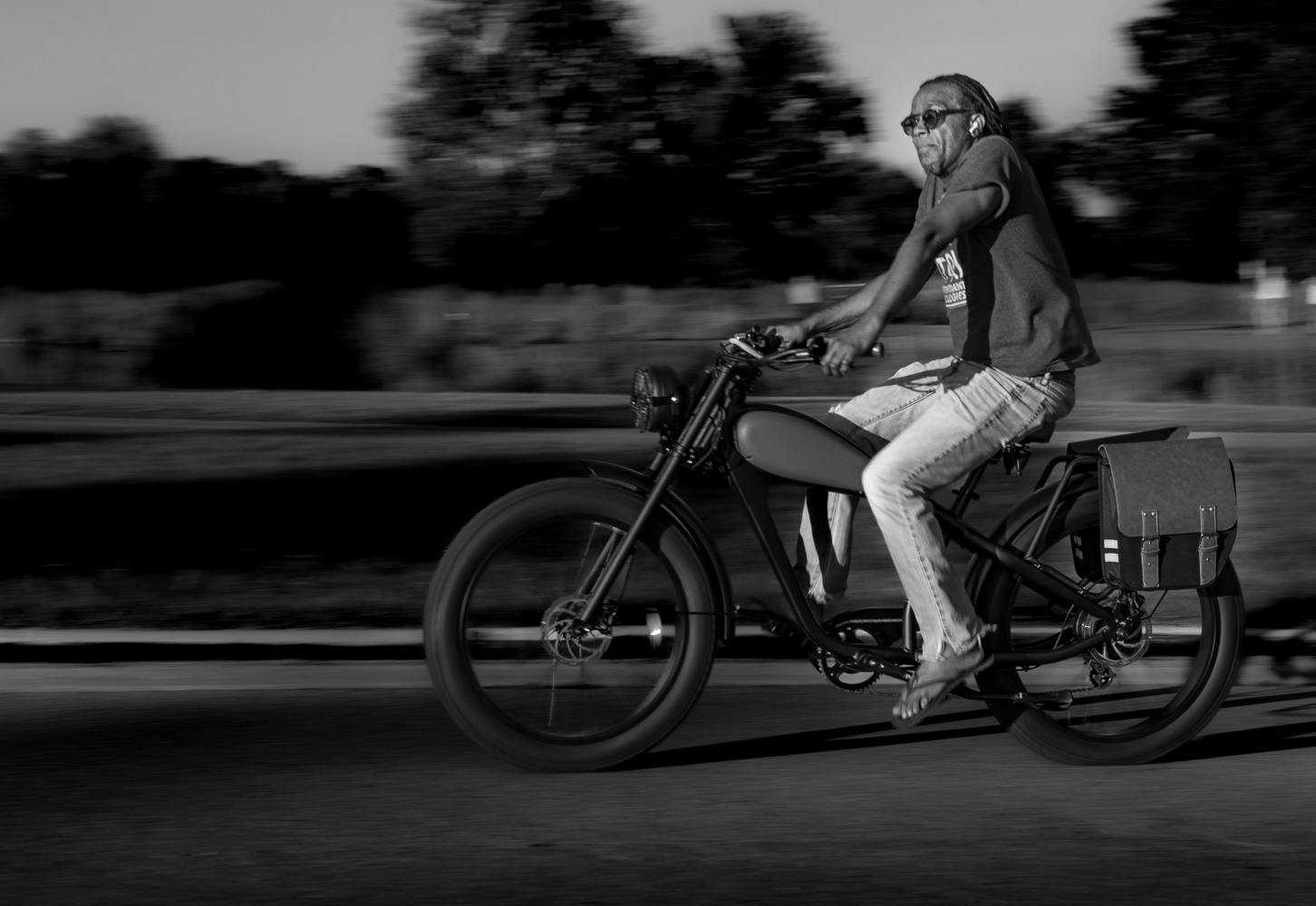
3D Pop?

Full resolution, uncompressed version is much sharper.

Download Original Size from flickr


Voigtalnder 40mm - ISO 200 - 𝑓/2.0 - 1/5000 sec
Original Post on flickr


Feb 28, 2023 at 07:16 PM
jeffersoncasey
Online
• • •
Upload & Sell: Off
p.58 #15 · which lens has the most 3D POP?


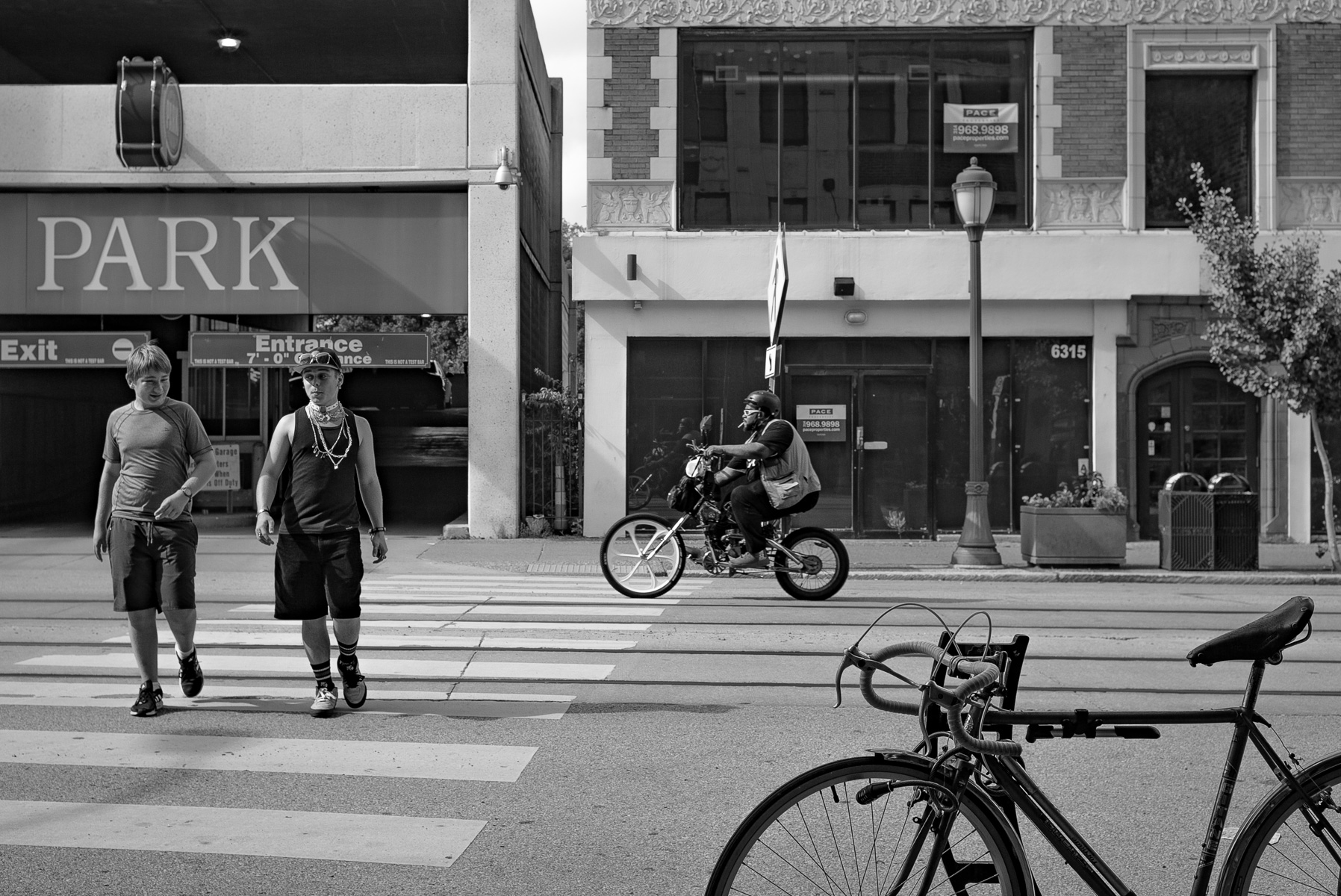
Haven't been joining this thread for a while, posting something just to stir the pot 😁


Mar 03, 2023 at 06:08 AM
RustyBug
Offline
• • • • • • •
Upload & Sell: On
p.58 #16 · which lens has the most 3D POP?


The bike shot above reminded me of another two-wheeler shot.

These are what I'd call "medium" 3D-ishness. Hopefully a creation of depth sensory, yet without quite being a dominating technical effort.

All shot with glass I don't own any more. I've had "stronger" and "weaker" 3D-ish (i.e. rates of transition in different zones) producers. My lens choices do still lean toward lenses that have a reasonably larger exit pupil relationship ... but, I'm not dominated in the quest for it as I was many years ago. Those lenses (Nikon, Zeiss, Mamiya, Oly) bridged brands, but they have long since been sold / traded for variety of reasons beyond the "ability" to generate a 3D-ish "pop". That said, I do tend to steer clear of lenses with smallish exit pupils ... and prefer a reasonable amount of micro-contrast, plus well corrected, but not quite perfect, clinically, so.

Because human physiological response includes saturation / color levels as contributing information as visual cues to depth, the monochromes are a bit more challenging (sans color rate of transition) to yield things spatially retarding / advancing. The reliance is then on tonal values and acuity rates of transition. More than one way (lens / not lens) to generate those rates of transition for differentiation that yield different plane info / perception.


Kent Southers 2023


Kent Southers 2023


Kent Southers 2023


Kent Southers 2023


Edited on Mar 12, 2023 at 09:05 AM · View previous versions


Mar 03, 2023 at 07:52 AM
Evangelos
Offline
• •
Upload & Sell: Off
p.58 #17 · which lens has the most 3D POP?


It seems the Sigma 65i has the Pop. Wide open.

copper by Onoma Mou, on Flickr


Mar 05, 2023 at 01:55 AM
vdo1
Offline
• • • •
Upload & Sell: Off
p.58 #18 · which lens has the most 3D POP?


Maybe if we try first with a simpler question - "which pencil has the most 3D POP":

https://www.boredpanda.com/3d-pencil-drawings/


Mar 05, 2023 at 08:02 AM
GMPhotography
Offline
• • • • • • •
Upload & Sell: Off
p.58 #19 · which lens has the most 3D POP?


Leica R 80 summilux 1.4 and it may end there.


Mar 05, 2023 at 08:16 AM
m43hero
Offline

Upload & Sell: Off
p.58 #20 · which lens has the most 3D POP?


7Artisans 28mm [email protected]

Edited on Mar 23, 2023 at 06:32 PM · View previous versions


Mar 05, 2023 at 08:53 AM
1       2       3              57              59              137       138       end


FM Forums | Leica & Alternative Gear | Join Upload & Sell

1       2       3              57              59              137       138       end


Welcome back
Log in to your account