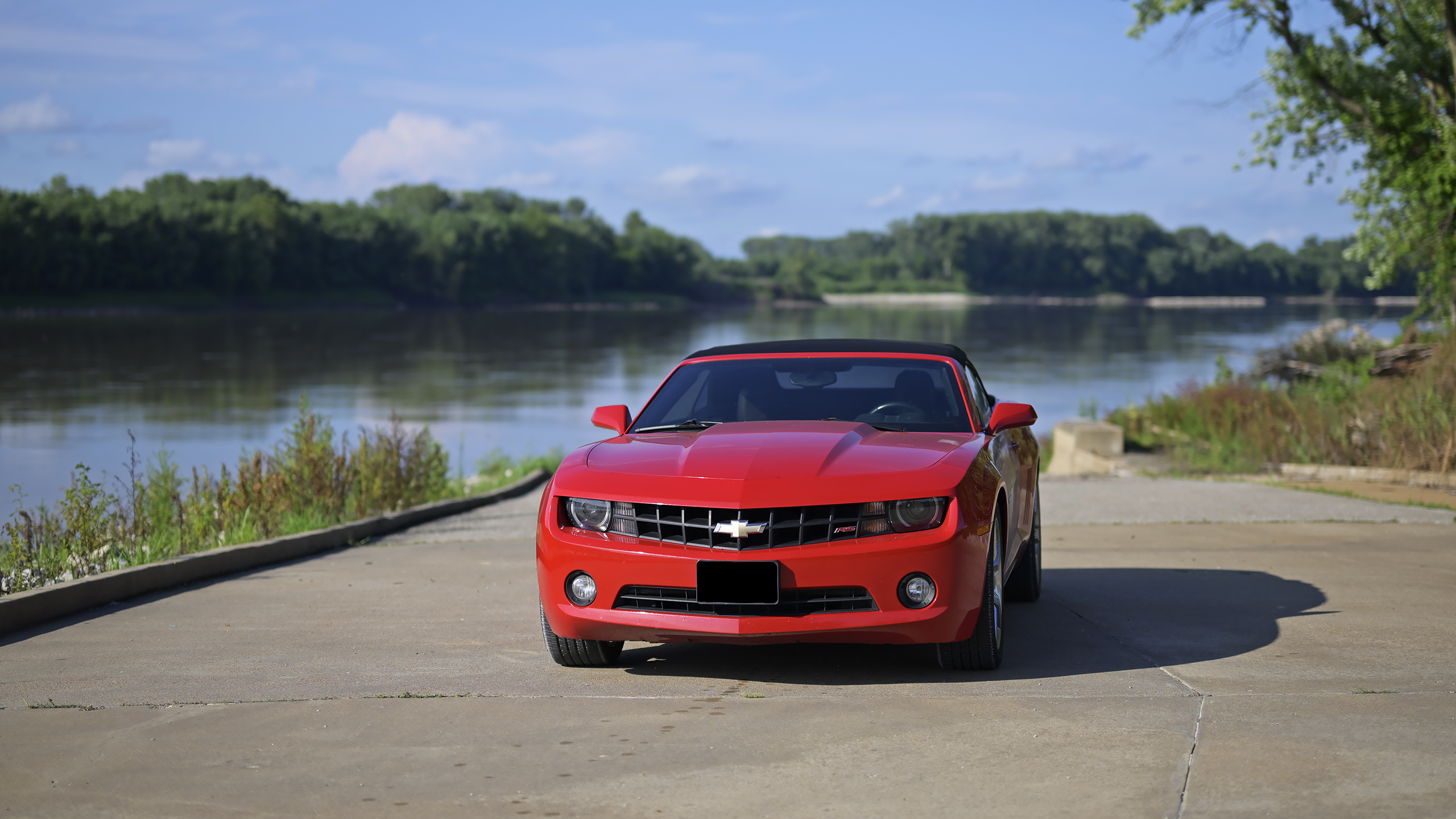
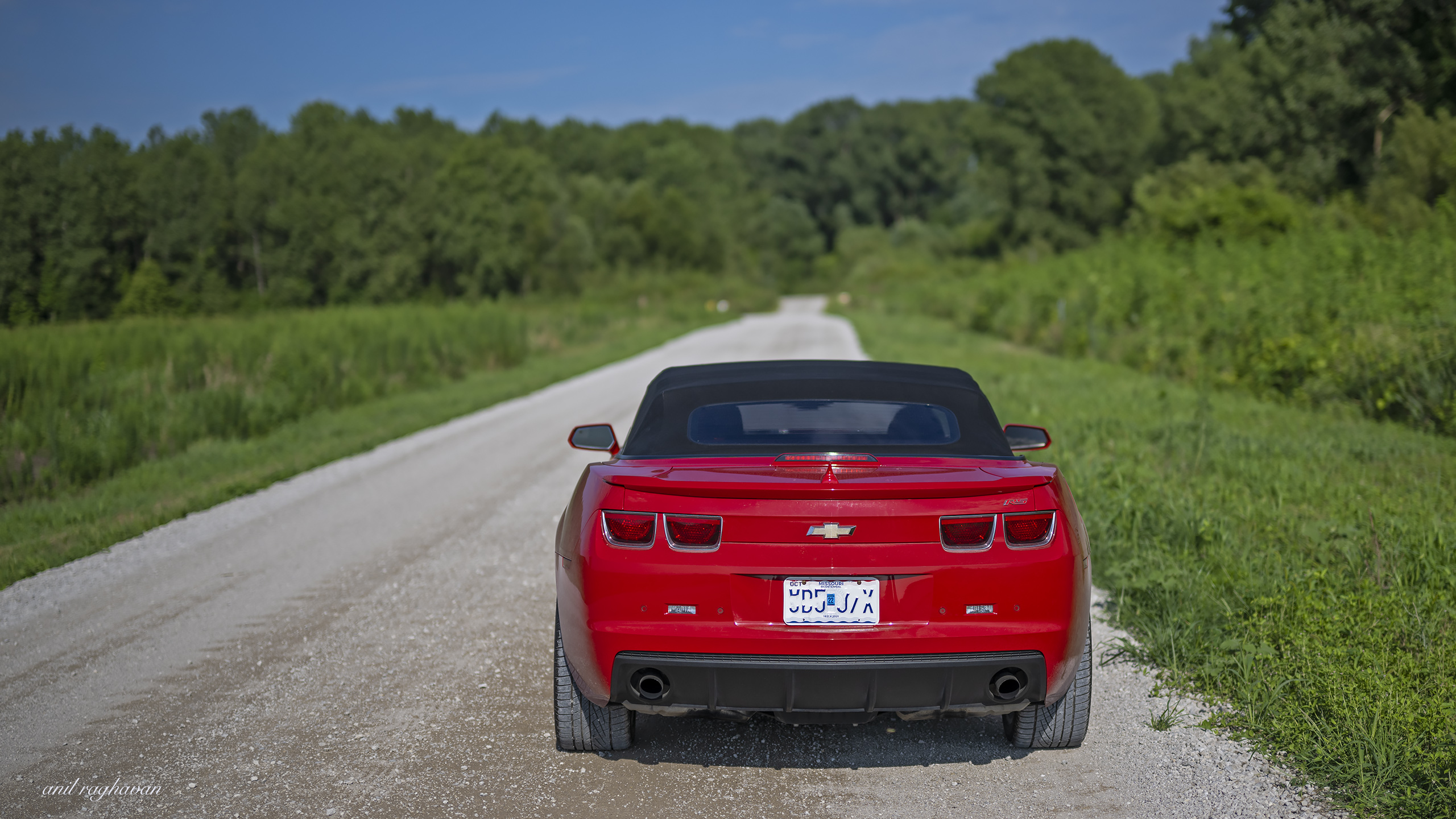
Not so clear .. this is not a topic that everyone will ever agree on
What is clear to one may be fuzzy to another
Luckily, these sorts of arguments is why FM is still alive and Fred makes $
Several images there that look 3D to me, especially of his dog.
Lenses used are different - some even with the 85 f/1.8 and still shows a 3D effect (in my eyes).
It is really difficult to argue about something that has no clear definition. Or maybe that makes it easier to argue about "Pop" seems to be more due to exposure and circumstances rather than lenses. At least I've never had any particular lens that always rendered every image with "pop". I don't exactly know what it is. But to paraphrase Justice Stewart: I know it when I see it.
Hon Bokk wrote:
Ugh... I'm sorry but 99% of the images posted here are not ''3D pop.'' I came to see some amazing micro-contrast goodness and to hopefully discover some new glass to buy but was majorly disappointed to find only low aperture shots and with no 3D pop anywhere in sight.
This I rather agree with.
Very few newer lenses have that ''3D pop,'' because newer lenses have terrible micro-contrast, all at the cost of higher sharpness. The only newer lenses with super good micro-contrast are mostly Hasselblad, Zeiss, Leica and Voigtlander lenses.
I just read a marketing pamphlet by Zeiss, where micro-contrast is apparently used to mean <sharp with high transmission and no optical flaws>. So when you say that some fancy expensive glass is less sharp, but still has more micro-contrast, you appear to use a different definition.
This is what real 3D pop looks like:
1 https://flic.kr/p/2nzxFTw - shot with Leica DG 25-50/F1.7
...
Since none of these come with a comparison shot taken with a sharp modern lens, they don't help proving your point. Also, they seem rather soft for some reason. Also, most of the pop that I could find seemed to be due to the very "aperture subject separation" that you dismissed as not being "3D-pop".
Micro-contrast light rendering example:
https://i.ibb.co/fvCy3wM/mce.jpg
What is this supposed to show? What are the axis, what is the meaning of the brightness level?
I just read a marketing pamphlet by Zeiss, where micro-contrast is apparently used to mean <sharp with high transmission and no optical flaws>. So when you say that some fancy expensive glass is less sharp, but still has more micro-contrast, you appear to use a different definition.
Since none of these come with a comparison shot taken with a sharp modern lens, they don't help proving your point. Also, they seem rather soft for some reason. Also, most of the pop that I could find seemed to be due to the very "aperture subject separation" that you dismissed as not being "3D-pop".
What is this supposed to show? What are the axis, what is the meaning of the brightness level?...Show more →
If you think the posted pictures with the 25-50mm and Panasonic S Pro 50mm are soft, you must have an issue with your screen or how you view the picture, they are razor sharp.
Keunish wrote:
If you think the posted pictures with the 25-50mm and Panasonic S Pro 50mm are soft, you must have an issue with your screen or how you view the picture, they are razor sharp.
What are you talking about? He posted images using Leica, Lumix, Nikkon, Zeiss & Kowa lenses, but none using Panasonic. I did not say that all images here are soft. I said his images are soft. Maybe too much compression, what do I know.
This thread does contain some sharp images and also some that have nice 3d separation. What this thread does not have is a direct comparison of a shot with 3d-pop and the same shot without 3d-pop, where the only difference is the lens. I'm starting to think that such a direct demonstration is not going to happen.
Daran wrote:
What are you talking about? He posted images using Leica, Lumix, Nikkon, Zeiss & Kowa lenses, but none using Panasonic. I did not say that all images here are soft. I said his images are soft. Maybe too much compression, what do I know.
This thread does contain some sharp images and also some that have nice 3d separation. What this thread does not have is a direct comparison of a shot with 3d-pop and the same shot without 3d-pop, where the only difference is the lens. I'm starting to think that such a direct demonstration is not going to happen.
What i'm talking about ? Sorry but he posted some of my pics with the Panasonic Leica 25-50mm and Panasonic Lumix S Pro 50mm f1.4. So yes these lenses are Panasonic lenses. The Panasonic Leica DG 25-50mm is a Panasonic lens, as well as the Panasonic Lumix S Pro 50mm ... Leica is just involved in the design of these lenses, mostly for the 25-50mm.
By the way, these lenses are crazy sharp, as the 35mm and 135mm GM I own. If you find them soft, It's maybe because you can't view them in full size.
I think this 3d-pop comparison would only work, if you compare lenses with the same focal length and same aparture adjusted, and on a tripod while focussing on a specific target. Everything else is just subjective impression-charing.
This is the best idea I have heard: to post a popped picture that was shot with a lens said to pop and to post next to it the identical scene shot with a lens of the same type and focal length and aperture that is said not to pop. Let's see what we see.
dieterson wrote:
I think this 3d-pop comparison would only work, if you compare lenses with the same focal length and same aparture adjusted, and on a tripod while focussing on a specific target. Everything else is just subjective impression-charing.
This entire topic is "subjective impression-sharing" and can never be more than that.
(no matter how many contributions are made)
If this "debate" could be properly settled it would have been done 50 years ago.
It's not a new topic.
Google can help you find a dozen such threads on various forums.
No conclusions then; none now.
Sometimes it's just fun to bat the ball around in order to pass the time...
RoamingScott wrote:
Light is 100% the key. Got any info on the technique you used for that moon shot? That's killer!
Thanks a lot! I don't remember exactly what software I used (it was freeware) but I stacked around 50 shots that were taken with a 1.7ii and 2.0iii stacked on a 600FL for the bright side of the moon, dark side was a full moon shot from a different day, and the stars was a quick shot of the sky on a 70-200FL layer masked together in PS.
Kasper6188 wrote:
Thanks a lot! I don't remember exactly what software I used (it was freeware) but I stacked around 50 shots that were taken with a 1.7ii and 2.0iii stacked on a 600FL for the bright side of the moon, dark side was a full moon shot from a different day, and the stars was a quick shot of the sky on a 70-200FL layer masked together in PS.
Hah, i'm not even close to having the glass to pull that off that well! Thanks for the insight.


 "Pop" seems to be more due to exposure and circumstances rather than lenses. At least I've never had any particular lens that always rendered every image with "pop". I don't exactly know what it is. But to paraphrase Justice Stewart: I know it when I see it.