It's my experience too.
I have three Zeiss ZF.2 "Classic" lenses (21, 35/2, 100/2).
Their "3D POP" doesn't come from what Zeiss marketing claims though. Here Zeiss states:"brilliant optical design and a sharp transition out of the focused areas create a perfect distinction between the main subject and its environment."
It's exactly the opposite. Sharp transition between focus plane and planes in front and behind said plane produce a "cartoon", 2D effect. What a good lens must be able to do is a smooth transition, maintaining a large microcontrast in the focus plane. This is I think what gives Zeiss lenses more 3D POP than other lenses. This effect can be visible (at least to my eyes) even when shooting at f/11 ...
Therefore, 3D POP isn't related necessarily to very large apertures....Show more →
I think you are misinterpreting the word "sharp" here. Or maybe the translation isn't the best, because I believe they mean that the transition is steep. Which means that you have your subject (at least almost) entirely in focus, and then the background blur comes in very rapidly behind it. And yes, those lenses will also often give great micro contrast when everything is in focus.
sebboh wrote:
perhaps their marketing is better than i give them credit for? i thought it was only the nerdiest corners of the photo internet. they should definitely trademark zeissiness, then we could debate that term.
If I hadn't read that some of the photos in this topic were GFX, I never would have guessed just by looking at the photos. I've been casually browsing only looking at the pictures, and only recently started reading the text. I had no idea anything was GFX until now.
Personally I think lighting and composition have the biggest effect on 3D pop. I've seen the same lens do seemingly flat rendering, then with just changing of light, render amazing photos that have great dimensionality.
Here are some photos that I think have nice pop. If only the 100mm STF was f1.8 or f2 to begin with instead of f2.8, I think it would be a lot nicer. But as it is, I still enjoy its rendering.
The following were taken with the Tamron 28-75mm f2.8, and I feel they also have some 3D pop, though some of them were taken stopped down:
sebboh wrote:
why not just ask which lenses have the most micro-contrast then?
there are obviously people here who are using 3D to mean, as zeiss says, a sharp transition out of the focused areas to create a perfect distinction between the main subject and its environment.
JohnDizzo15 wrote: Also, it is easy for people to see what many consider to be pop or 3D with a fast telephoto lens (or close to the subject with a fast normal FL lens) since everything in the out of focus areas is obliterated
^^ I think he is on point with this statement.
On another note, I could only imagen a non photographer reading this thread from certain parts of the country saying your all nuts, I dont see one pop in any of the images.. For those not understanding what I wrote, you see to many in the US pop is soda. . ...Show more →
Discussing full DOF 3D – the kind that counts to traditional landscapes despite Lloyd Chambers’ comical efforts to the contrary – I bemoaned upthread the emphasis given to wide open performance by makers and reviewers alike to the detriment of our needs.
I speculated that this ‘bokeh first’ trend is related to the declining ability of people to discriminate color gradation and spatial perception, and posted two images showing poor DOF. I raised as the main factors for full DOF 3D: the properties of tone (brightness range), contrast / micro-contrast depiction, and their brother-in-arms – color gradation. Now I’d like to say more about how I set about assessing 3D and give a few examples of it.
Scene selection – many landscapes must depict image depth extremely well, as desired in-focus content may range from relatively near the camera to infinity. The very helpful snippets of distant hillsides Fred provides in his reviews cast no light on the matter as they are all at the same effective focal distance – infinity. The 3D quality is a characteristic of full and deep images, not tiny sub-images.
Lens selection – all wide angles under ~35mm have such a broad and unnatural angle of view that they benefit from an optical ‘push’ to be able to show an artifice of 3D. This is a luxury not available to normal to telephoto lenses, yet many landscapes images flow from lenses at these focal lengths. It’s easier therefore to identify those with 3D and those without in the 40mm onwards class.
Often you cannot wait for ideal light when you arrive at great scenery and have to shoot in ‘flat light’ with a compressed DR. How lenses handle this challenge goes a long way to determining if they show good 3D. Only so much can be done in post for such images, and lenses’ images vary widely in how they respond to your efforts to inject contrast in post. The better ones are quite close OOC even in poor light, and the not-so-good ones will wear you out in a fool’s errand of trying to rescue them.
Micro-contrast we generally understand here as the ability to resolve fine detail (even though it is only part of the MTF story). It’s a necessary but not sufficient quality for these conditions, however. A field of well-drawn pebbles all of the same brightness level will do little for the full image if color is poor, even as crops may look great.
The last and most important component for sound 3D is color, and its interaction with contrast. The lack of color is why you see very few BW landscapes of note, and they look very flat and unengaging. Color-within-contrast is what gives objects credible shape, and it’s the key quality in breaking up the tones of motifs into finely graded elements. We should call this quality micro-color (hat tip: Mike Johnston).
The result: you get a facsimile of what the eye sees, unless color is depicted cartoonishly, with unnatural casts (which weaken the color balance) or too weakly; it must be realistic, ‘photo-realistic’.
It works throughout the tone range too, delivering excellent shadow detail to good highlight separation.
And a very satisfying viewing experience comes from being able to let the eye wander around the rich image. I’m not sure how people get that experience from OOF content rising off a thin focal plane of strong MTF. But tastes differ widely, as the thread illustrates.
The last part of this thread is supposed to be about modern lenses but allow me to place just a few from how this challenge was met 30-40 years ago. The identity of the lens is not important (many from that era do as well), but these images are all at near normal focal lengths and not at the golden hour or high latitudes many employ to give their images shape. Most lack leading lines, or near-far compositions. They have to stand and deliver or fail in the attempt, with no tricks!
What is important is the lens's ability to separate color tones to a fine level, enabling mountains, trees and water to show a wide range of hues and tones that assist in producing the depiction of 3D despite sharpness being merely in the medium/high range. (can we stop calling it 'POP' please, the term is gross, trivial and uninformative).
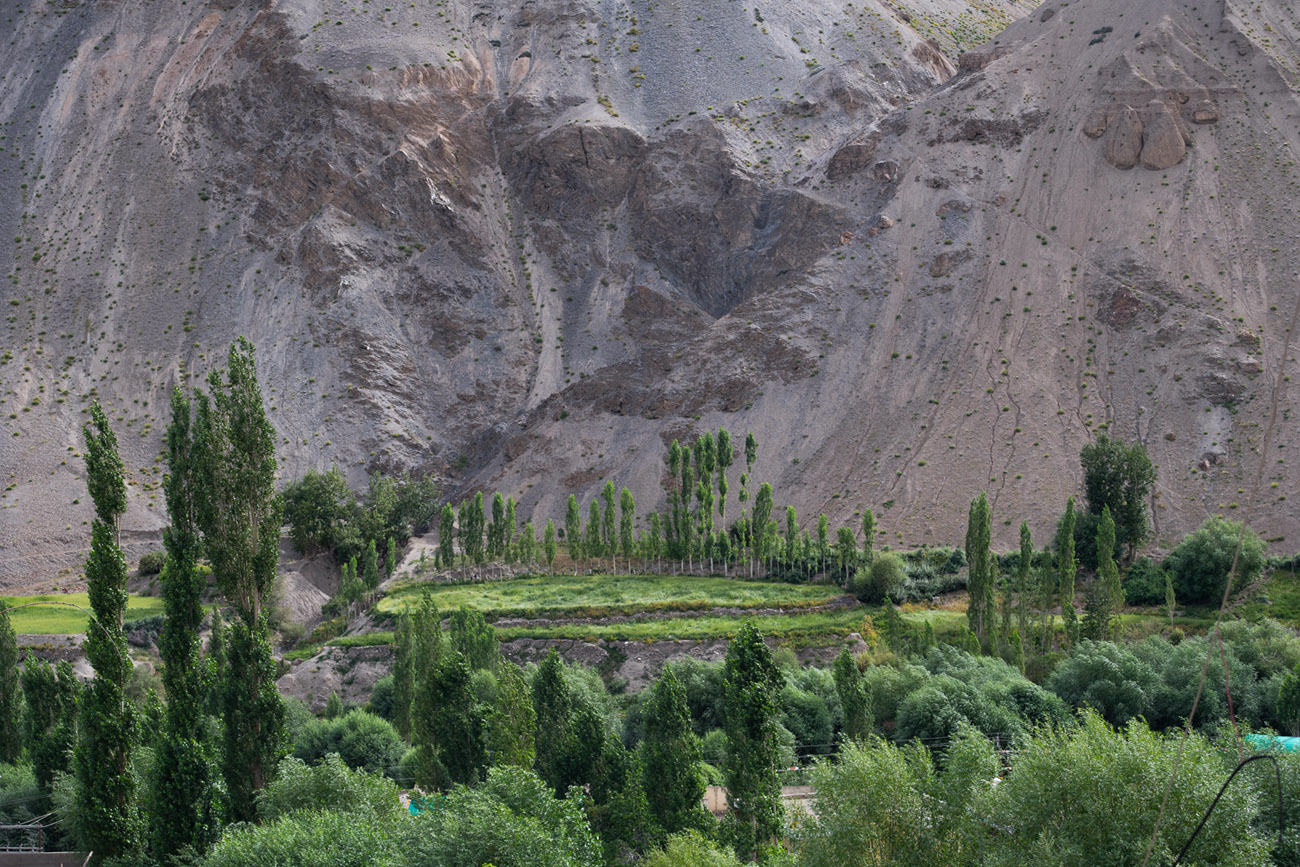
depth: 50m to one km, huge range of green hues/tone, exc separation of greens/yellows, accurate blue mountain
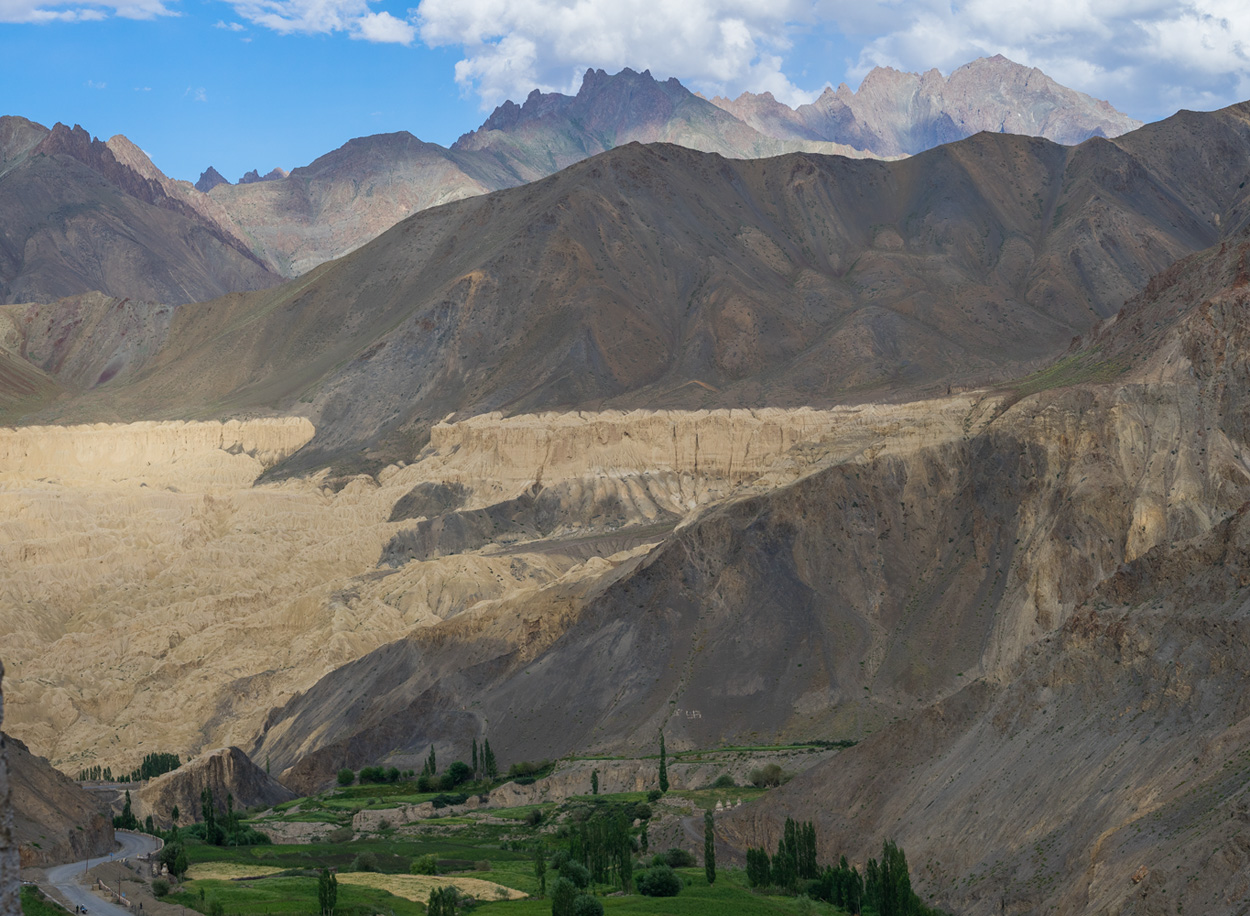
depth: 500m to 10kms, unwavering separation of hillside detail and colors, ancient lake yellows
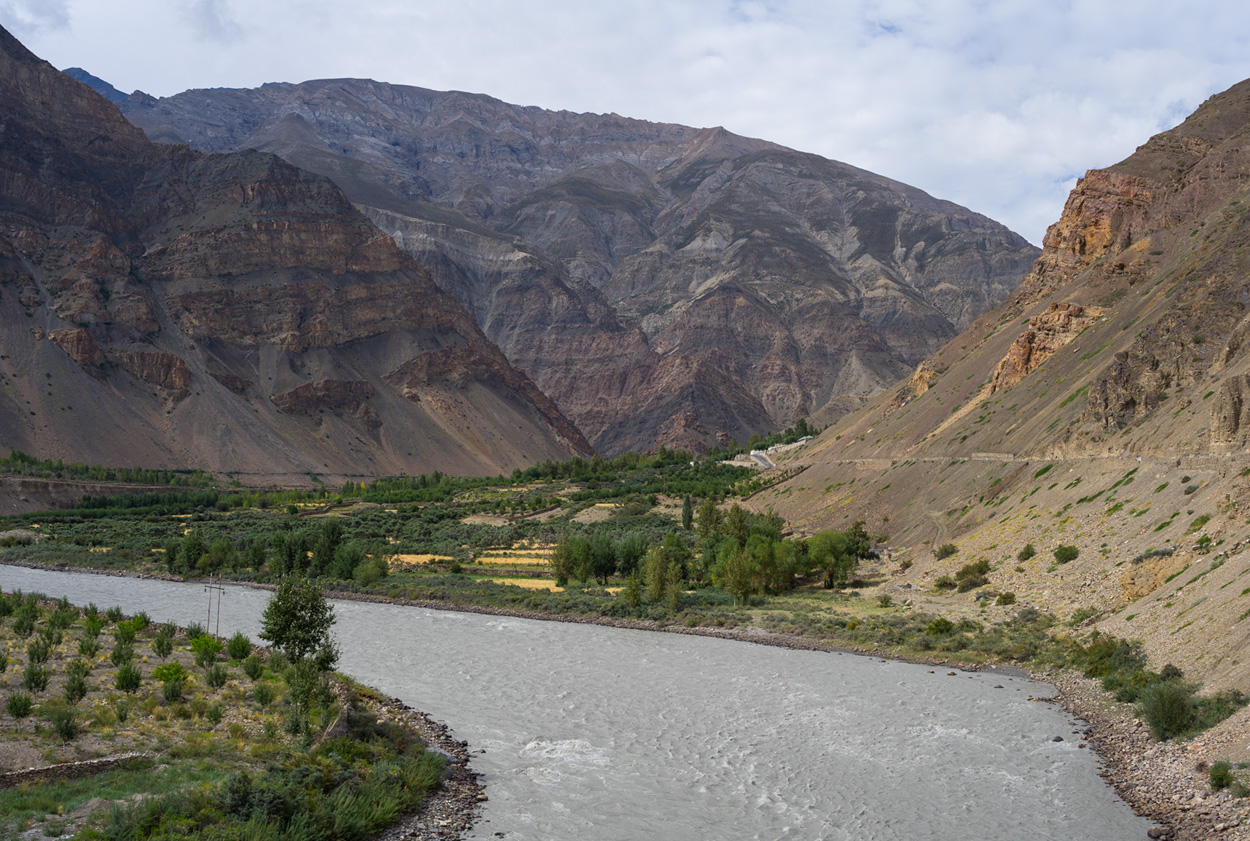
depth: 50m to 2kms, excellent ridge separation and range of ochres, greens and blues.
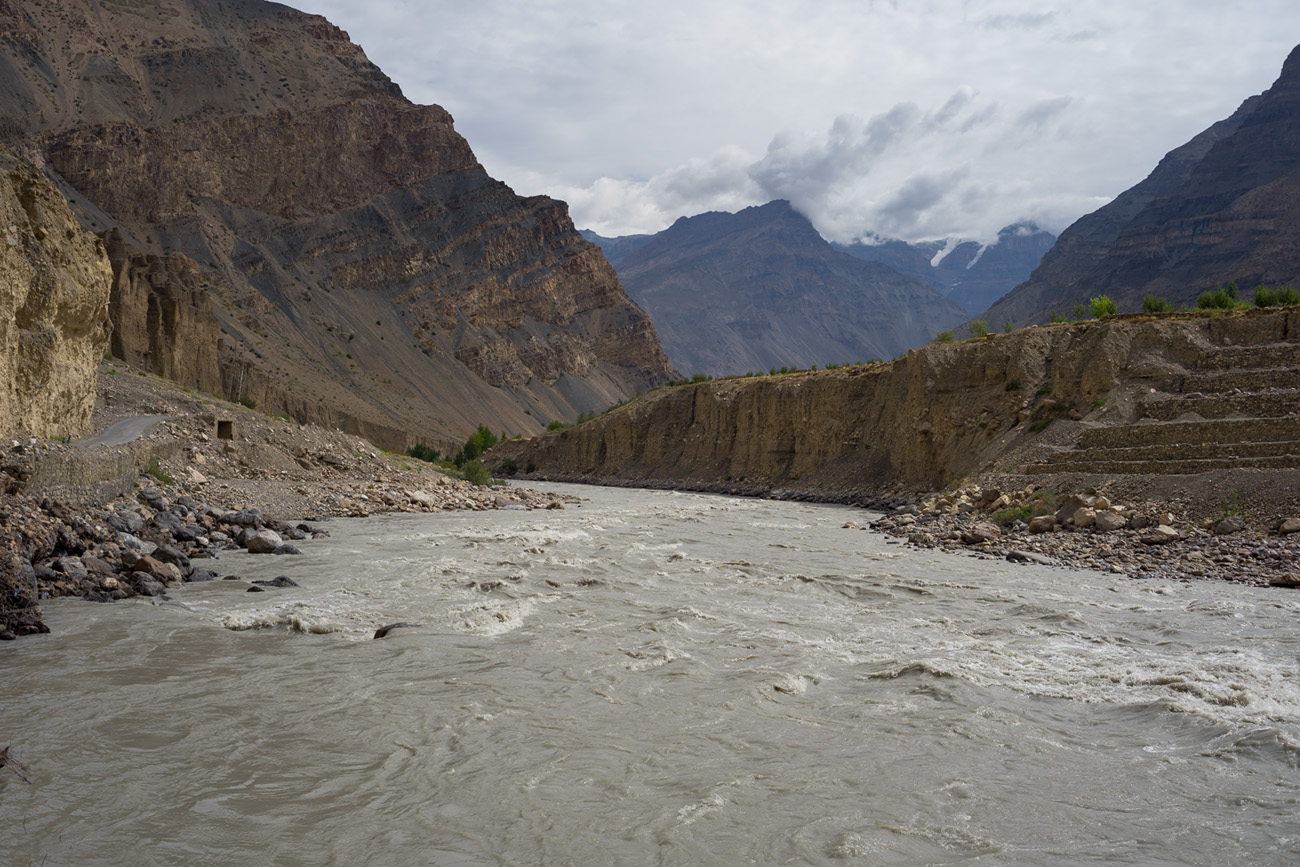
depth: 4m to infinity, even deep shadows show detail
My point was that not everyone is seeing the same thing. The Farmville pic has strong lines of highlight and shadow that it can give off that pop. But the question is if it's because the camera + lens combo or is it because the photographer? Could he have achieved the same thing with a different lens (given similar FOV) and camera combo?
Heck, in all the recent blind tests in the Sony room, it's hard for people to tell apart different lenses.
hiepphotog wrote:
My point was that not everyone is seeing the same thing. The Farmville pic has strong lines of highlight and shadow that it can give off that pop. But the question is if it's because the camera + lens combo or is it because the photographer? Could he have achieved the same thing with a different lens (given similar FOV) and camera combo?
Heck, in all the recent blind tests in the Sony room, it's hard for people to tell apart different lenses.
Agreed on your point. The only lens that I used (and therefore I know it's a bad photographer behind the lens) that had consistent pop was the classic Zeiss 2/25 ZE. It was definitely the lens and not me. I shot it on the Canon 5D3 and Sony A7R2 and the results were the same on both.
philip_pj wrote:
The last part of this thread is supposed to be about modern lenses but allow me to place just a few from how this challenge was met 30-40 years ago. The identity of the lens is not important (many from that era do as well), but these images are all at near normal focal lengths and not at the golden hour or high latitudes many employ to give their images shape. Most lack leading lines, or near-far compositions. They have to stand and deliver or fail in the attempt, with no tricks!
What is important is the lens's ability to separate color tones to a fine level, enabling mountains, trees and water to show a wide range of hues and tones that assist in producing the depiction of 3D despite sharpness being merely in the medium/high range. (can we stop calling it 'POP' please, the term is gross, trivial and uninformative). ...Show more →
my own wandering of the internet has revealed that many people (even many camera gear freaks) have no association of the zeiss name with 3Dness. arguments about the nature of 3D rendering abound in places with no mention of zeiss. i've seen canon fanboys wax eloquent about the magical 3D properties of L glass, i've seen leica newbies talk excitedly about the magical 3D properties of leica glass, and i've even seen olympus nuts argue that olympus sprinkles some magic digital powder on sensors in their high end camera that makes them produce greater 3D than those same sensors produce in olympus's cheaper cameras.
if what you say is actually true (i don't read camera gear sites as often as i used to) it would be a major marketing coup for zeiss, and maybe they should send some of the older forum members here a little kickback for their service.
also, i've always thought zeiss marketing was kinda terrible, but perhaps i'm not their market.
RoseandCharles wrote:
Personally I think lighting and composition have the biggest effect on 3D pop. I've seen the same lens do seemingly flat rendering, then with just changing of light, render amazing photos that have great dimensionality.
I agree. Lighting is the key for 3D. Good lens characteristics also make image more convincing and "real".
sony 35mm f1.4. I thought it handled the branches very nicely except there is like LOTS and LOTS of LoCA.... In the end I just desaturated the whole photo.
sebboh wrote:
my own wandering of the internet has revealed that many people (even many camera gear freaks) have no association of the zeiss name with 3Dness. arguments about the nature of 3D rendering abound in places with no mention of zeiss. i've seen canon fanboys wax eloquent about the magical 3D properties of L glass, i've seen leica newbies talk excitedly about the magical 3D properties of leica glass, and i've even seen olympus nuts argue that olympus sprinkles some magic digital powder on sensors in their high end camera that makes them produce greater 3D than those same sensors produce in olympus's cheaper cameras.
if what you say is actually true (i don't read camera gear sites as often as i used to) it would be a major marketing coup for zeiss, and maybe they should send some of the older forum members here a little kickback for their service.
also, i've always thought zeiss marketing was kinda terrible, but perhaps i'm not their market....Show more →
I don't recall ever seeing discussion like that w/r/t L glass, despite spending a lot of time on POTN several years ago, which was very much Canon-centric at the time. I mean, many of those folks had nothing but high praise for L-series lenses, often insinuating that anything less was a waste of time and anything costing more [read: Zeiss] a silly waste of money... but never a discussion on the illusion of depth.
Actually, what lead me to the FM Alt forum in the first place was a dismissive exchange on POTN. I remarked on the depth of someone's photo, I hadn't seen anything quite like it before (I believe it was taken with a 21 Distagon), and the L-fans pounced, telling me that both I and the photographer were nuts.
Makten wrote:
I think you are misinterpreting the word "sharp" here. Or maybe the translation isn't the best, because I believe they mean that the transition is steep. Which means that you have your subject (at least almost) entirely in focus, and then the background blur comes in very rapidly behind it.
I understood perfectly. And I disagree. As I tried to explain, smooth (not "sharp" or "steep") transitions between focus plane and planes in front of and behind it help providing a realistic visual effect (i.e. you look at a 2D image but you feel like you're looking at a real object in 3D space); in my opinion 3D pop has little relation, if any, with shallow DOF. Confusing shallow DOF with 3D pop is a rather common mistake.
Honestly, the only way to compare lens abilities to express 3d pop (I also think this is a term that should disappear due to its horrible lack of precision) is to take photos in a flat (or identical) lighting situation in a no depth composition at the same f stop with the same camera body using the same raw processor with no post processing.
Then take those images with exif removed and presented side by side. Not to say there aren't lenses that exhibit this effect straight out of camera, but there are too many variables that can increase that effect especially in post.
As I understand it, absolute sharpness and lens design and construction affect micro contrast (midtone detail), bokeh structure, aberration resistance, flare and ghosts resistance in backlit high contrast areas, color gradation, and color fidelity across surfaces.
The computational side along with the sensor itself can magnify the dimensional effect and in post with things like selective sharpening and color contrast even more so.
But if we're talking really strong "3D" you cannot beat high end cinema anamorphic lenses. On the photographic side I would say APO glass under 100mm present images closest to reality and therefore a stronger associative dimensional image.
ftllens wrote:
... this is a term that should disappear due to its horrible lack of precision...
I agree.
The term "3D POP" is used by Zeiss marketing guys, who most likely are neither photographers nor lens designers. When speaking about "3D POP" of Zeiss lenses, those guys say that their lenses "help photos convey the feeling that the areas in focus appear almost separate to the rest of the image. At wide-open aperture, they create the magical ZEISS 3D pop effect and deliver a harmonious bokeh for great visual impact." They confuse three dimensional illusion with shallow DOF. They should study Piero della Francesca and read his De Prospectiva pingendi. But they won't read it; they are only interested in selling volumes, not in the dissemination of image culture.