Samuli Vahonen
Offline
• • • •
Upload & Sell: Off
|
 p.67 #14 · ZE/ZF/ZM Images (Official Thread!) p.67 #14 · ZE/ZF/ZM Images (Official Thread!) | |
Thanks for compliments regarding Murder ditch series!
Wayne, your elephant rock shot has great reds. Like denoir commented it has something weird going on with web processing. Also I would assume that after sharpening properly there would be better separation between front of the "elephant" and the background, now it almost blends to background. Since it was shoot at f/8 (1/800s & ISO 200 based on sunny 16 it's 1/200=f/16, 1/400=f/11, 1/800=f/8, with polarizer somewhere between f/4.5 and f/5 - all assuming you didn't adjust exposure on RAW) there isn't much separation lens can give by DOF (too small aperture) or 3D (no suitable texture on subject and too rough light for that). We have so different styles - I would definitely shoot this little closer (if physically possible) at f/2 or f/2.8.
denoir, great subtle colors.
wayne seltzer wrote:
Yes, this is the one case where the 50MP bokeh is worse where there is larger distance to focus pt. and larger distance to background. Because the 50/1.4 transitions quicker to OOF in the distant scene it will have the smoother bokeh. This is evident in Philippe's and Makten's cityscape shots too as the background buildings get that less strongly drawn/slightly smoothed bokeh look to them. The 50MP's background has less bokeh effect as it transitions slower and farther back in the scene than the 50/1.4.
I was not worried about blur disc size (=quantity of bokeh) but the edginess and roughness of the highlights (=quality of bokeh). For quantity there is adjustment in camera (aperture) but not for quality.
wayne seltzer wrote:
But for other cases which I normal shoot more, where the distance to subject is smaller and the distance to background is smaller, example being a portrait in a garden and the bushes/trees are not to far behind the the people. I have found the bokeh of the 50MP to be smoother than the 50/1.4 especially if the background has strong sunlight.
In this case the 50/1.4 doesn't have a a large distance to transition to OOF.
Also distances for shooting portrait (assuming you talk halfbody/head&shoulders) planar is having image quality issues due to uncorrected aberrations, which will also cause bad quality of bokeh. So for quality it may be reverse situation at portrait shooting. Haven't tested yet.
I checked by using Toothwalker's VWDOF, the scenarios we are talking about here. When calculating I only used meters, for this post I roughly translated them to feet by dividing meter by 3.
My test shot was about from 7m/21feet (object distance) and the background was about 50m/150feet away (POI re lens = position of the point of interest relative to the lens) and aperture f/2.8 used. As a result I get blur disc size 0.110mm at 50m.
If we then shoot portraits at typical portrait shooting distance, let's say 1m/3feet. By trying few values your background would have to be 1.132m away, meaning that if focused to 1m the bushes/trees would have to be 13.2cm = about 5 inch away from the focus point to have same blur disc size. Since this scenario is physically not feasible (unless you push your model half inside to the bush/tree), I have to assume you have been shooting whole half person portraits, let's say from 2m/6ft distance, then the background would have to be 2.635m away from the camera, leaving 63.5cm = 25 inch between your subject's focus point and background. This is physically feasible, but for portrait I personally would choose blurrier background = background, which is further away or larger aperture unless it would be environment portrait where the background has some role, e.g. person leaning one hand to bookshelf/chair etc. (but again, I'm not portrait shooter).
I'll try to find test setup for this kind of scenario, at 2m planar doesn't completely suck but it's not nearly as good as it's at 10m distance, so I assume planar bokeh to suffer from aberrations more than in my 7m focused test shot.
(wow - this engineering stuff is really boring...don't hit me with anything hard...)
However what was proven that for my typical scenario where I want to get bokeh separation from objects far away e.g. 7m the planar was surprisingly *) giving less trouble in bokeh department for the makro-planar. Bokeh circles have even light distribution (MP - concentrated to edges of circles) at f/2.8 on this setup and the color errors are not that severe. I shoot also a lot at f/3.2, f/3.5 and f/4 and it seems 50MP is still having some issues at f/4 - Reminds me of Zeiss recommendation from 80's and 90's to stop down two stops from maximum aperture...
*) based on consensus formed by majority of people (including me) on forum these two lenses bokeh's
Also again for most sensitive (general - to not anyone specific) forum members reminder; this was discussion about bokeh of one kind situation, more meaningful to some of us, less meaningful to some of us. This doesn't prove that one lens is better than another, neither that one gives better value than another, or anything else in bigger picture. Only thing it may prove is that lenses cannot be evaluated saying one is better than other, or giving them ratings. "best" or "rating" methods can of course be used if the usage of lens is specified.
-------------------------------
I have hard time figuring out this 28ZE and what will it be used for. I got the lens very cheaply when trading Canon 135L to 85ZE, the same guy had also this for sale, so decided to buy both since I would had to wait 3+ years to see one on used market on Finland...
Large aperture would suggest usage for shallow DOF. It's also very sharp at large apertures but field curvature can cause effects like shown in my last picture post (Murder ditch 04, f/3.2 version, rejected by me due to corners being sharp) - the bokeh is nice but corners become sharp ruining the image. So for me the usage of large apertures will be limited to close-ups (e.g. f/2, 1/80s, ISO 800). At closed down I'm not sure yet do I like it more than Contax Distagon T* 2.8/28 C/Y. Based on shooting this far pixel level sharpness seems slightly better at 28ZE. However it seems to be missing something what 2.8/28C/Y has at f/8 and f/11 (the edge&texture rendering causing 3D to happen like this: 2.8/28). I haven't done yet any side-by-side shooting, and I don't feel like having enough energy to do it.
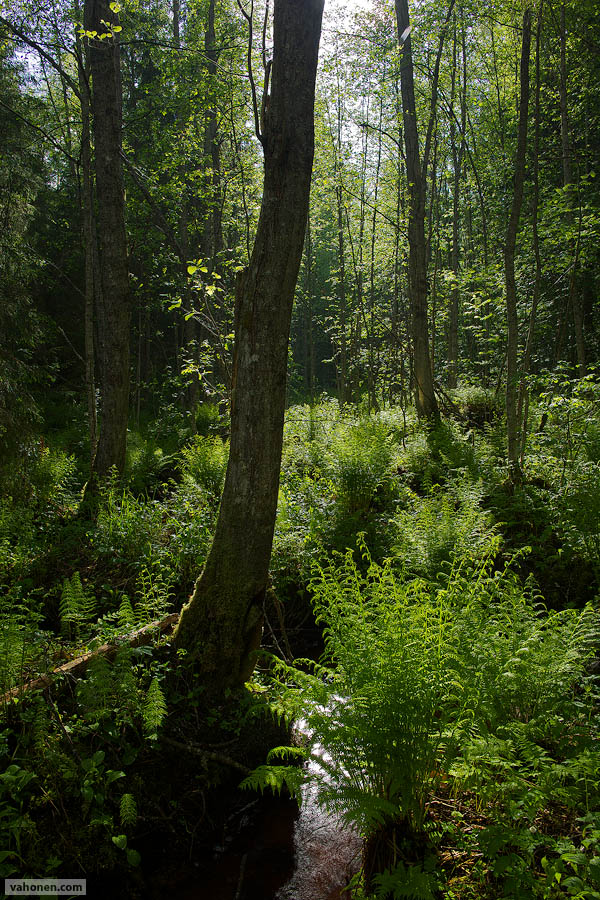
Murder ditch 03 - Carl Zeiss Distagon T* 2/28 @ f/11, 1/5s, ISO 100 (polarizer) - No obvious problems caused by backlight. Very weird flare on top of the photo (the 45 degree diagonal line on one of the trees - polarizer caused?)
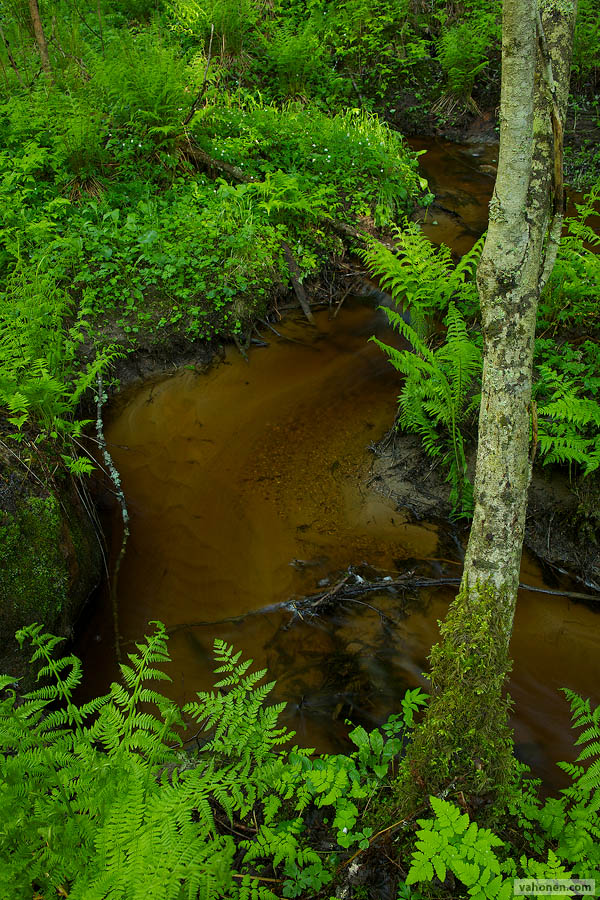
Murder ditch 05 - Carl Zeiss Distagon T* 2/28 @ f/11, 2s, ISO 100 (polarizer)
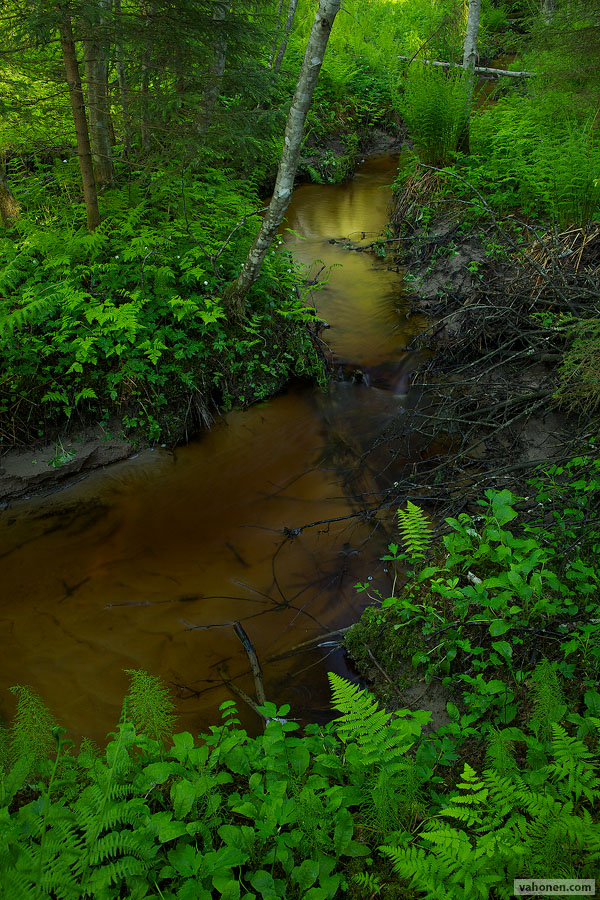
Murder ditch 06 - Carl Zeiss Distagon T* 2/28 @ f/11, 2.5s, ISO 100 (polarizer)
Samuli
EDIT: corrected link to 28C/Y image
EDIT2: added missing "makro-" in front of the later "planar" word on sentence starting "However what was proven..."
Edited on May 31, 2010 at 01:23 PM · View previous versions
|


