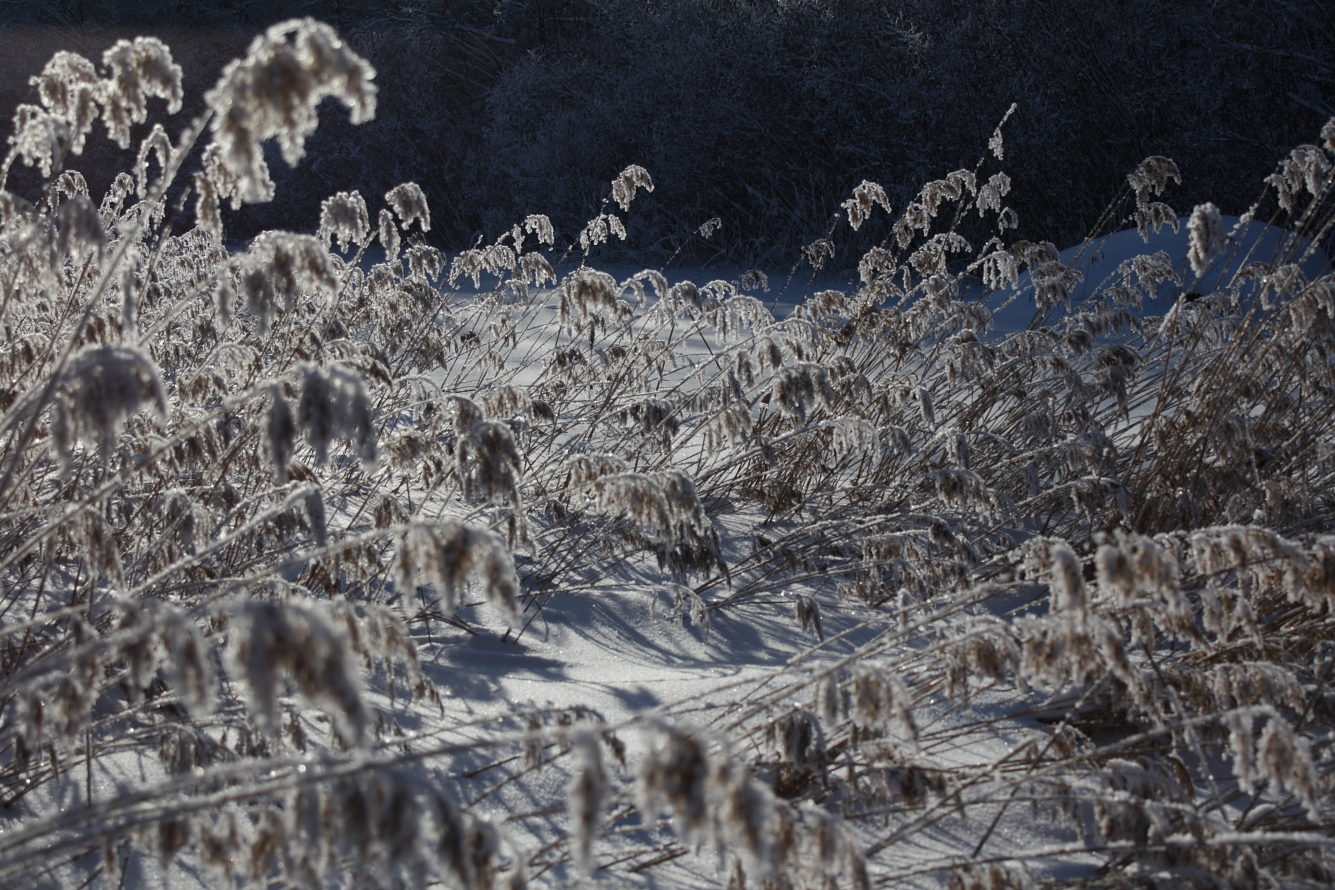
First 3D attempt here. I took several images while changing focus, and to my eyes this one just might have some. Some of the other definitely not. Distagon 40mmIF.
That's as flat as it gets. (sorry.) Don't confuse shallow DOF with plasticity.
-To be fair, you're getting a lot of compression from the FL, but still, they looks pasted onto the background. I'm not being an alt-snob when I say that that look is typical of Canon lenses, even the L-series.
This is the ZE 35 f:2.0. I am actually going to try and redo this shot with various Zeiss lenses to learn more about their specific performance. And thanks for the WOW!, but it is all in the lens, as Paul Yi would say
Cableaddict wrote:
That's as flat as it gets. (sorry.) Don't confuse shallow DOF with plasticity.
-To be fair, you're getting a lot of compression from the FL, but still, they looks pasted onto the background. I'm not being an alt-snob when I say that that look is typical of Canon lenses, even the L-series.
On last weekend I took one photo, which I assumed would appear 3D-ish/plasticity/what-ever-word-it's-approved-to-be-used-today, but it just didn't. It's sharp and otherwise this lens has this far only surprised me positively (except CA & vignetting) but maybe it's trying to avoid producing 3D or something, like in StevenPA's image discussed here earlier.
Haralan Harju 5 - Olympus OM 24mm f/2.8 @ f/4, 1/50s, ISO 800:
I think he means that you can setup a shot so that even at f/8 or f/11 the BG is very blurry. So just because a the BG is blurry doesn't mean the DOF was shallow relative to something shot at f/1.2 or the alike given consideration for subject distances.
Cableaddict wrote:
?? Explain, please. I seriously don't understand.
The answer is simply that the definition of depth of field does not allow you to judge DOF by the degree of background blur. Is the DOF of the image in question 20 centimeters or 2 meters? You can't tell because the image does not provide the clues. What you can say is that the DOF does not include the background. In all likelihood the rear DOF probably stops well in front of the background, but that is already an educated guess and no direct observation.
For a fixed setup, an increase in lens aperture reduces the depth of field and increases the degree of background blur. In that case there is a clear relationship, although DOF is still measured longitudinally and background blur transversely. However, upon comparing two photographs from different setups it is very well possible that one has both more DOF and more background blur than the other one, so the abovementioned relationship is not generally applicable.
Toothwalker wrote:
The answer is simply that the definition of depth of field does not allow you to judge DOF by the degree of background blur. Is the DOF of the image in question 20 centimeters or 2 meters? You can't tell because the image does not provide the clues. What you can say is that the DOF does not include the background. In all likelihood the rear DOF probably stops well in front of the background, but that is already an educated guess and no direct observation.
For a fixed setup, an increase in lens aperture reduces the depth of field and increases the degree of background blur. In that case there is a clear relationship, although DOF is still measured longitudinally and background blur transversely. However, upon comparing two photographs from different setups it is very well possible that one has both more DOF and more background blur than the other one, so the abovementioned relationship is not generally applicable. ...Show more →
Well, OK.
-kind of picky with the semantics, though!
"shallow DOF" still makes more sense to me, interms of my point, than "blurry backround." - What if the background was moving, and the photog used a slow shutter? - What if the lens used simply isn't as sharp at infinity as it is up close?
Well, the important point still got through, I think.
philber wrote:
This is the ZE 35 f:2.0. I am actually going to try and redo this shot with various Zeiss lenses to learn more about their specific performance. And thanks for the WOW!, but it is all in the lens, as Paul Yi would say
I knew it was a Zeiss. Yeah, I should have remembered you have the ZE35 from that other thread. What a lens! Some of the other ZE's seem to have lost a little plasticity vs their older, CZ / CY counterparts, but not the 35.


 Canon EF 85mm f/1.2L @ f/3.2