I'm mostly a lurker these days, but I do have some fun things I'd love to share regarding alternative lenses.
In my spare time I like to play around by ripping apart antique lenses and what not. It's real fun messing around with tubes and making strange patchwork glass.
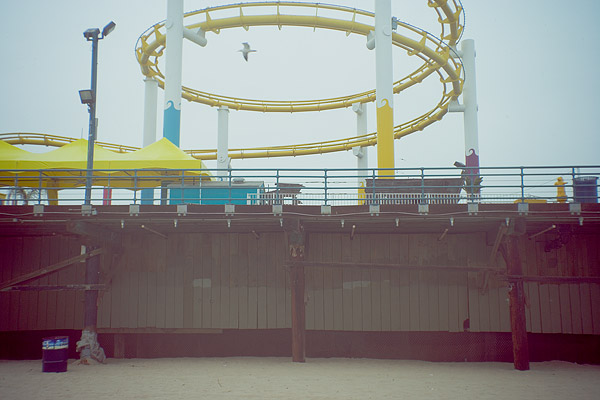
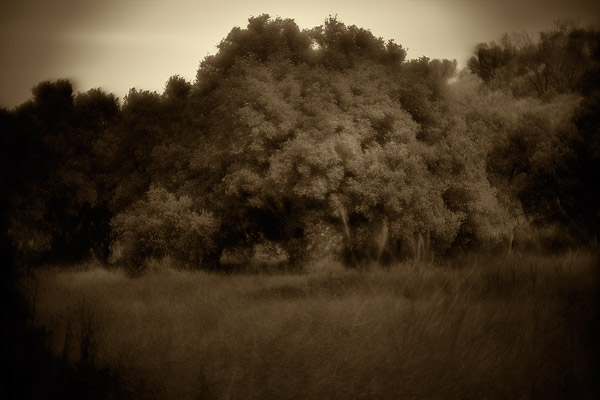
The first one is pretty standard. It's an old 60's Canon FD 55mm f/1.2 via optical adapter on a 1Ds Mark II.
You do get a nice blooming effect.
However, it does leave you wanting more in the sharpness department.
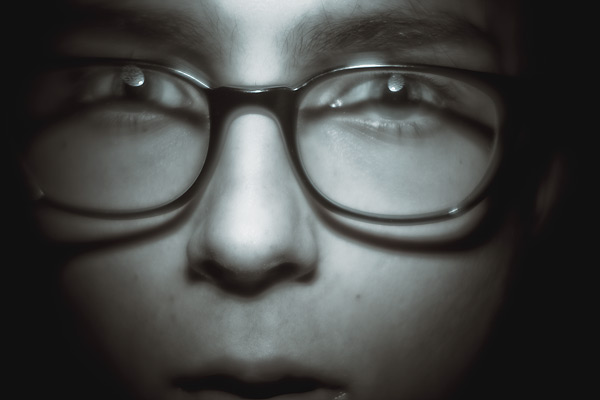
This next one was about a 100mm-ish lens, again late 60's Japanese glass.
I liked the slight fisheye effect it produced.
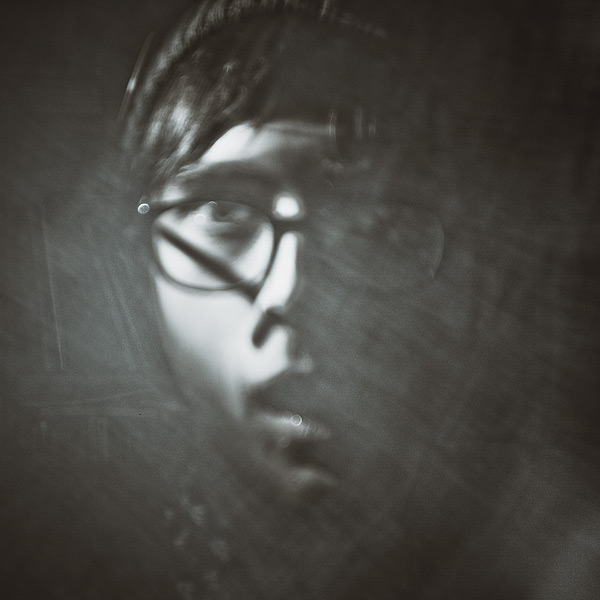
I used that same weird curved element in a 50mm version and got even more fisheye effect.
I like the weird almost spinning out of focus effect. I'm pretty happy with the sharpness and still have this lens today.
Here's an daylight example from the 50mm fishy. Stopping down the lens minimizes pinched out of focus effect.
Okay. On to what's kept me occupied the last 3 years or so. I work in feature films and for whatever reason I thought it would be an awesome idea to be able to shoot stills with anamorphic lenses. This led to lots of searching, and I mean lots! I own a whole ton of anamorphic glass at this point and am still tinkering, but these are the most interesting to me.
-bigger
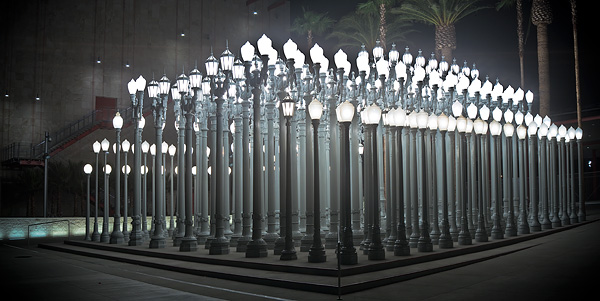
This is from an Iscogen 50mm anamorphic prime adapted to my 1Ds Mark III. This was wide open at f/2.8.
-bigger
Stopped down you actually get fairly impressive and sharp results.
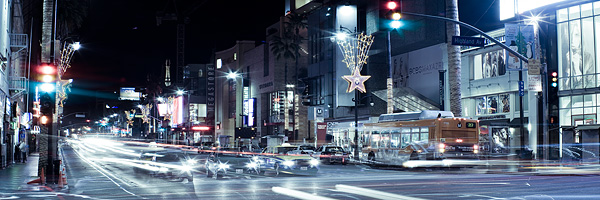
This next one is my baby. It's a 100mm f/2-ish 2x anamorphic prime that I had a friend at Panavision machine together for me. -bigger
It's a real pain to actually focus because you need to find the happy spot between the vertical and horizontal plains. It's also not a small lens at all.
-bigger
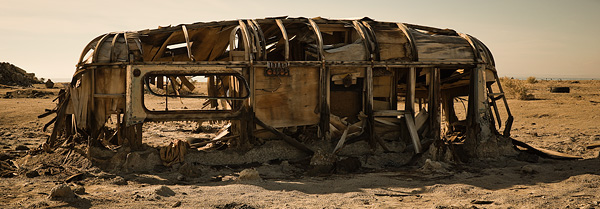
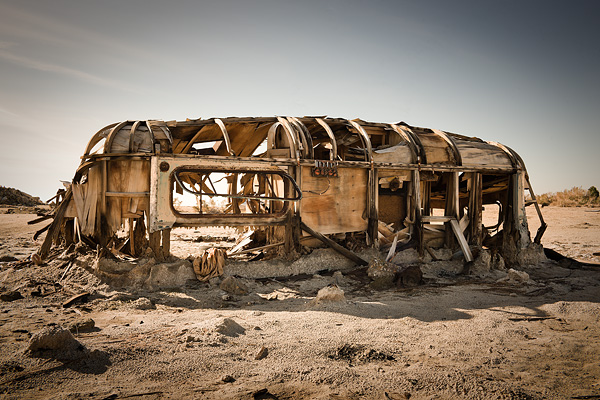
Here's a daylight example from the Salton Sea.
And just for comparisons sake, here's a shot of that same area with a Canon 35mm f/1.4L at a slightly different angle.
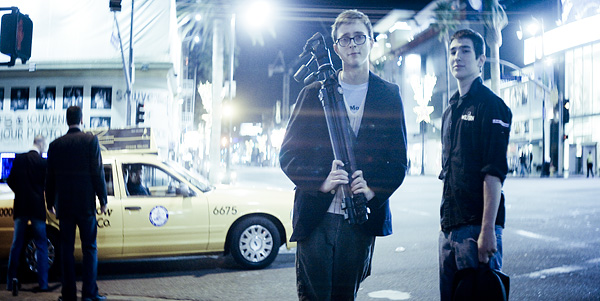
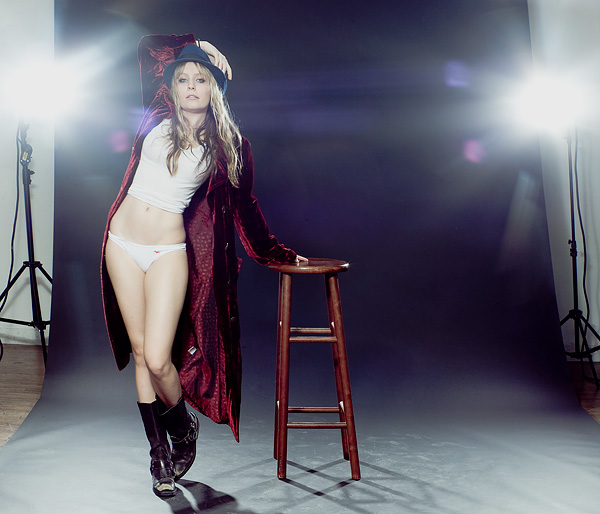
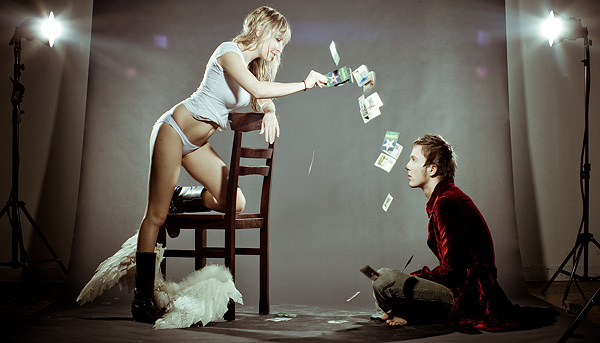
Due to the pain of focusing it is difficult to actually shoot people with it, but I gave it a stab.
This is the full stretched frame.
So my next anamorphic nightmare is going to be in the 25mm-35mm range hopefully. To date I haven't found a nice combination of elements to produce exceptable results, but I recently recieved some new anamorphic elements that can probably hold up to the wide angle world. I just waiting on some more $$ to come in to play around.
Can you clarify something about the anamorphic lenses? I guess the idea is to take a widescreen image, optically squeeze the horizontal axis to fit on a standard frame, then stretch it back out during projection with a complementary projection lens? So what happens here? Do you stretch the image in PS or is this as it's recorded?
fourfa wrote:
Can you clarify something about the anamorphic lenses? I guess the idea is to take a widescreen image, optically squeeze the horizontal axis to fit on a standard frame, then stretch it back out during projection with a complementary projection lens? So what happens here? Do you stretch the image in PS or is this as it's recorded?
Yes, please give us some details.
These shots are absolutely wonderful. It's sorta' like a Holga & a Lensbaby got together to have a party, and then someone dropped LSD into the punch. Me like!
BTW- I think the really soft ones are some of the best. (and I'm normally a sharpness freak.)
Nice Photographs Phil, and interesting alternative uses for oddball glass!
I have a couple of the ISCO 50mm anamorphic lenses, was going to use them for architecural and landscape work, but was a little underwhelmed with the performance of the lens. I would expand the horizontal dimension by 1.5x in photoshop for the final image, assume this is what you are doing also. As I remember, the front anamorphic section of the ISCO is removable, was thinking about trying to adapt it to another 50mm or 35mm lens to see if quality improves.
Shooting with this anamorphic lens is like using a 50mm lens for the vertical and a 35mm lens for the horizontal, difficult to describe, but it does give a somewhat different image than just shooting with a 35mm lens and croping.
Great work PhilH, you give me a totally new method to express myself. Although it will lead me to fetch some new lenses and some hours of fiddling and dremeling. I must admit though that the latter has great appeal for me, since I like the satisfaction that comes after I finish such a project.
In many ways thanks and much respect! One advantage is that you use the whole surface of the sensor, which gives more DOF, more light per pixel etc.
fourfa, Cableaddict - Clarification. So yes, what you see and what is recorded at the time of shooting is a "squeezed" image. When shooting this makes it difficult to compose and focus, but thanks to things like Live View it's much easier than the viewfinder. It can actually be horizontal, vertical, diagonal. It's up to you really.
Here's a shot with the anamorphic lens on a diagonal and not stretched:
Later in Photoshop I stretch it out. The 100mm anamorphic is a 2x stretch. The Isco is somewhere betweeen 1.3x and 1.5x. It's rather trivial to do. In theaters they use an optical element to restretch the image, or do it digitally after a digitizing scanning (we use a Northlight scanner at R&H) process and then filmout the stretched out frame back to film via laser recorder (and we shoot out with an ARRI laser recorder).
The whole idea behind doing this was to have a different "native" recording format, which I find is woefully lacking in 35mm digital still cameras. Meaning that our dSLRs are 3:2 aspect ratio (or 1.5:1 in the movie world), with these anamorphic elements I currently can shoot at both a 2:1 and 3:1 aspect ratio natively. Which to me, is very cool. Btw, the aspect ratio of a 6x17 large format camera comes out to 2.83:1. There is in fact a 3x anamorphic lens out there, but they are pretty rare to find and very much moolah. I also imagine the image quality would be fairly ugly too.
ci5ic - Thank you. Lack of sharpness isn't all bad, it's certainly nice to set a mood.
sirimiri, cgiff - Thanks! I'm out and about at the moment, but I'll take a shot of the lenses on a camera tonight.
rico - Well it wasn't totally under the table, it cost $$$$, but I'm stupid crazy when it comes to this stuff.
ovredal73 - Thanks. I love it too. I need to shoot more with it though. I'm working on a "smeary" look lens at the moment that should also produce a nice background effect.
ACElkins - Thanks Ace. Man, let me tell you I had the hardest time finding that bloody Isco lens and you've got two of them! I find that somewhere between 1.33x and 1.5x is happy on the Isco restretch. I agree that the underlaying lens isn't the sharpest lens in the world, but stopped down to f/8 it gets much much better. I've had the same thoughts about adapting it to another lens too. Mainly the 50mm f/1.4 or maybe a 40mm pancake lens of some sort. I'm working on it. First I think I'm going to cut up and old 50mm f/1.8 first.
biotar - Thanks. I'm a bit of nut when it comes to alt gear for sure. I imagine I've spent too much time and money fiddling around with lenses that I don't use all that much. But, it certainly has kept me excited about experimenting when it comes to photography. Specifically I find glass from about 1960-1975 to be awesome. It's big, it's heavey, it's sharp, and most likely has lead in it.
Here's two other alternative lenses that are much more readily available.
This was shot with a Loreo "lens in a cap".
For the price of these suckers ($15-$20) I'm surprised I don't see more people with them. I tend to always have one in my kit.
These next three are using a Holga lens adapted to EF mount.
The color is very nice and you can get fairly sharp images from this plastic lens.
A cool trick if you're into introducing flare into the equation is taking the lens off the camera and reversing it.
This allows a closer focus and create LOTS of flare
I'll post up some photos of the anamorphic elements on a camera soon.


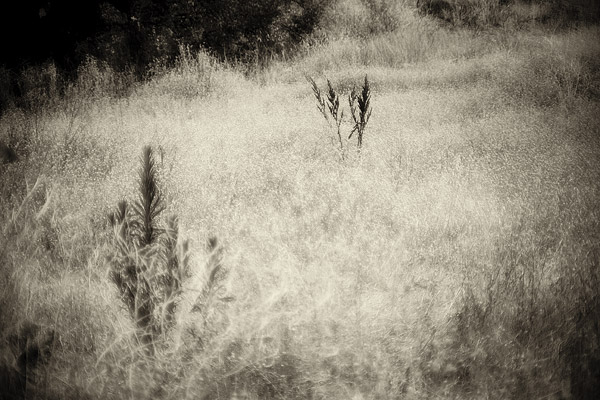





 very interesting stuff