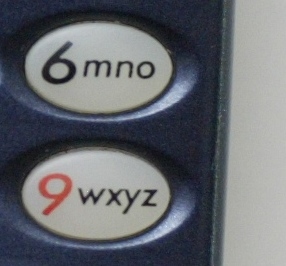
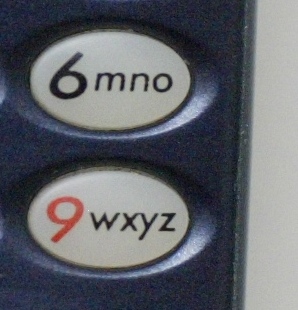
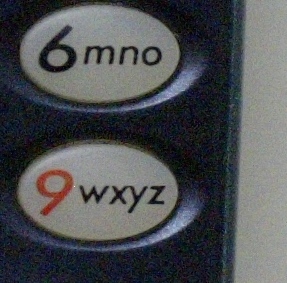
Thanks Yakim - now if you were to resize these crops to match the pixel size of the original 40D crops you posted, then looked at them side by side, then you would see how much better the 40D is performing.
Understood though if this doesn't matter much to you normally
In good lighting the difference is less apparent. However I believe you will see more of a difference in poor lighting, which is when you really need the higher ISO.
Although I know there are some ISO1600 concert pics that are occasionally posted by a fellow FM'er that are really impressive, for the most part my 20D always trumped my 1D for low light, high ISO shooting.
None the less, the 1D does look good in this test.
many thanks for this thread which just show what I want to know and no need open other question thread.
my problem is I only have 1D, and mainly shoot motorsports, kids, baby, portrait, model in studio...etc. I always shoot RAW and sometime with biggest JPG from 1D.
I am thinking if need buy a camera for backup or maybe replace 1D dut to is heavy (but I already get used to this), I would like to hear from you (and others) that 40D or maybe used 20D is suit for me?
do you think 40D can replace my 1D for above my jobs? and offer better result like better IQ and high ISO result ?
There's more to a camera than IQ in high ISO. The difference in UI and the tiny viewfinder is a real PITA. My suggestion is to find a 1D Mk II (N) and make the current 1D the backup body. The only reason I did not do it myself is that I badly wanted the 10-22. It's simply better than my former 17-40.
The funny thing is that I never intended to buy the 40D. I wanted (and still want) the 1D Mk III. Thing is, I got tiered of waiting for Canon to fix the AF bug so bought the 40D for the mean time. As far as I am concerned the 1D's major problem is it's battery consumption. It really suck. I thought about buying another battery but the reviews were mixed and the 1D Mk III uses a different one….
Do you think 1D still can work fine for the photo even print out with 10"x8" ?
I think so but sometime I just got headche that I need one backup camera, but per my budget I only can buy used 20d, 30d & 40D.
and I just want to know if 40D is worth for the difference between 30D or even 20d. .
if yes i would like to buy 40D...
thanks for sharing...
IMHO the 40D is a major leap over the 20D and 30D (AKA 20D Mk II). A lot has been improved in it: AF, LV, screen, high ISO, UI etc. The 20D and 30D never tempted me but the 40D is really good. That, however, does not change my view stated above.
I've printed many 20x30 posters with 1D for HS sports.
1D is still one amazing camera for the price IMO.
Leslie168 wrote:
thanks Yakim and understand your point.
sorry for a little off topic.
Do you think 1D still can work fine for the photo even print out with 10"x8" ?
I think so but sometime I just got headche that I need one backup camera, but per my budget I only can buy used 20d, 30d & 40D.
and I just want to know if 40D is worth for the difference between 30D or even 20d. .
if yes i would like to buy 40D...
thanks for sharing...
Yakim, I understand your point of view. I do think that if you never print your images, you miss out on potentially one of the greatest satisfactions of photography. However, it makes sense to suit your equipment and your methodology to your choice of media and goals. Here is my way of thinking about different camera formats:
There are two basic elements in any photograph that precede any other refinements.
They are perspective [point of view, camera placement] and angle of view [framing, crop, what is included].
The camera format [sensor size, film size] will then affect the results, because different formats will require different focal length lenses to achieve identical perspective and framing.
Once you choose appropriate lenses to get the same field of view, the pictorial results of varying formats can be fairly compared.
Even if the camera formats were identical and only the number of pixels varied, what would matter in the end? To me it seems that the whole picture matters. The 4 MP of the 1D or the 10 MP of a newer body will both be used to create a complete image. Even if it is only viewed on screen, wouldn't it make sense to compare the versions when they are both the same size? As nearly as possible identical?
Your PP skills may be limited, but have you tried composing a shot the same way in each camera and sizing the images to fill your monitor, whatever size that may be?
Large pixels [1D] can be an advantage for low noise. Many pixels [40D] can be an advantaqe for minimizing the effect of noise. The size of the sensor determines the limits of quality for any given level of technology. I suspect that the advances of the last few years have slightly more than made up the difference between those two sensor sizes. You own both, so you can do your own comparisons. It may not be conventional wisdom, but I think you need to equalize images to get a meaningful result.
Many years ago, I shot 6x7 cm film, sometimes using high speed films, and I shot 35mm Technical Pan with compensating "pictorial" developers (very low speed, very fine grain and high resolution). In some cases, the larger film actually showed more grain, but with other advantages in quality. There are all kinds of trade-offs and I'm not trying to make a direct comparison to your digital cameras, but imagine that you were judging a full-frame DSLR of only 4 MP (if such a beast existed) and a compact digicam of 12 MP. How would you decide which had "lower noise", or any other aspect of image quality? I think you'd have to look at the whole picture!
Photon wrote:
Yakim, I understand your point of view. I do think that if you never print your images, you miss out on potentially one of the greatest satisfactions of photography.
Printing will be dealt with in the future. Just after upgrading my computer….
Photon wrote:
To me it seems that the whole picture matters.
I can't agree with you more. Nevertheless, I confess I am a little of a gearhead….