rscheffler
Offline
• • • • • •
Upload & Sell: Off
|
 p.2 #16 · Product Photography - what do I need to take product pictures of a baseball bat? p.2 #16 · Product Photography - what do I need to take product pictures of a baseball bat? | |
Ming-Tzu wrote:
I know the MS will default to the camera's flash sync speed, which would be 1/200 in this instance (5d4). My assumption is that if I shoot a picture at, say 1/5000 SS, the QT will take the shot at that 1/5000 but the other lights in the group (MS300-V) will fire off at 1/200. Not sure what the impact that would be. All in all, best not to overcomplicate things and just buy the lights that are needed vs buying lights for things that may or may not be needed lol
Anyway, lots more research to do
Thanks!
It won't work. If you're going to shoot at 1/5000 in HSS with a flash that works at HSS (I'm assuming the QT), that flash pulses the light output to extend the flash duration time to 1/250, which is the travel time for the shutter slit opening to cross the frame. The pulsed light is necessary so that at every point across the frame that the shutter slit/opening passes, the light output is exactly the same. With a cheap non-HSS flash, it will probably have a flash duration shorter than 1/250, meaning that the shutter opening will only see that flash for a brief portion of the time it takes to cross the frame. Meaning, you'll register an exposure only for a small section of the image right at the start of the shutter travel. While there are some niche systems that operate in Hi-sync or hyper-sync mode, rather than pulsing the strobe output as the shutter opening crosses the frame, they rely on a very long flash duration, typically longer than the camera's max sync speed, so that the single burst output of the strobe is 'on' for the full time that the 'higher than sync speed' shutter opening crosses the frame. But this system has some downsides in that the output during that single burst is not entirely even, meaning that exposure across the frame is less even than HSS strobes.
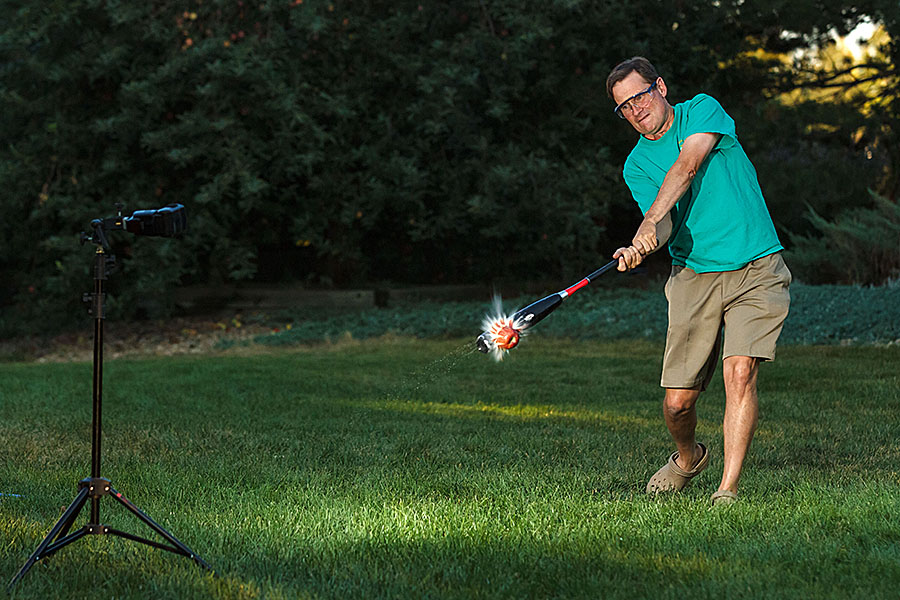
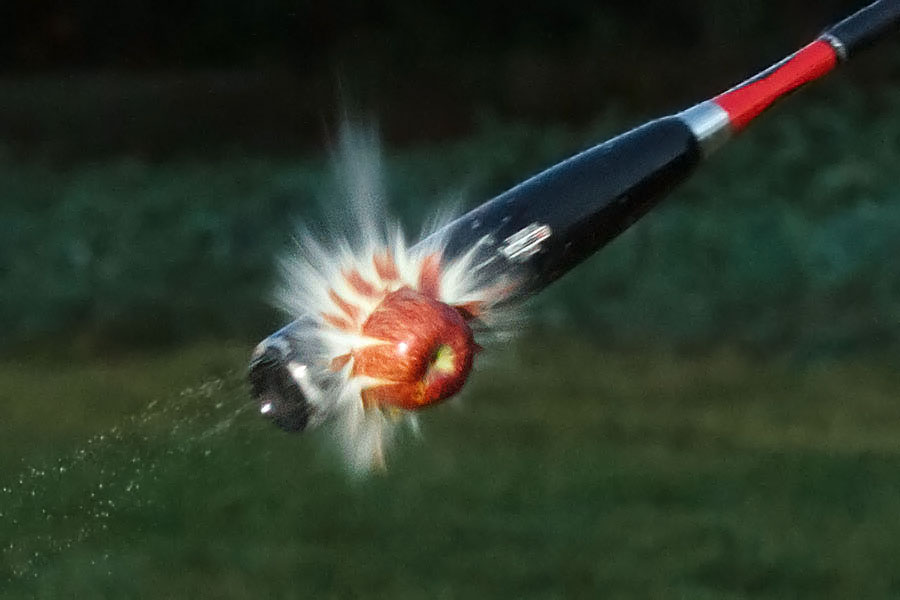
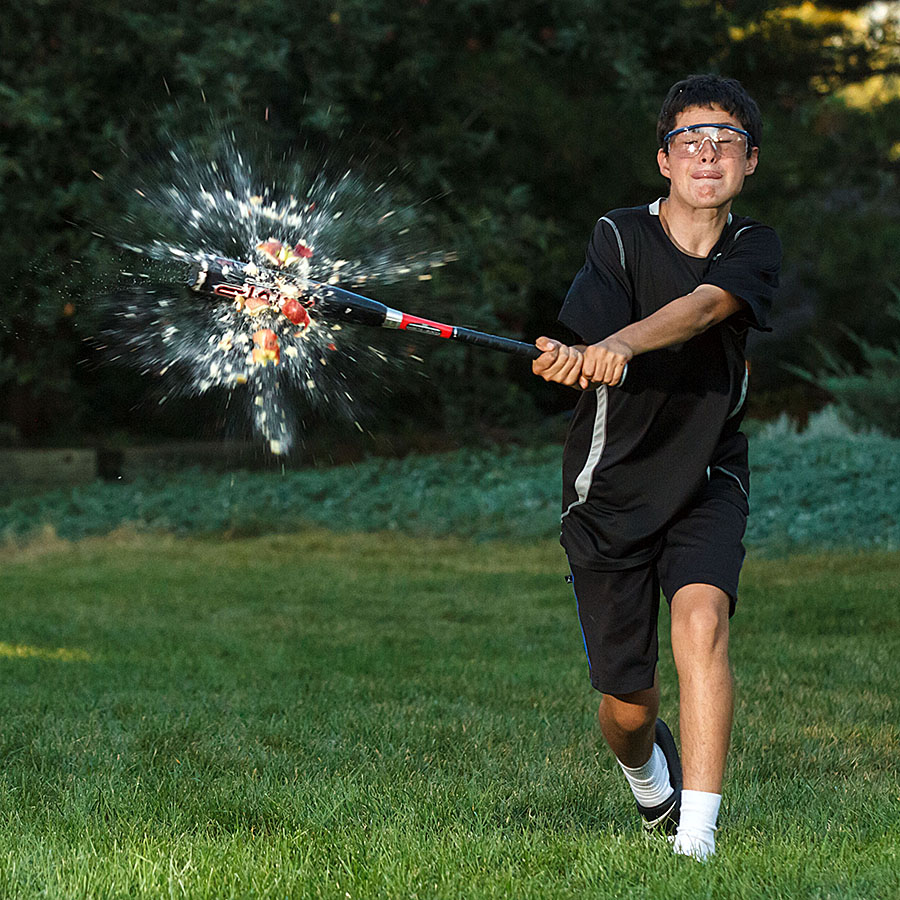
All that said, if you have total control over ambient lighting and can mostly eliminate it from illuminating the subject, you don't need to use a high *camera* shutter speed to freeze action with strobes. You just need strobes with short (fast) flash durations. The strobe's flash duration effectively becomes the 'shutter speed' because that is the only light on the subject. So if the flash duration is 1/2000, that is the same freezing effect as a 1/2000 shutter speed in continuous light. The catch here is that cheap strobes generally have slow/long flash durations at higher power outputs, or depending on how the reduce flash output, possibly across their full output range. It can be as slow as around 1/200, which will not freeze fast action. Many of the battery operated studio strobes are IGBT controlled, which means that as power output is reduced, the IGBT circuit shortens the output pulse, which shortens flash duration. So a lot of these strobes have really short flash durations at low output levels, and is why you will see some outrageous looking claims like 1/20000 flash duration. Sure, that's true, but probably at 1/128 power. If you need short flash duration at high power output in order to stop down a lot and use low ISO, you're looking at seriously expensive strobe equipment.
So if action isn't on the client's 'want list' I'd skip thinking about it. If it is, you'd be better off to rent some decent studio strobes from a rental house and increase the fee.
|