Fred Miranda
Offline
Admin
Upload & Sell: On
|
 p.2 #12 · Thypoch Simera 21mm f/1.4 ASPH. Review p.2 #12 · Thypoch Simera 21mm f/1.4 ASPH. Review | |
Thypoch Simera 21mm f/1.4 ASPH. -- Read the Full Review
Final Thoughts
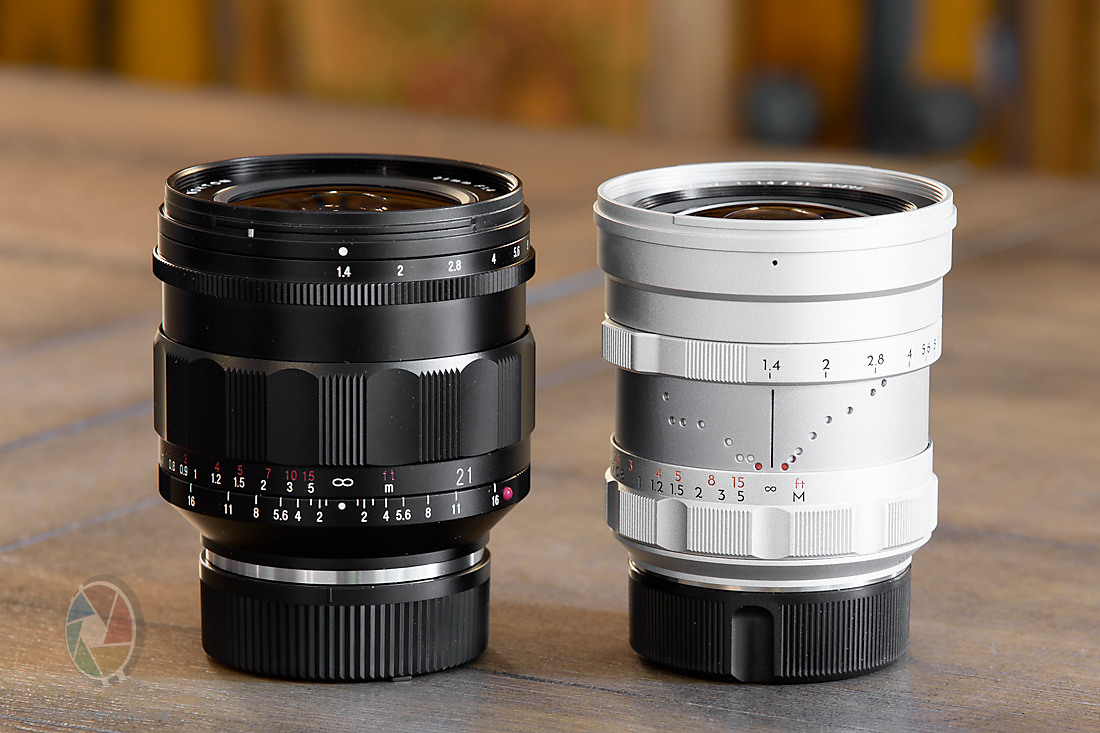
The Thypoch Simera 21mm f/1.4 ASPH. arrives as a thoughtfully refined take on the formula Cosina set with the Voigtlander 21mm f/1.4 Nokton, sharing its 13 elements in 11 groups layout, but adding 3 ED, 2 aspherical and 3 high-refractive index elements, 14 aperture blades and a floating element design. It is a rather large lens for the Leica M system, but at 426g without the supplied metal bayonet hood it is surprisingly light, roughly 60g lighter and noticeably slimmer (φ66 x 69mm) than the Nokton, with a 62mm filter thread and a choice of black or silver anodized aluminum finishes.
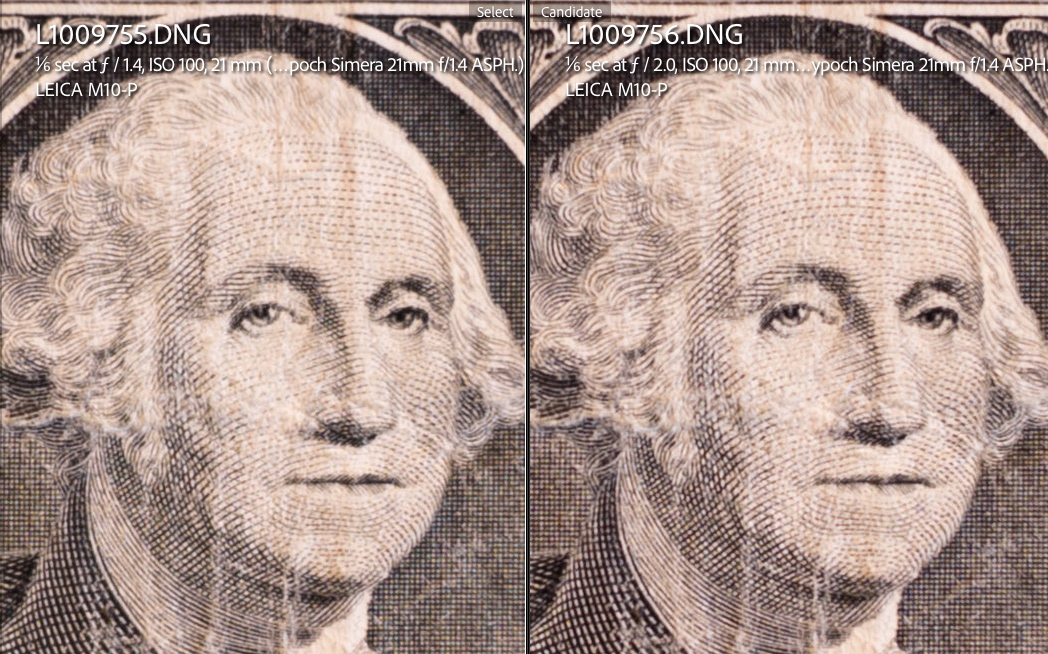
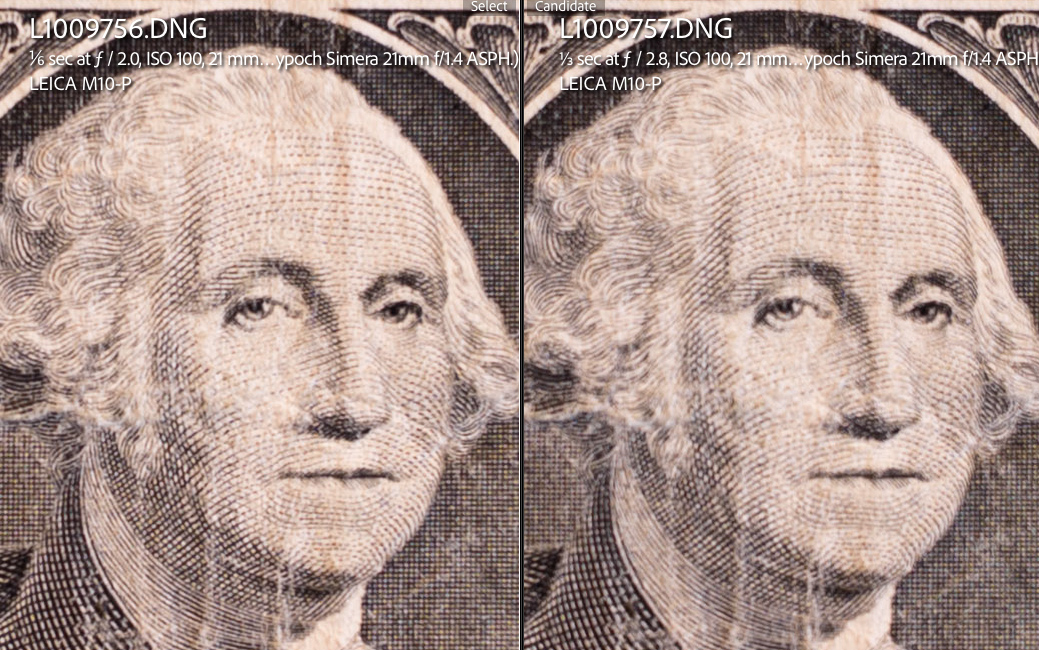
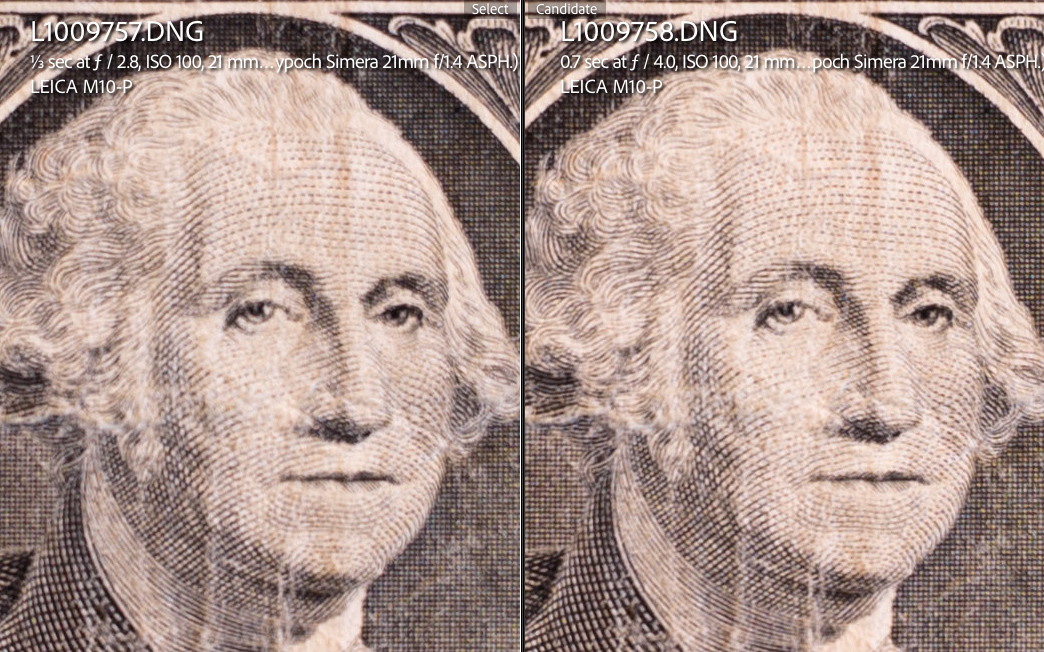
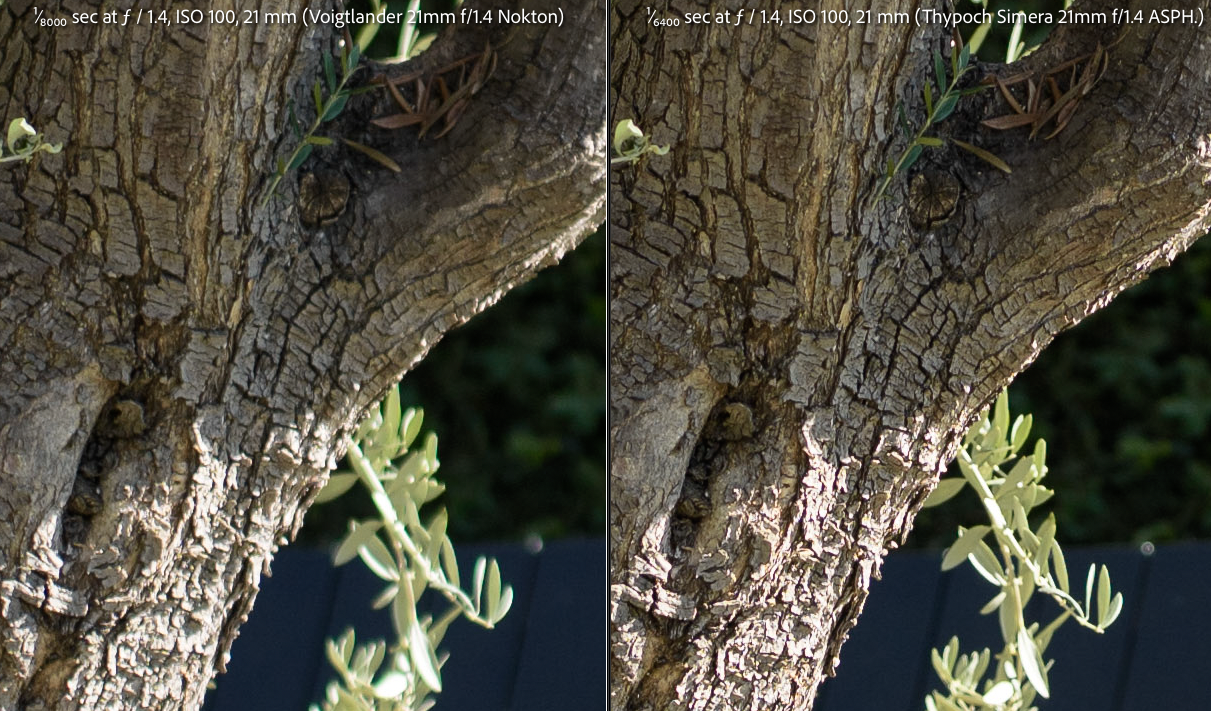
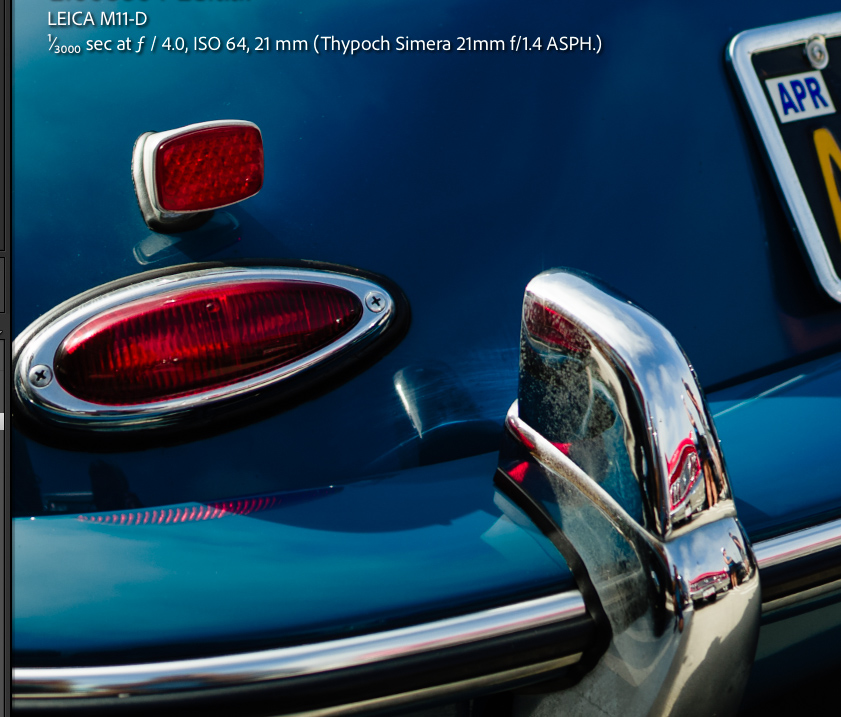
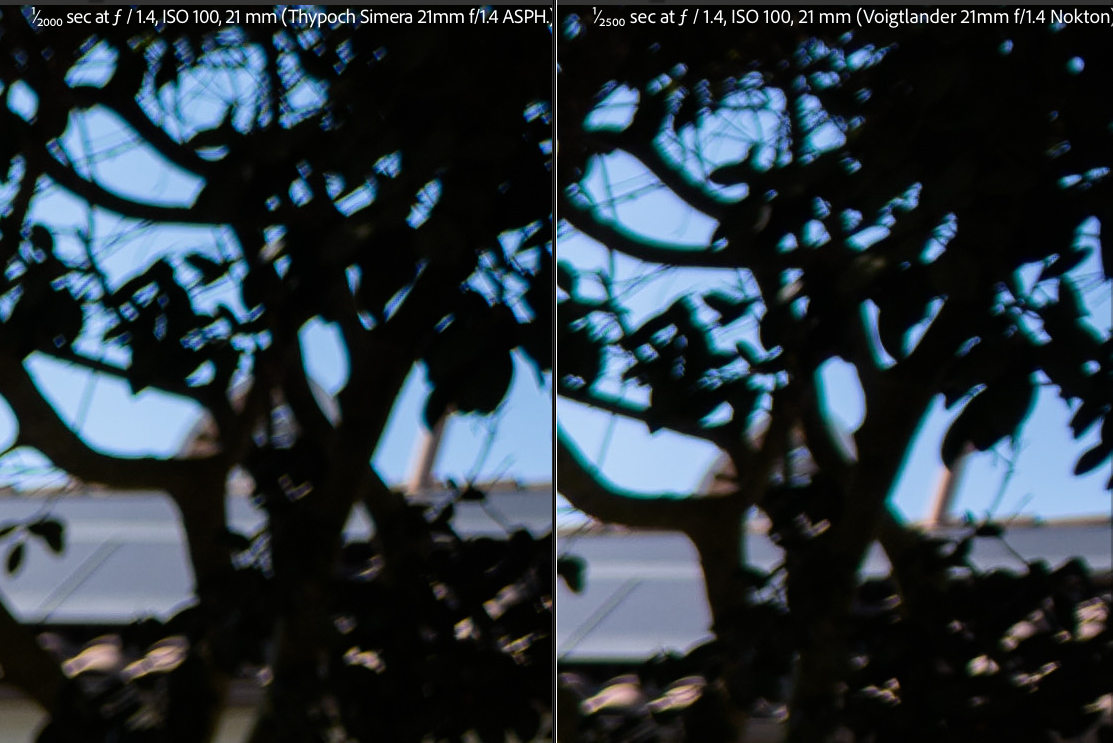
After many weeks of testing three copies of each lens on a high resolution sensor, I can say the Simera delivers where it matters most. At f/4 and smaller, it performs similarly to the Voigtlander 21mm f/1.4 Nokton, but at wider apertures, especially wide open and at the center, the Simera has higher resolution and contrast. The trade-off is a more pronounced field curvature shape, which pulls the mid-field and corners out of the focus plane when focusing at the center, while the Nokton is more balanced across the field. Distortion is minimal, a slight pincushion that a -2 correction in Lightroom handles perfectly, and chromatic aberration control is the Simera's biggest strength, better than the Nokton's wide open in the corners.
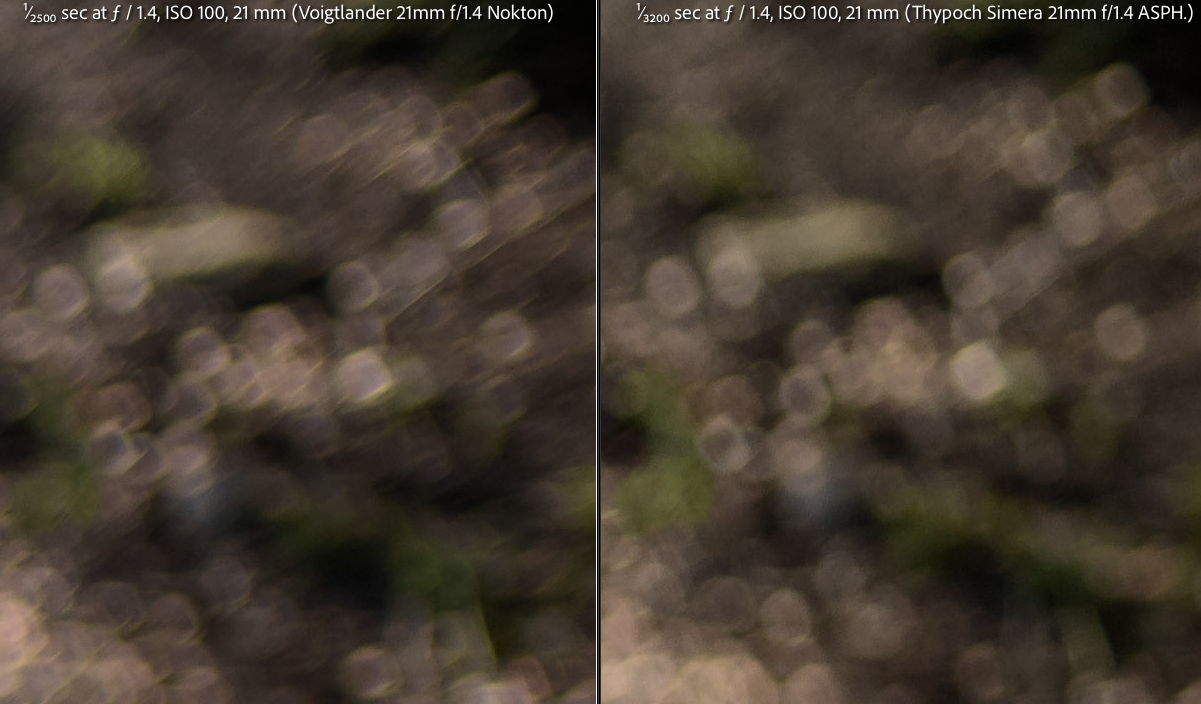
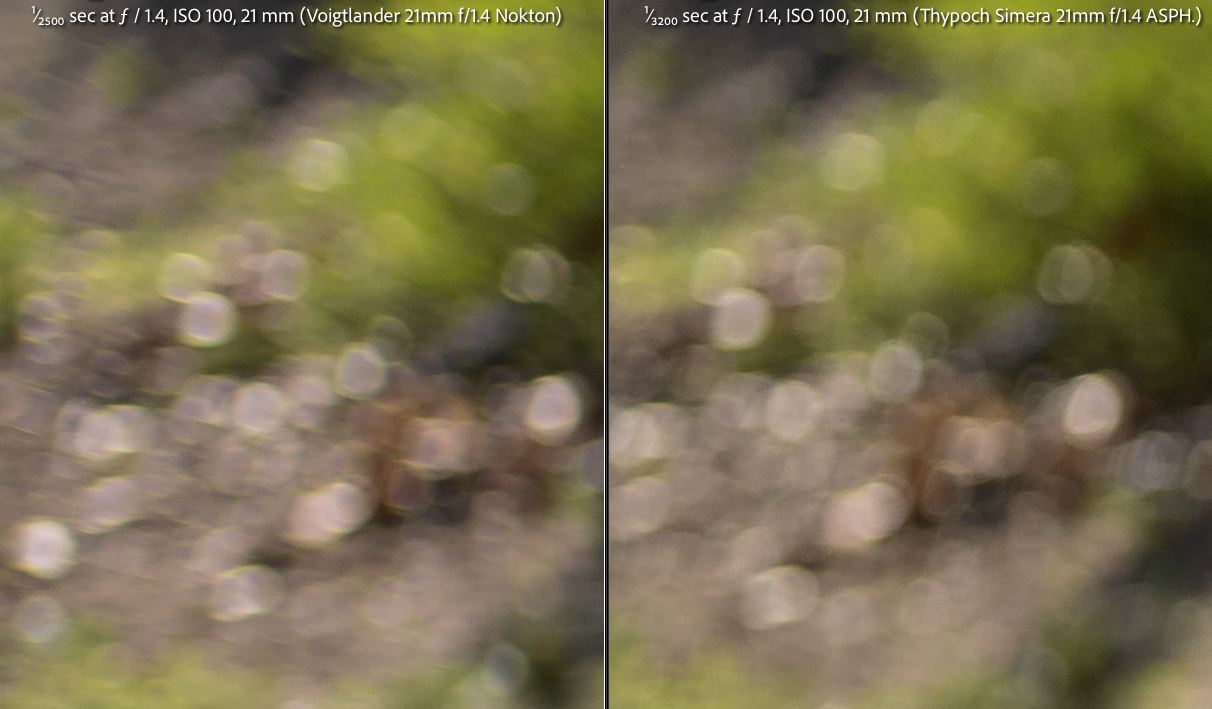
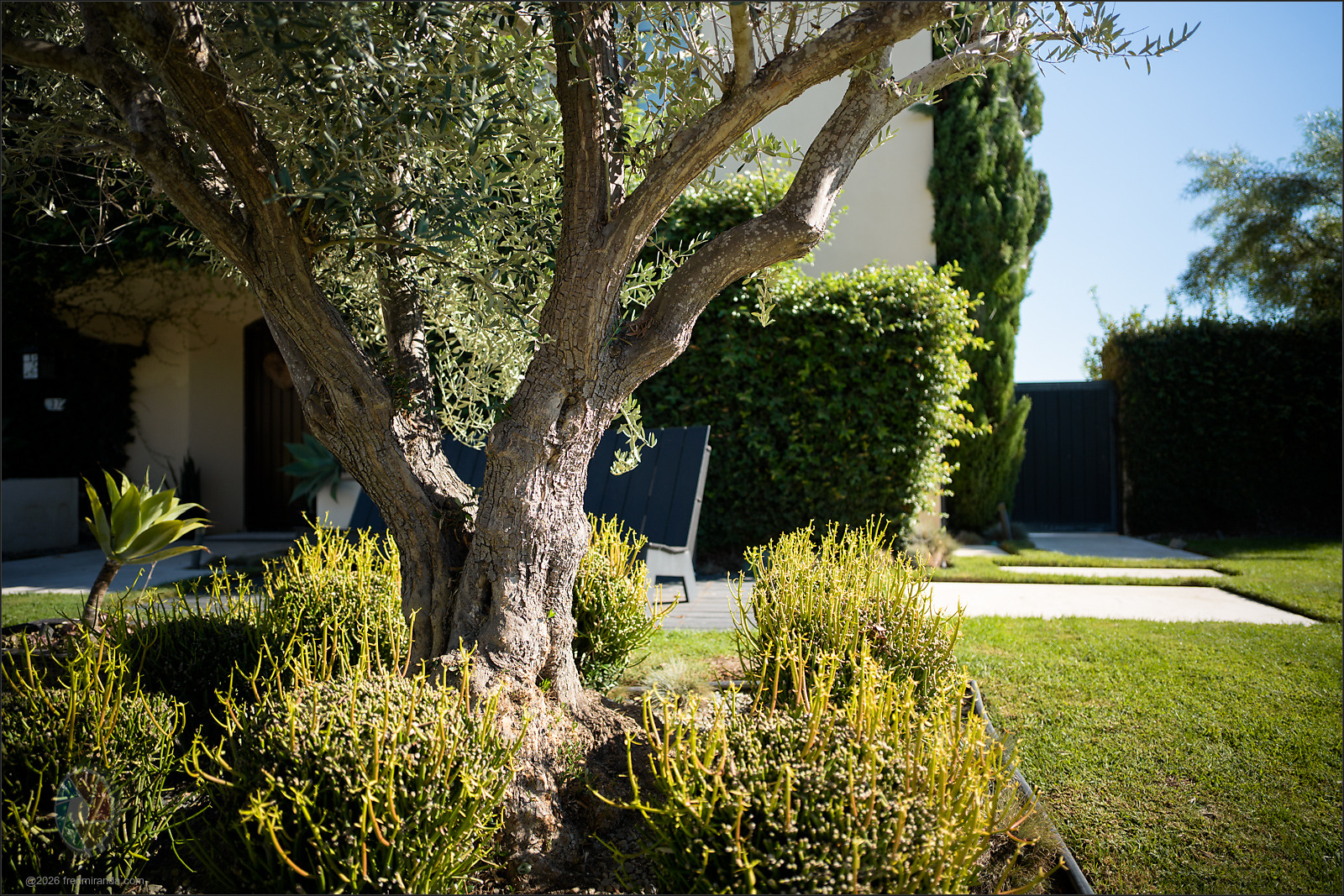
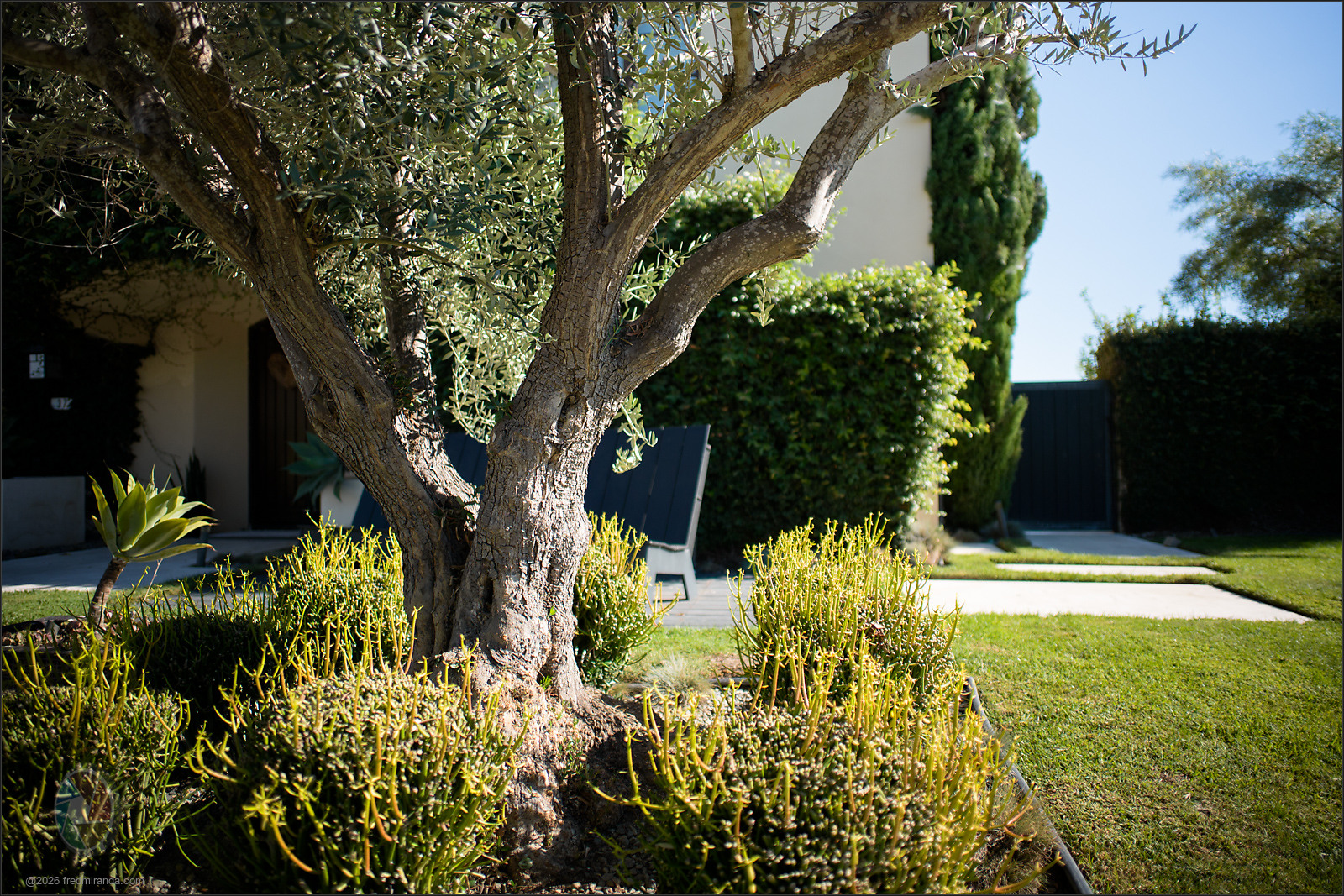
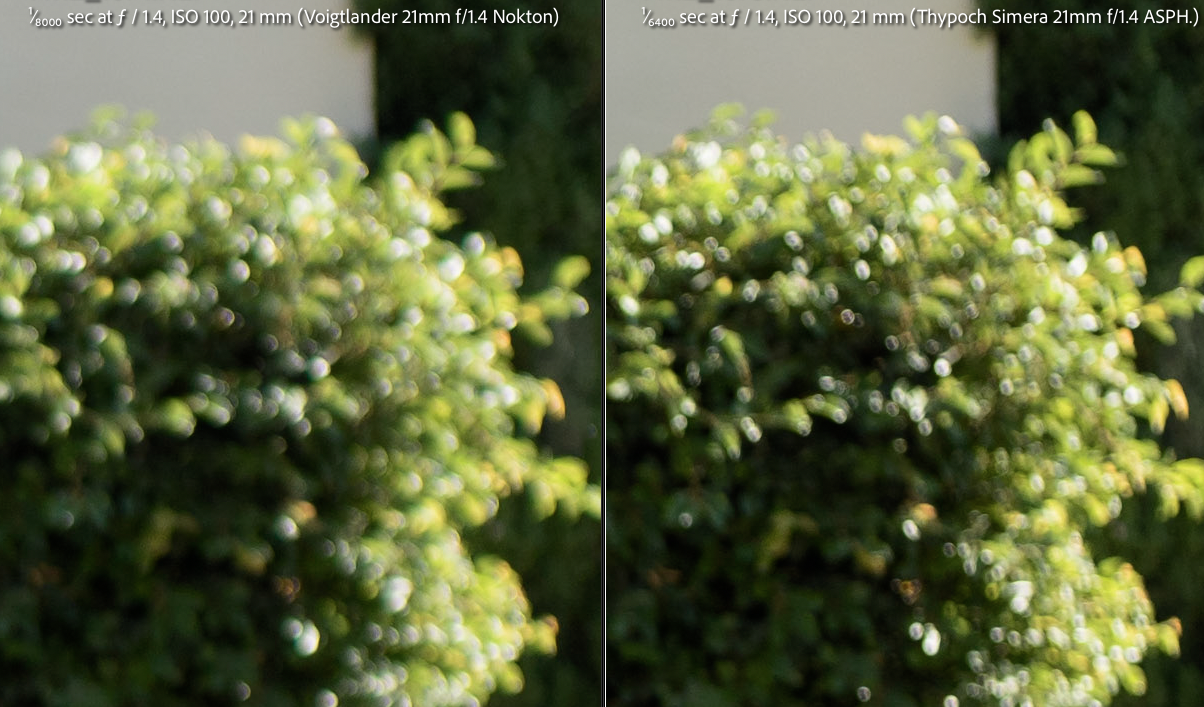
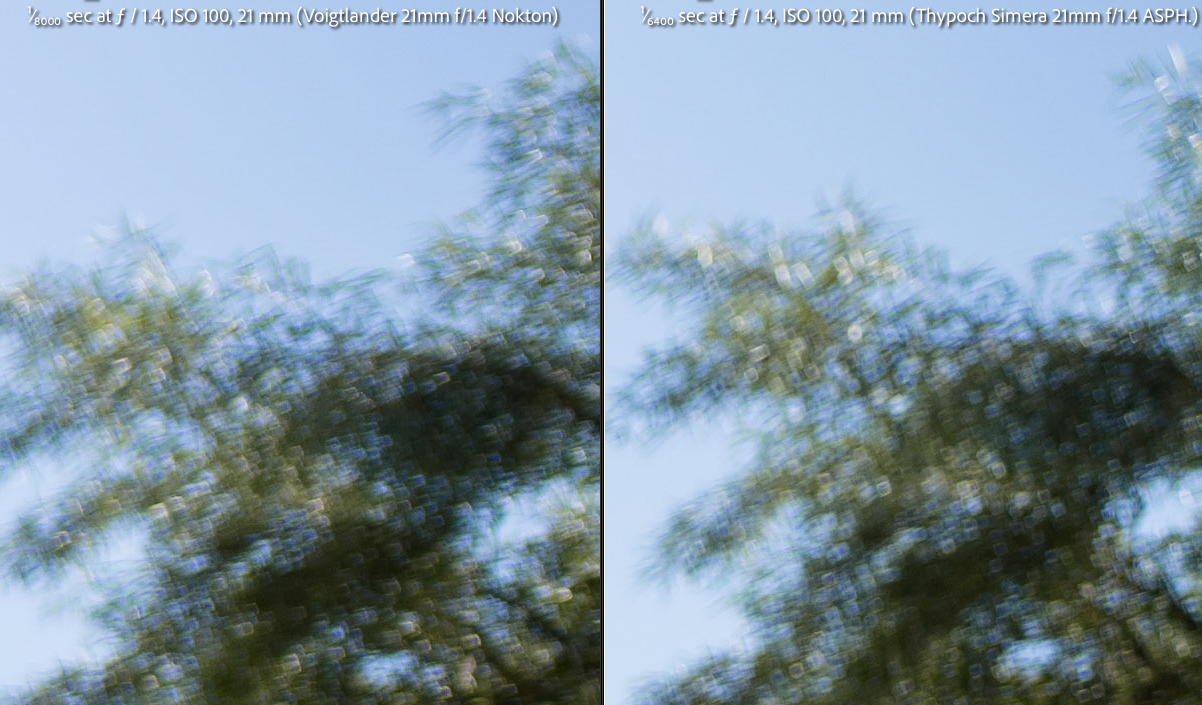
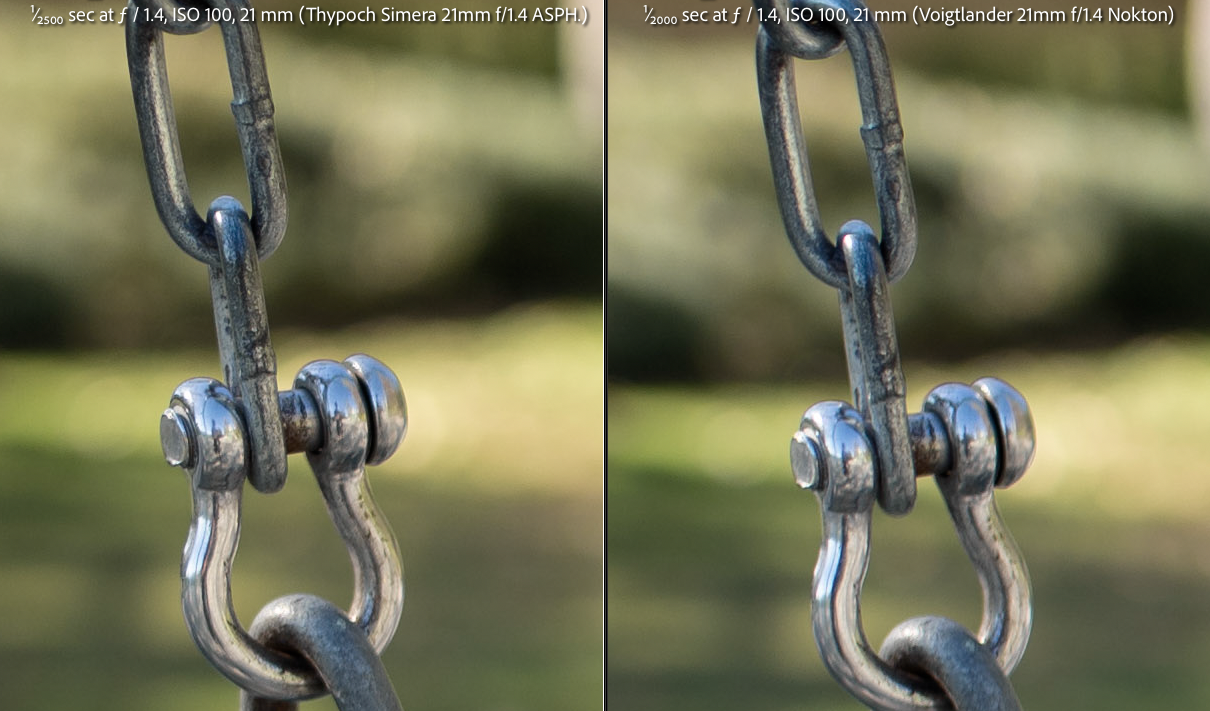
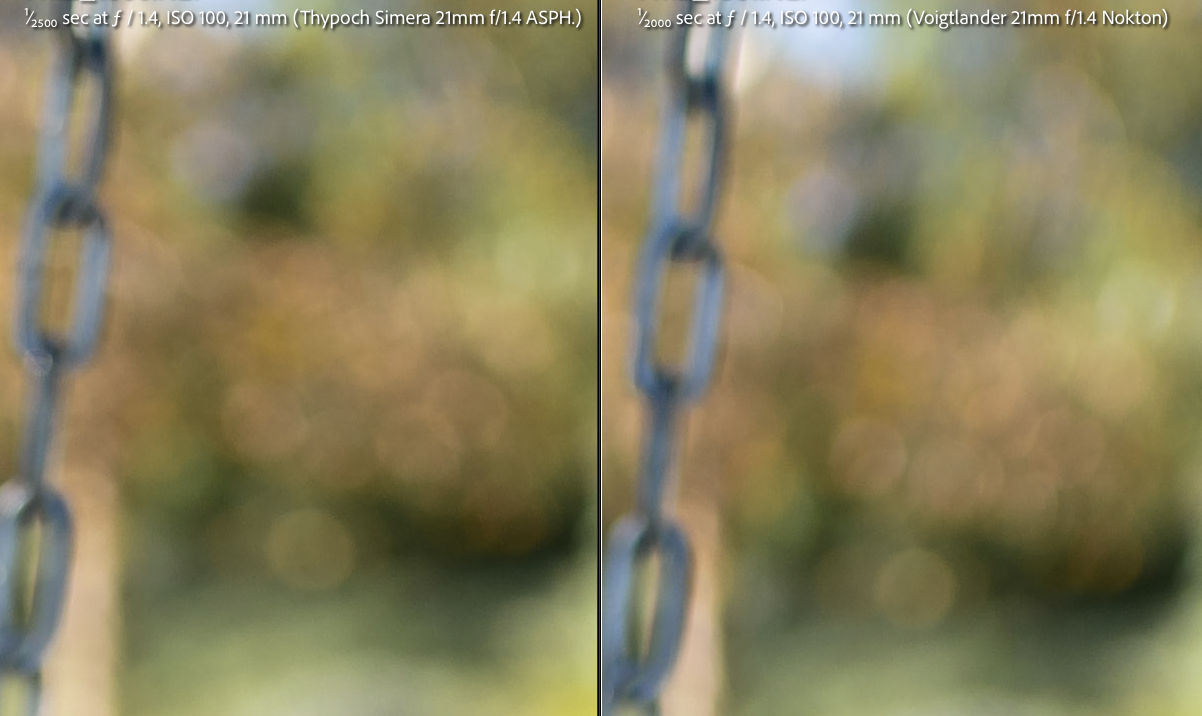
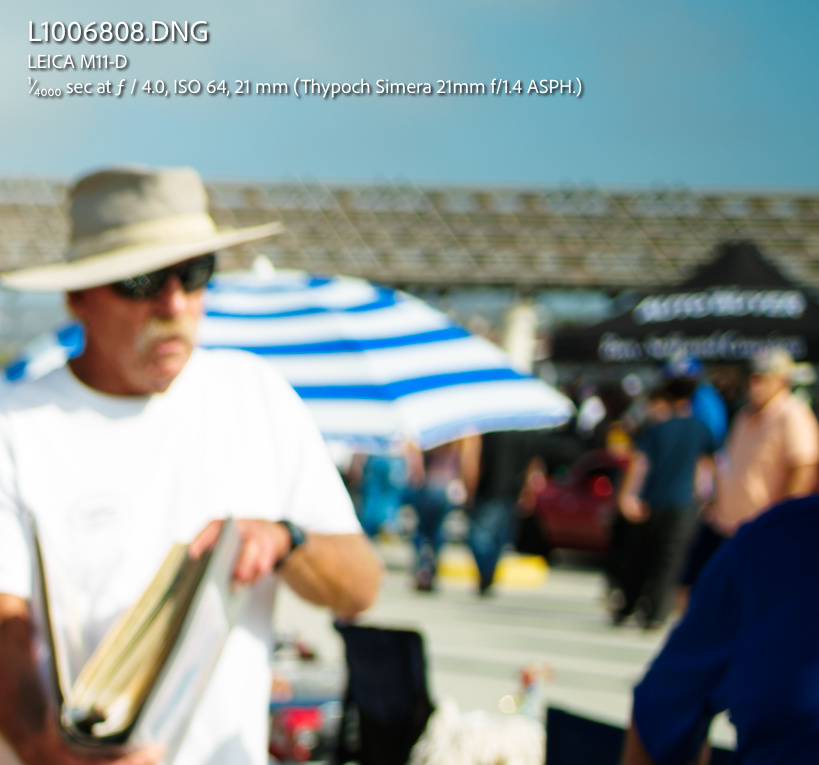
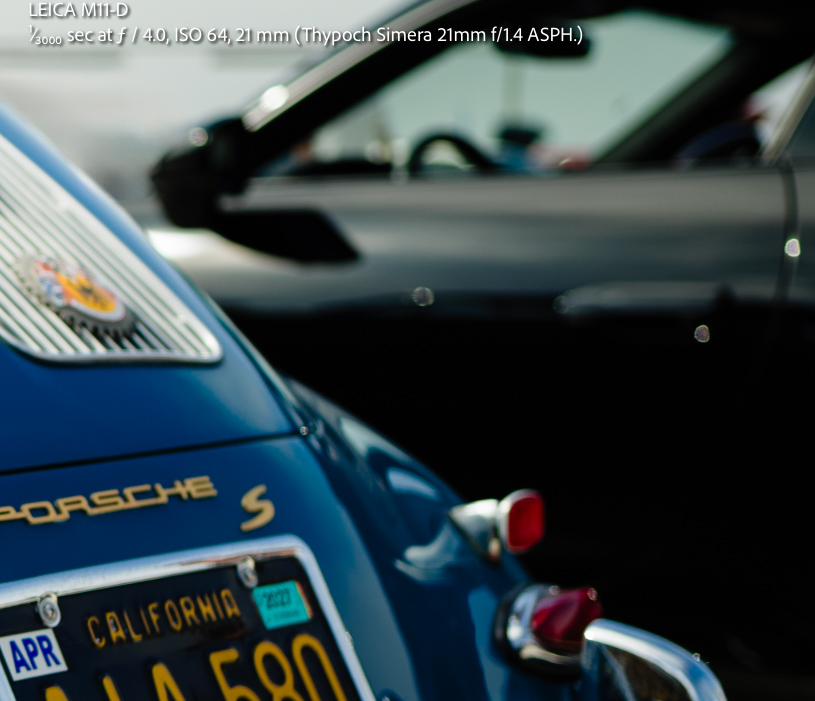
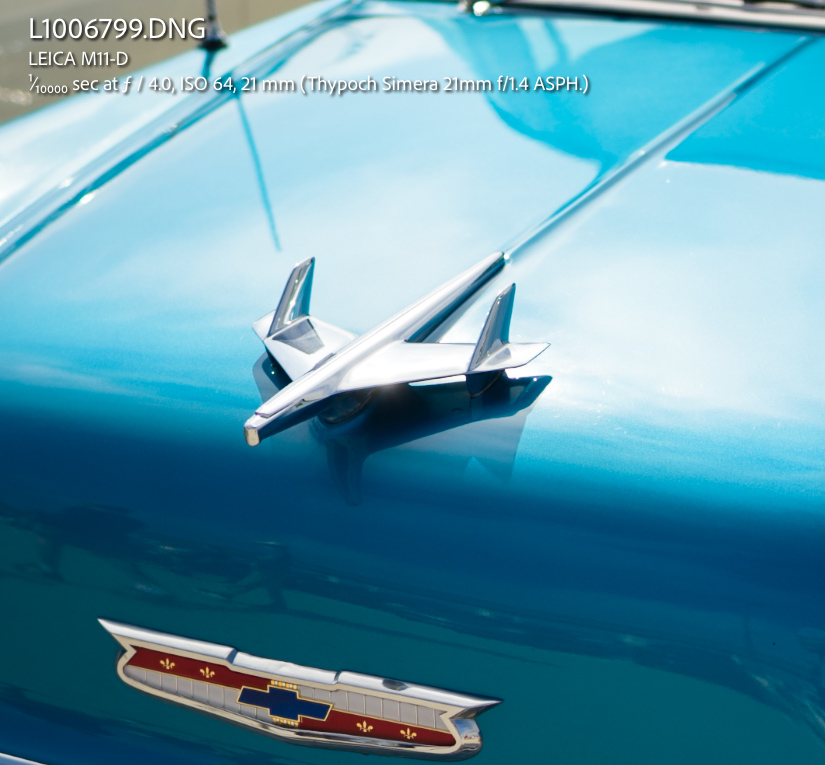
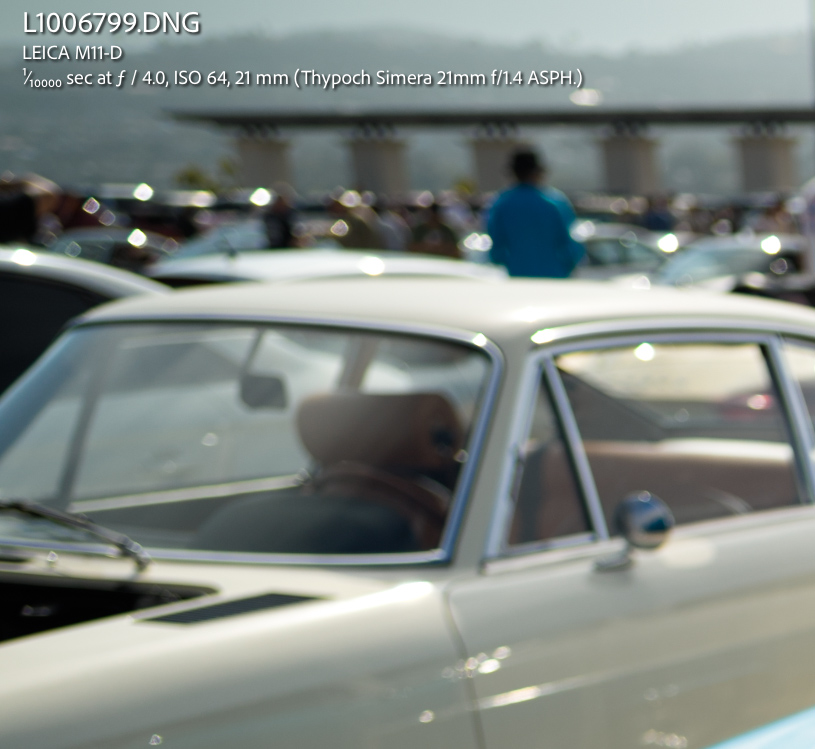
Its rendering is very close to the Nokton's. Both produce an undistracting look without being abstract or lifeless, with almost identical specular highlights, smooth focus transitions and low residual spherical aberration wide open. The differences show up at mid and long distances, where the Simera's field curvature makes the out-of-focus areas less even than the Nokton's. At around 0.7m, it is hard to tell them apart. The Simera's 14 aperture blades keep highlights rounder when stopped down and produce well defined 14-point sunstars from f/4 to f/16. I also noticed a slightly warmer cast on the Simera.
In use, the Simera has a few touches the Nokton lacks. It focuses down to 0.23m in Live View (versus 0.5m for the Nokton), the focus ring has a tactile detent at the 0.7m rangefinder coupling limit, and a declick switch on the aperture ring will appeal to video shooters. Its mechanical depth of field indicator, small vents on the barrel that shift to red as you stop down, is a refreshing alternative to traditional scales and especially useful for zone focusing at 21mm. Internal focusing means the lens doesn't extend when focusing. The focus throw is a short 90 degrees from 0.23m to infinity, and the ring is very sensitive up close, so I'd prefer a longer throw. My copy tracks accurately with my Leica rangefinders.
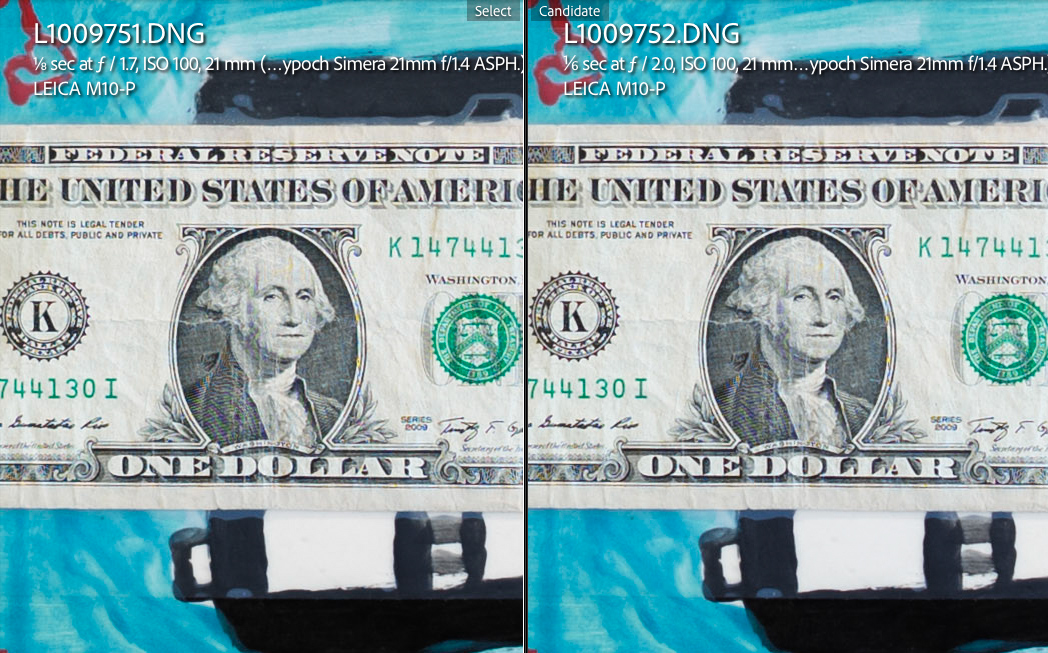
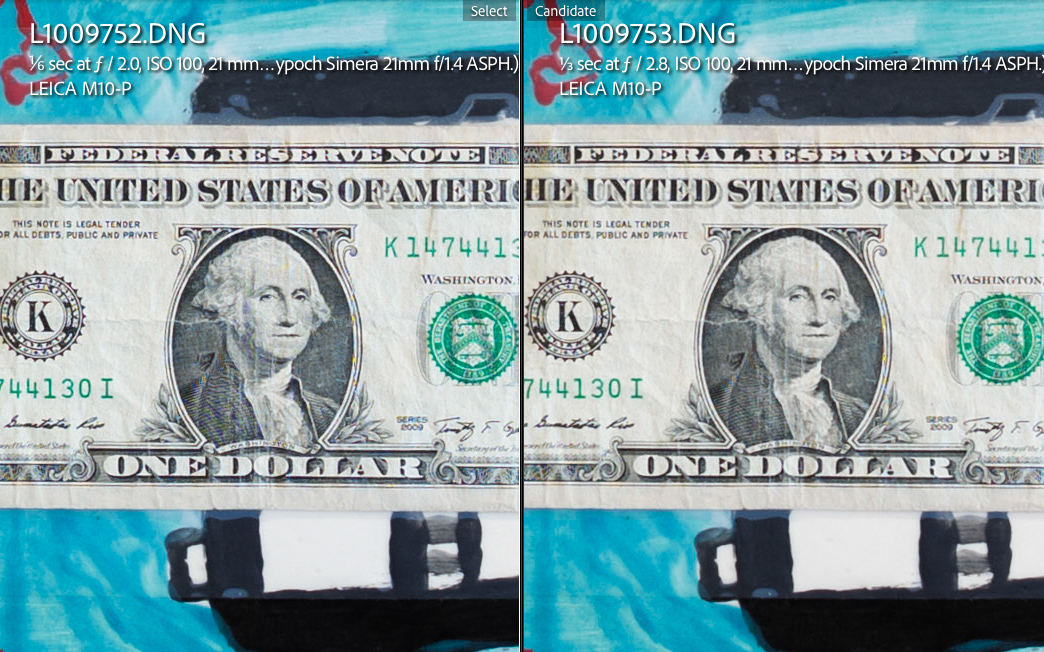
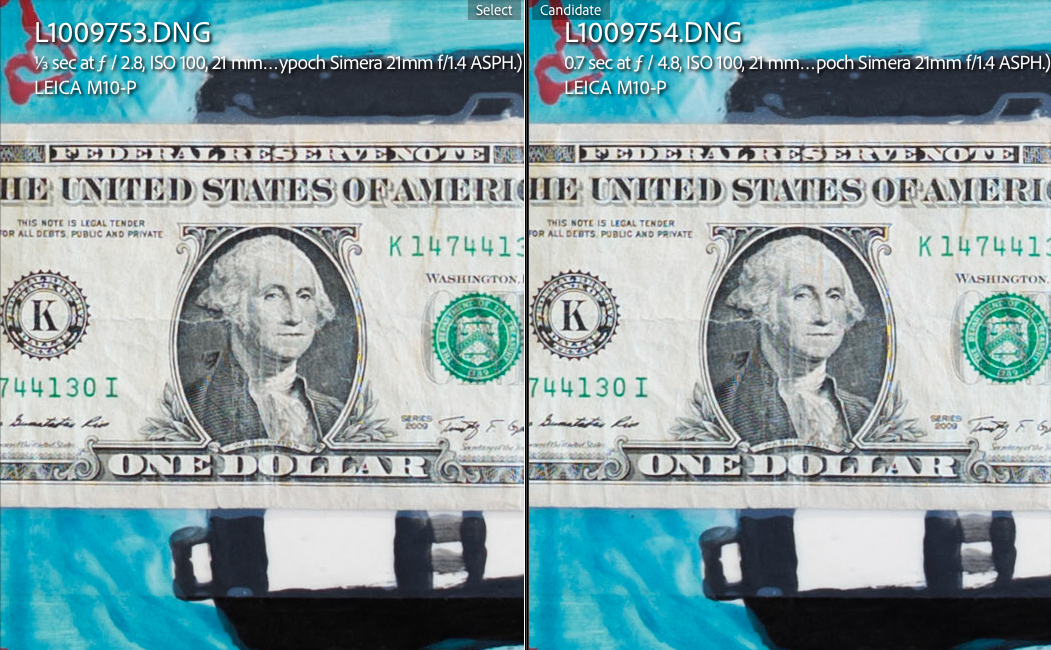
At the minimum focus distance, the lens keeps good resolution, but I observed focus shift at both 0.7m and 0.23m, so focus at your working aperture. Wide open there is also a slight amount of spherical aberration.
There are a few downsides. The aperture ring is a bit too loose and the markings get closer together at smaller apertures, with the increments shifting partway through (1/3 stops to f/5.6, 1/2 stops to f/8, then full stops). Field curvature is also more pronounced than usual, changing from slightly outward at close distance to a wavy shape beyond 2 to 3 meters and inward at infinity, and I suspect it was optimized for a thicker sensor stack.
Overall, the Simera is a very strong alternative to the Voigtlander Nokton, trading a bit of field flatness for better wide open center performance, better chromatic aberration control, closer focusing and a more refined set of features.
⸻
Pros:
⦿ Higher resolution and contrast than the Voigtlander 21mm f/1.4 Nokton at wide apertures, especially wide open and at the center.
⦿ Performs similarly to the Nokton from f/4 onward.
⦿ Outstanding chromatic aberration control, better than the Nokton wide open in the corners, with very clean axial fringing.
⦿ Minimal pincushion distortion, correctable with a simple -2 in Lightroom.
⦿ Smooth focus transitions and low residual spherical aberration wide open.
⦿ Rendering very similar to the Nokton, with almost identical specular highlights.
⦿ Lighter (426g without hood) and slimmer (φ66 x 69mm) than the Nokton, with better balance on an M body.
⦿ Metal bayonet hood included, in black or silver anodized aluminum.
⦿ Focuses down to 0.23m in Live View, versus 0.5m for the Nokton, with good resolution at the minimum focus distance.
⦿ Tactile detent at the 0.7m rangefinder coupling limit, letting you know when you need Live View.
⦿ Mechanical depth of field indicator with vents that shift color as you stop down.
⦿ Aperture declick switch for smooth, silent adjustments.
⦿ 14 aperture blades give rounder highlights when stopped down and well defined 14-point sunstars from f/4 to f/16.
⦿ Internal focusing, so the lens doesn't extend.
⦿ Floating element design.
⦿ Smooth focus ring with just the right amount of resistance, and my copy tracks accurately with Leica rangefinders.
⦿ No infinity lock, unlike earlier versions of the Simera 28mm f/1.4.
Cons:
⦿ Field curvature is more pronounced than the Nokton's, curving inward at infinity so the mid-field and corners fall out of the focus plane when focusing at the center.
⦿ Field curvature changes with distance (slightly outward up close, wavy beyond 2 to 3 meters, inward at infinity), which can make out-of-focus areas less even.
⦿ Focus shift at both 0.7m and 0.23m, so focus at your working aperture.
⦿ Slight spherical aberration wide open.
⦿ The aperture ring rotates a bit too freely, with markings that get closer together at smaller apertures and shifting increments (1/3, then 1/2, then full stops).
⦿ Short, sensitive focus throw (90 degrees), which makes precise focusing at close distances demanding.
⦿ Large for an M lens, and no focusing tab.
⦿ Slightly warmer cast than the Nokton.
⦿ The Nokton may render a slightly wider angle of view (possibly copy variation).
In the end, the Thypoch Simera 21mm f/1.4 ASPH. succeeds by building on a proven formula instead of reinventing it. It matches the Voigtlander Nokton's rendering and neutral behavior, then improves on it with higher wide open center resolution and contrast, outstanding chromatic aberration control, close focusing down to 0.23m, a lighter body and thoughtful features like the depth of field indicator and the 0.7m detent. The trade-offs, namely stronger field curvature and focus shift at close distances, are real but manageable. For Leica M shooters who want a fast, high performing 21mm with a bit more refinement than the Nokton, it is an easy lens to recommend.
_____________
Order the Thypoch Simera 21mm f/1.4 ASPH. lens:
Thypoch Store (Use promo code: FREDMIRANDA for a 5% discount at checkout)
B&H Photo
___
|