OwlsEyes
Offline
• • • • •
Upload & Sell: On
|
 p.1 #10 · Interested in Z6 IR Conversion for travel to Iceland, Africa, US Prairies, etc... p.1 #10 · Interested in Z6 IR Conversion for travel to Iceland, Africa, US Prairies, etc... | |
indusphoto wrote:
Z6 is great, I had it until I got Z63 converted. I recommend life pixel which is cheaper and reliable. Also I recommend getting full spectrum conversion so you can use it in many different ways.
You can use lightroom to process IR black and white but fit more creative color, use Photoshop.
---------------------------------------------
Fred Amico wrote:
Can't help with specifics, Bruce, but as mentioned above check out LifePixel's web site. They have lots of info and tutorials that might help you, as well as specific info about which cameras are good and not so good for conversion.
https://www.lifepixel.com/
---------------------------------------------
Harold Carlson wrote:
The Z7 suffers from PDAF banding showing in infrared images. I experienced this. The Z6 might not be as bad since it's lower resolution.
As for Z lenses, I never did try the 28-75mm but I can tell you I was never happy with the 14-30mm despite everyone saying it performed really well. I experienced a color hotspot and the edge performance was not good.
Look up Rob Shea on Youtube to get info about processing and shooting infrared.
---------------------------------------------
spyderphil wrote:
I used Kolari to convert a Z6II to IR full spectrum. I did get the AR coating - there's some dispute if it works but my experience with a XT2 was that it did help. I've used Lifepixel in the past also. Not had any issues with either. I also purchased the Kolari sensor filter covers. They work well except with wider angle zooms on the edges where you get a small amount of smearing and darkening. Easy to crop out out but worth noting. The kit zoom 24-70mm is excellent on IR.
When the light isn't very interesting for regular photography a IR camera can add some drama.
I'm going to list a Sony A7S FS in coming days if you're interested in that....Show more →
---------------------------------------------
indusphoto wrote:
I had the Z7 too and the banding was easily noticeable. Z6 is much better and banding was not visible to me unless I pushed hard on clarity or contrast.
I didn't have problem with nikon 14-30mm in black and white, but for color photos, I do see some issues. Actually I don't think there is any Nikon Z glass which is perfect, but 24-70mm f/4 is very close.
---------------------------------------------
kwalsh wrote:
Quick Answers:
1. Z6 has some PDAF banding in IR. There are workarounds, but given the cost of conversion you might prefer to trade up to a Z6II or Z5 to avoid the issue.
2. I've used Kolari multiple times and been happy. I did one camera through Spencer camera and it was good. I've got a LifePixel conversion I bought used from someone else and it is just fine as well. As to filters see details below, I prefer an internal filter but there are pros and cons to both.
3. See details below. Very few lenses are truly "hot spot free". In general low element count primes (e.g. 40/2) have the best chance of doing really well, but that's no guarantee at all. A lot of Tamron zooms are pretty darn good, something about their coatings I presume just happen to do decent in IR.
4. I do all my processing in LR Classic. Rob Shea's profiles will save you a whole heap of time (they embed channel swaps in the profile). You can do a variety of channel swaps in PS as needed, but these days Shea's profiles are all I really need.
5. See details below. The big thing is to not have unreasonable expectations about using optics that are highly optimized for visible wavelengths. You will need to deal with some diffuse hot spotting and loss of sharpness at the edges unless you restrict yourself to a small number of lenses that happen to perform great in the IR but might not fit well at all into your visible shooting lens kit.
Details:
As mentioned, the first generation Z6 and Z7 can suffer from the PDAF banding artifact that was corrected in later generations. For whatever reason, while rarely provoked in visible wavelength photos it shows up very frequently in IR on the Z7. Sounds like Z6 it is a bit less frequent. This artifact is easily removed in using RawTherapee as a RAW converter, but if that isn't your usual converter it is annoying to have to jump over to deal with the artifacts when they happen. I wrote my own DNG preprocessor to remove the artifacts at the RAW level so I could still do all my processing in LR.
The "hotspot" issue for a given lens varies a lot depending on the subject, processing, and range of wavelengths being captured. And a lot has to do with what one person considers "acceptable" and what another person does not. B&W processed images tend to be a lot more tolerant than color processed images.
Many Z lenses, like many modern lenses, are pretty awful and can simply be ruled out for any IR use at all (e.g. 24-120/4S, 24-200/4-6.3, the entire F/2.8S trinity). There is little rhyme or reason to what is good and what isn't. The 40/2 and 50/1.8S are both extremely good. The 85/1.8S is quite bad. Many Tamron lenses seem to do quite well in general. Voigtlander is a mixed bag with some truly awful ones and some quite decent ones.
And then there are lot lenses that for one person are "pretty good" and for others are "not acceptable". The 14-30/4S is not perfect, but there really aren't better alternatives that I'm aware of (potentially one of the more recent Tamron UWA zooms could be good, I haven't tried). So do you just not shoot anything that wide with a zoom or do you accept the 14-30/4S and work around its problems? What's good for one person isn't for another. With the right post processing you can absolutely deal with 14-30/4S diffuse "hot spots" but many folks won't want to jump through those hoops because they prefer to spend more time shooting and less fighting with post processing.
Bottom line, if any review says "no hotspot until F/11" what that really means is there absolutely is a hot spot at all apertures. Below F/11 the spot becomes diffuse enough that the reviewer isn't noticing it with their processing at their wavelength range. Do color processing with a 720nm filter of bright foliage in front of a dark sky and you'll absolutely see a big distracting diffuse "hot spot" on that supposedly "very good" lens even when shot at F/2.8 despite the claims of "no hot spot until F/11". Do a B&W only conversion with an 830nm at F/5.6 of a garden with no sky and indeed, you won't detect a "hot spot". It's absolutely there, but it no more visible than mild vignetting is visible in that kind of scene.
The other issue is a lot of people simply don't even know how to test in a consistent way for IR hotspots. I've seen many cases where people claim "lens X has way less of a hot spot than lens Y" but when tested carefully what is really happening is that lens X has two stops less IR transmission than lens Y and they tested by photographing a light bulb at a constant exposure. When properly balanced for exposure it ends up they have the same hotspot performance or even lens Y is better than lens X.
IR is a lot of fun, but be prepared for either endless compromises or deciding to just shoot with one or two low element count primes that do really well in IR.
As for the Z6, decide based on the price for a conversion whether it might be better to "trade up" to a used Z6II or Z5 to avoid the PDAF banding issue.
As for how to convert, I was previous an advocate of a single wavelength conversion around 720nm for IR cameras. Dealing with external filters can be a big hassle so I didn't like full spectrum, unless on a fixed lens compact camera where you only need one filter size. But then by accident I stumbled into a used 530nm conversion Z7 at a steal of a price. This was a nice compromise. The built in 530nm produces nice color processed IR without a filter and can make a nice 720nm like B&W conversion if you just drop the red channel, all without needing external filters. If you want to go for the ultra deep 830nm IR look you can slap a filter on the lenses that take filters and have a different look.
Anyway, I've enjoyed shooting IR for well over a decade, but it is always a bit of a fight. People with high expectations are usually disappointed. Those willing to experiment and compromise can have a lot of fun....Show more →
I just wanted to thank everyone who has replied to this thread. I am less confused about the steps I should take, but more uncertain about the camera I'm intending to use.
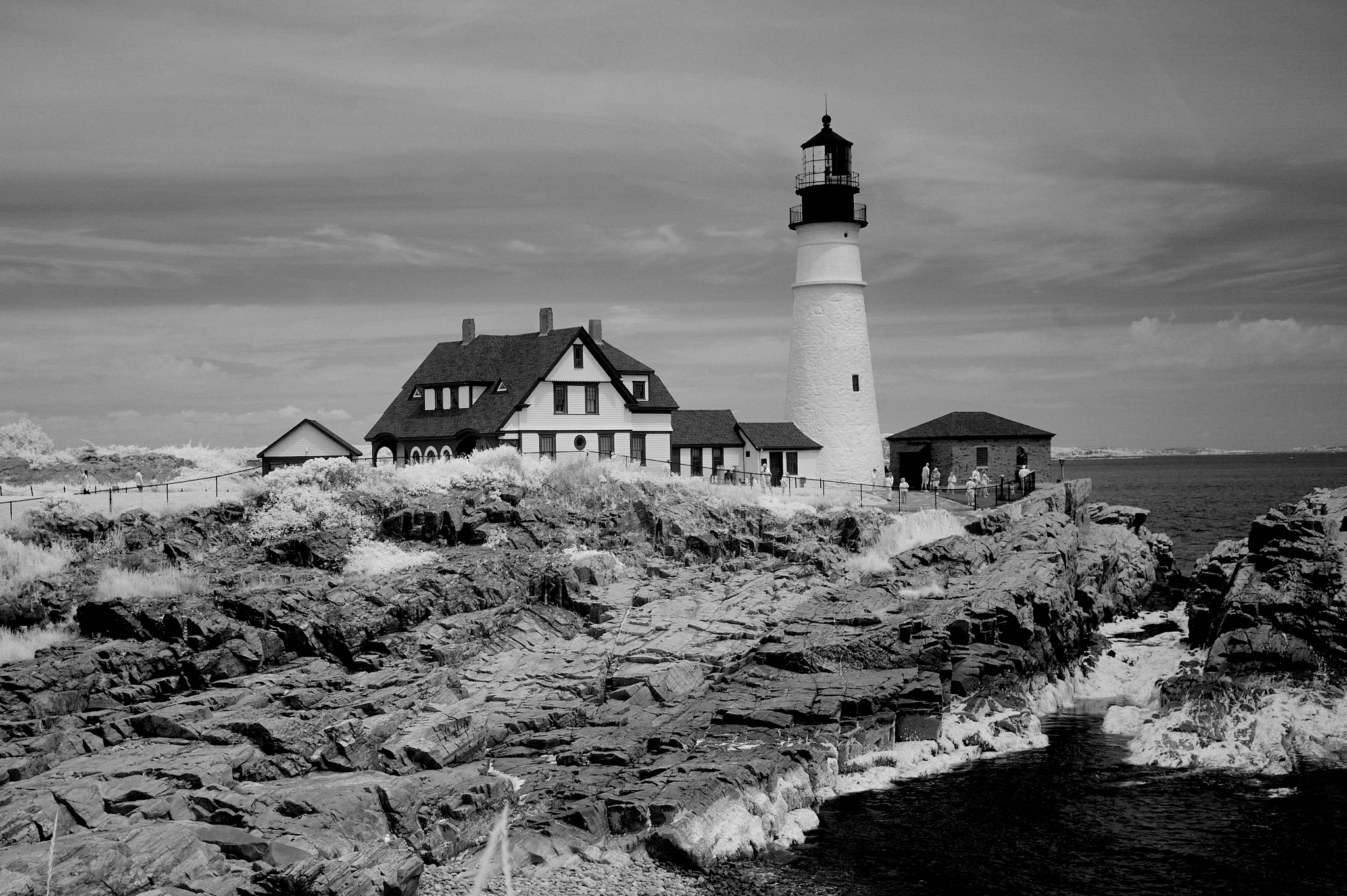
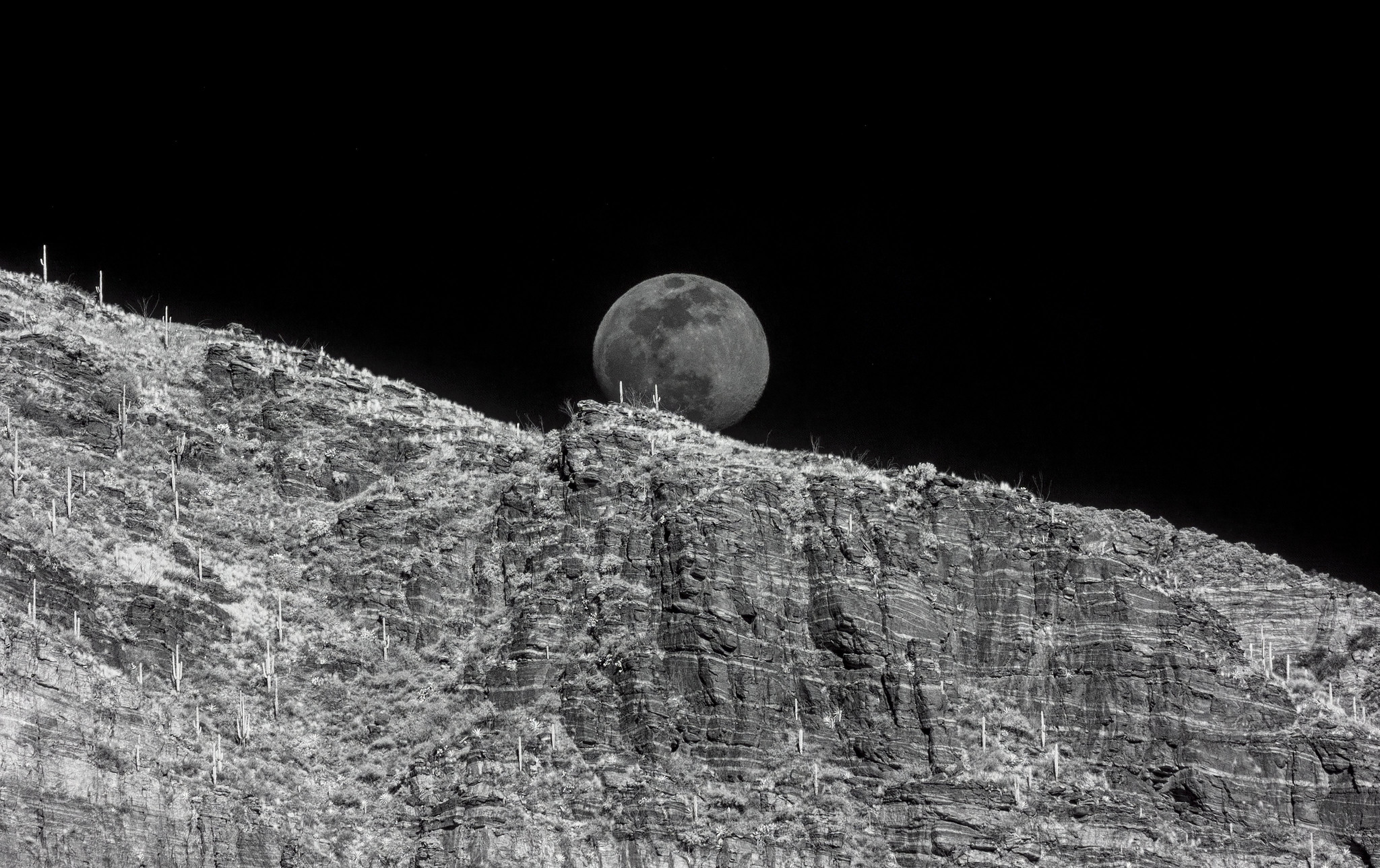
I appreciate seeing some images and the frank talk about banding and lenses. I am more of wildlife photographer than landscape photographer, but I often take trips where landscapes have been my primary focus. While Nikon gear has been a consistent part of my workflow, I have also shot with Hasselblad X-cameras, Leica SL-series bodies, and use an M typ 240 when I want to slow everything down. I have recently seen a GFX 50R full spectrum camera for sale, and this got me thinking about IR. In addition, I have some friends who produce IR images, and I have liked how this can expand their shooting opportunities.
At this point, I'm still on the fence 
Thanks again for the advice and thoughts,
bruce
|