RustyRus wrote:
Is your copy ok? I know the Ultron is a very sharp lens but surprised at F8 the Thypoch is that mushy? For example, that is not what we are seeing the 21 3.5 Kasana-
I thought the same--but he says his copy is verified good and centered. The CV 35/2 creams at mid and corners WO--which is too bad. I was hoping for better.
I am curious if this is due "averaging" sensor stacks again by Thypoch. Perhaps the Ksana will perform better on a Sony than the CV 35/2.
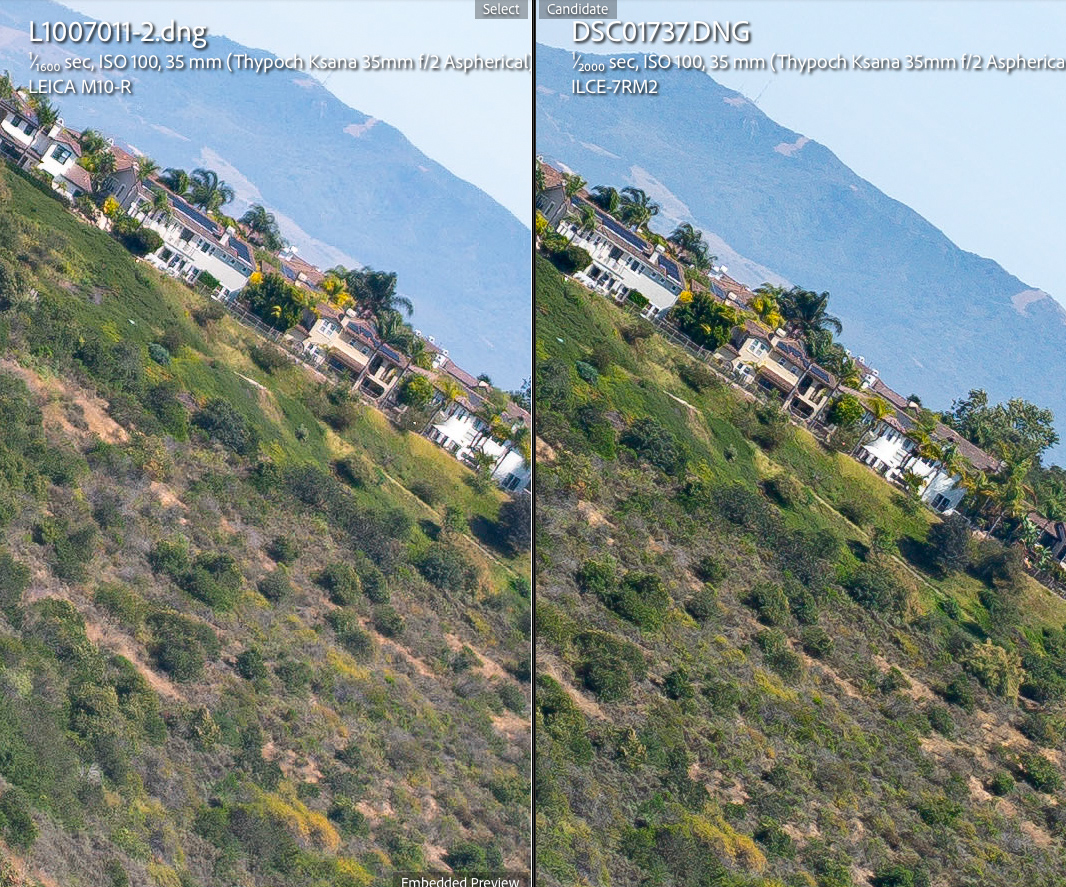
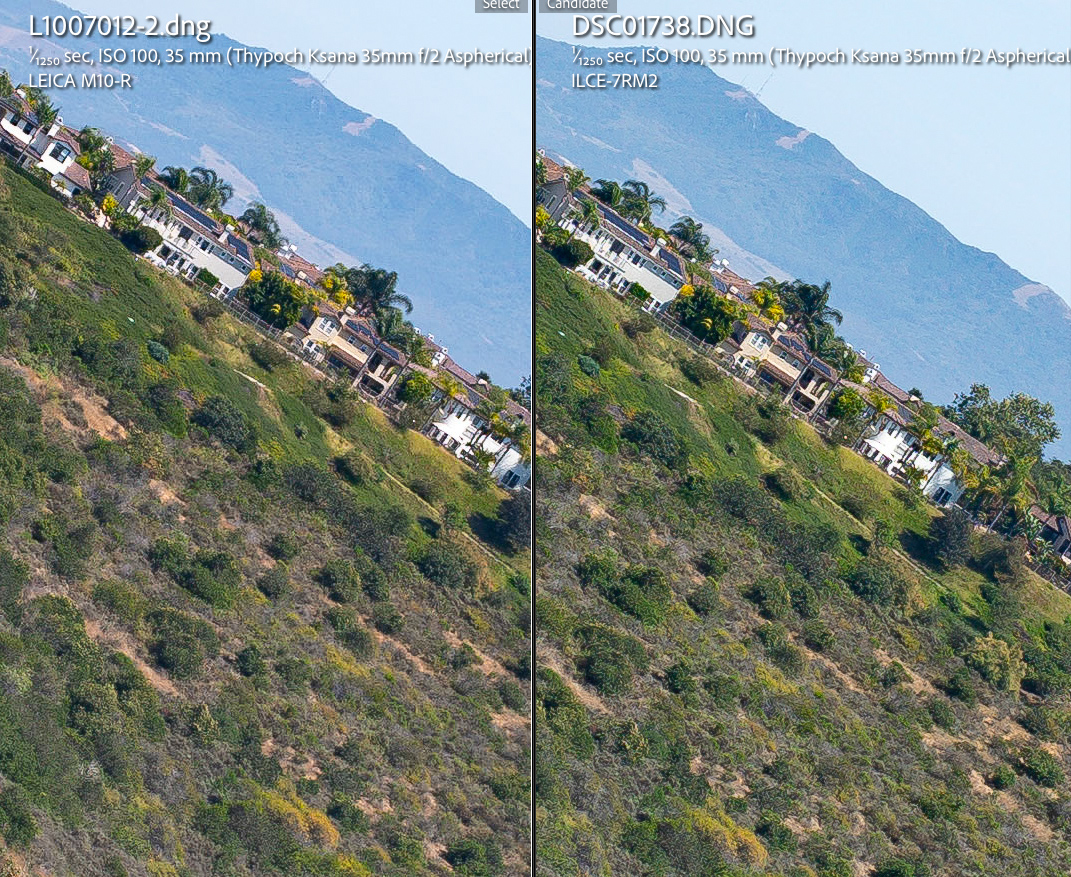
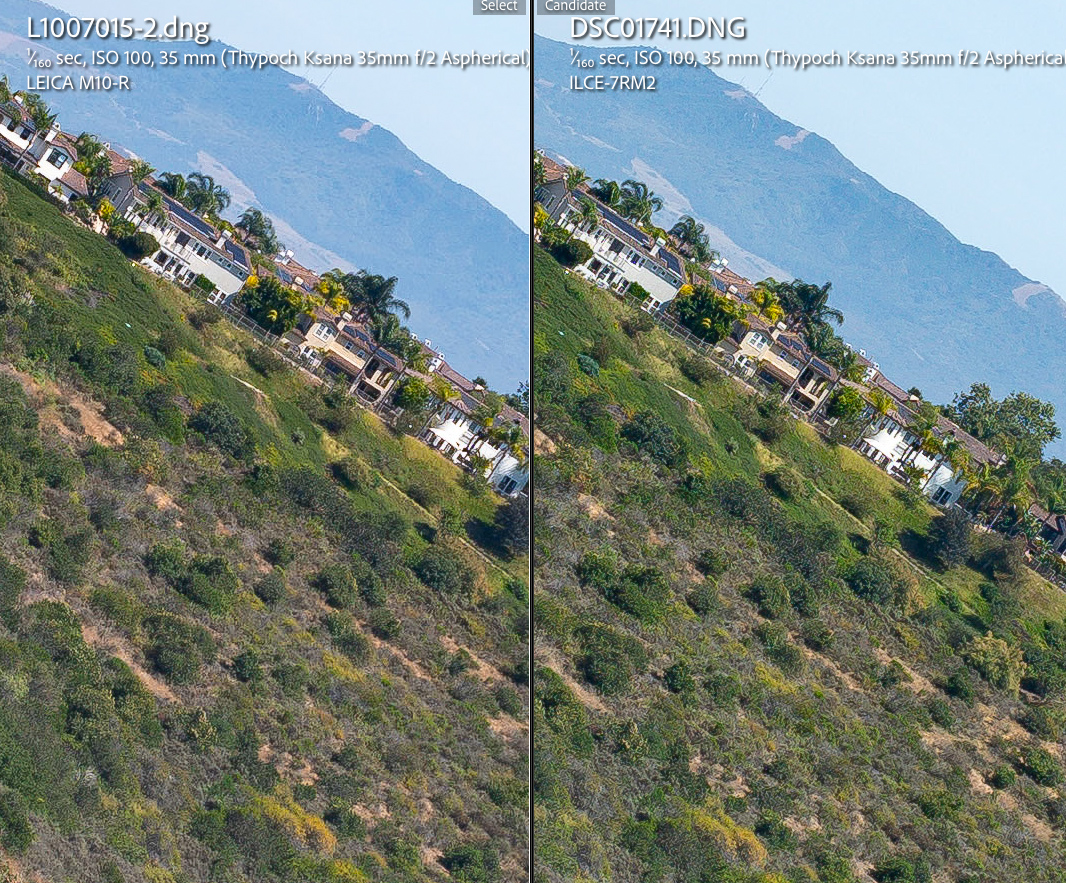
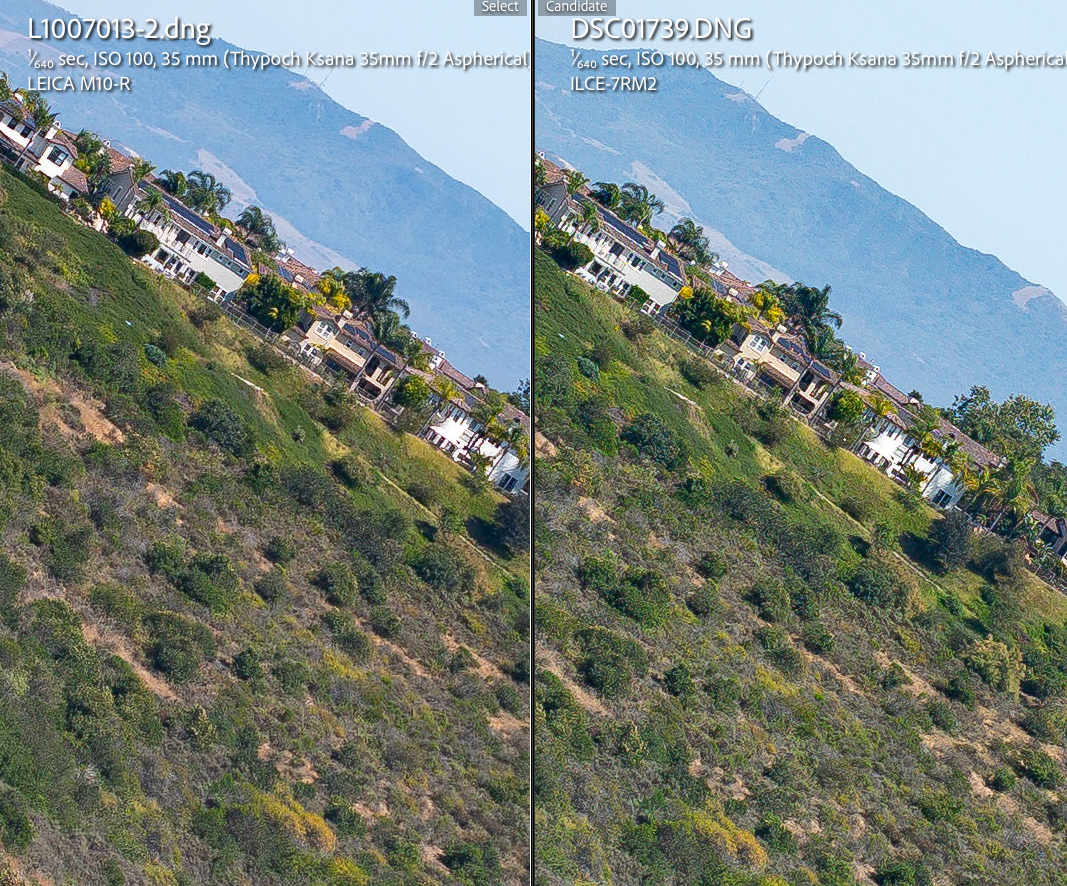
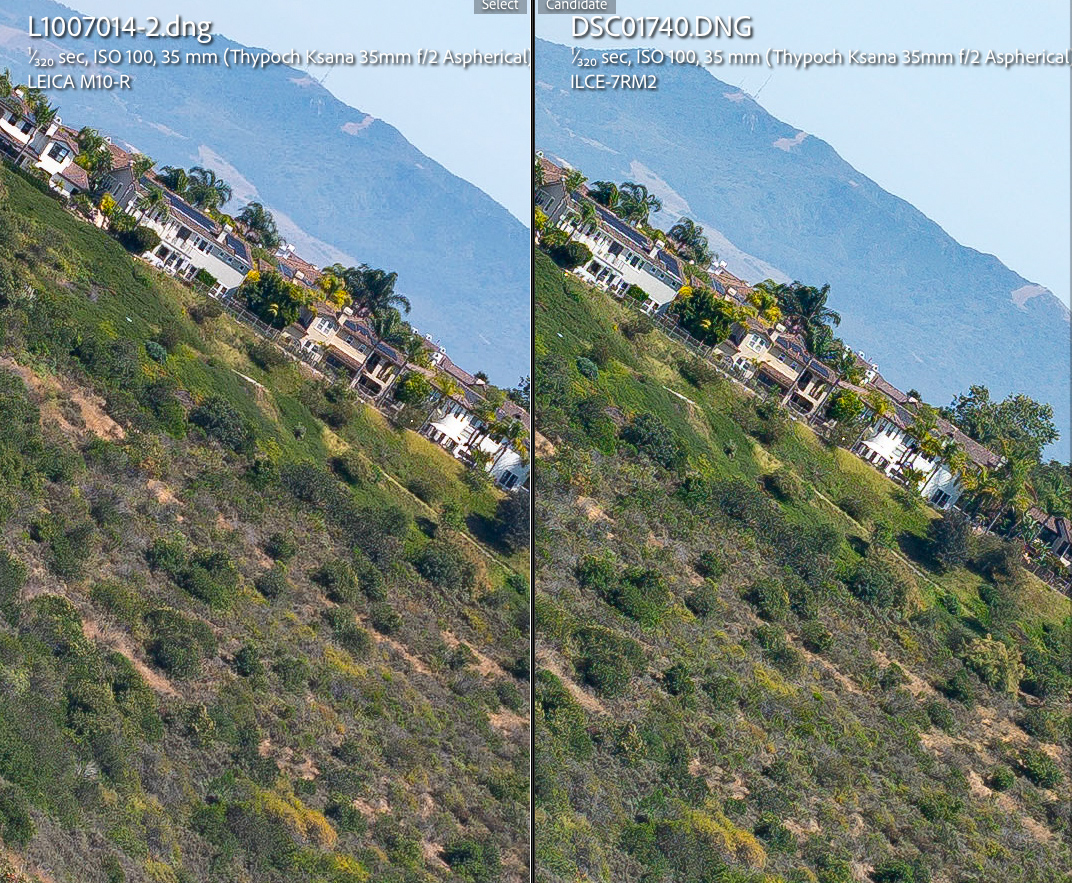
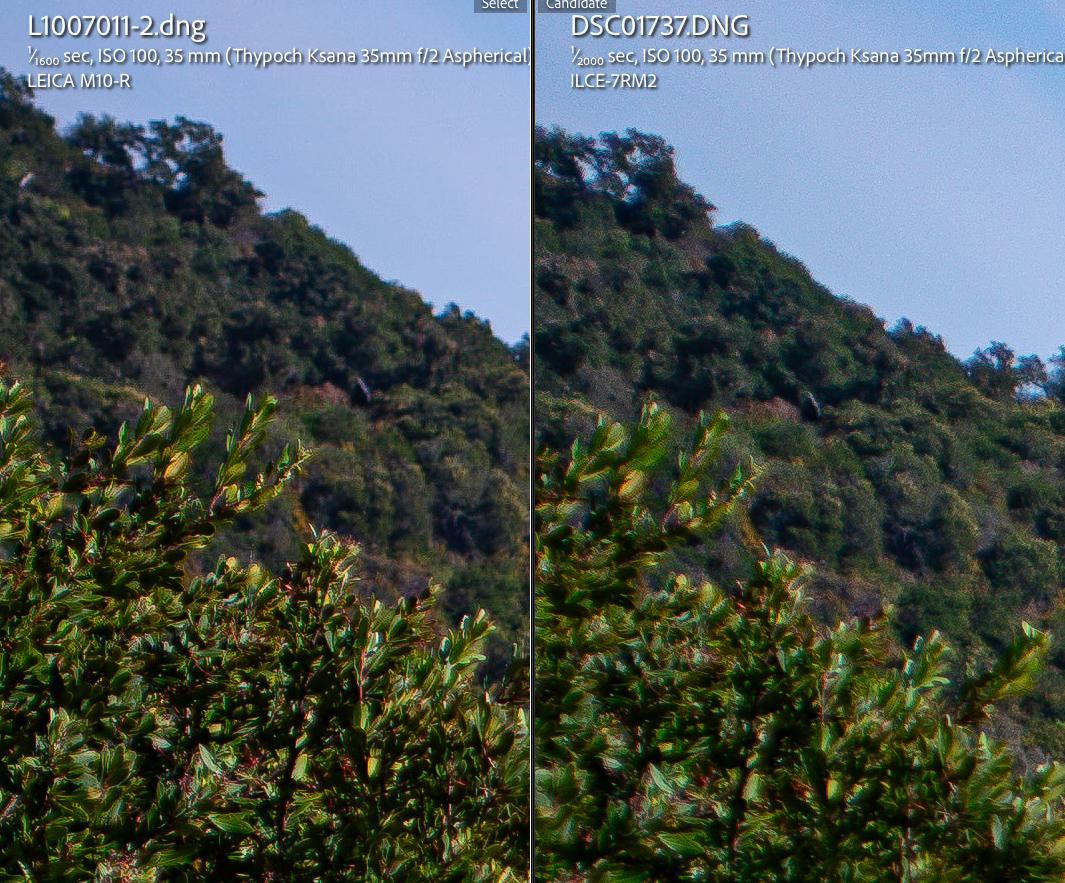
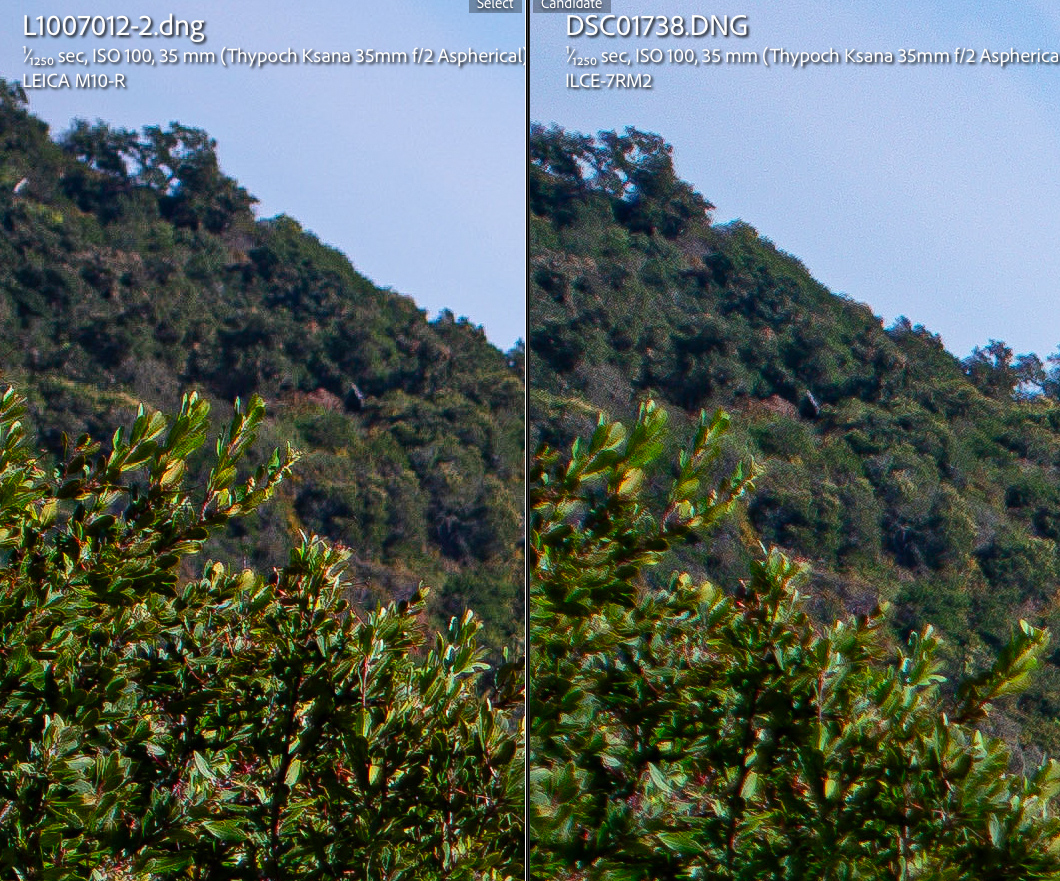
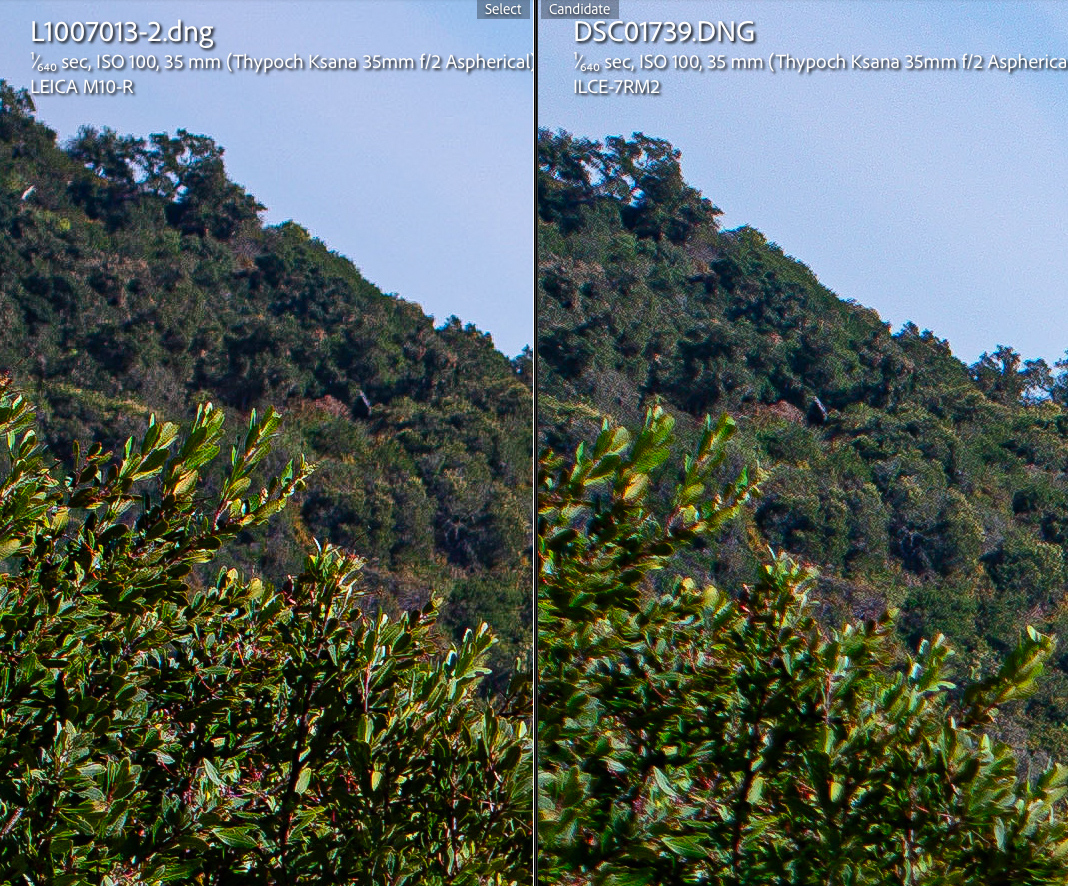
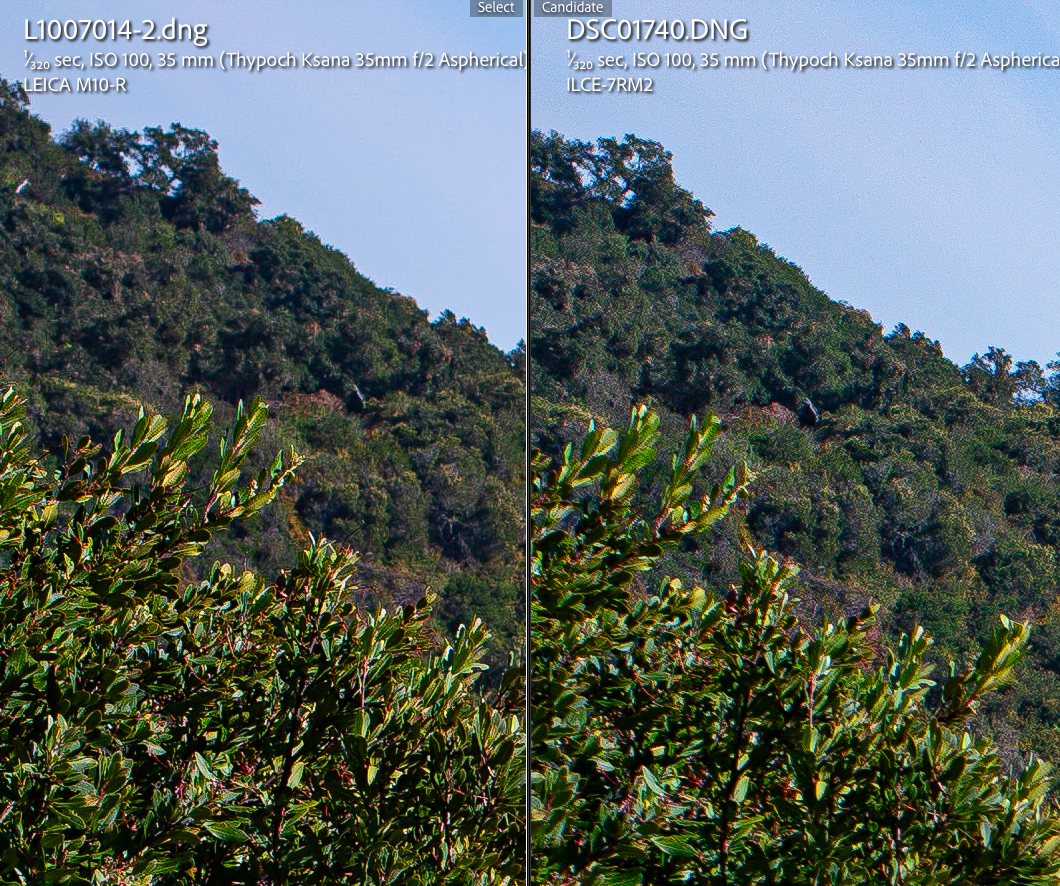
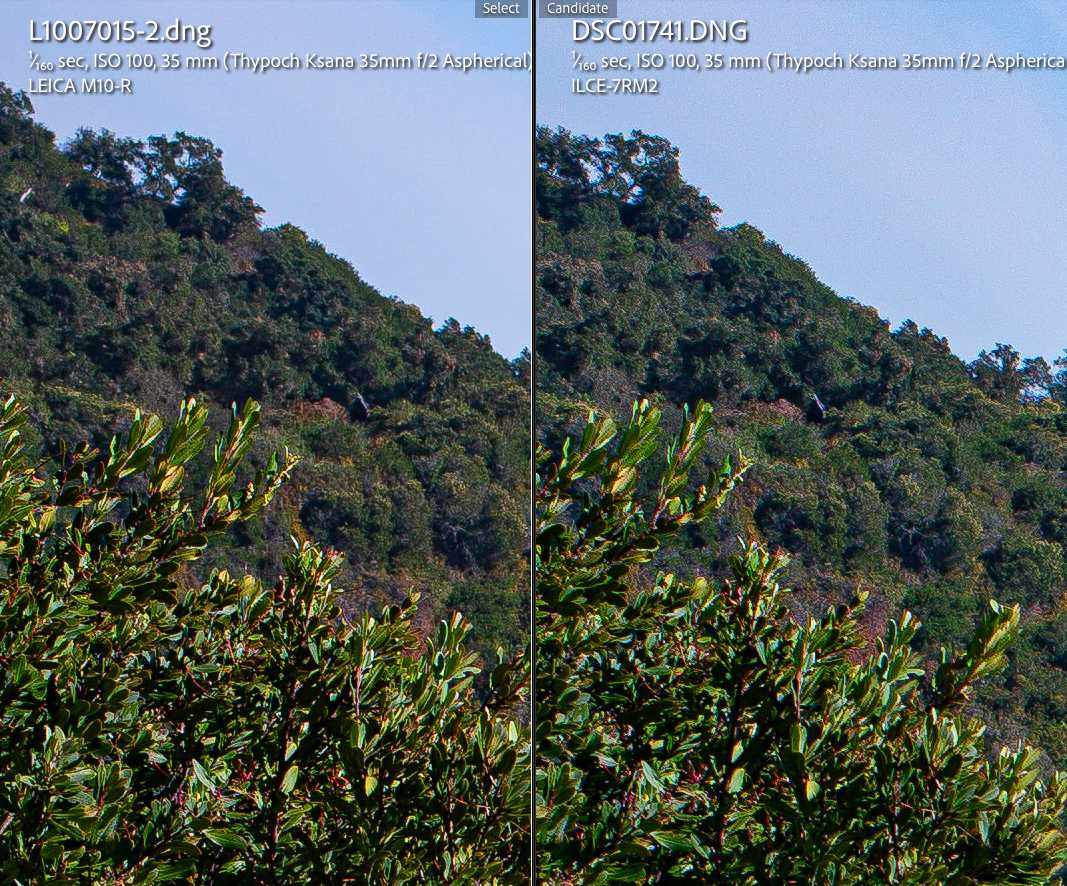
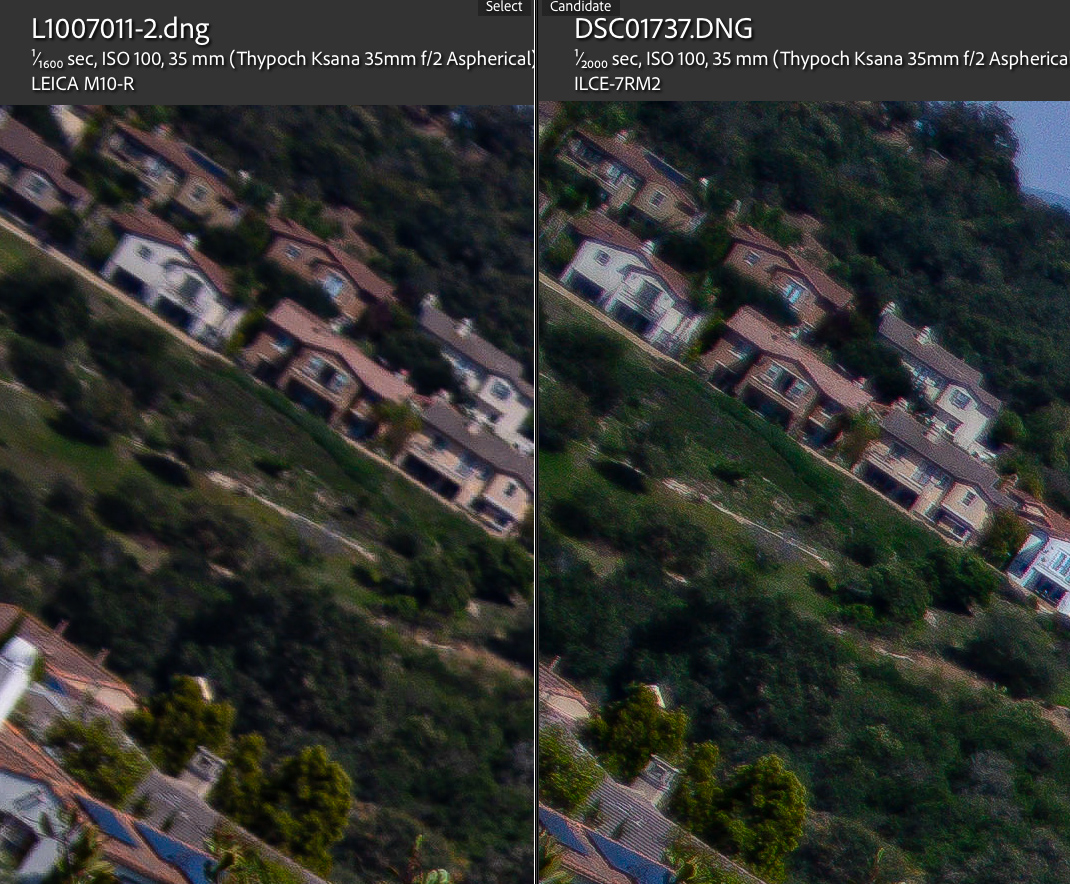
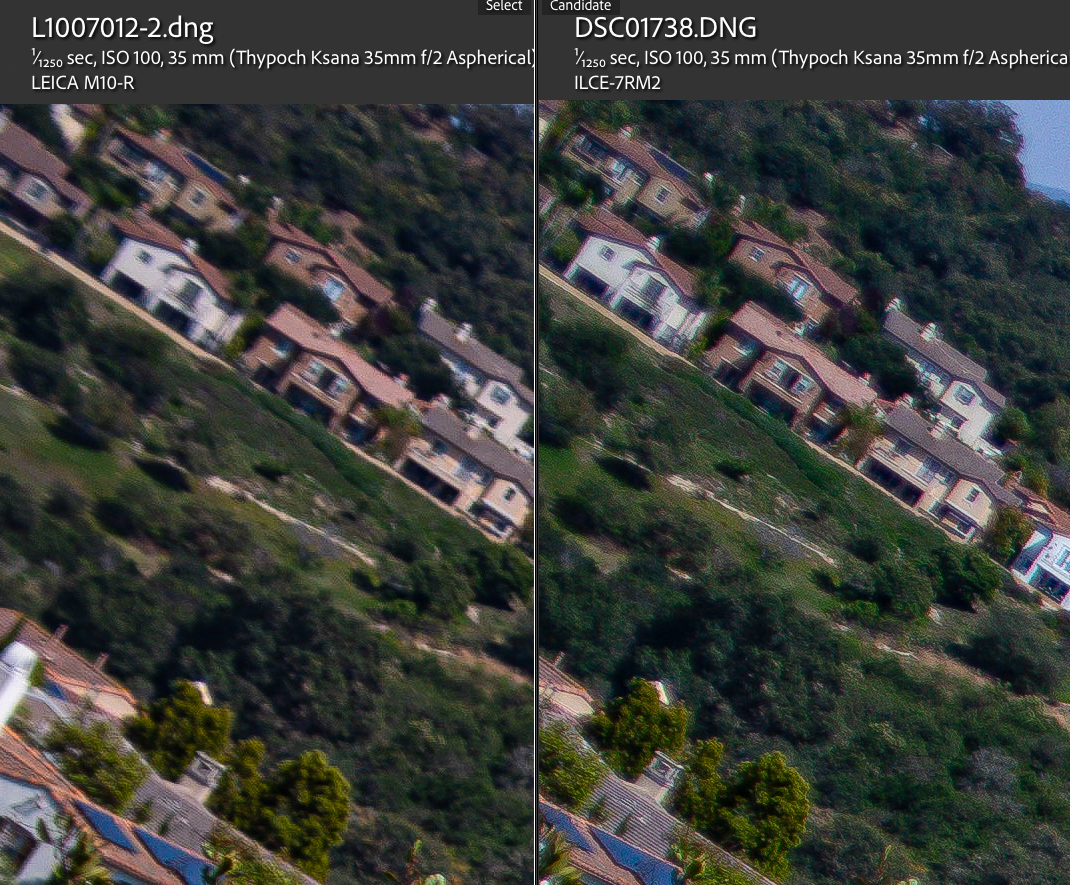
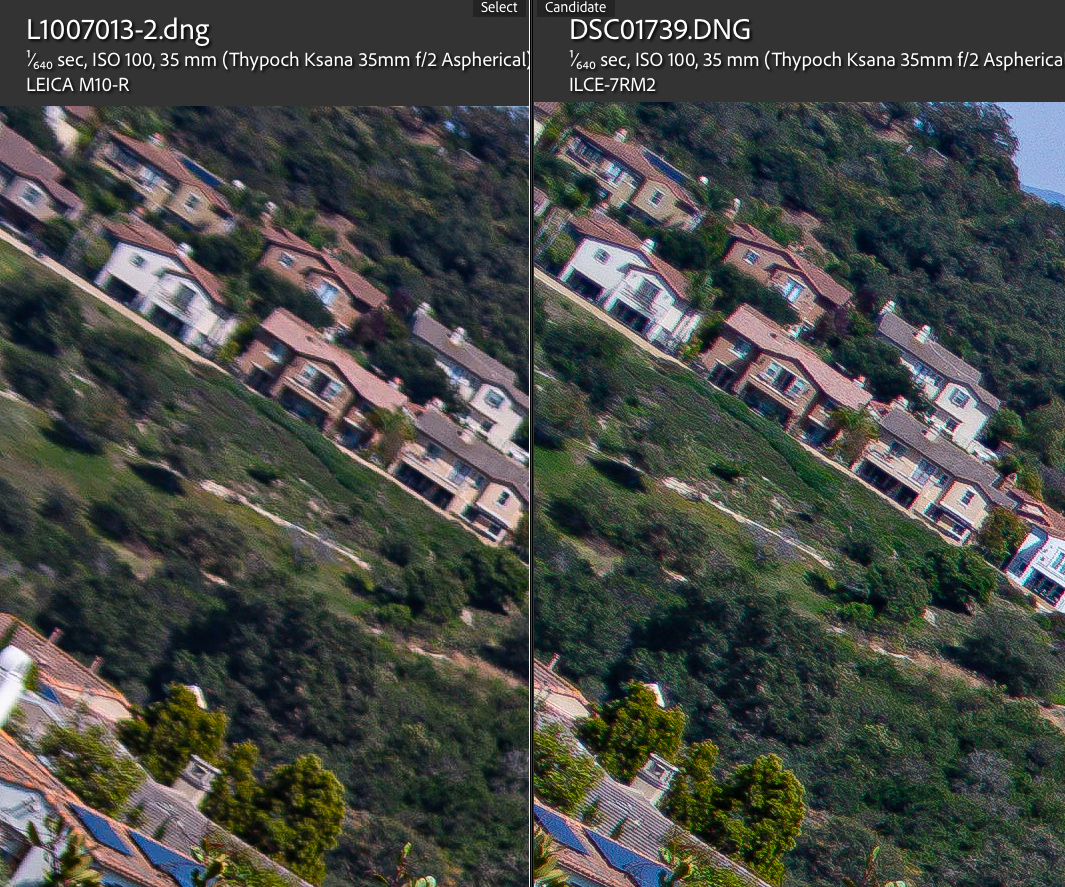
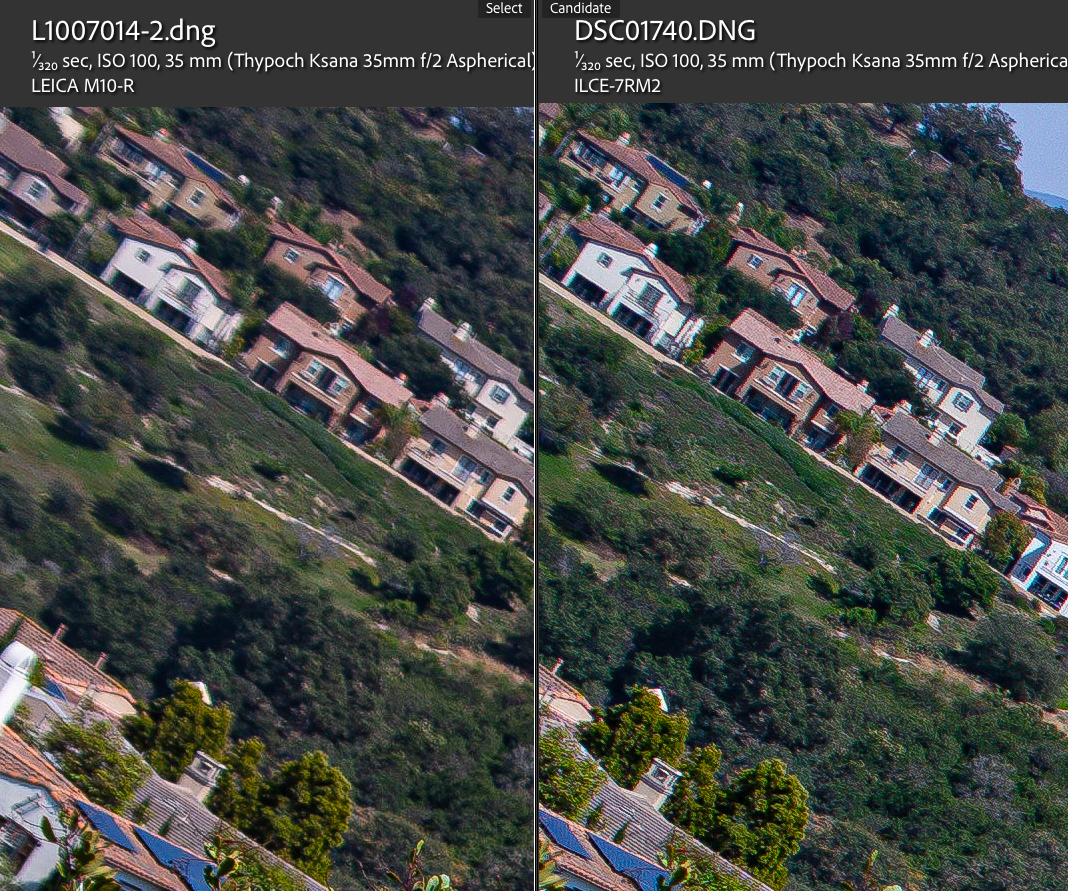
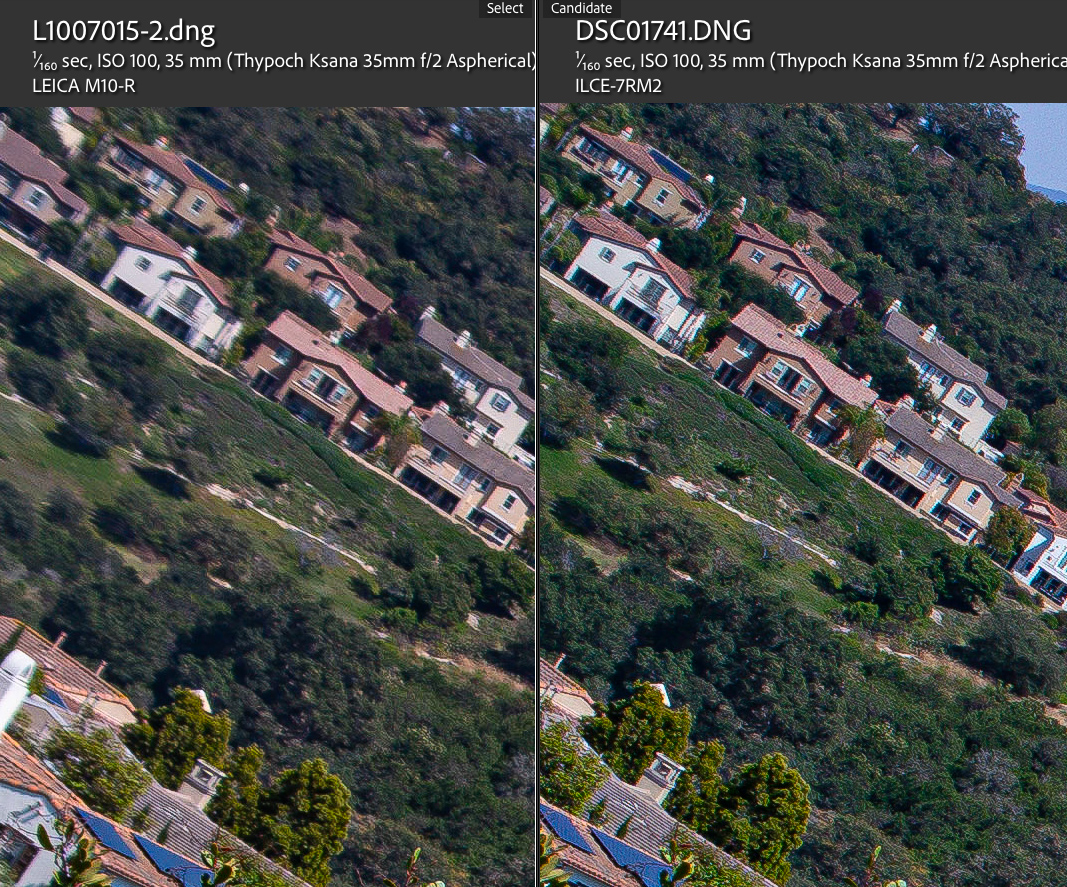
Infinity performance adapted to Sony A7R II (42MP)
Update on resolution testing:
This test is invalid as the Ksana 35mm f/2 sample I received is severely decentered, which significantly affects the results across the frame. Because of this, the current resolution and contrast findings are not representative of a properly centered copy.
In all the years I've tested Leica M lenses under close scrutiny, I have never seen an M mount design perform better on another system when adapted. That is exactly what I am seeing with the Thypoch Ksana 35mm f/2 Aspherical.
On paper, it should perform best on Leica bodies with thinner sensor stacks. In reality, it seems tuned in a way that favors a thicker stack, which also raises the possibility that the same optical formula, without major changes, could soon appear optimized for other mirrorless mounts.
Mid zone and corner performance on the Sony A7R II is noticeably better than on the Leica M10 R, with both cameras sitting in a similar 40MP range, making for a fair comparison. The results speak for themselves. If you are considering the Ksana 35/2 and plan to adapt it to Sony or other mirrorless systems, you are not taking a hit in image quality. You may actually end up with the better performing setup compared to native M mount use.
Check the pixel level crops from both Leica M10-R and Sony A7R II at center, mid field, and corners at f/2, f/2.8, f/4, f/5.6, and f/8.
Distance: Infinity
Focus: Center - Best of three shots at maximum magnification
White Balance: Daylight
Software used: Lightroom with FM Default Landscape Sharpening; all other settings are at default.
PS:Chromatic Aberration (CA), and distortion were not corrected either in post-processing or in-camera.
Center Resolution and Contrast
Infinity performance adapted to Sony A7R II vs Leica M10-R
So the lens is optimised for mirrorless but sold with a Leica mount.
Looking at the comparisons with the voigtlander on the M10-R the nearer bush is MUCH sharper on the thypoch indicating a tonne of field curvature. Given I shoot a Leica I'll pass on this lens. Thank you for testing, Fred!
Odd choice to not optimize an M-mount lens for Leica cameras..
Curios what the field curvature test will show. If the plane of focus shifts towards the camera at the edges, it could at least be interesting for portraits - throwing the background more out of focus than you would otherwise get with an f/2 lens.
Making an M-mount lens that is optimized for a thicker sensor stack seems like one of the most absurd decisions ever. Either make a lens for Leica users, or make a Sony mount lens and save yourself (and us) the cost of the intricacies of the rangefinder mechanism.
RustyRus wrote:
Is your copy ok? I know the Ultron is a very sharp lens but surprised at F8 the Thypoch is that mushy? For example, that is not what we are seeing the 21 3.5 Kasana-
To me the bottom front corner seems to be best, suggesting anything but a flat focus plane.
mranger211 wrote:
Making an M-mount lens that is optimized for a thicker sensor stack seems like one of the most absurd decisions ever. Either make a lens for Leica users, or make a Sony mount lens and save yourself (and us) the cost of the intricacies of the rangefinder mechanism.
Thypoch seems opposed to tweaking lenses to optimize the lens the mount the lens is for (Simeras and now Kasana with the 21/3.5 and 35/2). Perhaps their thinking is m-mount is adaptable to all ILC (lingua Franca mount) and the sheer amount of shooters (sales) is far greater for ILC cameras than m-mount. I think they’re just looking at it from a business perspective— you cater to the money. It’s not that Thypoch doesn’t want shooters to use the lens on m—hence they keep the RF aspects—m-shooters just aren’t the priority.
In an odd way, Thypoch always has these shticks to differentiate itself—the focusing dots, infinite lock, flaring, “cinematic” marketing push, vintage barrel designs— but having rangefinder lenses that are tiny and compact that actually work better on ILC’s is unique and highly useful for a majority (more than m only!) shooters. CV ports their lenses, but always super sizes them which is annoying. I’d be very curious to see the sales for the Simera line. I highly suspect they did not sell as many Simeras as they wanted while constantly getting ripped their lenses lack chips and mount optimization (IMO justified). The competition from Voigtlander in particular does not favor them—I think CV produces better glass at a similar price point. This approach addresses that in a way—gives shooters something Leica and CV won’t. I am the case in point here. I would not pick this lens Ksana 35/2 over the CV 35/2 on a native sensor stack. But I will probably buy it (depending on the rest of the review) because in the Sony ecosystem we do not have a small decent 35/2 that is manual focus.
I am very curious to see how their future releases play on different sensor stacks
May 20, 2026 at 10:19 AM
Steve Spencer Online • • • • • • • Upload & Sell: On
nehemiahphoto wrote:
Thypoch seems opposed to tweaking lenses to optimize the lens the mount the lens is for (Simeras and now Kasana with the 21/3.5 and 35/2). Perhaps their thinking is m-mount is adaptable to all ILC (lingua Franca mount) and the sheer amount of shooters (sales) is far greater for ILC cameras than m-mount. I think they’re just looking at it from a business perspective— you cater to the money. It’s not that Thypoch doesn’t want shooters to use the lens on m—hence they keep the RF aspects—m-shooters just aren’t the priority.
In an odd way, Thypoch always has these shticks to differentiate itself—the focusing dots, infinite lock, flaring, “cinematic” marketing push, vintage barrel designs— but having rangefinder lenses that are tiny and compact that actually work better on ILC’s is unique and highly useful for a majority (more than m only!) shooters. CV ports their lenses, but always super sizes them which is annoying. I’d be very curious to see the sales for the Simera line. I highly suspect they did not sell as many Simeras as they wanted while constantly getting ripped their lenses lack chips and mount optimization (IMO justified). The competition from Voigtlander in particular does not favor them—I think CV produces better glass at a similar price point. This approach addresses that in a way—gives shooters something Leica and CV won’t. I am the case in point here. I would not pick this lens Ksana 35/2 over the CV 35/2 on a native sensor stack. But I will probably buy it (depending on the rest of the review) because in the Sony ecosystem we do not have a small decent 35/2 that is manual focus.
I am very curious to see how their future releases play on different sensor stacks...Show more →
I think you are mostly right in your analysis. I think Thypoch wants ot use the Leica M mount as a way to make lenses available on all mounts while still working on Leica M. I still think the lack of contacts is a big problem and although I like some of their design choices I don't like others. This lens so far has left me pretty uninterested. The performance outside the center is worse on Leica, but even stopped down isn't that good on Sony. And although the Loxia 35 f/2 is one of the few 35 f/2 lenses for Sony, and CV doesn't have a 35 f/2 tuned for Sony, they do have the new 40 f/2 Septon which looks to my eyes a much nicer lens and is pretty close in focal length. Personally, I like the CV 40 f/1.2 at or rather near 35mm, but I like a little bigger lenses than you do. The performance of this Thypocb Ksana 35 f/2 although an interesting size and specs has left me quite unimpressed even to use on mirrorless.
CV 35/2 Apo-Lanthar is of course available for Sony but it's much bigger and longer than Ksana and different style of lens. I also think that the new Septon 40/2 is the strongest CV competitor in E-mount + 35/1.4 Nokton classic is not much heavier than Ksana + adapter.
I like it that this Ksana 35/2 seems to work pretty well on Sony but it's still not making me buy one since I have a lot of 35-40mm lenses already (must be around 15) and the small/light M-mount types are well covered by MS-Optics lenses that I already have + with the re-release of Apoqualia 35/1.4 approaching. Ksana is quite heavy (being brass) for the size and with an adapter it would be somewhere around 235g or more. Anyhow, this seems more interesting to me than all their other lenses so far. Electronic contacts + native E-mount would increase the appeal (since they can do that with AF zooms already).
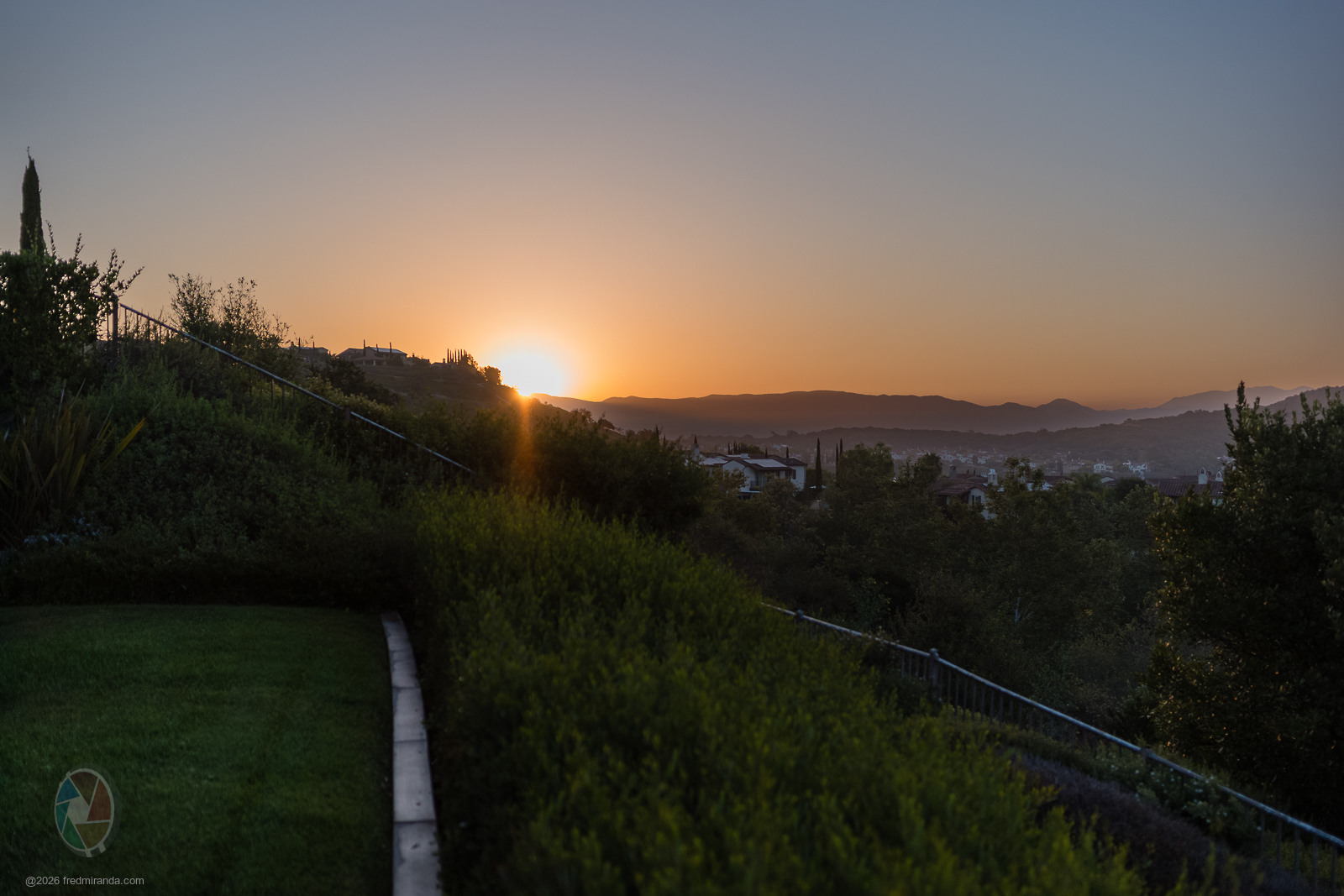
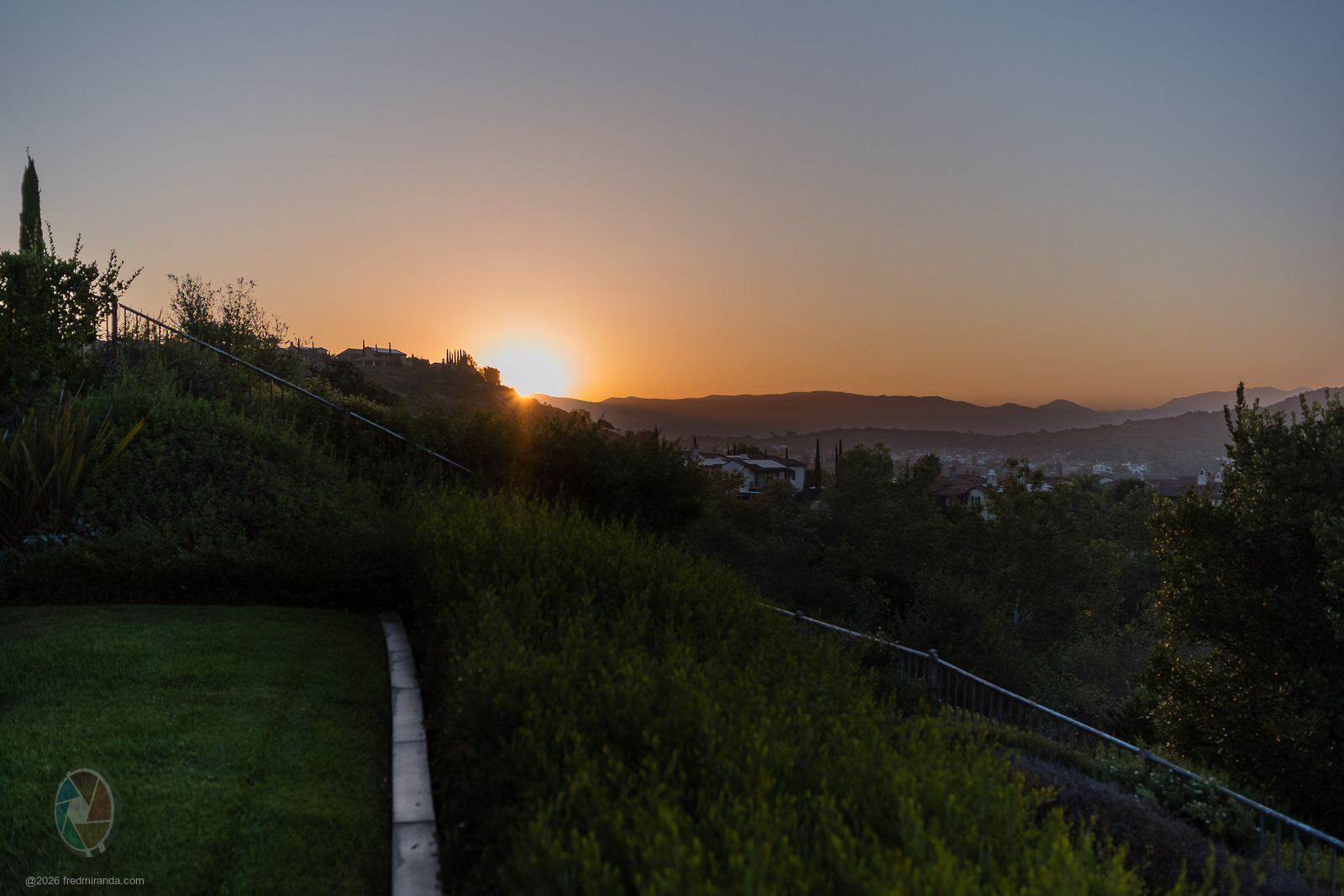
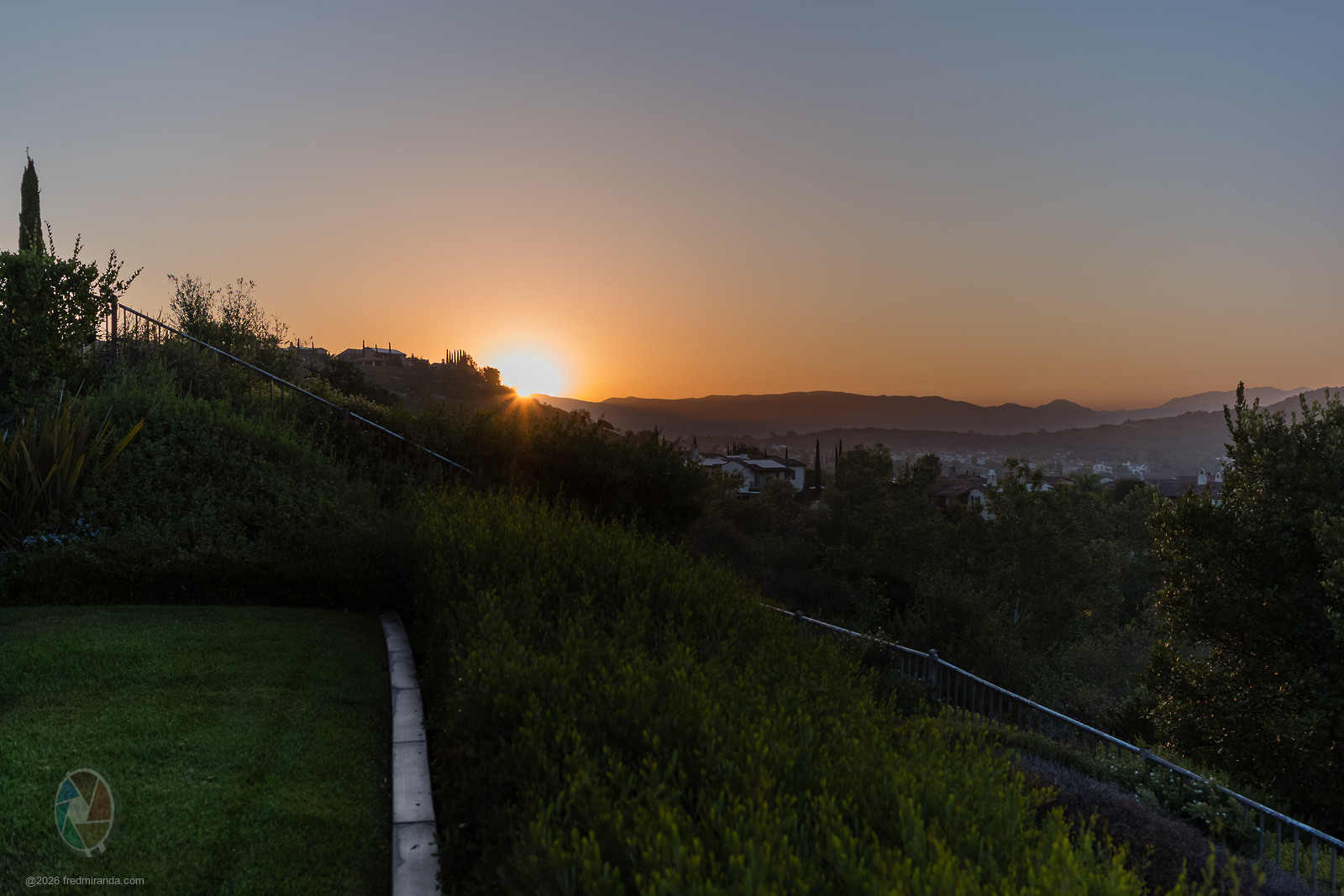
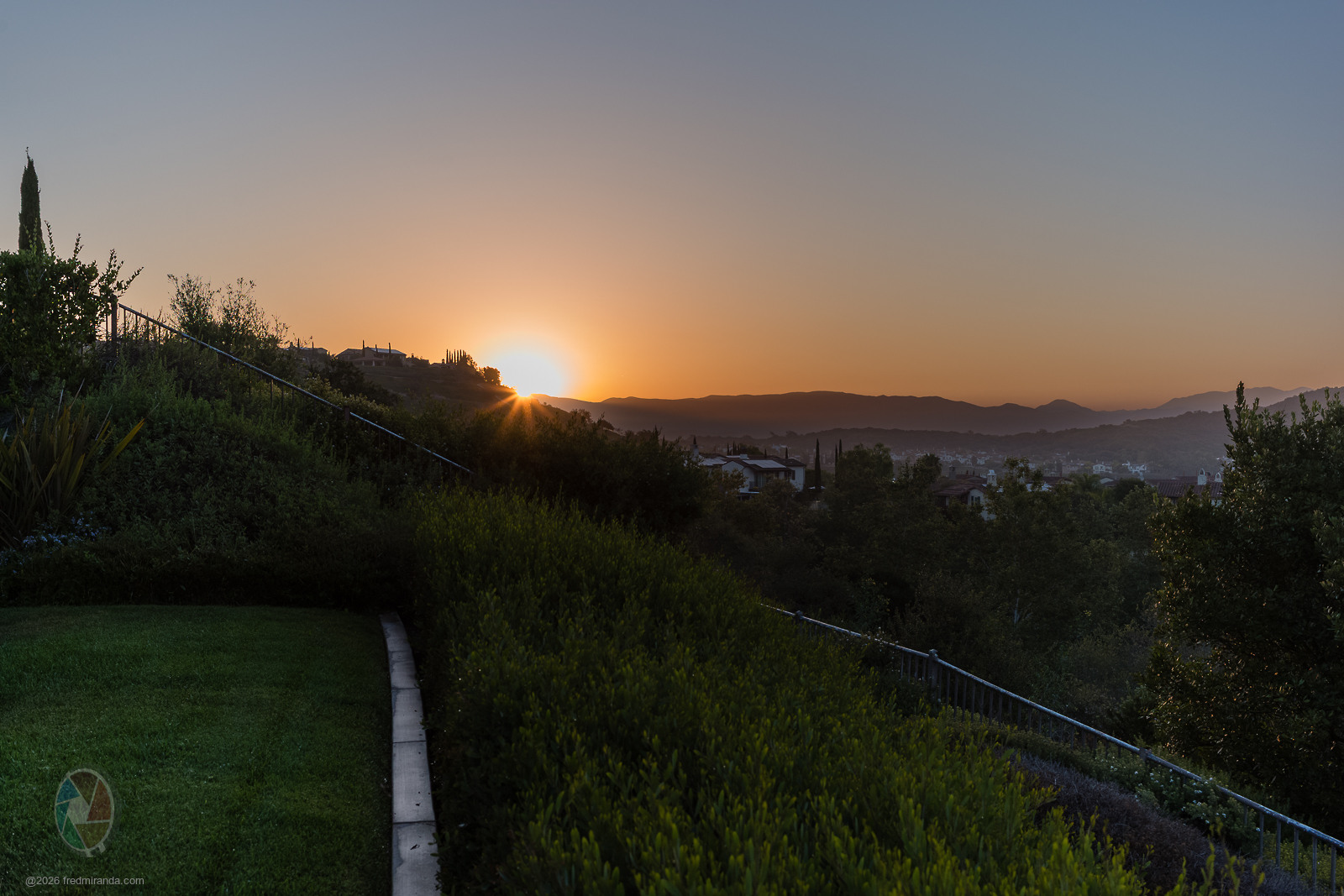
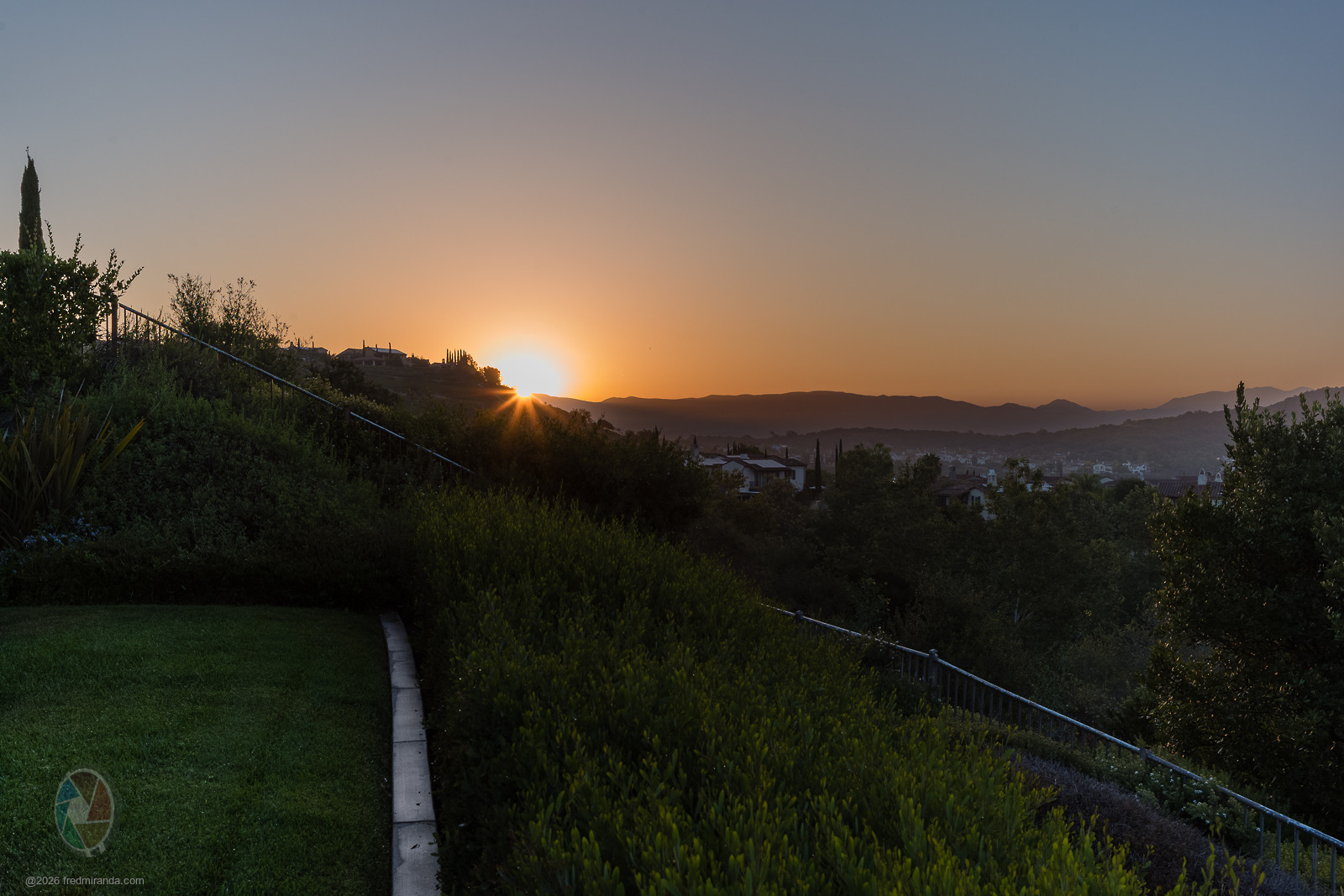
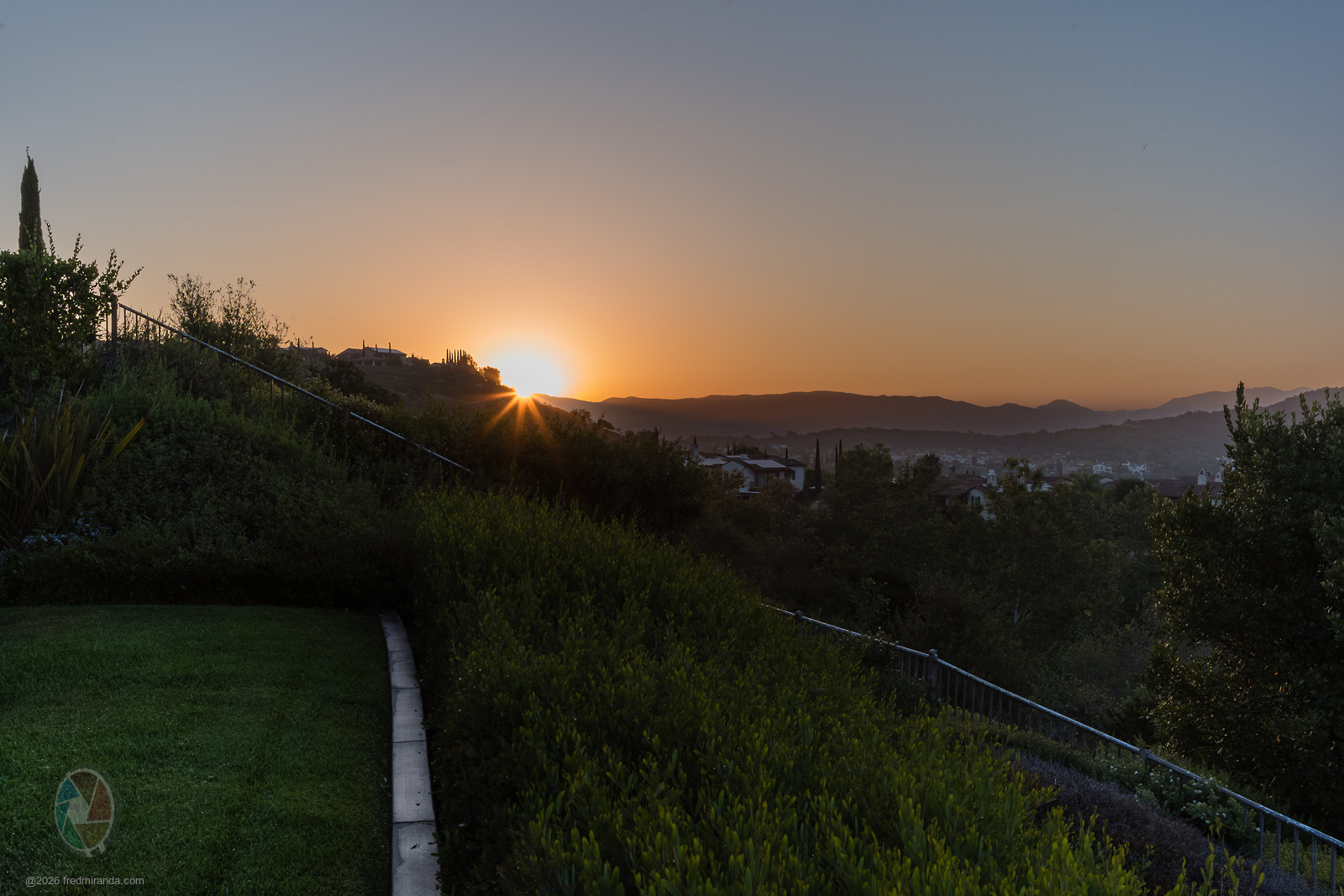
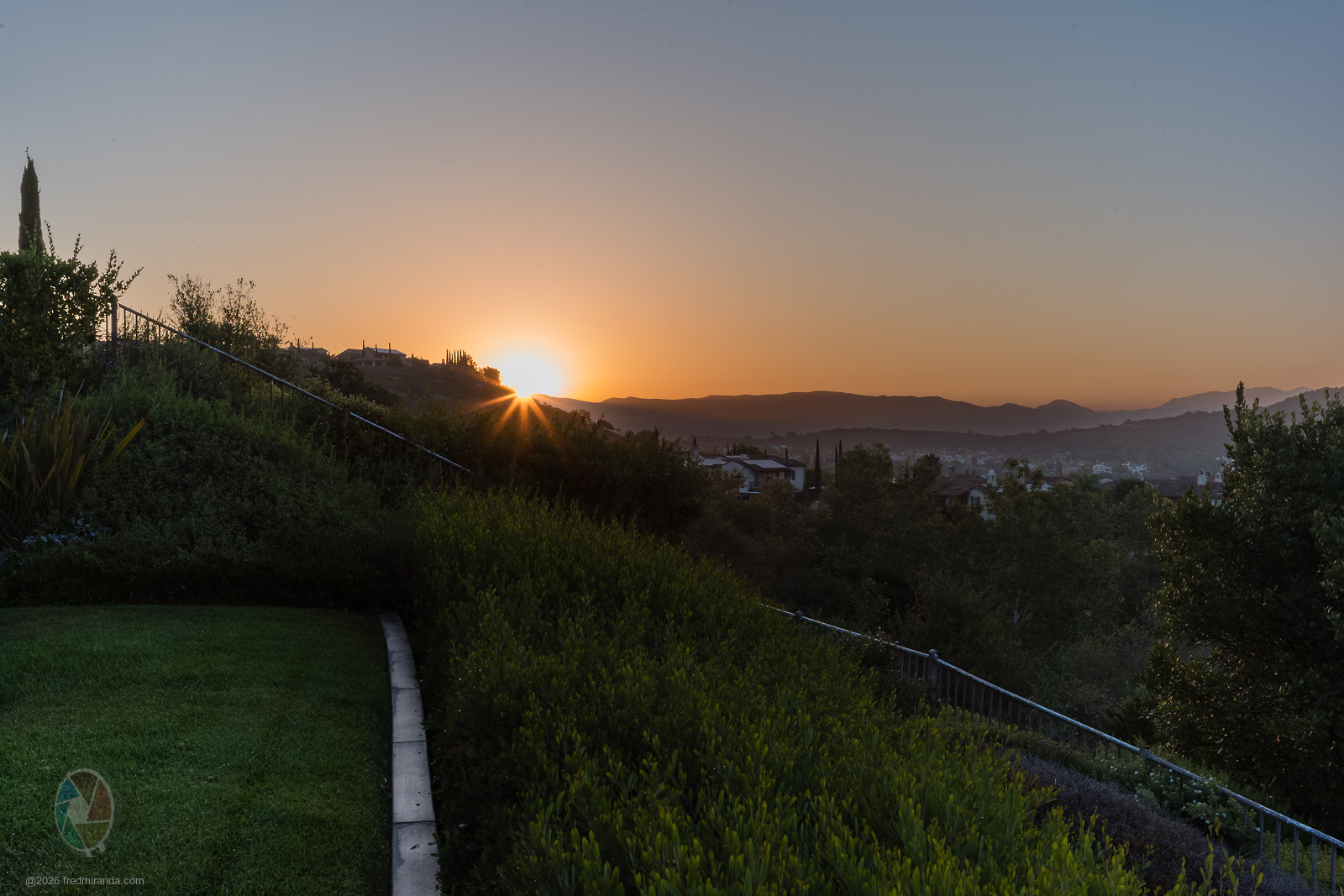
For those who care about well defined sunstars, the Thypoch Ksana 35mm f/2 Aspherical produces a very interesting rendering. The aperture uses 'straight' blades, although not as straight as most Zeiss and Cosina M-mount designs, which made me curious how the sunstars would behave when stopped down. In practice, manufacturing tolerance looks strong, with clean symmetry and evenly spaced rays.
At wide open and f/2.8, sunstars are mostly absent and sun rays remain smooth and soft. From f/4 through f/16, the effect becomes progressively more defined, and by mid apertures the sunstars are clearly visible and aesthetically pleasing. They are not overly defined like some lenses with uniformly straight blade geometry, which actually works in its favor, giving a more balanced look between smooth bokeh and sunstar definition. Even at f/16, the sunstars remain surprisingly clean, avoiding the usual chaotic breakup you often see at the smallest aperture.
Below is a sequence showing the transition from f/2 to f/16 in one stop increments. With 10 aperture blades, the lens produces 10-pointed sunstars with good symmetry.
I was also hoping to see more obvious behavior from the much publicized Epoch Coating 84' in the form of distinctive ghosting or veiling flare. In practice, the lens behaves much like other modern well coated optics in this regard. Flare control is excellent, at least for this scene, with strong resistance to ghosting comparable to the Voigtlander 35mm f/2 Ultron. Even when pointed directly toward bright light sources or shot into the sun at different angles, ghosting remains minimal. I will run more flare tests to see if I can better isolate any signature behavior from the Coating 84.
Also included in this series is uncorrected vignetting across the full aperture range.
f/2
LEICA M10-RThypoch Ksana 35mm f/2 Aspherical lens35mmf/1.01/2000s100 ISO-2.0 EV
f/2.8
LEICA M10-RThypoch Ksana 35mm f/2 Aspherical lens35mmf/1.01/1000s100 ISO-2.0 EV
f/4
LEICA M10-RThypoch Ksana 35mm f/2 Aspherical lens35mmf/1.41/500s100 ISO-2.0 EV
f/5.6
LEICA M10-RThypoch Ksana 35mm f/2 Aspherical lens35mmf/2.01/250s100 ISO-2.0 EV
f/8
LEICA M10-RThypoch Ksana 35mm f/2 Aspherical lens35mmf/2.81/125s100 ISO-2.0 EV
f/11
LEICA M10-RThypoch Ksana 35mm f/2 Aspherical lens35mmf/4.01/60s100 ISO-2.0 EV
f/16
LEICA M10-RThypoch Ksana 35mm f/2 Aspherical lens35mmf/4.81/45s100 ISO-2.0 EV
I picked up this lens the other day. I mirror the opinion that the aperture detents could have been a bit more stiff/pronounced. The <0.7m focus transition is also not as noticeable as the Simera line of lenses, at least in comparison to the 28 and 75.
Steve Spencer wrote:
I think you are mostly right in your analysis. I think Thypoch wants ot use the Leica M mount as a way to make lenses available on all mounts while still working on Leica M. I still think the lack of contacts is a big problem and although I like some of their design choices I don't like others. This lens so far has left me pretty uninterested. The performance outside the center is worse on Leica, but even stopped down isn't that good on Sony. And although the Loxia 35 f/2 is one of the few 35 f/2 lenses for Sony, and CV doesn't have a 35 f/2 tuned for Sony, they do have the new 40 f/2 Septon which looks to my eyes a much nicer lens and is pretty close in focal length. Personally, I like the CV 40 f/1.2 at or rather near 35mm, but I like a little bigger lenses than you do. The performance of this Thypocb Ksana 35 f/2 although an interesting size and specs has left me quite unimpressed even to use on mirrorless....Show more →
But I think with Thypoch’s thinking, they have slyly again not added contacts and kept production manufacturing lower because M Mount lenses don’t use contacts. Users expect contacts from E or Z or L or E native lenses—but not adapted m-mount lenses. They also cut costs by not having to release lenses in different mounts with different body housing like CV.
And yes, we have the Loxia 35/2 and Septon 40/2, both of which I prefer so far to this new Ksana 35/2, but both are stuck to e- amount. Or E and Z if adapting. With RF, L and M out of the equation, that’s a lot of the market pie Thypoch is cutting themselves out of.
And you are right—I do like even smaller lenses than you do. I mostly use small lenses even by rangefinder standards to the point where I accept some considerable trade offs. And I’m with you too, I can’t say I like a lot of their design choices. I think with each release, it is becoming apparent that they are more than budget option but also not super serious/sophisticated. Their new 24-50 underscores this again. Good lens for a moderate amount of money with compromises.
nehemiahphoto wrote:
Thypoch seems opposed to tweaking lenses to optimize the lens the mount the lens is for (Simeras and now Kasana with the 21/3.5 and 35/2). Perhaps their thinking is m-mount is adaptable to all ILC (lingua Franca mount) and the sheer amount of shooters (sales) is far greater for ILC cameras than m-mount. I think they’re just looking at it from a business perspective— you cater to the money. It’s not that Thypoch doesn’t want shooters to use the lens on m—hence they keep the RF aspects—m-shooters just aren’t the priority.
In an odd way, Thypoch always has these shticks to differentiate itself—the focusing dots, infinite lock, flaring, “cinematic” marketing push, vintage barrel designs— but having rangefinder lenses that are tiny and compact that actually work better on ILC’s is unique and highly useful for a majority (more than m only!) shooters. CV ports their lenses, but always super sizes them which is annoying. I’d be very curious to see the sales for the Simera line. I highly suspect they did not sell as many Simeras as they wanted while constantly getting ripped their lenses lack chips and mount optimization (IMO justified). The competition from Voigtlander in particular does not favor them—I think CV produces better glass at a similar price point. This approach addresses that in a way—gives shooters something Leica and CV won’t. I am the case in point here. I would not pick this lens Ksana 35/2 over the CV 35/2 on a native sensor stack. But I will probably buy it (depending on the rest of the review) because in the Sony ecosystem we do not have a small decent 35/2 that is manual focus.
I am very curious to see how their future releases play on different sensor stacks...Show more →
You are probably right. Thypoch has realized they sell most of their lenses to ILC shooters, and want to use the M-Mount as a one-size-fits all. Optimizing for some average ILC sensor stack most likely makes sense from a cost-performance perspective. This is not my use case, but I can see it being useful for a lot of people. The problem for Thypoch, though, is that I would guess that they will use a lot of potential sales based on tests performed on a Leica.
I generally liked the Simera line, even the much maligned 35mm f1.4, and would have loved a small 35mm f/2 walk around MF lens optimized for M-Mount. I had the VC Ultron at some point but it didn't really speak to me...might have to give it another try. Or maybe look at LLL and alternatives.
For those who care about well defined sunstars, the Thypoch Ksana 35mm f/2 Aspherical produces a very interesting rendering. ....
In my opinion those sunstars look very close to perfect, striking just the right balance, while maintaining good symmetry.
The flare performance also looks surprisingly good (from my perspective--I realize that some will be disappointed).
I am looking forward to the rest of the tests. So far this lens looks very promising for adapting to mirrorless. I actually prefer the flexibility of the M-mount for use on mirrorless. The cross-mount flexibility that this provides is more important to me than the benefits of a dedicated mirrorless mount.