p.1 #4 · Fireball over Catalina Mountains, Arizona
Thanks to you both, meteor photography which is one of the things I do is different than most other photography in that I can set it up but 99.99% of the time I get nothing. I can compose set exposure and nature is that it is, many many many thousands of images go into getting one good one- a few times a year more during major showers. Countless hours culling and then there is the reward as you see, shooting maybe a couple hundred thousand images a year, maybe more I dont count. And I look at everyone one of them.
p.1 #7 · Fireball over Catalina Mountains, Arizona
Thanks, the only way to do this type of photography is set up framing, exposure and then shoot photos over a long period time, often with more than one camera hoping to get a meteor, and a good one, because it is a random event. So this is what I do, big card, slow cheap one ones are good because it is only an image every 8-15 seconds depending on FL, aim the camera to set the seen, check exposure depending on Moonlight, hope the neighbors lights go off !, and do it. Next day is exhausting going through several thousand images, brute force, but it works and I can get great captures f bright meters doing it. I shoot maybe 75-100k images a year doing this. Over the years I have captured a lot of great meteors. Best gear is a faster lens, 1.4-1.8 14-20 mm , lately adapting Sigma Art F that are great lenses for this to Nikon Z, tripod, interval timer (I like better than the internal one), battery eliminator to mains, and capture, the slowest and cheapest microSD cards are good I use 512s since there is plenty of time to write each image. Next day transfer the images to a faster access like a SSD to scan because scanning thousands of images from a slow microSSD is frustrating. For this year my new configuration is a mac studio hub that has SD and microSD port and I installed in internal fast SSD into the hub so I can copy and scan- hope this is the way to go.
p.1 #8 · Fireball over Catalina Mountains, Arizona
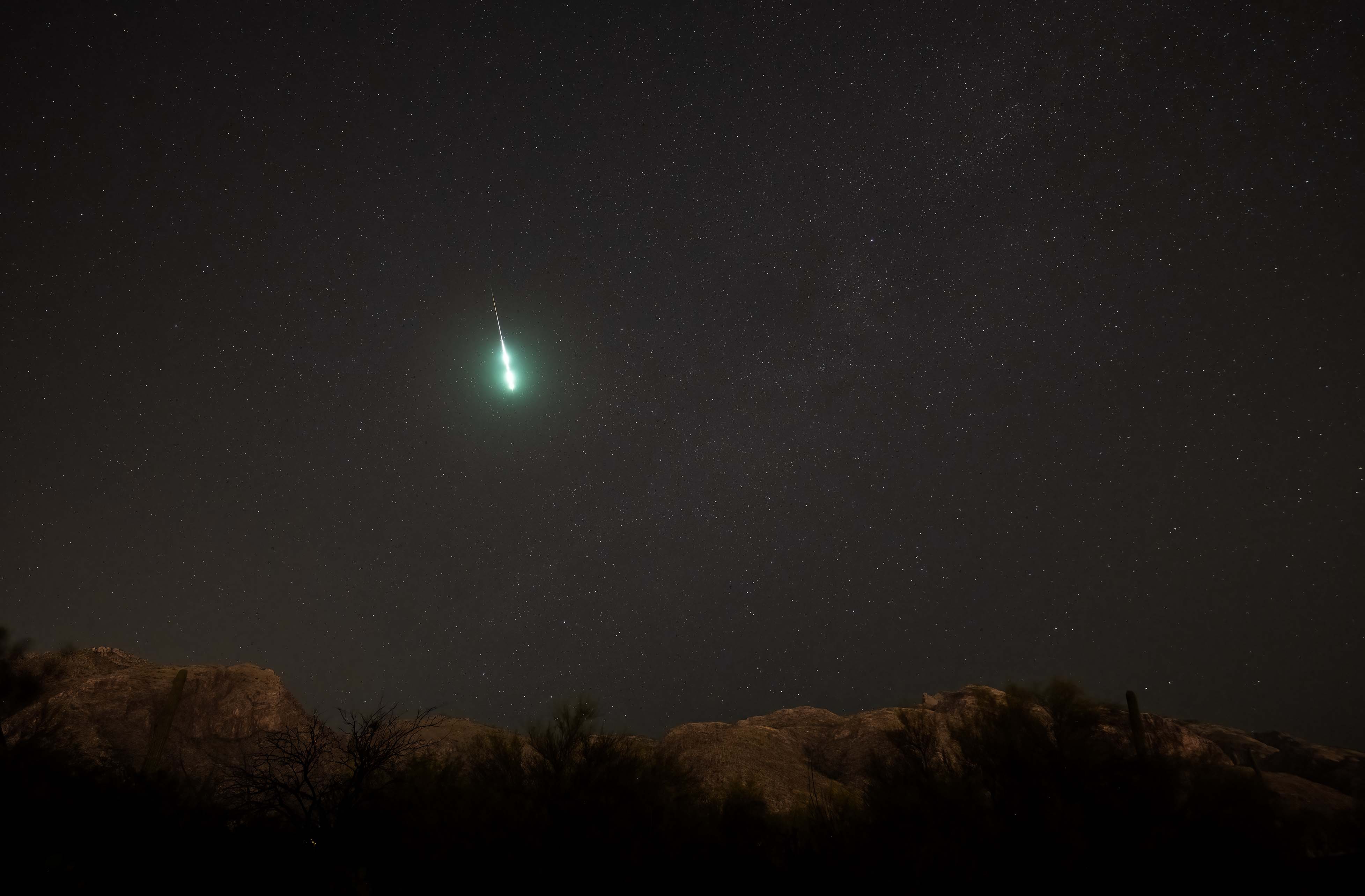
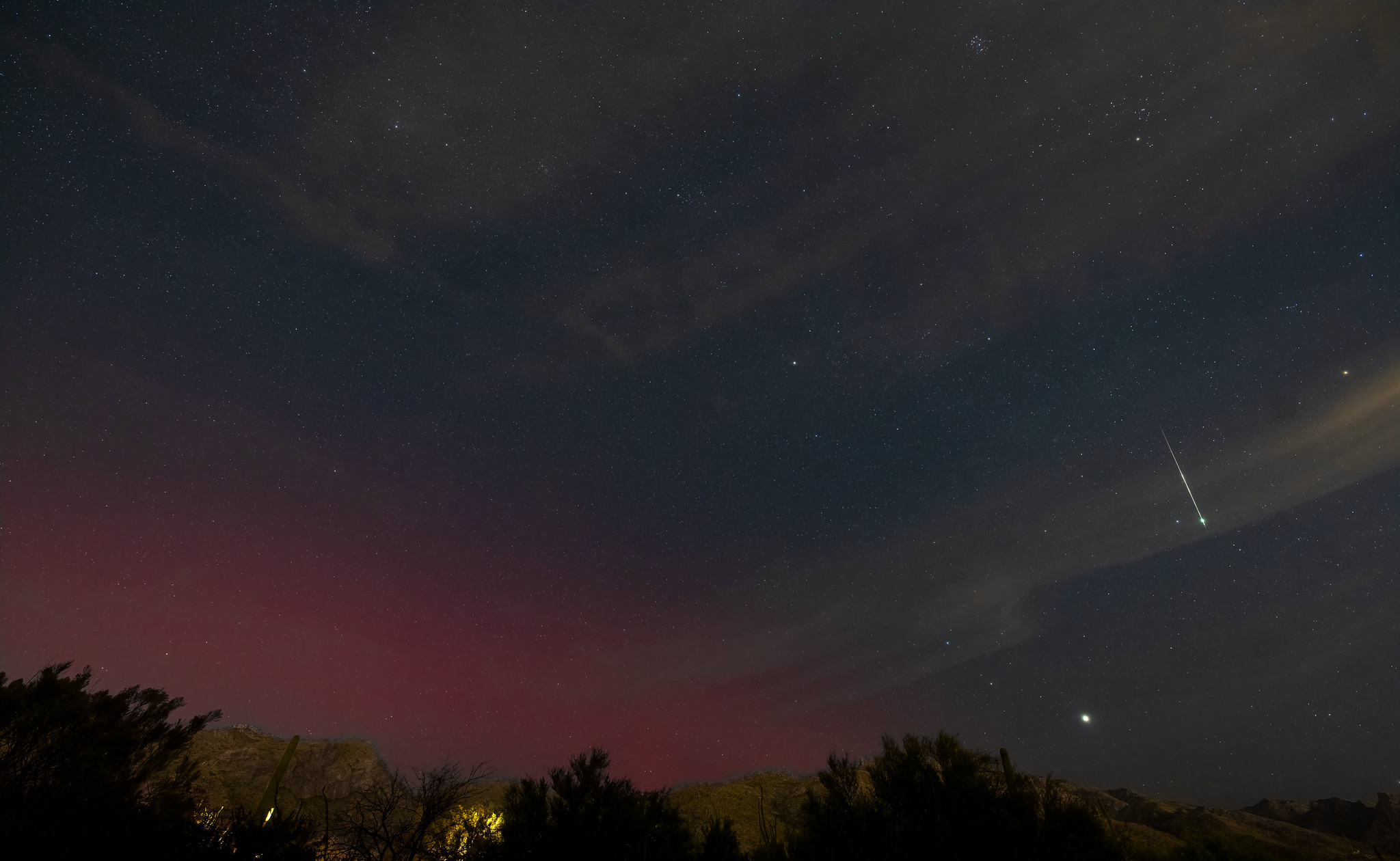
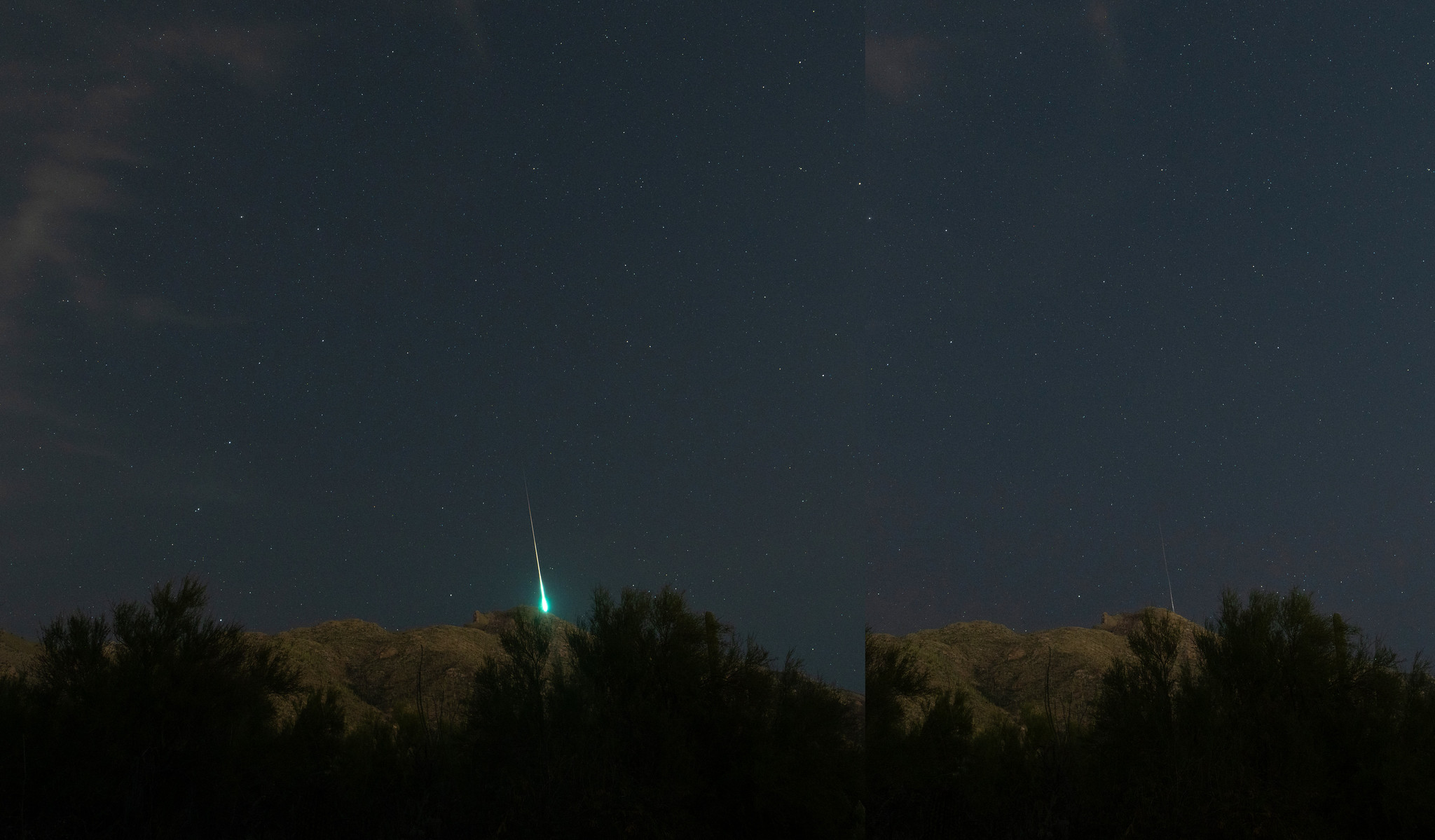
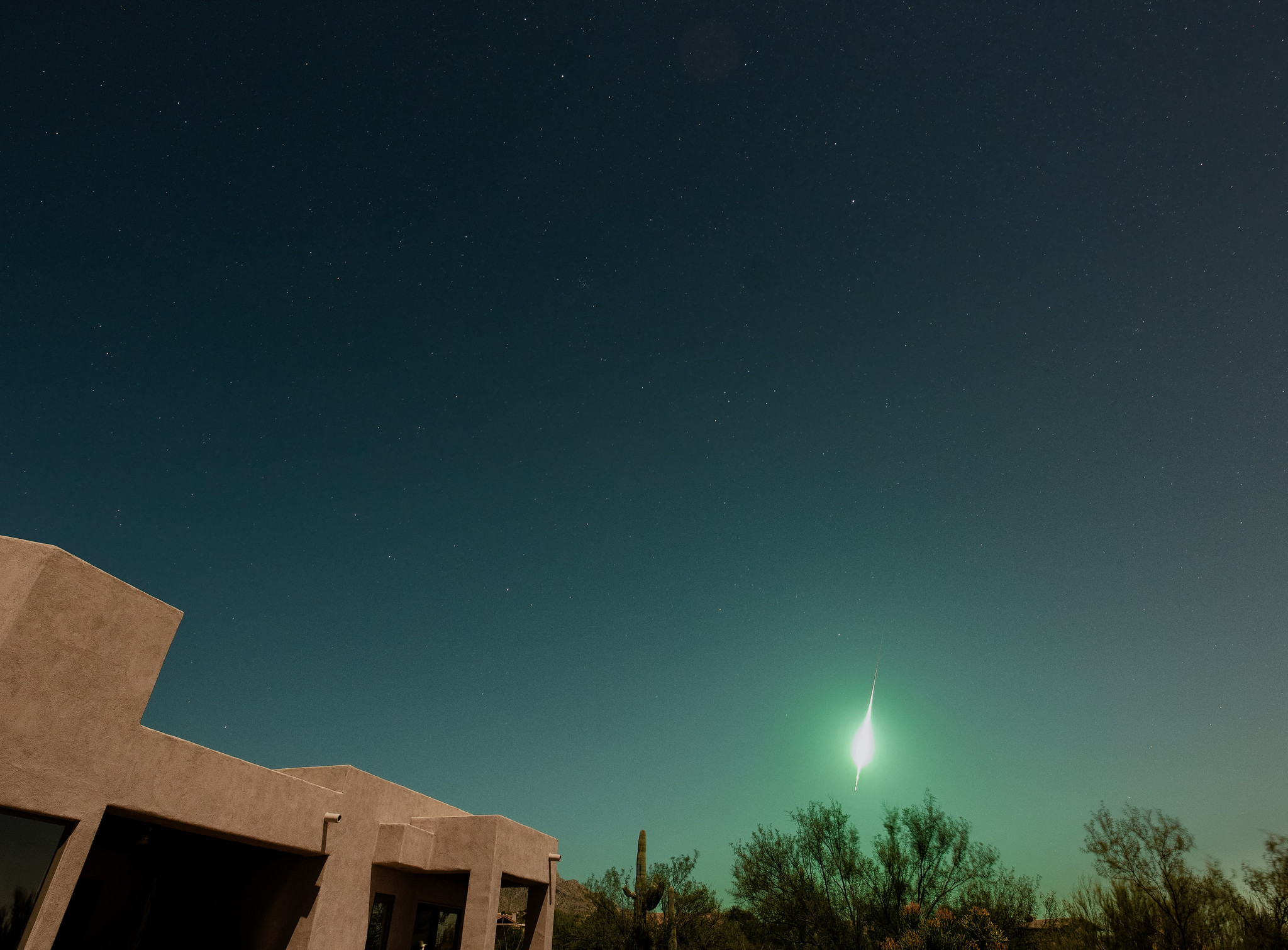
the Taurid meteors are well known for fireballs and the season is almost upon us - I'll be clicking away and anyone who wants to give it a shot it can be very rewarding the first two are 2025 season some of many I have captured as a scenic and the last one is one of the best fireballs I have seen and I saw it ! prior year from my backyard camera. 2025 even had an aurora visible in Tucson.
The aurora can be seen in Tucson !
The huge fireball the green glow is the ionized air around the exploding meteor making this bright green color
an easy and rewarding photographic activity - capture images while sleeping review the next day- I often run 3-5 cameras on good meteor nights which translates to maybe 10,000 images to review.