I shoot on a Nikon z8, and primarily do wildlife portraits.
I started with the Nikon 200-500, upgraded to z180-600, which was a nice upgrade.
When I shoot, I primarily shoot in the 800mm range, as I'll shoot in DX mode. However, the z 180-600 is on the softer side. I also tend to shoot in early mornings or late evenings as that's when some of my subjects are active.
Embarrassingly, I had a shot get selected for a local exhibit and my shot was cropped to a point that wouldnt print as well as I would have liked.
I'm looking to do one of the following, and I'm looking for advice from others that may have been in the same situation.
-Slap a 1.4x tc on my 180-600
-Swap to a 600 pf, with a TC when needed
-Skip the TC and go with the 800 6.3 (or 800 5.6)
There's also the real answer, which is 600 F4 TC, which does everything that I need (faster, built in tc), however even used this is closer to 12k.
Financially, I can do anything other than the 600 f4 at the moment, however I would rather buy once.
For those who were in a similar situation, what route did you take? Did you regret not going directly to 600 f4?
I would always lean towards a 1.4x before cropping to DX. That said, I don't particularly enjoy using the 1.4x on my 180-600 for a few reasons (softens it up, makes it much harder to track objects).
In order of what I'd do/try in your shoes:
1) try the 1.4x on the 180-600 and see how the experience and results are for yourself, cheapest option to start with
2) if you aren't convinced, keep the 1.4x and try the 600PF...see if having a fixed focal length is limiting to you. if you find you are keeping the 1.4x glued on...
3) try the 800
You'll always get the sharpest results with a bare lens, but you can never make a long prime shorter which I why I typically lean towards zooms myself.
600 PF buys you nothing over the 180-600 except weight and you give up a lot of flexibility. IMO the only reasonable choice in your case 800 PF. The 600PF may make sense as a standalone if you already own the 100-400.
BTW the 180-600 should not be visibly soft at 600 unless you pixel peep or crop deeply.
You are probably going to get advice to learn how to get closer so you don't need the 800. You can safely ignore it Yes, stalking skills are good to have but often useless. For example, many wildlife areas in the southwest intentionally hold visitors WAY back.
I'm with Scott on this one and my favorite tele lens is the 600 f/6.3 (apart from the 600 TC). It's the sharpest one of the lot, small, compact, and lightweight. With a 1.4 TC you'll be shooting at 840 albeit it at f/9 so light levels become an issue.
Shooting at 800+ mm takes finesse and atmospherics frequently become a factor. Do I regret not owning the 600 TC? Yes, in some respects although it's size and weight are challenging and I much prefer to be mobile, travel, and hand hold.
My journey was different because I purchased the lenses as they became available on the market namely, 800, then 186, then the 600. Of the three, I probably would have skipped the 186 as I already owned the 100-400 (which I sold and later reacquired). Currently, the 186 is used the least followed by the 800, and the 600 is my preferred, go to lens. Depending on where I'm traveling and what subjects I may be shooting, I might take any combination of the lenses, although I generally take a zoom along with a prime lens. For example, on a recent foray to Spain in the mountains to shoot lynx, I took the 180-600 and 600 f/6.3 (+ 1.4x TC). My 100-400 was at Nikon otherwise that would have been the preferred lens over the 186. Almost all images were with the 186. On another trip to FL for birding, I took the 186, 800, and 600 and deployed them depending on the location/subjects Looking at the images, 800 = 600 > 186. Could I have taken one over the other? Certainly, although I had the luxury of taking all three.
Why do I take a prime and a zoom? Depending on location/subject a prime alone may be limiting due to FL and MFD. For example, a warbler hops on a bush 3 feet away, neither the 600 or 800 PF will be able to capture it. Similarly, if a fox were to hop out of the brush in front of you, what lens would you want in your hands to capture it? Hopefully, this information is useful?
There is a lot to consider here, and I think what I will say is different from those who have already shared. I am a nature photographer that shoots about 70% wildlife and 30% landscapes and small patterns. I've had all the gear mentioned here and others that have not been mentioned.
I am fortunate to live where I can get fairly close to mammals and large birds, and when I cannot, I either work to get close and/or use a combination of converters and cropping. Unlike others, I am willing to crop deep and use technology like Gigapixel to create large enough files that I can print at 16x24. A click on me and my posts will show you the variety that I photograph.
My primary kit is the 400TC, 100-400, and 24-120. I will stack 1.4x converters on my 400TC when I need 800mm and I will use the DX crop if I need more. My light kit is the 180-600 with the 24-200mm lens. I can do 95% of my work with the light kit as I do with the primary and have traveled with the light kit when space is a factor. While @ 600mm the 180-600 is not as sharp as my 400TC w/ 1.4x it is more than sharp enough if there is adequate light and a fast enough shutter speed. The quality of the image is far more reliant on good light, subject position, and composition than it is on sharpness. The mix of noise reduction and resizing tools are so good these days that "best in sharpness" is a 4th level contender of importance.
So now your situation... if I did not have my primary kit for wildlife and all I had was the 24-200 + 180-600, and I had the money to make it happen, I'd buy the 800mm PF. I sold my 180-600 and 800PF in the summer of 2023 to buy my 400mm f2.8TC, but this was because I wanted the f/2.8 aperture more than the longer focal length. I am not a small bird photographer and the 800PF was not used as often as the zoom. Given that I like the 400 to 600mm range for mammal photography, it made sense to shift my gear... note, I did not use the judgmental term "downgrade or upgrade." I don't look at any shift in gear these days in those terms, I look at them with the perspective of... best gear to meet photographic intentions.
If you invest in the 800PF, you will find that your 180-600 will be used as it was designed to be... between 180-600 on an FX sensor. Both lenses will be portable and hand-holdable, you will just need to practice finding your target with the longer lens.
ShutterSamurai wrote:
Hi all, I'm looking for upgrade advice.
I shoot on a Nikon z8, and primarily do wildlife portraits.
I started with the Nikon 200-500, upgraded to z180-600, which was a nice upgrade.
When I shoot, I primarily shoot in the 800mm range, as I'll shoot in DX mode. However, the z 180-600 is on the softer side. I also tend to shoot in early mornings or late evenings as that's when some of my subjects are active.
Embarrassingly, I had a shot get selected for a local exhibit and my shot was cropped to a point that wouldnt print as well as I would have liked.
I'm looking to do one of the following, and I'm looking for advice from others that may have been in the same situation.
-Slap a 1.4x tc on my 180-600
-Swap to a 600 pf, with a TC when needed
-Skip the TC and go with the 800 6.3 (or 800 5.6)
There's also the real answer, which is 600 F4 TC, which does everything that I need (faster, built in tc), however even used this is closer to 12k.
Financially, I can do anything other than the 600 f4 at the moment, however I would rather buy once.
For those who were in a similar situation, what route did you take? Did you regret not going directly to 600 f4?...Show more →
I think a little more background on your location, subjects, and challenges would he helpful. With the current information, I’d probably get the 800mm f/6.3.
I currently shoot the 600mm f/4 FL E, which could be a consideration for you. That lens is spectacular, but If I shot primarily at 800mm, I’d almost certainly just get the 800mm f/6.3.
For owls and other animals that like to come out in the lower light hours you can't beat the 400TC. My wildlife setup is the 100-400, 400/2.8TC and 800PF. I've used the 1.4x stacking on the 400 in a pinch and it works well, preferable over cropping, but not as good as the native 800PF.
I'd look at the FL you are trying to get to with the 180-600 and cropping and see where you end up. If its mostly on the 800 side then I think the 800PF is the best choice. Its especially good for smaller birds, and I think pairing it with your 180-600 is a great versatile option. Atmospheric haze is an issue the longer you go, and cropping only makes that worse.
604photo wrote:
For owls and other animals that like to come out in the lower light hours you can't beat the 400TC. My wildlife setup is the 100-400, 400/2.8TC and 800PF. I've used the 1.4x stacking on the 400 in a pinch and it works well, preferable over cropping, but not as good as the native 800PF.
I'd look at the FL you are trying to get to with the 180-600 and cropping and see where you end up. If its mostly on the 800 side then I think the 800PF is the best choice. Its especially good for smaller birds, and I think pairing it with your 180-600 is a great versatile option. Atmospheric haze is an issue the longer you go, and cropping only makes that worse. ...Show more →
FYI... If you use DXO, the image quality of a stacked 400TC is equal to the 800PF, I compared the output prior to selling my 800PF. With that stated, I am considering a repurchase of the 800mm lens, as it is very light and pairs well with the 180-600mm lens.
Honestly from what my research, the 800pf and 600 f4 are essentially identical in quality.
800 is significantly lighter
600 has a massive light advantage plus it's two lenses in one.
Strongly leaning towards the 600 f4 purely for lighting needs. I might play with another lense and see how much of a difference the extra stop or so makes for iso/shitter, otherwise I would be totally fine with the 800 pf
ShutterSamurai wrote:
For those who were in a similar situation, what route did you take? Did you regret not going directly to 600 f4?
180-400 f/4 AF-S with an FTZ II. It has a built-in 1.4TC, getting you to 540mm. DX crop, bang you're at 810 f/5.6, and it's sharp and focuses quickly. Used they can be had for reasonable prices.
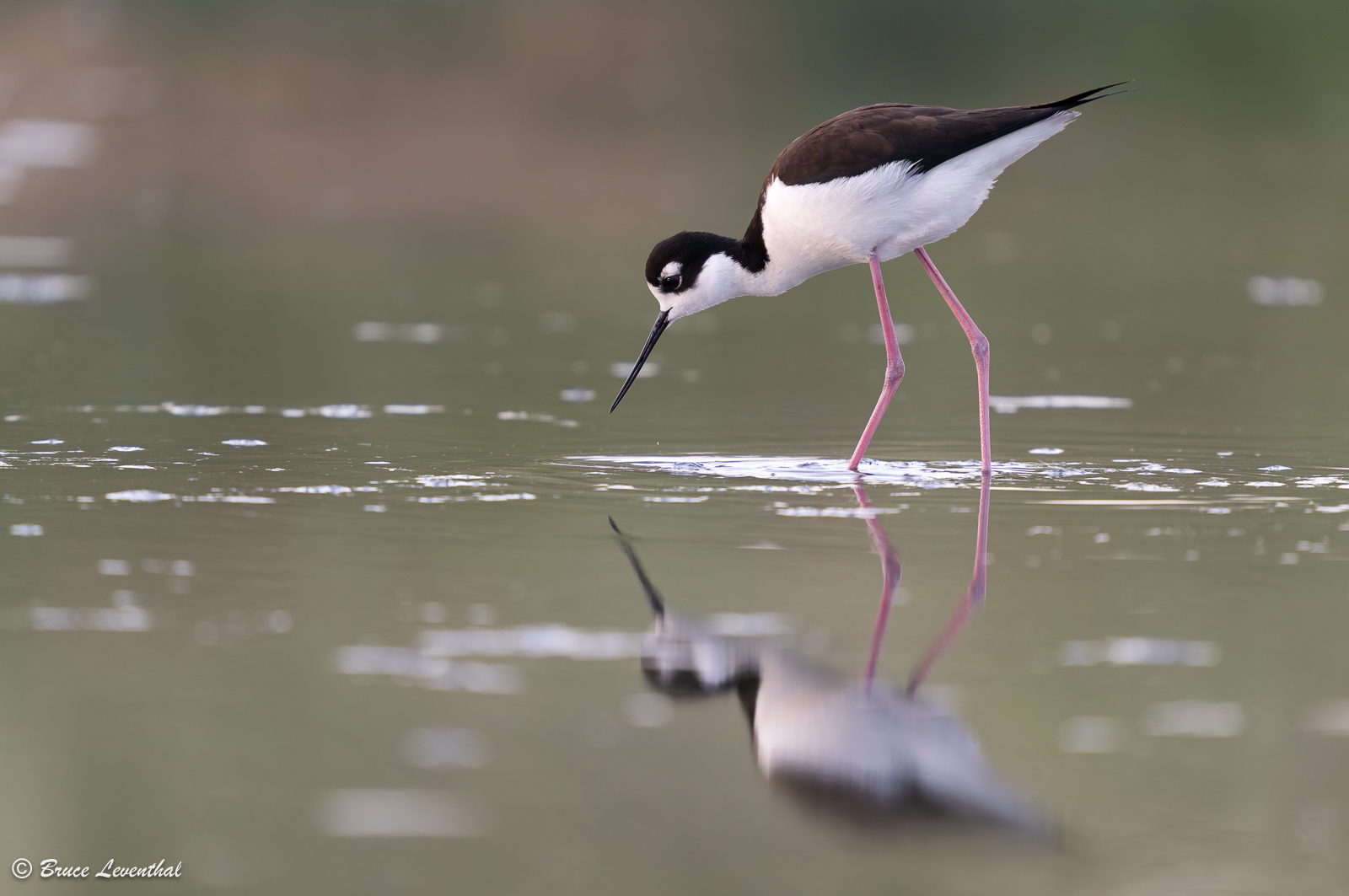
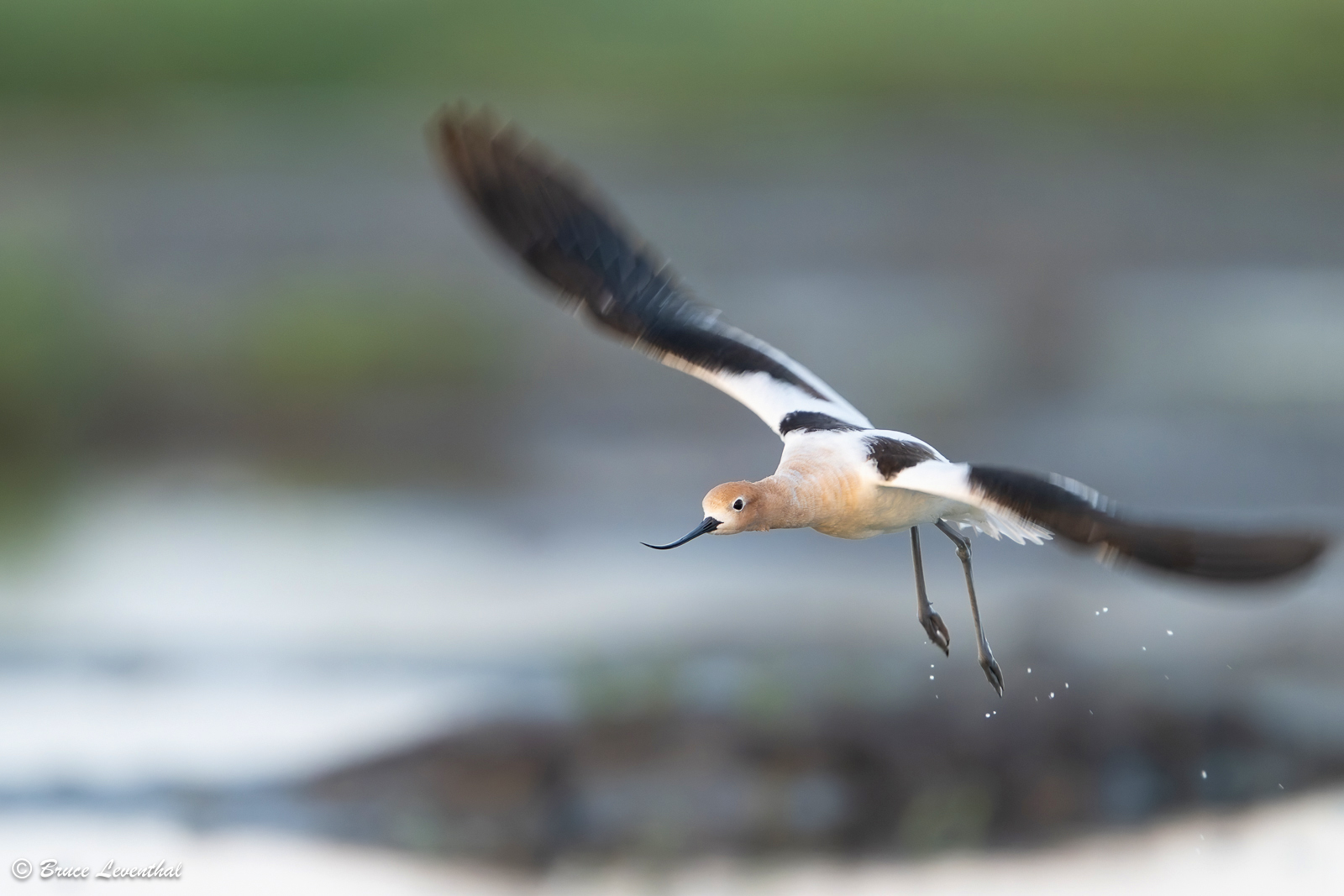
I was in the field today with my 400mm f2.8TC photographing stilts and avocets at sunrise. The goal was to shoot matings, and while I managed to catch one, the best work was of solitary avocets and stilts. I often need to stack 1.4x TCs for this shoot as these are medium sized birds at a bit of a distance. In thinking about the discussion here, I asked to borrow a friends Z 2x converter instead of stacking my 1.4x on the 400TC w/ its converter engaged. I was so surprised by the output... even in pre-dawn light at ISO6400 that I came home and ordered a 2x. When the opportunity presented itself, I would engage the internal 1.4x converter and the performance was better than expected.
Let me know if you are interested in seeing any images from this combination... to be clear, they will be processed with DXO Pro to get the best out of the files and then my normal work on color and white balance...
Another option is to get an f mount 500f4
Used with the ftz adapter it is fabulous.
There are many good copies of the G version for under $2000. Of course it’s heavy and needs a good gimbal head to get the best results. F4 allows for great focus in early morning and late evening light.
Lots of great advice here. I can only put across what I do and you can judge whether it suits your needs. I have the following lenses: Z 100-400, Z 180-600, Z 600 PF, and Z 600 f4 TC. I used to own the Z 800 f6.3PF but it became redundant when I got the Z 600 f4 TC. I shoot birds mainly and many of these can be small some tiny in fact. l also do landscapes, interesting street scenes and animals but here in Australia animals are mainly only Kangaroos, Wallabies, Koalas and Wombats. Kangaroos etc don't do much that other than hop, the rest of the time they are fairly boring, as are Koalas and Wombats etc, thus animal photography here is limited in its interest.
So, with that in mind, birds are the majority of my photography and with birds, 600mm is the minimum and I am often at 840mm. My Z 600 f4 TC is my go to lens. I have used the 180-600 and actually rate it highly, much better than it's price point would indicate. The Z 600 pf is also a great lens and I often use it with the 1.4x TC and it is still sharp as a tack. I rarely ever use the 100-400 as I find it too short for my birding but it is an excellent zoo lens, though.
I can post sample images from all lenses if you are interested, or you can go to my individual galleries on PBase. When you click on the image, underneath is options for image size. Best option is "Auto" as it sizes the image to suit your screen:
I know that there was not a follow up request about seeing image samples, but I think that these might be helpful to anyone wondering if the 2x converter is a viable option. While I photographed these same birds when the sun was significantly above the horizon, I chose to share two images that were taken right before and after sunrise. The images are only tiny crops to straighten horizons, but they will give you an idea of what is possible at ISO 6400 when using the 400mm f2.8TC and 2x converter.
The first photo is a black-neck stilt... not my favorite neck position has the it is tilted ever so slightly away from me, but I wanted to push an image out quickly for this thread. The photo was with a Z9 + 400 f2.8 + Z2x = 800mm.
The second is an action/flight shut of an avocet. Still ISO 6400 @ 1/500 sec. Same as above with the built-in 1.4x engaged, thus 1120mm. The EXIF is included so you can see for yourself.
Based on this experience, I bought a Z 2x today and no longer believe I need an 800PF. So this one lens with a 2X converter allows me to shoot 400mm f/2.8, 560mm f/4, 800mm f/5.6, and 1120 f/8... not bad.
cheers,
bruce
NIKON Z 9NIKKOR Z 400mm f/2.8 TC VR S Z TC-2.0x lens800mmf/5.61/500s6400 ISO0.0 EV
NIKON Z 9NIKKOR Z 400mm f/2.8 TC VR S Z TC-2.0x lens1120mmf/8.01/500s6400 ISO+1.0 EV
I had 800PF but eventually sold it when I got 600/4s TC. In a lab test, 600/4s TC with internal TC has a slight edge but looking at the picture, except that bokeh is slightly smoother on 600/4s TC, there is not really a huge difference between the two. I used to use 400/2.8s TC along with 800PF. The only reason
I bought 600/4s TC is because I found that I tend to use 600 and 800 range more often than 400 so
I rather have one lens that cover both focal length rather than using 400 and 800 focal length on 2 different bodies. I still keep 400 for when I need 400mm or when f2.8 is advantageous.
800PF does reasonably ok with TC when you need further reach as long as light is not an issue.
600PF is nice and light and play well with TC1.4.
My only concern with 800PF is that unless you keep your 180-600, you don't really have anything below 800mm focal length which may be a disadvantage. If you are keeping 180-600, I think 800PF is your best option.
It appears my work discount stacks with Nikons current sale, as well as the 0% for 24 months.
Instead of paying cash, I'll take the free loan and keep that cash in a high yield savings, which brings the cost of the new lens within a couple hundred of what they go for used, with the caveat of it being new, from Nikon, and with a fresh warranty.
I look forward to being able to use the new lens in a couple of days when it arrives!
I appreciate all the feedback provided here, thank you very much!
I gain too much in mobility with the PF lenses to ever revert to heavy glass with a gimbal head and tripod for support. I replaced my 600mm f/4 with the 800mm PF lens and then a year later I replaced the 400mm f/4.5 plus TC with the 600mm PF lens.
The cost of both PF super telephoto lenses is less than the cost of the 600mm f/4 TC lens and for me a lot more versatile. With the PF lenses I can move about freely and alter the background for subjects and crouch to shoot at eye level when needed.
Whenever I see photographers with large lenses mounted on tripods I find that they seldom move from their location and always shoot at eye level when standing.


 Yes, stalking skills are good to have but often useless. For example, many wildlife areas in the southwest intentionally hold visitors WAY back.