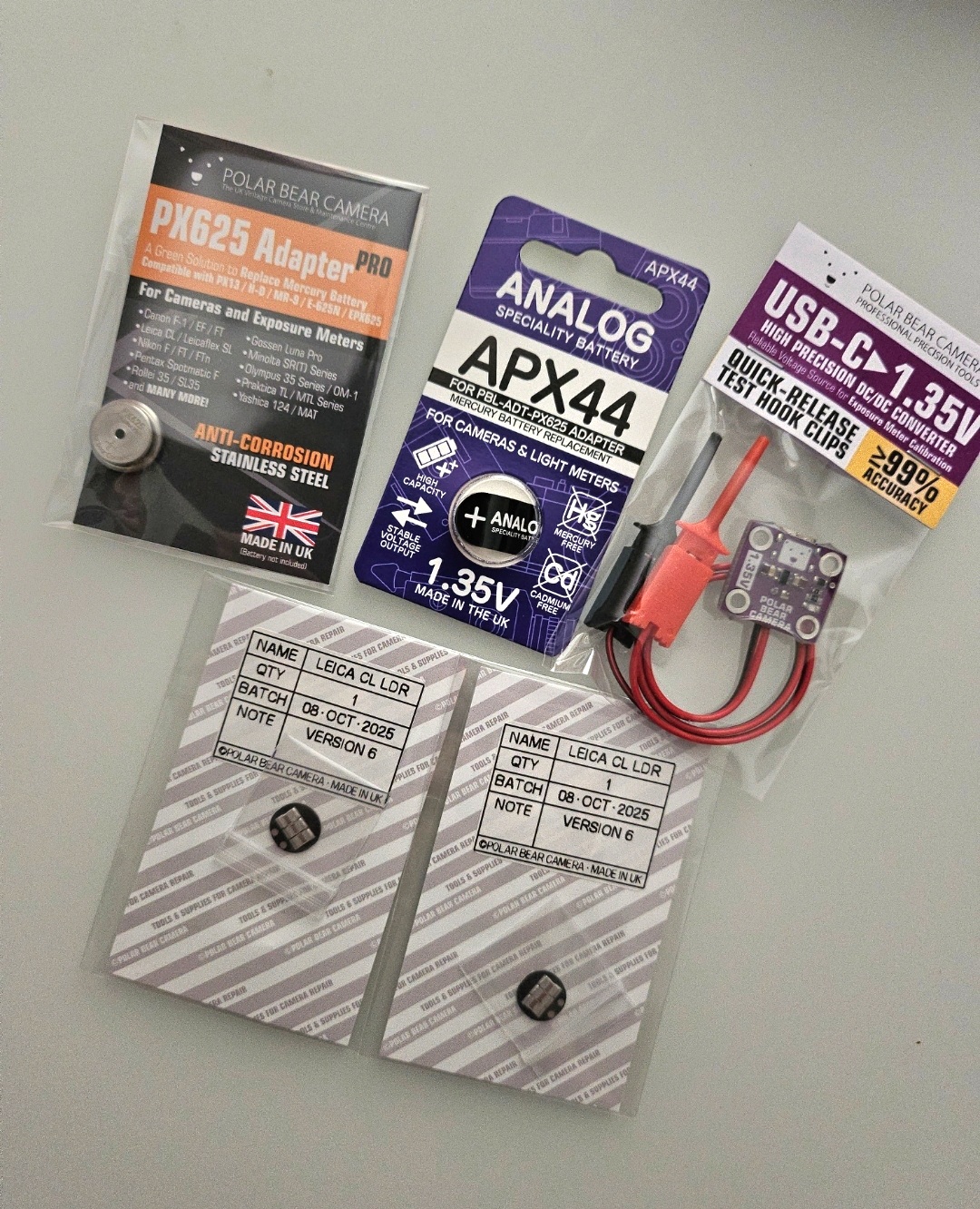
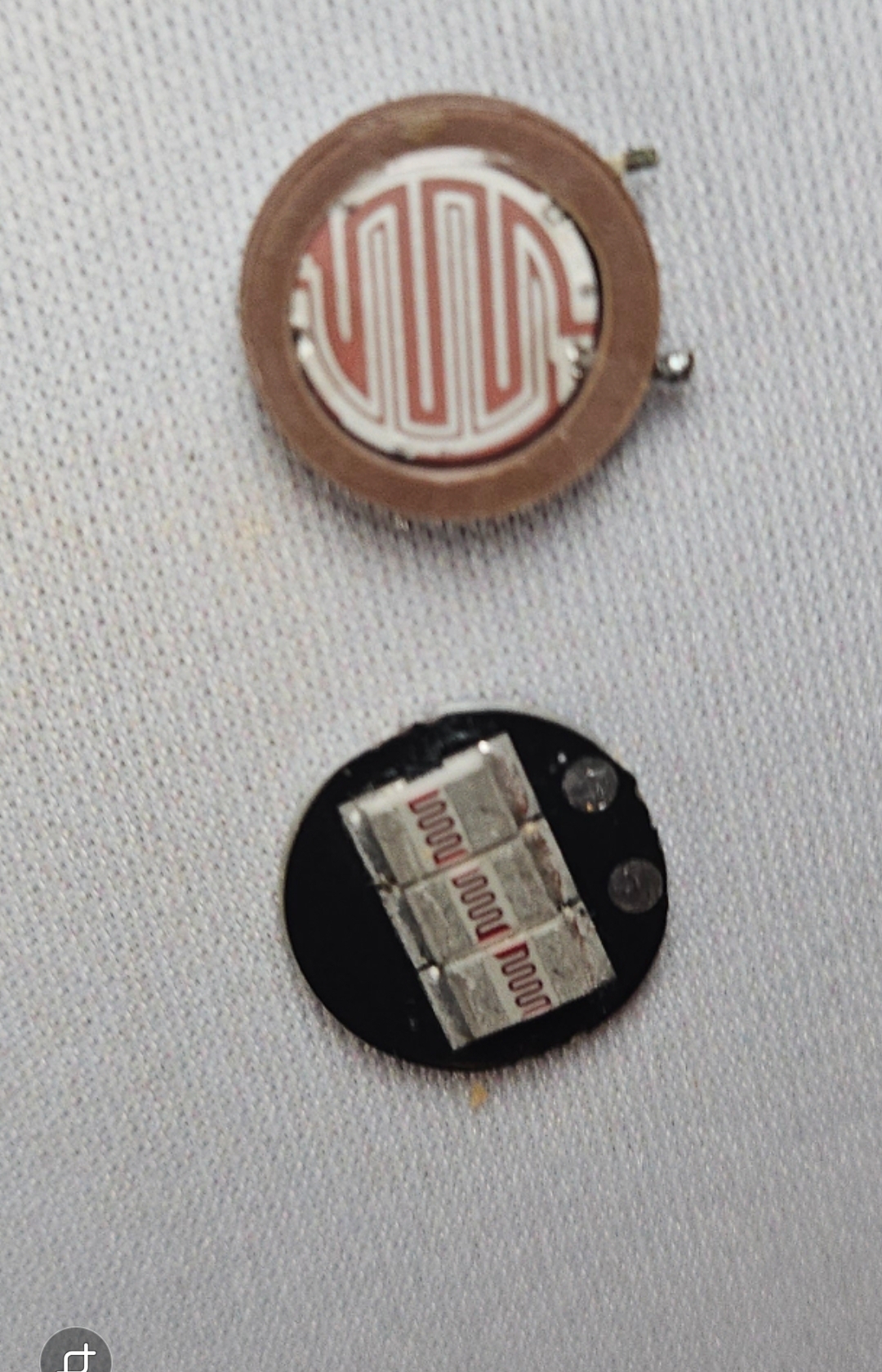
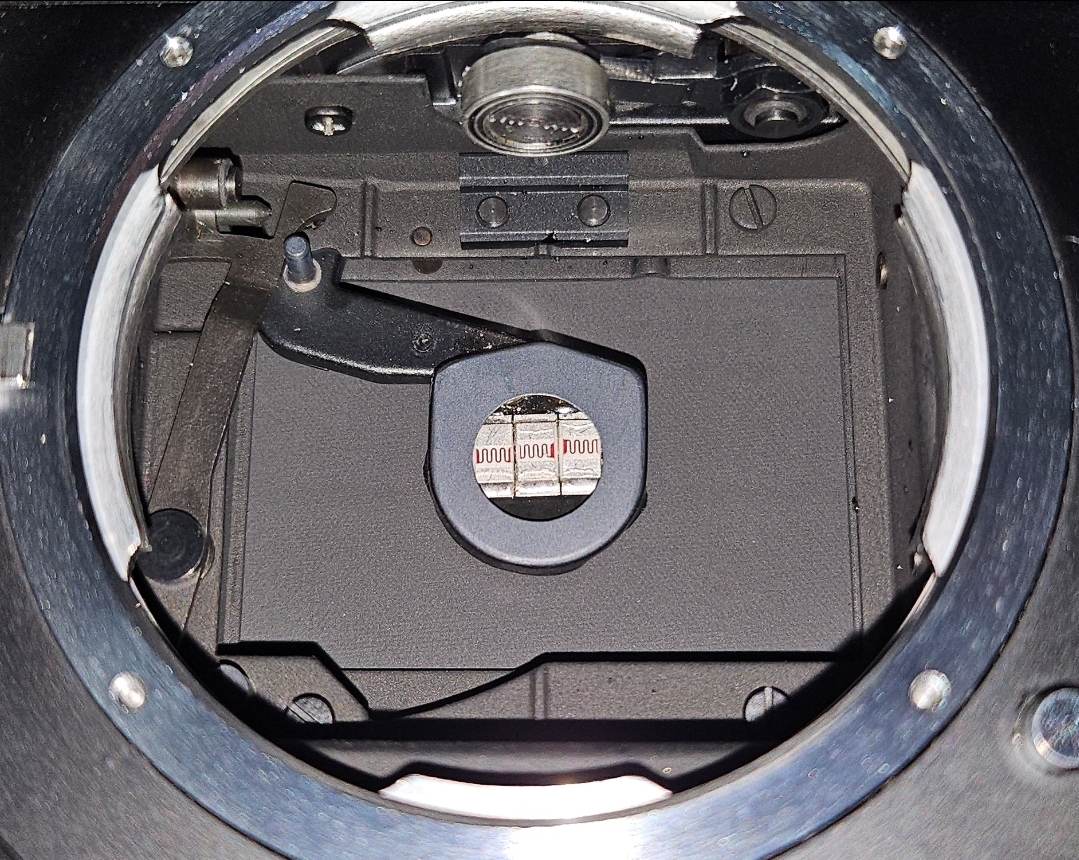
Has anyone done this yet? Looks pretty straight forward but wonder if there are any tips or tricks for removing the cell cover.
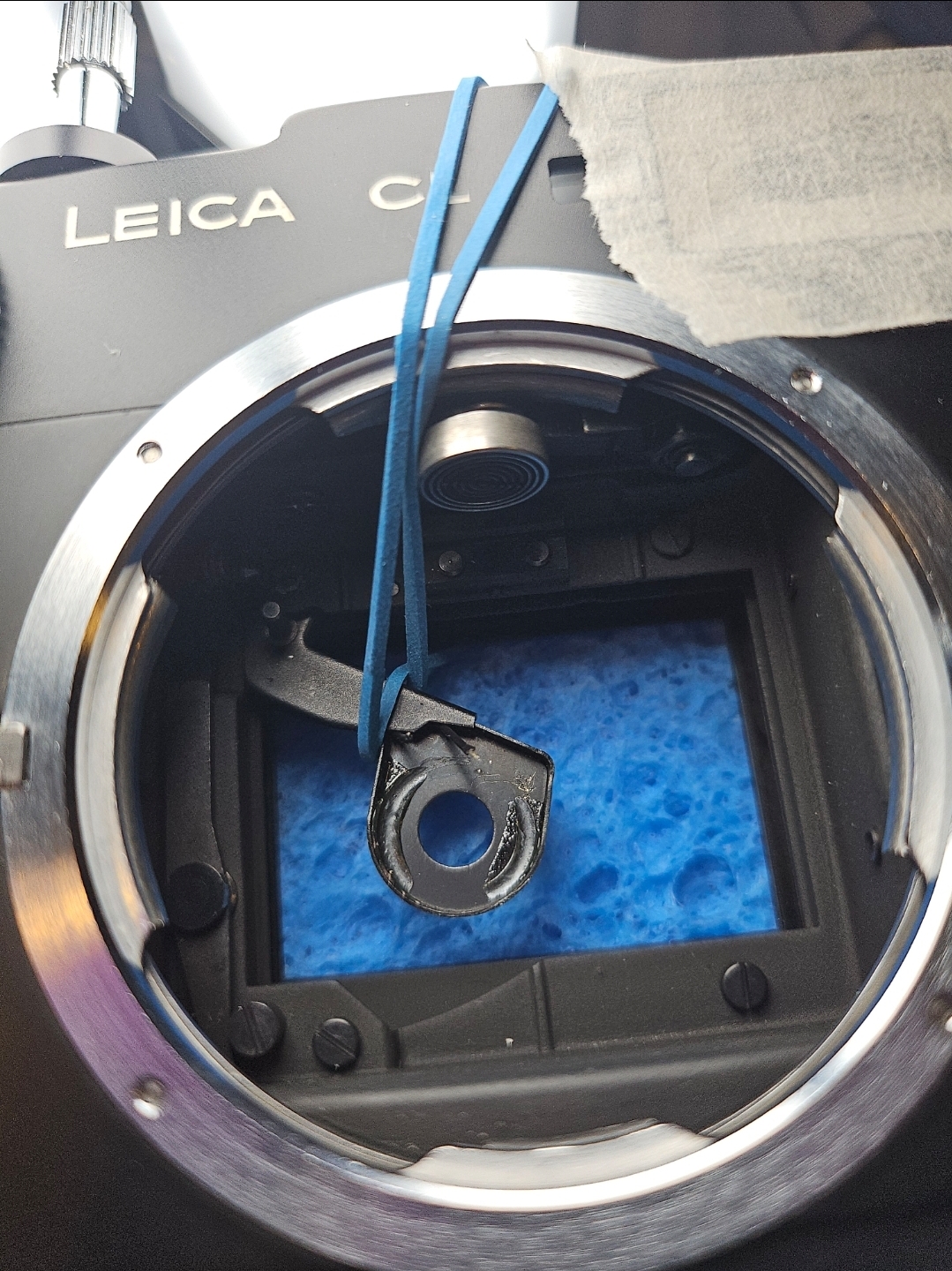
Looks to me you just use a shutter release cable lock in bulb mode to keep the shutter retracted, remove the pressure plate, and wedge something so the metering swing doesn't hide. Then remove the metering cover, desolder the metering cables from the original cell, solder the new one in (polarity doesnt matter), stick it in with double sided tape or non-solvent adhesive, then use the 4 calibration screws to fine tune if need be.
The cells arrive in a few days, so will update when I attempt it, but wondering if the metering cell cover or cell itself is just stuck on with adhesive.
Unrelated, I masked off all the framelines except the metering gauge on the right side to use this with my 28mm lens and it's pretty clean to use now.
The CLE I liked a lot but unfortunately when I sold it here it got stolen lol was a sign.
The kit came in today for the CL so I'll give it a shot if I can figure out how to swing out the metering cell without breaking it. It gets locked in the body after the shutter release is pressed down so I have to be careful.
EDIT: oh okay, it was pretty easy lol, after the shutter release is locked and the metering cell retracts, theres no tension on it again, so you can just pull it back out with any small tool then use something to wedge while you work on it.
I'm actually wondering if I can convert this USB C adapter tester to a permanent supply but maybe space restricted.
Well it works great and fairly easy but the soldering was like interstellar, definitely recommend using a loupe and a focused light.
Stuff needed:
-3M 9495LE double-sided tape
-One of those precision screwdrivers, both phillips and flathead
-Soldering machine, tin, and maybe desoldering tape
-Fine tweezers
-Good lights
-Fresh batteries, EDIT: USB 1.35v is much better after recalibrating BC and lower SS
-Masking tape and aluminum foil to protect from soldering if you're horrible at it like me
-precision small scissors or something to use expose more of the existing metering wire conductors if you miss snipping the existing meter with more room
-a reliable light meter, camera with accurate meter, or your phone
-locking shutter release
-two rubber bands and something like qtips or plastic wedge tool to holds the bands (really anything)
-multimeter if you wanna test the new cell (both of mine were good)
1. remove lens and lower frame
2. remove pressure plate assembly (just two screws but watch out cause its 4 pieces)
3. set shutter speed to bulb
4. fire shutter and lock up
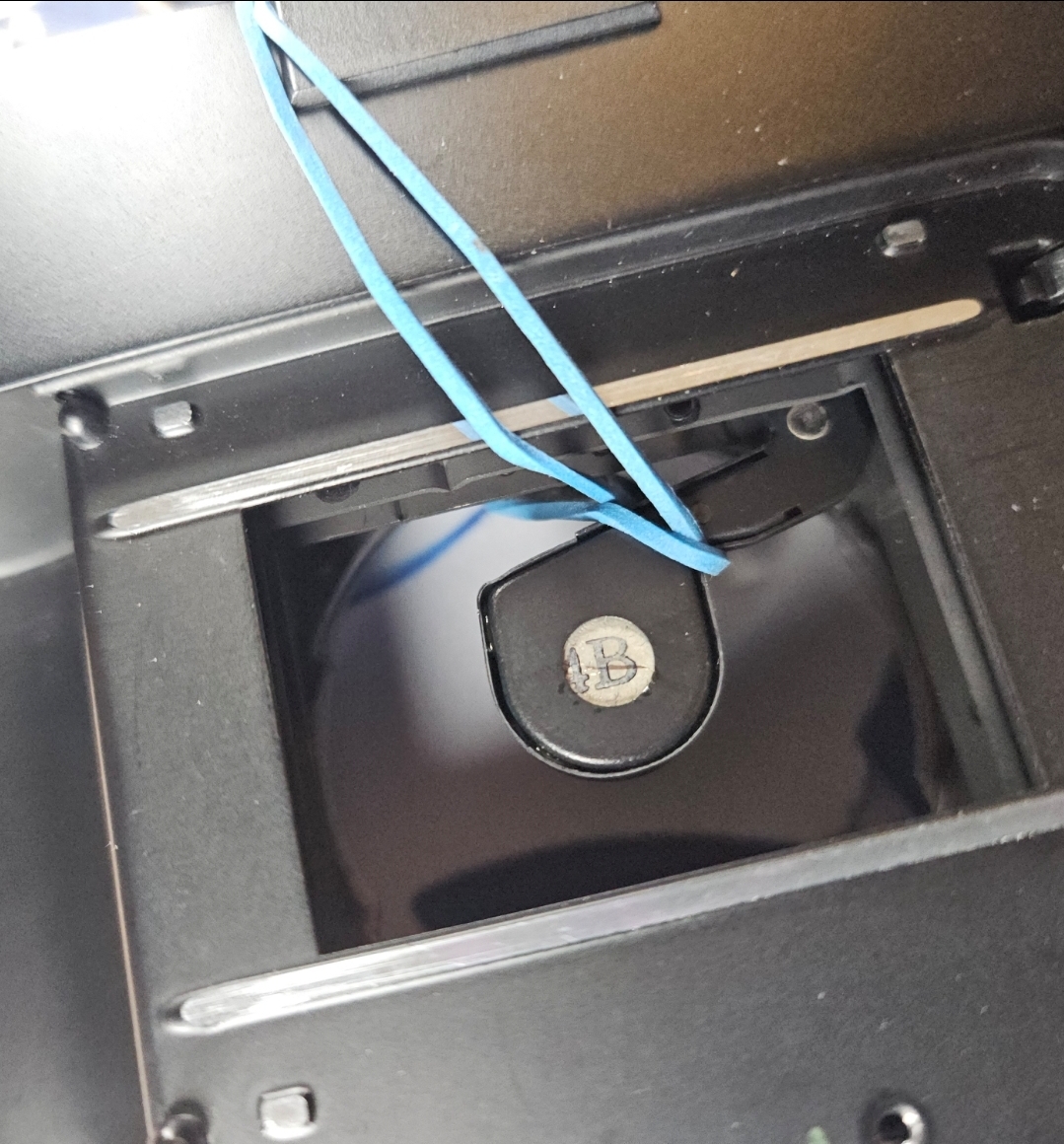
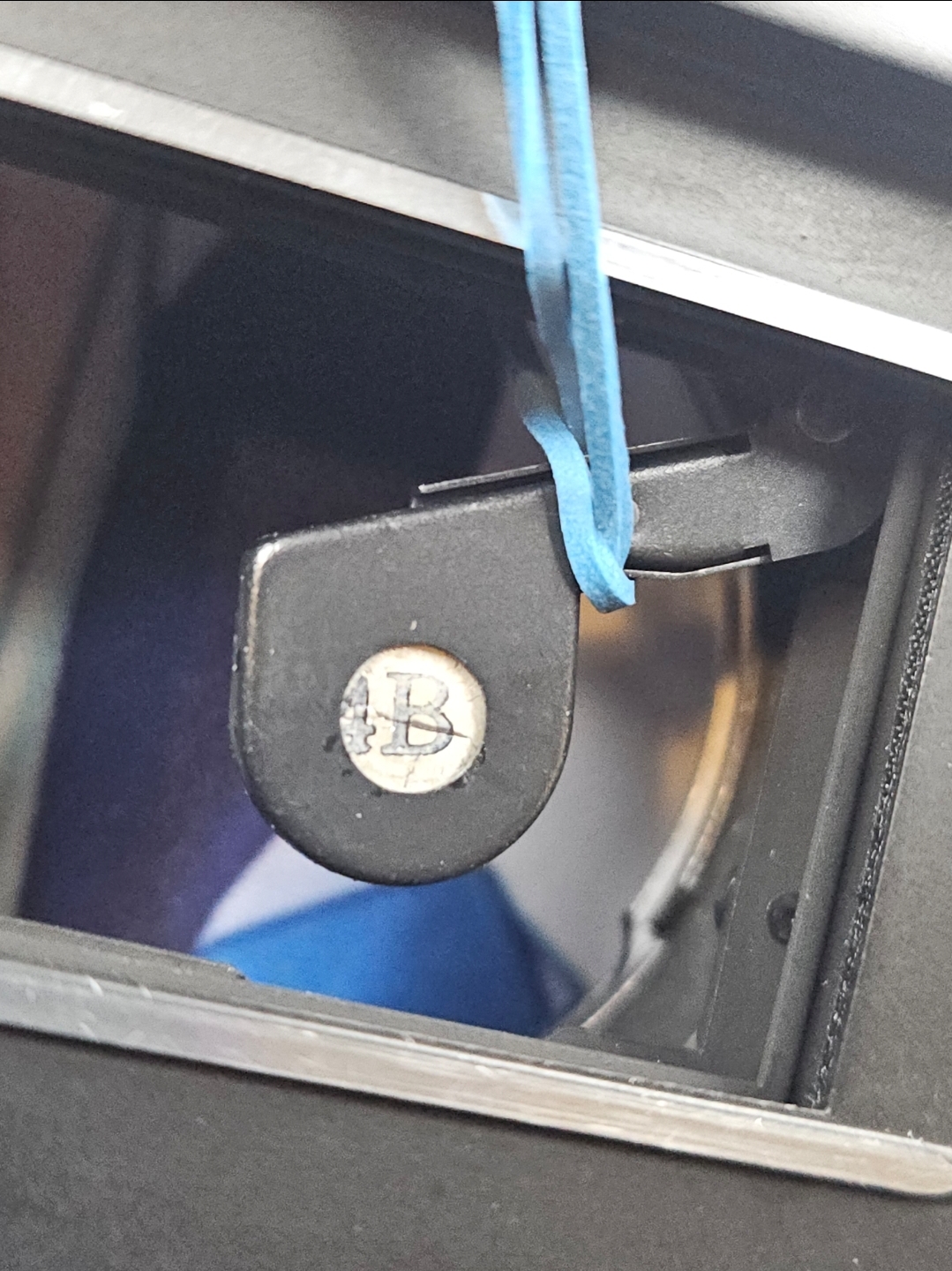
5. use tweezers or qtip to pull out the metering cell swing (it's not locked in at this point to anything)
6. use rubber bands to keep the swing out (i just put one hooking the swing front of cam and one back, then used a qtip or plastic thing to tourniquet the bands together and hold it in place for the ideal position)
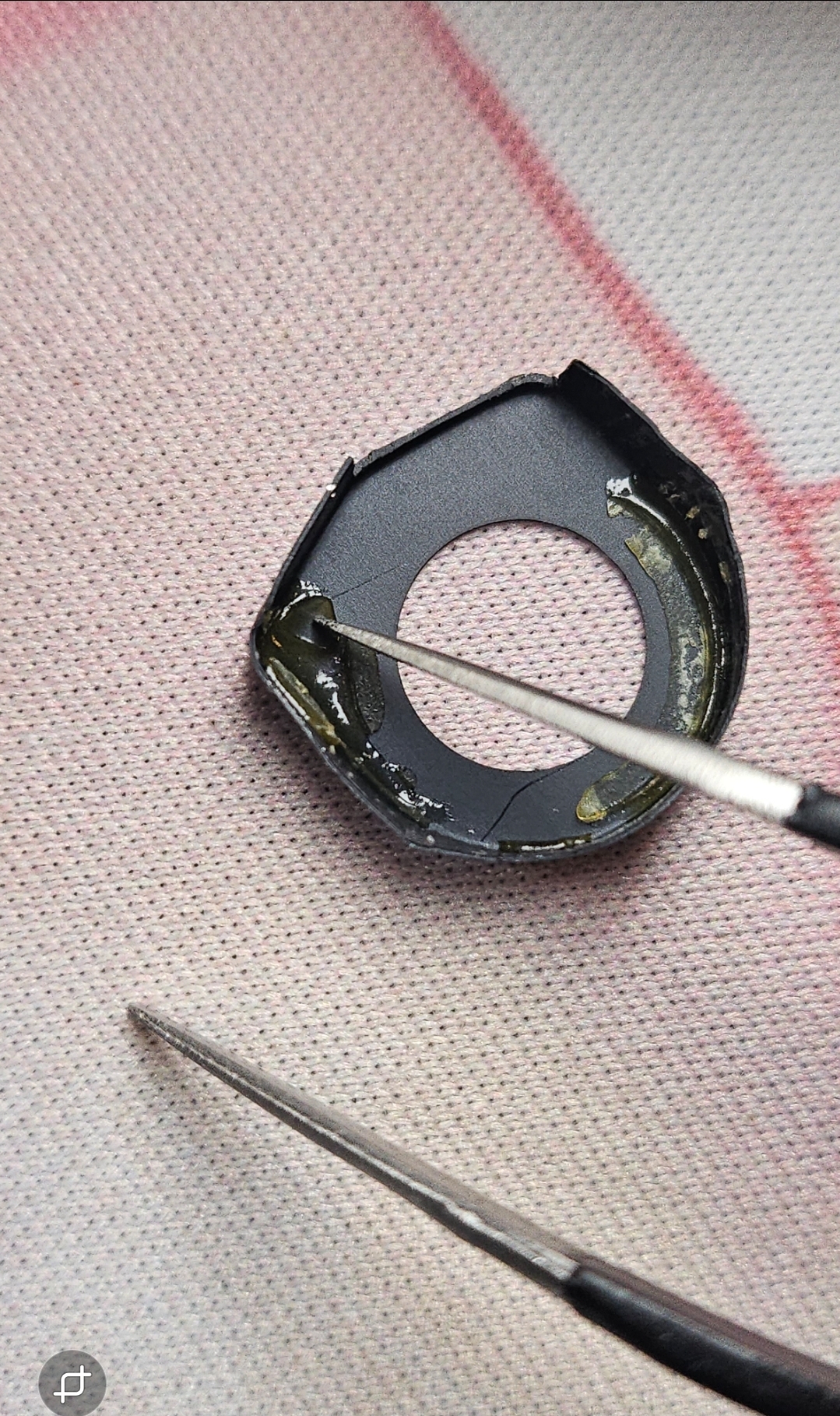
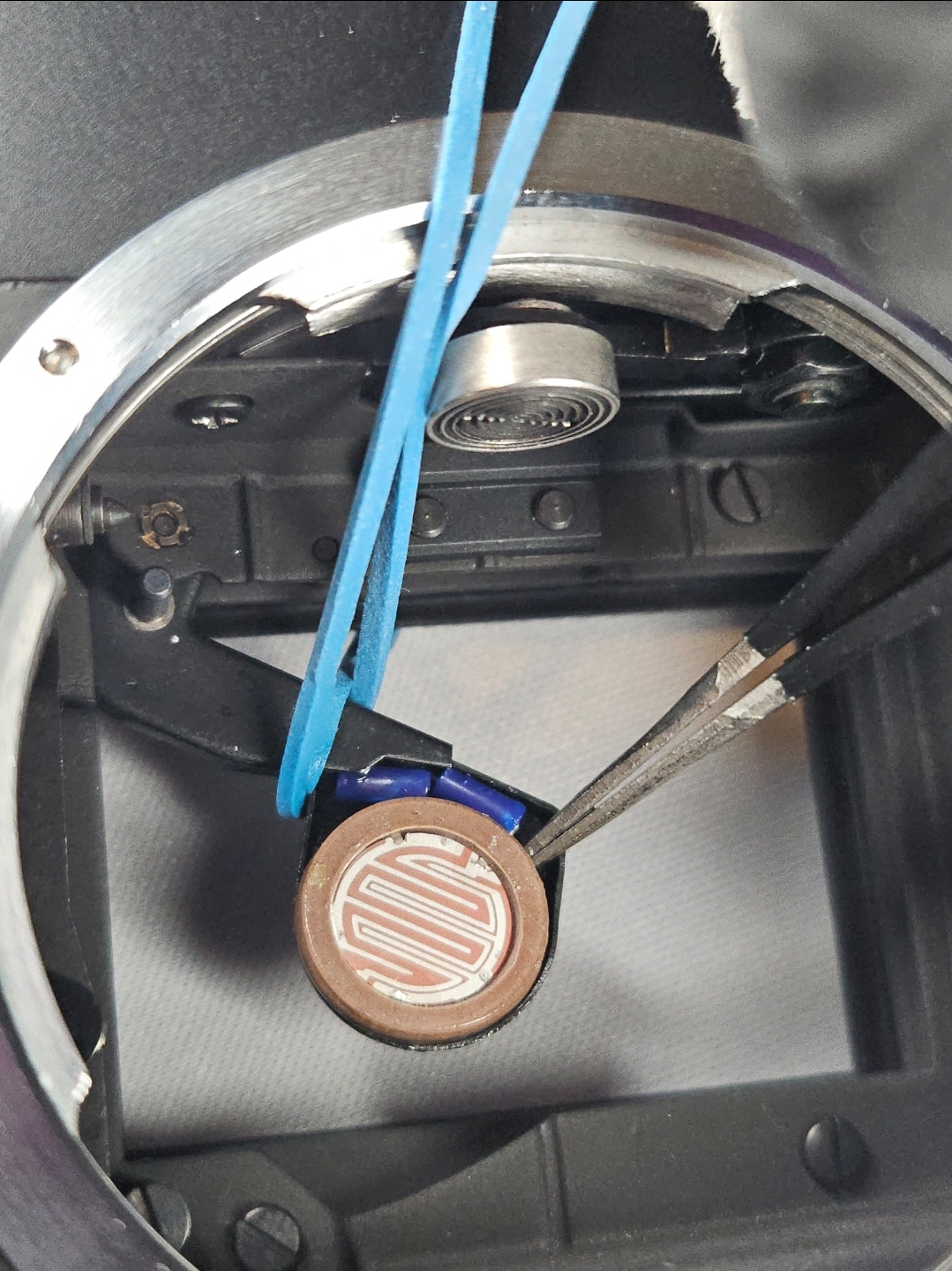
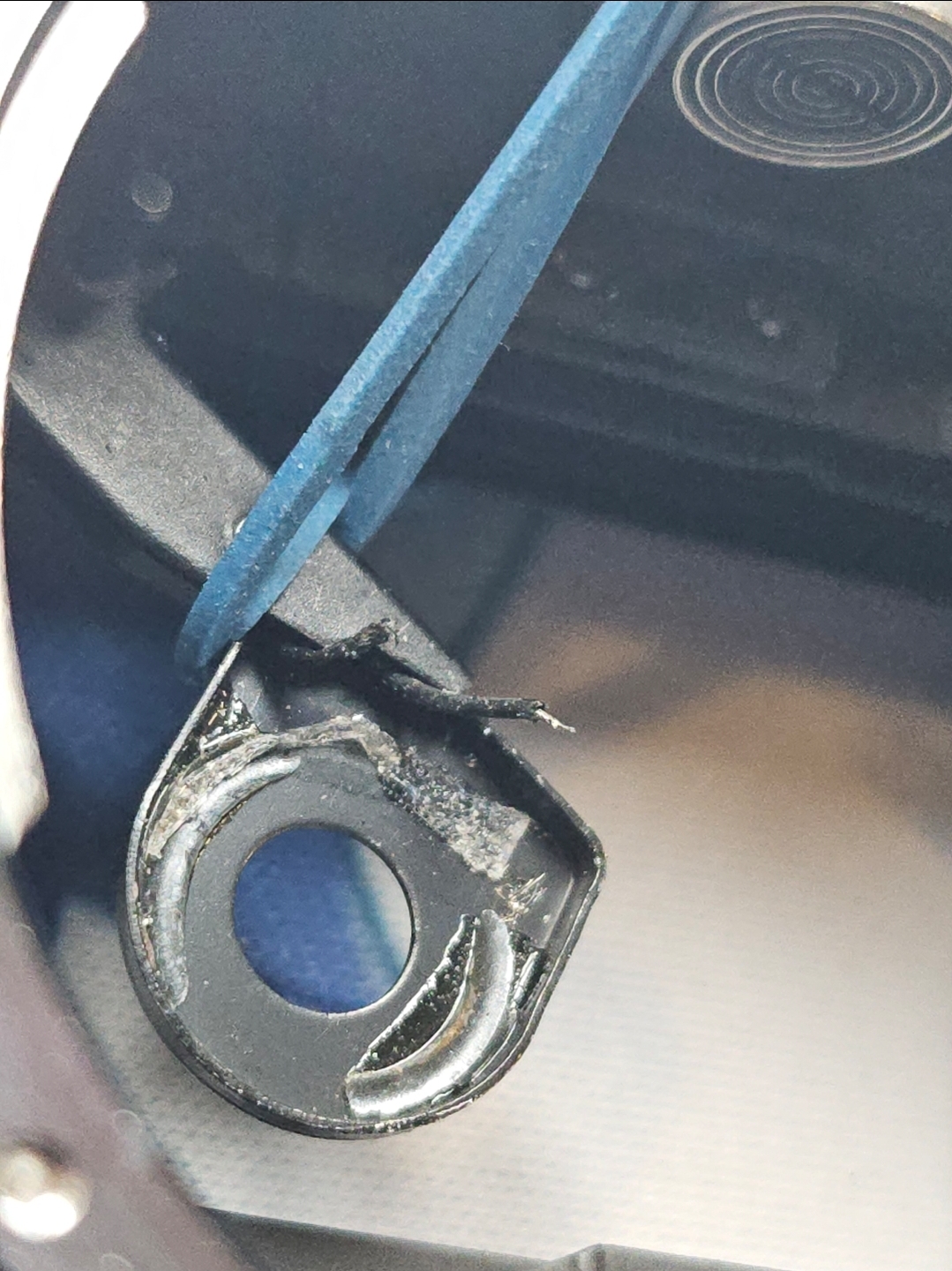
7. remove the metering cell cover. this is just lightly held on by a little glue and pretty easy to get off. you can use the fine tweezers to wedge the cover clamp outwards and it should pry off with some wiggling): https://rangefinderforum.com/threads/leica-cl-cellmeter-cover-removal.4817563
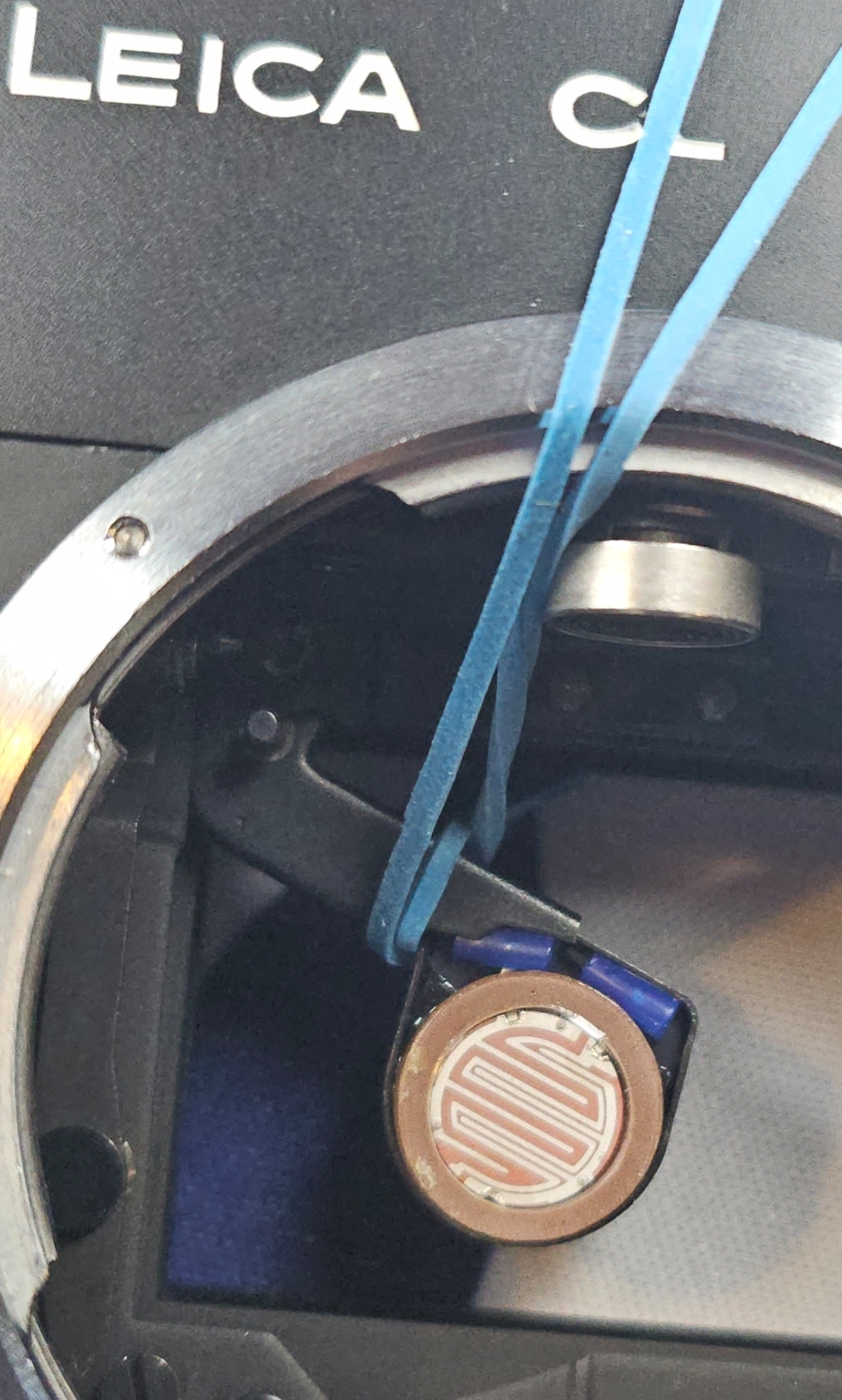
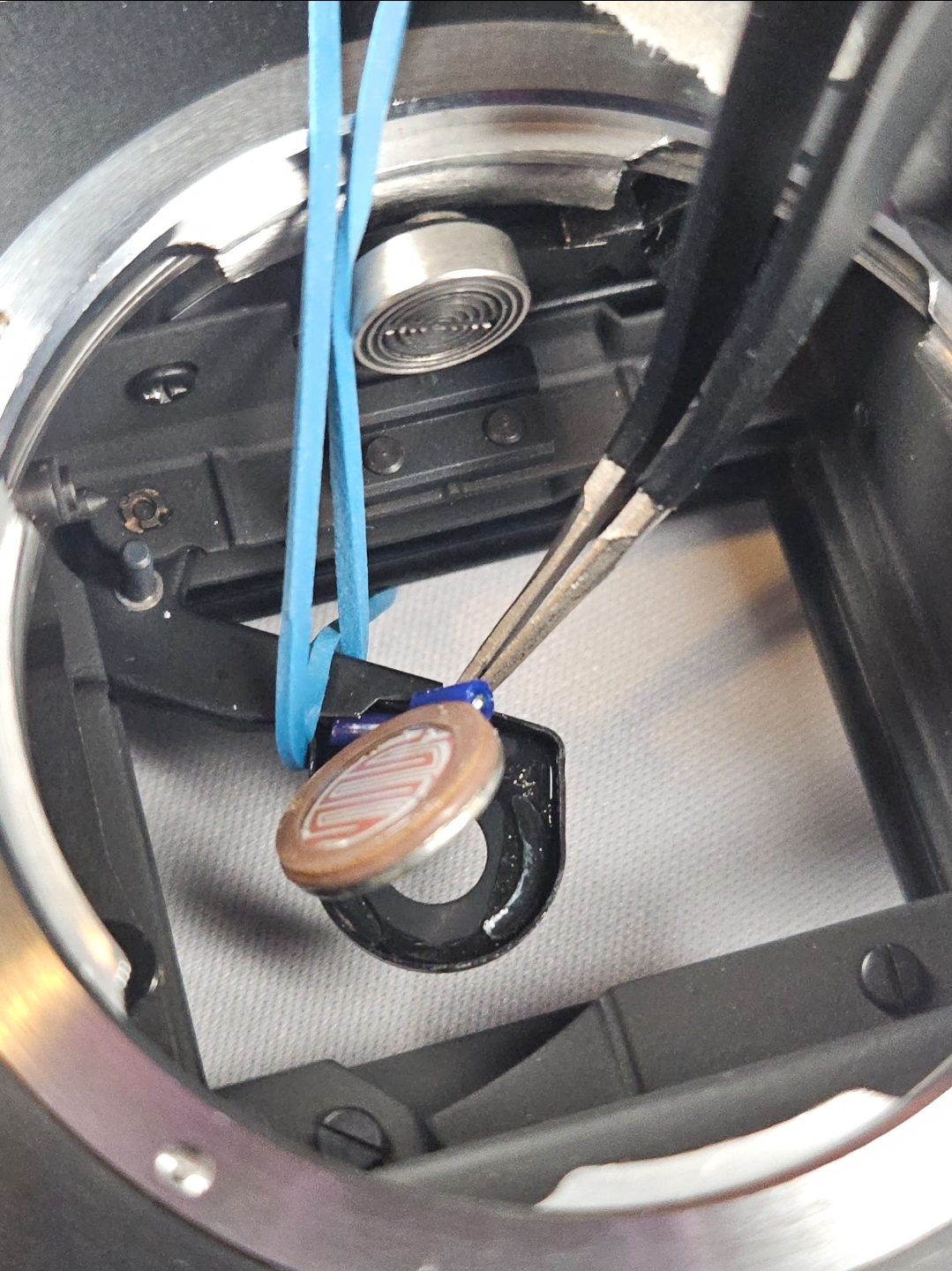
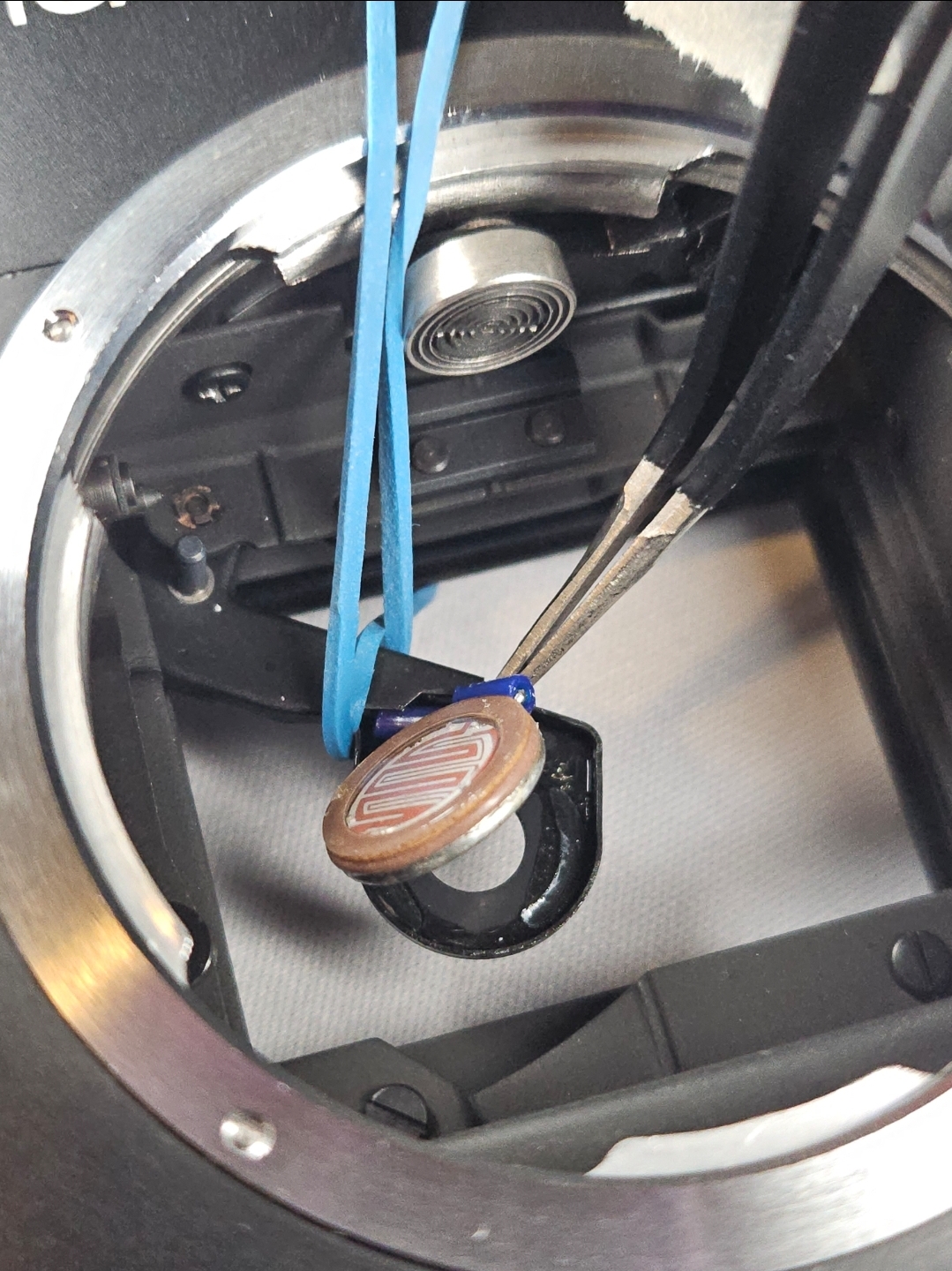
8. once the cover is off you can use the same tweezers to wiggle the original metering cell out, its just the same little glue, i dabbed some alcohol on it and it came off pretty easy. WARNING: you might snip off the cell from the wires so be careful here.
9. disconnect the wires from the metering cell, mine just kinda fell off lol, i discard the factory blue wire guards
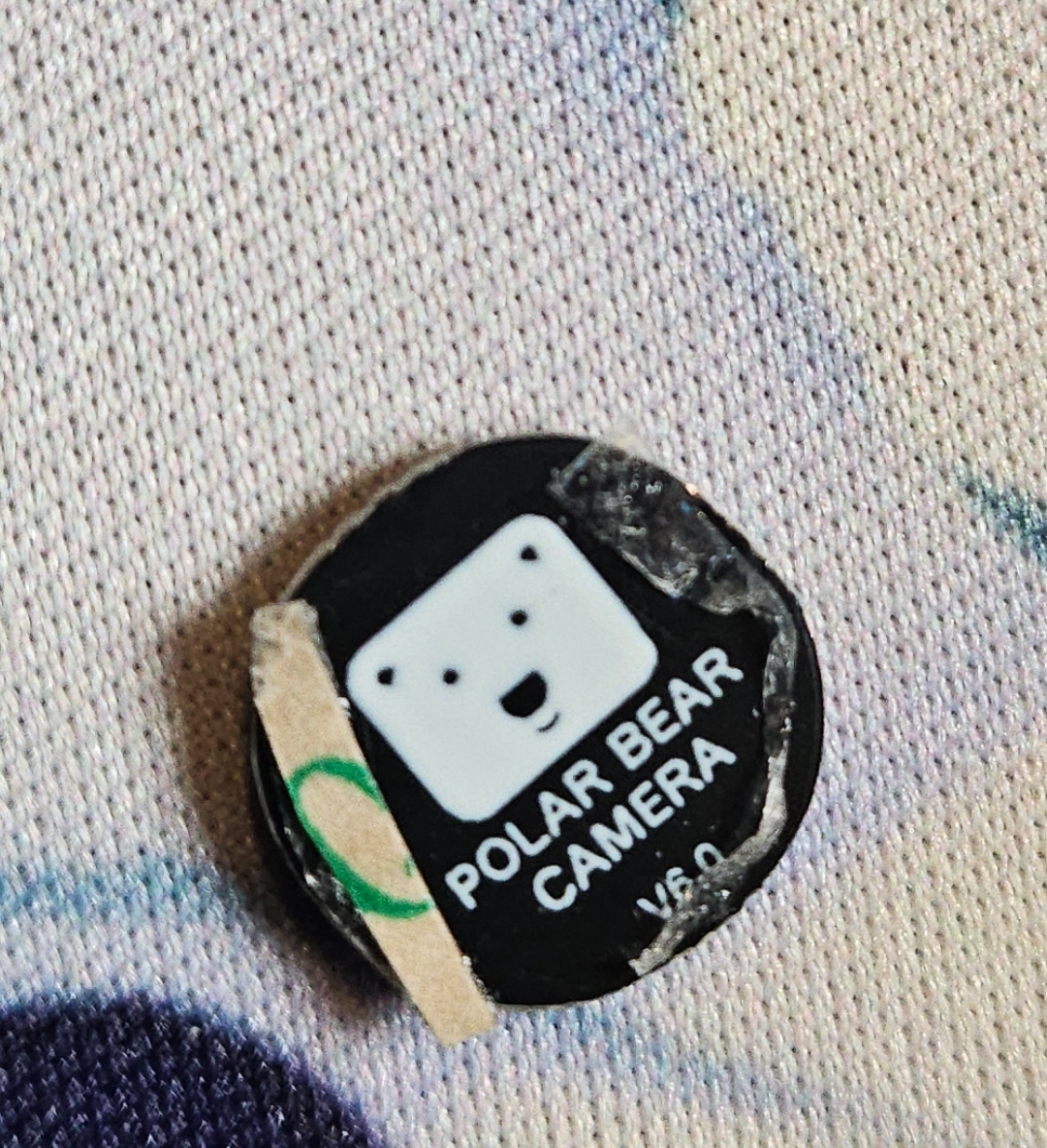
10. use the double sided 3M tape (just a little mimicking the glue placement is fine) stick the new cell (make sure it's facing the right way towards lens side) to stick new cell to swing
11. solder the wires to the new cell (none polarity but they are obviously different lengths anyway)
12. put a battery in and test to see if it works! doesn't have to be accurate cause that's for calibration part.
13. use 3M to stick cover back on
14. remove rubber bands and make sure the swing wasn't bent in one direction while installing cell and check functions
15. remove shutter release lock
16. flip camera over and remove three screws with the bottom frame off (they are different sizes so keep track, additionally the longest screw has a support spacer underneath the plate you'll remove so make sure not to lose that) refer to the youtube video for that
17. use thin flat tool like precision flathead to slowly pry off the metal foil thats glued on to access the metering calibration screws.
18. temp re-attach the bottom plate you removed to put a battery in (or you can use this: https://polarbearcamera.com/products/usb-c-to-1-35v-high-precision-dc-dc-converter-exposure-meter-calibration)
19. calibrate the meter for 1/1000, 1/30, 1/2 (https://rangefinderforum.com/threads/leica-minolta-cl-meter-adjustment-notes.34204/) pretty easy, but optimize it for your priority usage, I'm using this CL for day time 100/200 ASA films, so my 1/1000 was more important than the sub 1/60 speeds. note: the 4th screw is for BC and doesnt affect calibration. additionally the first 3 screws have different directions for adjusting so keep that in mind.
20. once you're satisfied with the calibration, remove the base plate again if you used battery
21. use 3M tape and stick on the cover foil, re attach base plate, making sure you align the support spacer for the longest screw in
22. re-attach pressure plate assembly (easiest way is to put plate first then the rest over the hinge area)
23. test all functions again to make sure everything is good
the new cell is pretty accurate and does great in bright light and indoor low light. Using the 1.35v usb adapt power source it's accurate through the entire ss range including the unrelated BC check.
I have my dad's old Leica CL and used the battery adapters to get the meter working again, but found the reading was about 2 stops off. My "fix" was adjusting the film speed to compensate, though I don't have a lot of confidence in the consistency of that approach. I thought it was an issue with the adapter and its voltage, but maybe the meter itself is failing.
I haven't spent a lot of time on it, as I don't really love using the CL. I wanted to use this camera with my Voigtlander 40/1.2 since it's set up for a 40mm, but the focus accuracy is a challenge with the small base length and tiny viewfinder.
grahamgibson wrote:
Nice write-up--saving this for later.
I have my dad's old Leica CL and used the battery adapters to get the meter working again, but found the reading was about 2 stops off. My "fix" was adjusting the film speed to compensate, though I don't have a lot of confidence in the consistency of that approach. I thought it was an issue with the adapter and its voltage, but maybe the meter itself is failing.
I haven't spent a lot of time on it, as I don't really love using the CL. I wanted to use this camera with my Voigtlander 40/1.2 since it's set up for a 40mm, but the focus accuracy is a challenge with the small base length and tiny viewfinder. ...Show more →
If the meter stills reads from bright to dark but just off, you might be able to get away with just using the calibration screws (very easy to access). Then just bounce a bright continuous light off the wall to use as your source. Just make sure to use a fresh battery. Usually these meters usually need recalibration anyway once in a while. I probably should have done this with the original meter first to see drift baseline but wanted to take it out of the equation since I'm traveling with it soon.
I did another retune using the 1.35v adapter power source and the big wall bounce light and it's pretty accurate now.
I was concerned about the focus accuracy (and more sensitivity to RF drift due to that), so it's designated to use with the 28 1.5 Nokton. I masked off all the framelines except the meter and it's quite clean with for me accurate framing. The smaller rangefinder patch acts a nice metering target as well. I like this solution as it's also really simple to explain to someone how to use it with less clutter (I'll be using this to teach people).
Eventually I'll see if I can make a custom mask replacement for 28mm, but I don't think it's necessary.
Thanks for this excellent write up and photos, about to order one of these replacement cells.
grahamgibson wrote:
I wanted to use this camera with my Voigtlander 40/1.2 since it's set up for a 40mm, but the focus accuracy is a challenge with the small base length and tiny viewfinder.
The 40/1.2 is within the margin of the CL's baselength, no problem. RF Accuracy Chart here.