p.2 #1 · Small, compact, relatively fast, high IQ (f2/2.5) 28mm lens in the same line as the 40mm f2.5 G.
chez wrote:
idiots.
wolfloid wrote:
What a friendly place this is.
Oh yes!😄
Apr 04, 2026 at 07:13 AM
Steve Spencer Offline • • • • • • • Upload & Sell: On
p.2 #2 · Small, compact, relatively fast, high IQ (f2/2.5) 28mm lens in the same line as the 40mm f2.5 G.
vincent.w.lee wrote:
Could be true, using the iPhone as an example it has only gotten wider over the years going from a 37mm in 2007-2009 to shifting around in the 29-35mm range between 2010 - 2015 to most recently stabilizing:
Personally going to 24 was unwelcome for me, especially with the minimum focus distance and maximum magnification getting worse (0.09x -> 0.07x -> 0.05x over the last three).
---
Back on the topic of 28's. Maybe Viltrox can do something in this space as a pro 1.4 and compact 1.8/2 option would be great. Nikon had an amazing 28 F1.4 (F mount / DSLR) that was 645g. The Sigma Art is about the same optically but is huge.
As a 35 lover, I think a 28 is more versatile on a high MP body. I'd be down to try out a 30-32 too ...Show more →
Part of going wider with phones is that higher level phones, now often have more than one lens. In a two lens setup going with a wider lens and a longer lens makes sense. For example, the iPhone 17 as an example now has a 13mm equivalent, and a 26mm equivalent (and this lens is the main one with a better sensor).
So phones continue to evolve and if they adopt a 3 lens set up, I think the middle lens will often be pretty close to 28mm, but Apple didn't do that with the iPhone 17 Pro that does have 3 lenses. That has a 13mm, 24mm, and 100mm equivalent, but it seems there the 100mm equivalent primarily achieves the reach by using a very small sensor for that lens. If they use a bigger sensor, as I think would make sense, something like a 13mm, 28mm, and 56mm would make sense. They will likely achieve the 12mm by using a bigger sensor, and the 56mm by using a smaller sensor, but we will see as phones continue to evolve. If they add just a 1.5X crop to each of these modes they get 13mm, 20mm, 28mm, 42mm, 56mm, and 84mm equivalents. I expect 3 lens phones will be close to something like that in the future.
p.2 #3 · Small, compact, relatively fast, high IQ (f2/2.5) 28mm lens in the same line as the 40mm f2.5 G.
I think the real answer is that 28mm is not different enough from 24mm for most companies to justify making a dedicated lens. Almost every brand already offers several 24mm options, and the focal lengths are close enough that demand for a separate 28mm is limited. From a business perspective, it makes sense that manufacturers do not prioritize a focal length with so little differentiation.
At the same time, the mirrorless market is becoming crowded, especially on Sony E mount, and companies have started releasing unconventional zoom ranges such as 35 to 100, 50 to 150, and 16 to 25. With that trend toward standing out, it would not be surprising if someone eventually produces a modern 28mm simply to offer something unique in a saturated lineup.
In the end, it is all speculation. Nobody really knows what direction lens makers will take next
p.2 #4 · Small, compact, relatively fast, high IQ (f2/2.5) 28mm lens in the same line as the 40mm f2.5 G.
"the Nikkor 28mm f/2.8 "muffin" at 155g and only 43mm long. I have the Nikon Zf permanently mounted on it."
The perfect size!
Apr 04, 2026 at 09:54 AM
Steve Spencer Offline • • • • • • • Upload & Sell: On
p.2 #5 · Small, compact, relatively fast, high IQ (f2/2.5) 28mm lens in the same line as the 40mm f2.5 G.
ramesesthe2nd wrote:
I think the real answer is that 28mm is not different enough from 24mm for most companies to justify making a dedicated lens. Almost every brand already offers several 24mm options, and the focal lengths are close enough that demand for a separate 28mm is limited. From a business perspective, it makes sense that manufacturers do not prioritize a focal length with so little differentiation.
At the same time, the mirrorless market is becoming crowded, especially on Sony E mount, and companies have started releasing unconventional zoom ranges such as 35 to 100, 50 to 150, and 16 to 25. With that trend toward standing out, it would not be surprising if someone eventually produces a modern 28mm simply to offer something unique in a saturated lineup.
In the end, it is all speculation. Nobody really knows what direction lens makers will take next...Show more →
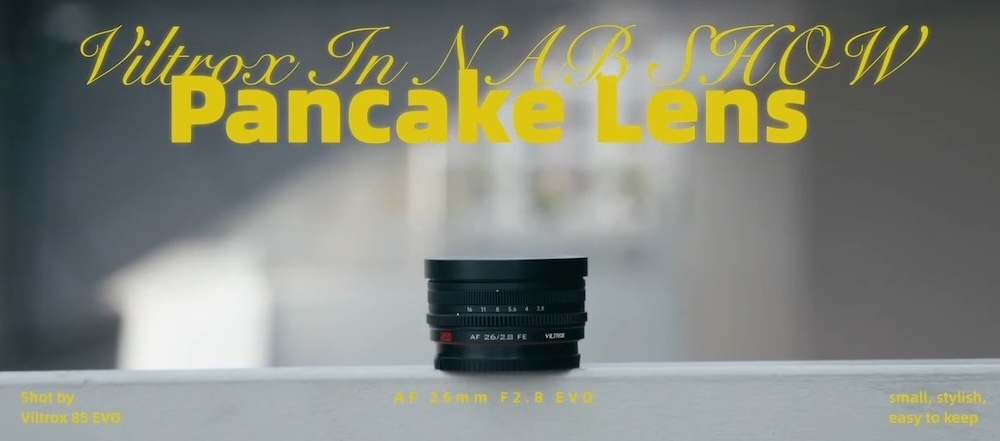
Actually, Sony offers a 28mm f/2, and both Nikon and Canon offer a 28mm f/2.8 in mirrorless mounts. Third party lens makers Sigma, Voigtlander, Viltrox, and others also make 28mm lenses. Manufacturers do make lenses at this focal length. They just don't make the small 28mm f/2 or f/2.5 lens the OP would like to see.
That said, I think you are right that we see less 28mm lenses because there are even more 24mm lenses and the small f/2 or f/2.5 lenses do exist at 24mm and that may be why they don't make them at 28mm. It is really the niche of the small lens not the focal length itself that hasn't been done yet.
p.2 #6 · Small, compact, relatively fast, high IQ (f2/2.5) 28mm lens in the same line as the 40mm f2.5 G.
I never thought 28 and 24 are close. They always seemed pretty different to me even when I was on cropped body. 24 on cropped felt not wide enough, but it doesn't emphasize a subject in the shot when you want to get close. 28 felt like it was more intimate and easier to use as a daily lens, hence one of my favorite daily walkaround lens when I was on Minolta/Alpha cropped camera was Maxxum 28/f2.
Once I moved to full frame though the 24 became much easier to like. Its much wider feeling, and feels easier to use than a 20 because of less fear of distortion when you are close to your subject.
28 is still more intimate because again its less fear of distortion but you can include more of the scene than 35. But when I first got the FE 28/2 I was not happy with how that lens performed optically even compare to my old Maxxum lens. Pretty happy with the new MF Voigtlander 28 APO though.
p.2 #7 · Small, compact, relatively fast, high IQ (f2/2.5) 28mm lens in the same line as the 40mm f2.5 G.
You can say 28mm is the king of compromise - very good for almost everything, a benevolent ruler. The dearth of them in the AF sphere is partly due to the unwillingness of mainstream outfits to show users how much better a prime can be compared to the extreme short end of their overstretched mid-zooms, which furthermore are their bread and butter.
Not many f1.4 zooms in the 24-70mm class, however, so users of fast 28s can produce images not otherwise obtainable. They will become very popular, I feel. Cited by many filmmakers as the "secret ingredient" for a traditional film look, 28s provide a "just off-center" perspective.
It's made even better if your 28mm has fine bokeh and fade character, such that, if you are forced to put more distance from the camera, a little cropping is viable. Cropping a 24 merely gets you to where you arguably should have been in the first place.
24-25mm is popular in light cine ranges, as a step between 18mm and 35mm within six-lens ranges. This will have the unintended consequence of pushing users into using the 35mm very often, as they lack the best street FL and its special longitudinal rendering qualities.
24s may be seen as kind of interloper, a thief stealing thunder from 28mm. There are none in the Voigtlander VM range, even Leica's Summilux 24mm is the range's 'invisible child'. Subjects just seem to get lost in the surrounding jumble of 24s, so they are where they should be - mostly left right out.
p.2 #10 · Small, compact, relatively fast, high IQ (f2/2.5) 28mm lens in the same line as the 40mm f2.5 G.
Not to get into a topic that might be considered contested, my impression is that optically for a full frame image circle, there are some focal lengths that take more work to design than others based on the light paths and characteristics of common formulas for a specific image circle and focal distance. I've studied a lot of lens designs and techniques, and I've come to the conclusion that those mid wides are actually among the hardest to design well because a designer can't necessarily avail themselves fully of the methods that improve wide-ultra-wides, nor can they lean fully on classical "normal" or telephoto design techniques. It seems to always require some additional effort, whether that's utilizing piles of special glass, complex cemented triplets and asphericals, or some other such finesse.
In a similar way, there are some formulas which seem trivial to realize effectively by virtue of the angles created in projecting the 35mm image, my examples would be something like 135mm lenses, or even 65mm lenses, most of which are quite good.
I grant you that this is a massive oversimplification, but as a manufacturer, if 28mm is in some ways one of the most difficult and expensive designs to produce vs. the more popular 35mm, which might be easier as a result of its slightly closer-to-normal focal length, or even vs. the 24mm, which could be simpler as a result of being closer to wide, I would simply choose to omit it from the lineup.
p.2 #13 · Small, compact, relatively fast, high IQ (f2/2.5) 28mm lens in the same line as the 40mm f2.5 G.
vincent.w.lee wrote:
Maybe Viltrox can do something in this space as a pro 1.4 and compact 1.8/2 option would be great.
Viltrox already makes a very good 28/1.8 lens. However, it seems they conceived of it as a video lens, and only gave it a non-clickable aperture ring. Very silly. But it can be put in A mode and controlled with clicks via the camera dial. I hope Viltrox makes a version II of the lens ... with a proper clickable aperture ring.