jtra wrote:
Or I could use mechanical shutter (and even increase ISO to 400 for comparable DR) but risk shaking the lens. There are no do-overs in Moon alignment photography.
I have tested a7rv internal intervalometer with mechanical shutter (it can be set in intervalometer menu, but it defaults to electronic) on my two tripods. The travel tripod Gitzo GK100T (similar to GT1545+GH1382TQD) and heavy Gitzo GT4543LS+Markins Q20i. The travel tripod was without center column extended the heavy tripod was set to same height as travel. With 1/5s exposure and 1s interval a lot of pictures in sequence showed it was shaky at 800mm on 400-800mm (OSS off) on the travel tripod, but it was good on the heavy one. The electronic shutter was good on both. So it can work for timelapse in mechanical as long as heavy tripod is used.
jtra wrote:
I have tested a7rv internal intervalometer with mechanical shutter (it can be set in intervalometer menu, but it defaults to electronic) on my two tripods. The travel tripod Gitzo GK100T (similar to GT1545+GH1382TQD) and heavy Gitzo GT4543LS+Markins Q20i. The travel tripod was without center column extended the heavy tripod was set to same height as travel. With 1/5s exposure and 1s interval a lot of pictures in sequence showed it was shaky at 800mm on 400-800mm (OSS off) on the travel tripod, but it was good on the heavy one. The electronic shutter was good on both. So it can work for timelapse in mechanical as long as heavy tripod is used....Show more →
I assume you had EFCS enabled for the mechanical shutter shots?
You might want to test the slowest one, but Sony bodies are not capable of CFe 4.0 (one lane of PCI 4.0) speeds so over 900MB/sec. probably is no practical difference. They revert to CFe 2.0 speeds (one lane of PCI 3.0) instead. Theoretically a CFe 4.0 camera could provide a larger continuous burst and faster buffer clearance if the whole pipeline could keep up.
Note that those silver cards are VPG 200, so are not truly as sustained as the Gold Type A VPG 400 cards.
jtra wrote:
I have tested a7rv internal intervalometer with mechanical shutter (it can be set in intervalometer menu, but it defaults to electronic) on my two tripods. The travel tripod Gitzo GK100T (similar to GT1545+GH1382TQD) and heavy Gitzo GT4543LS+Markins Q20i. The travel tripod was without center column extended the heavy tripod was set to same height as travel. With 1/5s exposure and 1s interval a lot of pictures in sequence showed it was shaky at 800mm on 400-800mm (OSS off) on the travel tripod, but it was good on the heavy one. The electronic shutter was good on both. So it can work for timelapse in mechanical as long as heavy tripod is used....Show more →
Tests are definitely appreciated, but it takes more than a second between shots for the tripod to settle back down. I’m not saying it will change anything, but it could.
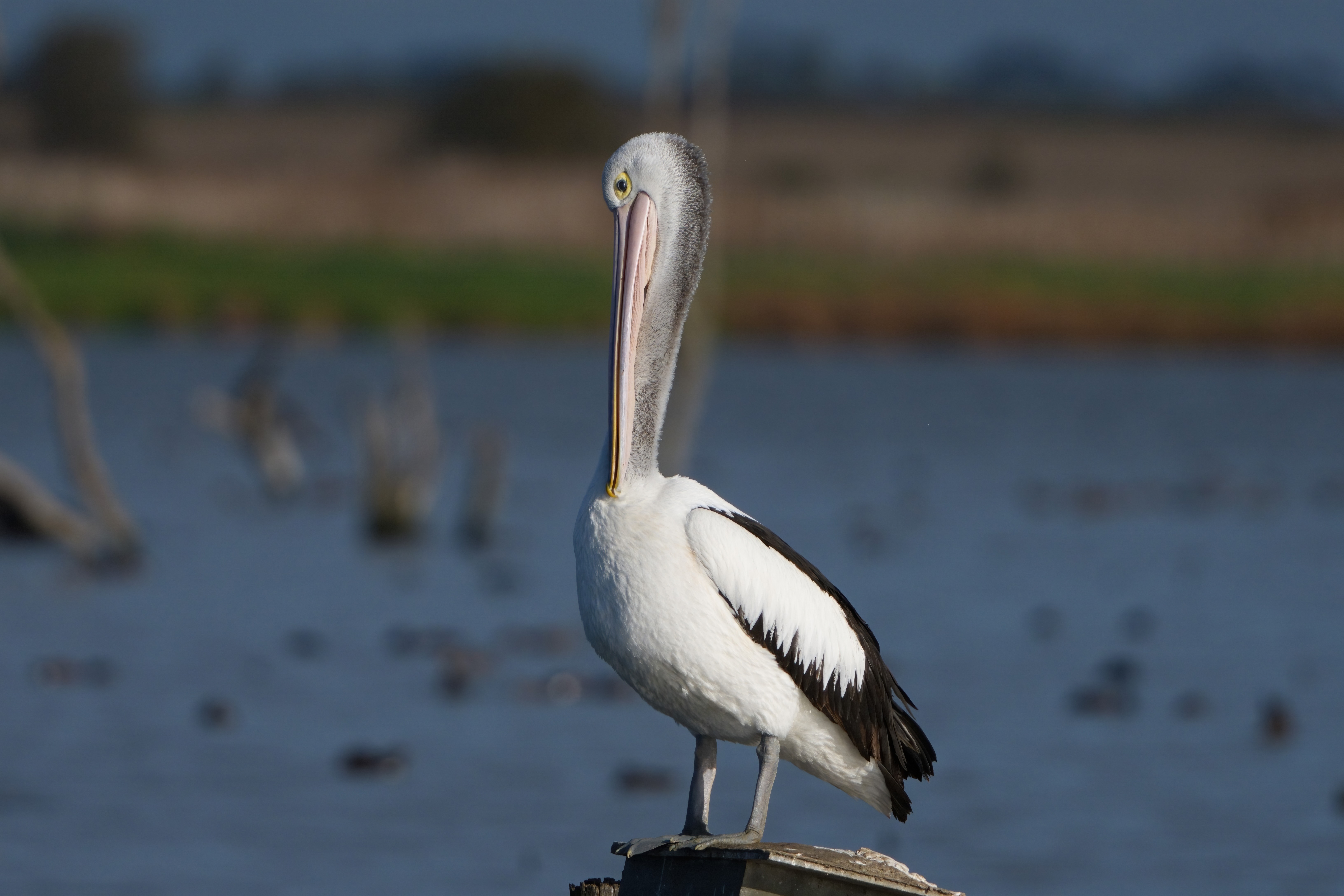
My first outing with the A7RVI. All shots were shot at lossy compressed with the Sony FE 400-800. I bought the A7RVI to compliment my A1. I was very impressed with the bird eye AF on the A7RVI and its tracking ability. They both exceeded my expectations.
aman74 wrote:
Tests are definitely appreciated, but it takes more than a second between shots for the tripod to settle back down. I’m not saying it will change anything, but it could.
I don't understand turning off the OOS in a modern lens. Is the OSS+IBID so bad that you would not use it?
arbitrage wrote:
Are you saying you think the wings are distorted? They look normal to me.
Yep distorted - abnormally elongated and pointy - more like a swifts wing. Also notice most swallows bodies are a bit deeper than usual - I think some of that is due to lens movement up/down during the scan.
When they are that close up its hard keeping them in the frame so there is quite bit of lens movement and I think that is a bit contributor. You can tell by the amount the bird moves across the frame from frame to frame.
This is exactly the same as what I found trying to use the R5 and to a very much lesser degree the A1/A1ii. Completely non-existent on any A9iii images.
But mechanical shutter works just fine so if you want nearly distortion free images and don't have A1/A9 series use mechanical shutter in H (7fps).
tmoseley1 wrote:
So what's the consensus - keeper?
I spent a week with the a7R VI and the 24-50mm f/2.8 on vacation, and it was a great combination for travel. I also had the Z8, which had been reset to factory settings after its repair, so it felt like a brand new camera.
The a7R VI was very easy to use, and without any manuals I configured it for two different scenarios: static/landscape and people photography. Everything worked wonderfully. There were a few unexpectedly out-of-focus images, but I suspect that was because I was experimenting with settings. I assigned the front dial to ISO, the left rear dial to shutter speed, and the right rear dial to aperture (so it goes unused when a lens has an aperture ring). This matches my GFX setup, and I am very happy about it. I finally turned away the LCD screen, which is my preference, but also used it to take pictures from weird angles - a huge winner design comparing to everything else! I complained before that the level gauge graphics take up a lot of screen space, and that is true. However, the a7R VI is also very easy to level almost automatically. I always struggle with this on other cameras, but here I get it leveled instantly every single time. It is amazing. I still do not see base plates for this camera, I need one badly. It looks like it strained something in my hand and it gets really painful if I put my wrist into just the right position. Otherwise, I have enjoyed the camera so far. It is a keeper for me.
To my surprise, Capture One does not have a profile for the 24-50mm f/2.8. This lens is excellent, but it does need some corrections. C1, what's up That is about my only complaint about Sony in general.
I spent a week adjusting the Z8 settings to my liking, and I am still not quite there yet. I used different lenses, the 24-50mm f/2.8 vs the 70-200mm f/2.8 with a 1.4x teleconverter on the Nikon, so it is not a perfect comparison. Still, I had the feeling that the Nikon was more confident and somewhat faster at focusing in AF-C and at subject recognition. This is not a problem for Sony at all; both were more than fast and precise enough.


 That is about my only complaint about Sony in general.