AJay wrote:
I can't speak for the A7RVI but I have used all sorts of other Sony cameras and could never tell the difference and always shoot in compressed. Even when pushing the grading, exposure, etc. -- no difference that I can see.
I nave not done tests with Sony cameras, but I have carefully compared uncompressed and lossless-compressed RAW files on other platforms and I can detect no difference whatsoever. I actually wonder why anyone uses the uncompressed version at this point.
It's a bit like FLAC vs WAV in the audio world. The FLAC compression makes absolutely no difference at all, but there's always someone who insists on having the 3x larger WAV file.
On a similar note, in the world of video I have never been able to see any difference at all between 422 10-bit vs 420 10-bit. Again, testing side-by-side footage doing extreme pushes of exposure and color. I never shoot 422, always 420. 10 bit vs 8 bit makes a BIG difference however and I always shoot in 10 bit whenever possible.
Also, unless my intention is to pull frames out of a video and make them into stills, I always shoot h.265 and not All-I.
These steps will save you all sorts of room on expensive memory chips w/o any noticeable degradation.
gdanmitchell wrote:
I nave not done tests with Sony cameras, but I have carefully compared uncompressed and lossless-compressed RAW files on other platforms and I can detect no difference whatsoever. I actually wonder why anyone uses the uncompressed version at this point.
There is no need to compare uncompressed and lossless compressed raw files visually since the uncompressed data can be generated algorithmically from the lossless compressed file, and they produce bit by bit identical RGB files after raw conversion, otherwise the format would not be lossless. Uncompressed can in some systems open faster (if the SSD or hard drive is very fast and yet processor is not that fast, I have in some cases in the past had such hardware) and/or support more software some of which might not support the compression algorithm used by the manufacturer. Currently the most important camera manufacturers' ways of producing lossless compressed files has been established sufficiently that software support is usually quite fast to appear when the camera is launched, but some of the technically-lossy but visually-(almost)-lossless compression methods might not be instantly supported by all software along with the uncompressed. So there can be reasons to use those formats.
AJay wrote:
On a similar note, in the world of video I have never been able to see any difference at all between 422 10-bit vs 420 10-bit. Again, testing side-by-side footage doing extreme pushes of exposure and color. I never shoot 422, always 420. 10 bit vs 8 bit makes a BIG difference however and I always shoot in 10 bit whenever possible.
Also, unless my intention is to pull frames out of a video and make them into stills, I always shoot h.265 and not All-I.
These steps will save you all sorts of room on expensive memory chips w/o any noticeable degradation....Show more →
If you take video of a subject which has a lot of colorful texture (such as the costumes at a samba carnival) it should be possible to see the difference between 4:2:2 and 4:2:0 when looking at the frozen image at the pixel level, and to my eye, the richness of the color for Prores 422 HQ vs. h.265 4:2:0 10-bit is evident, but if you asked me to prove that it matters when the final image is output at h.254 8-bit 4:2:0 then I wouldn't bet quite as much on it. I would need to do some more testing. :-)
ilkka_nissila wrote:
There is no need to compare uncompressed and lossless compressed raw files visually since the uncompressed data can be generated algorithmically from the lossless compressed file, and they produce bit by bit identical RGB files after raw conversion, otherwise the format would not be lossless.
You and I both know that, but I tested it anyway at a couple points just to demonstrate to the non-believers… ;-)
ilkka_nissila wrote:
If you take video of a subject which has a lot of colorful texture (such as the costumes at a samba carnival) it should be possible to see the difference between 4:2:2 and 4:2:0 when looking at the frozen image at the pixel level, and to my eye, the richness of the color for Prores 422 HQ vs. h.265 4:2:0 10-bit is evident, but if you asked me to prove that it matters when the final image is output at h.254 8-bit 4:2:0 then I wouldn't bet quite as much on it. I would need to do some more testing. :-) ...Show more →
Here's a comparison I did a few years ago, JPG vs HEIF 4:4:4 vs HEIF 4:2:2 vs 4:2:0
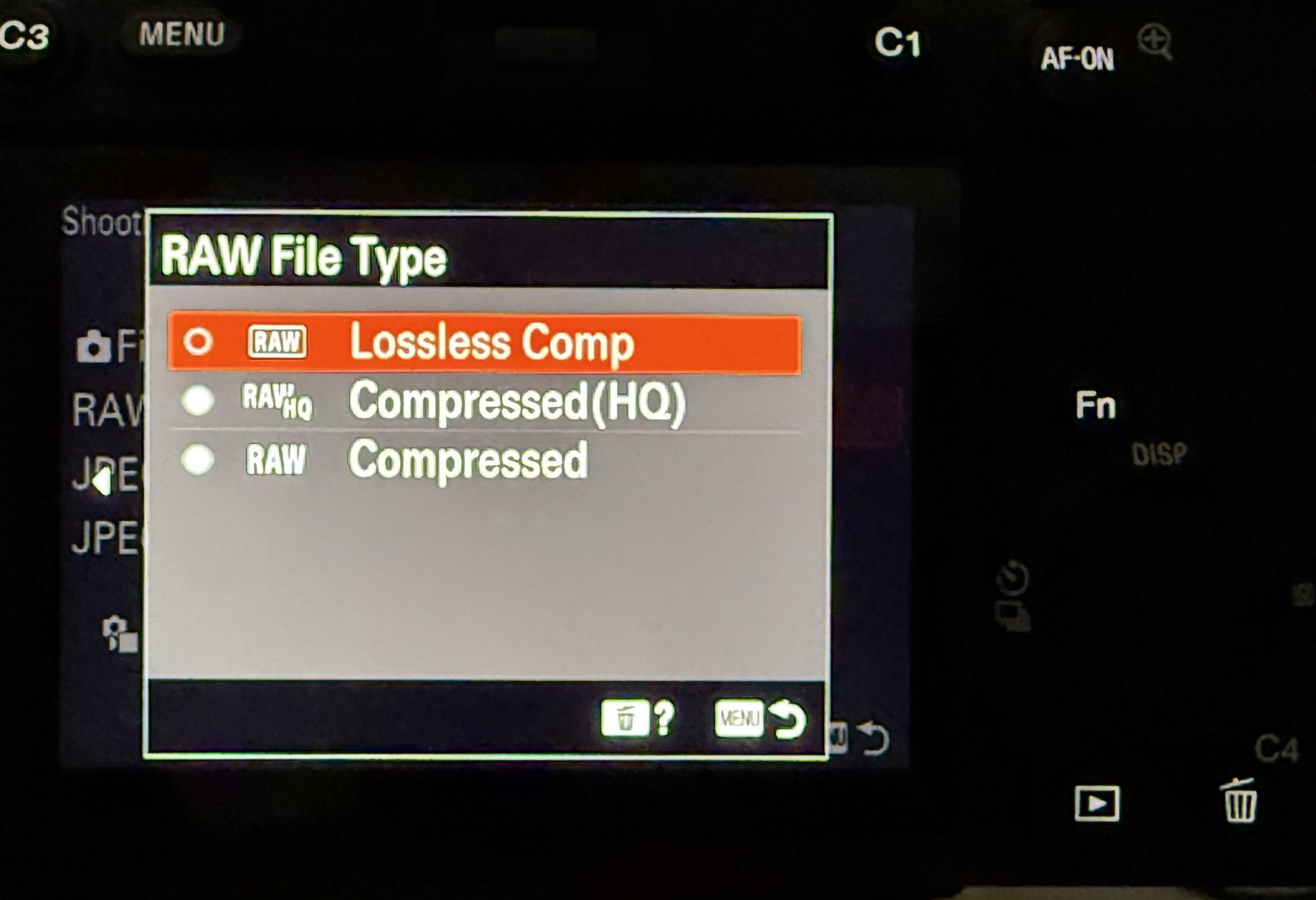
To be clear, uncompressed RAW is not what doc4x5 was asking about - Sony no longer offers uncompressed RAW so it’s not even a choice. The three RAW format options available on the A7R6 are Lossless Compressed, and two levels of lossy - Compressed (HQ) and Compressed.
I feel like using the lossless compressor for single frame and low ISO, but regular compression for 20-30FPS and high ISO (hi gain, non DGO) where there is more noise anyway.
My rudimentary visual test compared the Compressed HQ format which is by definition "lossy" with the Lossless Compressed and could see no differences in either the highlights or the shadows as hard as I looked at both 100% and even 200%.
I got the new beta of Raw Digger and found that both are 14 bit, if that matters. I'm really not interested in chasing angels on a pinhead but it seems fairly clear, to me at least, that I can do just fine with the Compressed HQ for much of what I do. If I'm doing "serious art," whatever that is, I'll still likely use the Lossless Compressed for now at least. Why? the same "reason" I preferred to use my 4x5 in the film era as opposed to my Hasselblad even though I had a hard time distinguishing any differences in my prints.
I'm sure some perfectionists will still say they can see differences. I don't enjoy arguing this stuff anymore. I have a Nikon using friend who is a superb photographer, artistically and technically. He uses Nikon's Uncompressed RAW rather than Lossless. He says he can see differences in the highlights; I cannot. He's a better photographer than I am so I do not argue.
gdanmitchell wrote:
I nave not done tests with Sony cameras, but I have carefully compared uncompressed and lossless-compressed RAW files on other platforms and I can detect no difference whatsoever. I actually wonder why anyone uses the uncompressed version at this point.
Why bother if the documntation says LOSSLESS? You use lossless compression everywhere all the time, even by looking at this web page, which has been delivered to you in lossless/compressed form.
The reason uncompressed RAW option exists is for backward compatibility. Some people still rely on software which hasn't been updated to support compression. Personally, I remember MacOS not being able to show previews for compressed Fuji RAF. Usually this is temporary, and Apple added the support swiftly. I am not surprised that the latest Sony cameras are removing uncompressed RAW option since it's no longer needed.
BTW I like @EB-1 approach to lossy RAWs. I tried to reverse-engineer them and my conclusion is that Sony is simply discarding the top bits. Resolution is not affected but you're getting about 10EV of DR, which means that at high-gain ISO settings there's nothing to lose anymore.
old-gregg wrote:
Why bother if the documntation says LOSSLESS? You use lossless compression everywhere all the time, even by looking at this web page, which has been delivered to you in lossless/compressed form.
The reason uncompressed RAW option exists is for backward compatibility. Some people still rely on software which hasn't been updated to support compression. Personally, I remember MacOS not being able to show previews for compressed Fuji RAF. Usually this is temporary, and Apple added the support swiftly. I am not surprised that the latest Sony cameras are removing uncompressed RAW option since it's no longer needed.
BTW I like @EB-1@ approach to lossy RAWs. I tried to reverse-engineer them and my conclusion is that Sony is simply discarding the top bits. Resolution is not affected but you're getting about 10EV of DR, which means that at high-gain ISO settings there's nothing to lose anymore....Show more →
snapsy wrote:
FYI, Dpreview has reshot their a7rVI Exposure Latitude (DR) test, this time including the 12-bit ES burst mode in the comparison. Here's a link I generated that compares the a7rVI 14-bit ES vs 12-bit ES vs 14-bit MS (DGO) vs a7rV:
I recommend every one to get the raws from this comparison and processes them in the software you use. I did this in past when comparing previous generations and I did it now to decide if I want to upgrade from a7rv to a7rvi. The results can look different than presented jpgs.
I did comparison in LrC where I pushed exposure +5 in global settings and further +4 in mask covering whole area to see the character of the noise clearly. I was a bit surprised that LrC was then showing me different and worse view in view+compare modes relative to a develop mode. But export (same view as in develop) to 16 bit tif and importing allowed the compare view to really compare.
I also found it interesting that there is different image performance for ES in Hi+ over ES in slower frame rates because in Bill Claff's photonstophotos website, there is only single ES chart for a7rvi. So that probably invalidates some comparisons people make with ES modes of Canon cameras like R5II for wildlife use.
I wonder how will the image quality differ in long exposures. In general longer exposures even at lower ISOs have more noise. Sony cameras before a7rv used so called start eater noise reduction in exposures 4s and longer, but a7rv and later models do not have it. I wonder how a7rvi stands here.
For most of the people the a7rvi makes electronic shutter usable over a7rv. But I use electronic shutter on a7rv all the time on tripod as it is just as good as mechanical, does not wear shutter (I often use intervalometer for timelapses for videos and pick some images from them as stills) and does not shake longer lenses. With a7rvi I would be using mechanical shutter more get advantage of DGO. Kind of reversal.
With a7rv I use mechanical shutter for birds/people and I would be using electronic with a7rvi (but birds/people are not my main type of photography currently).
With a7rv I use electronic shutter on tripod landscapse but I would be using mechanical with a7rvi (my main type of photography where I care about image quality).
gdanmitchell wrote:
I nave not done tests with Sony cameras, but I have carefully compared uncompressed and lossless-compressed RAW files on other platforms and I can detect no difference whatsoever. I actually wonder why anyone uses the uncompressed version at this point.
Not just Sony, I only use HEIC* on my Z9 and the differences in IQ are so minute you might see some slight differences to uncompressed at maybe 400% view. I have all my cameras set up to only use best quality RAW for single-shot for landscape at low ISO.
Pixel Perfect wrote:
Not just Sony, I only use HEIC* on my Z9 and the differences in IQ are so minute you might see some slight differences to uncompressed at maybe 400% view. I have all my cameras set up to only use best quality RAW for single-shot for landscape at low ISO.
A fun experiment that would help people get a perspective on these things would be to compare the magnitude and types of differences between
Formats (raw and, say, HEIF)
and
Cameras (say A7r5 and A7r6)
- - -
As a person who has not used HEIF (other than on an iPhone), aside from file size, what other reasons are there for using HEIF rather than raw? And, is the DR of HEIF the same as raw?
Ross Martin wrote:
To be clear, uncompressed RAW is not what doc4x5 was asking about - Sony no longer offers uncompressed RAW so it’s not even a choice. The three RAW format options available on the A7R6 are Lossless Compressed, and two levels of lossy - Compressed (HQ) and Compressed.
Thank you for posting. I was not aware of these changes on Sony's newer cameras.
Does anyone know if Sony is using a new type of compression technology/method? Or they just dropped uncompressed raw and reorganized and renamed the remaining lossless and lossy compression types.
gdanmitchell wrote:
As a person who has not used HEIF (other than on an iPhone), aside from file size, what other reasons are there for using HEIF rather than raw?
While it is a much better format than JPEG, it still has most of the downsides of JPEG, just to a lesser degree. Given how much better it is, it may for some applications good enough to use instead of RAW, e.g. when you only need minimal editing in post and the file size is relevant to you. However, at least for now the support of 10bit HEIF isn't what it should be. And, is the DR of HEIF the same as raw?
Not even close. Sony HEIF uses 10bit color depth. For reference: JPEG uses 8bit, lossless RAW uses 14bit, lossy RAW is either 13 or 12bit, depending on camera. Some cameras may drop to 12bit depending on settings (e.g. when shooting bursts).
Thanks. Without having looked into in carefully, this is what I assumed.
Some of the previous posts comparing it to raw had me wondering if I was wrong.
Daran wrote:
While it is a much better format than JPEG, it still has most of the downsides of JPEG, just to a lesser degree. Given how much better it is, it may for some applications good enough to use instead of RAW, e.g. when you only need minimal editing in post and the file size is relevant to you. However, at least for now the support of 10bit HEIF isn't what it should be.
Not even close. Sony HEIF uses 10bit color depth. For reference: JPEG uses 8bit, lossless RAW uses 14bit, lossy RAW is either 13 or 12bit, depending on camera. Some cameras may drop to 12bit depending on settings (e.g. when shooting bursts)....Show more →
Very impressive camera this - you get the A1ii/A9iii experience without the expense.
APS-C mode the images are 6K and buffer seems to be basically unlimited - I chickened out because there was no sign of it slowing down. But then I never hit the buffer in FF mode either.
Unfortunately the light was poor today and on top of that I forget to change the zebras default setting so all my images are 2 stops under exposed !! Although the damn EVF is so bright you would never know when looking at them in camera.
I can see an A6900 coming with a version of this sensor.
I never experienced any stuttering of the EVF, even when pre-capture was on but never used high quality EVF setting.
I used standard monitor and EVF quality and high frame rate and lossy compressed. It's not 240p but it seemed at least as good as the A1/A1ii/A9iii in the same (120p?) mode - perhaps slightly better (HDR mode?).
Pre-capture works great - I couldn't really test AF tracking though, birds all flew off sideways.
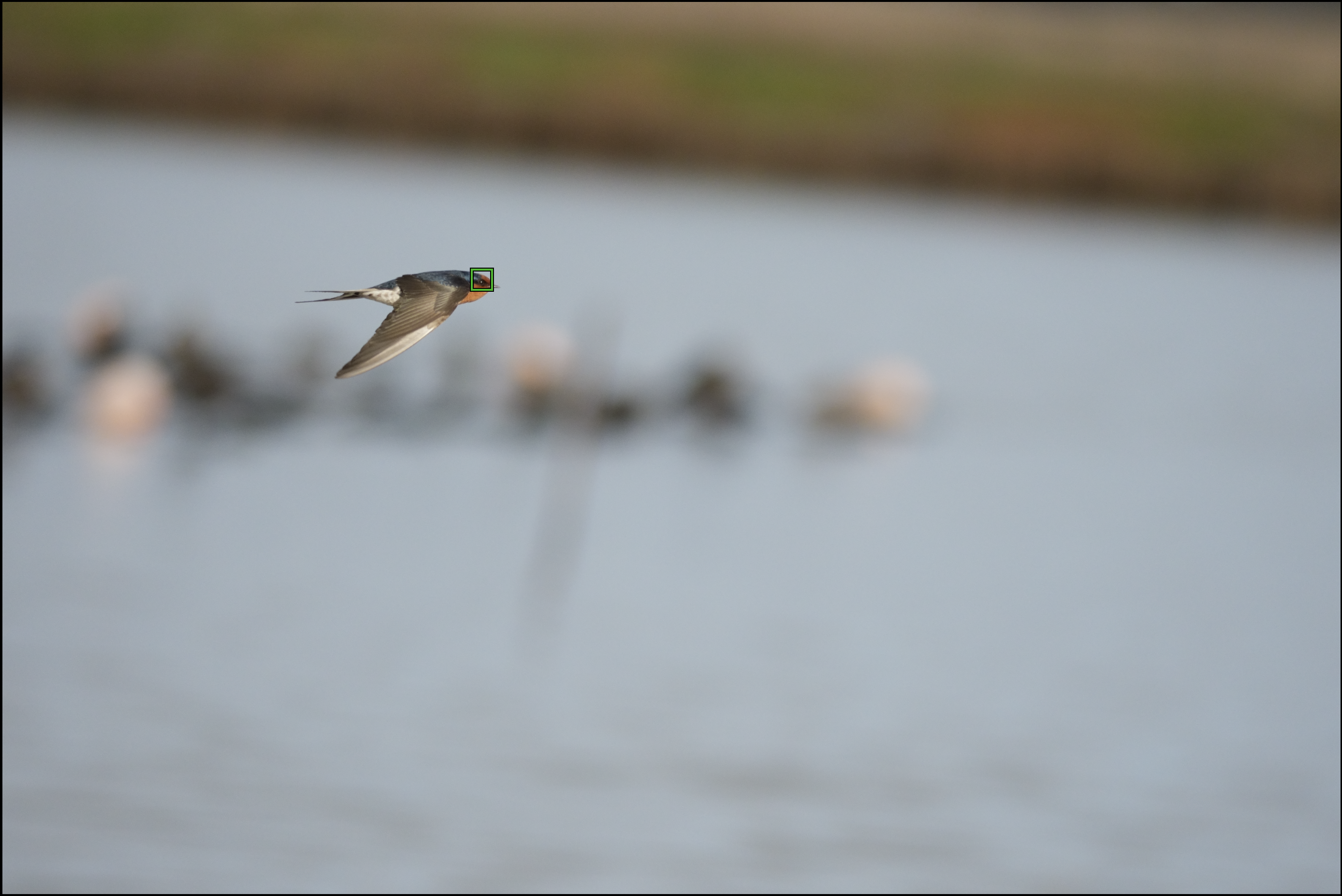
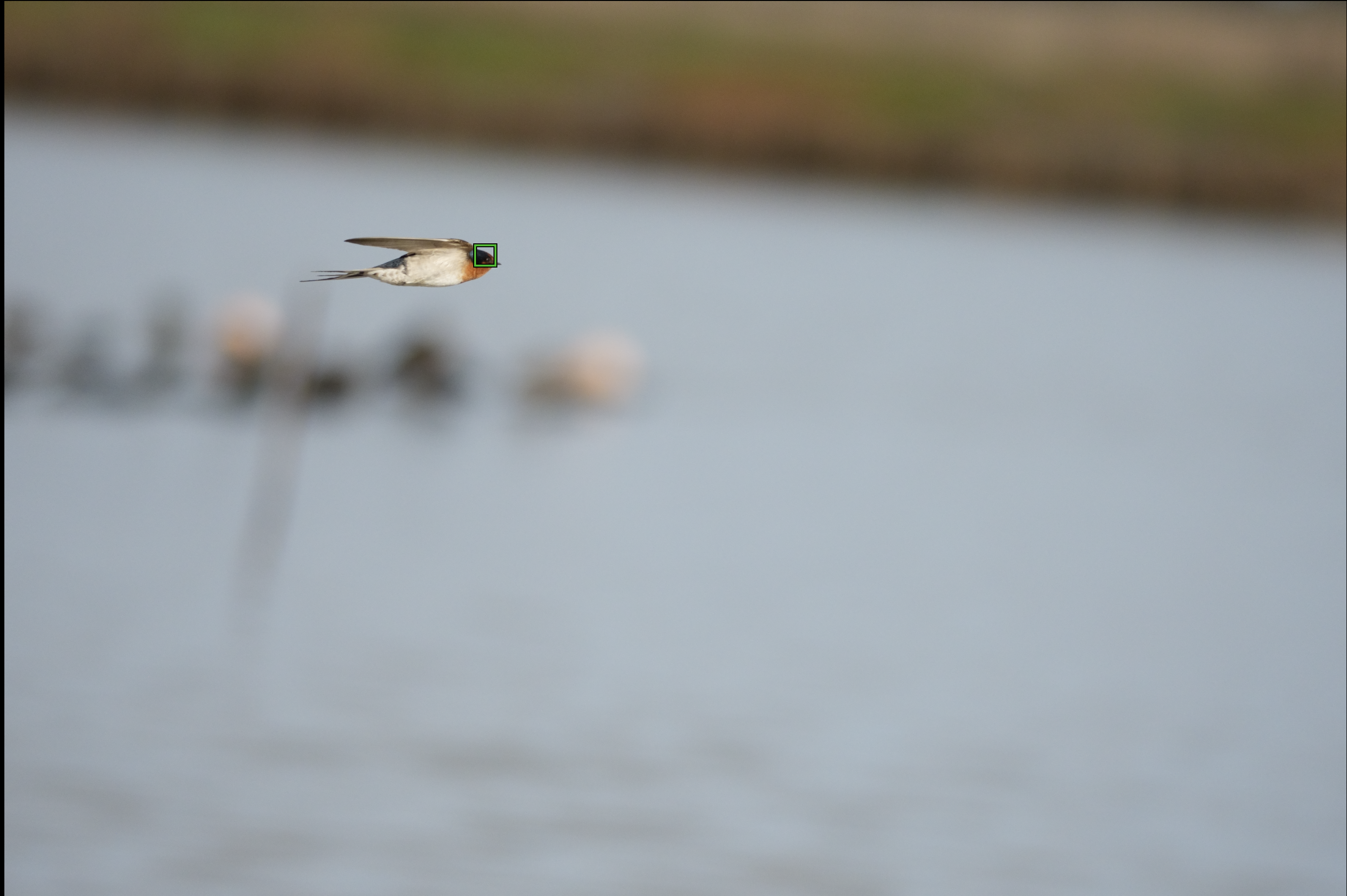
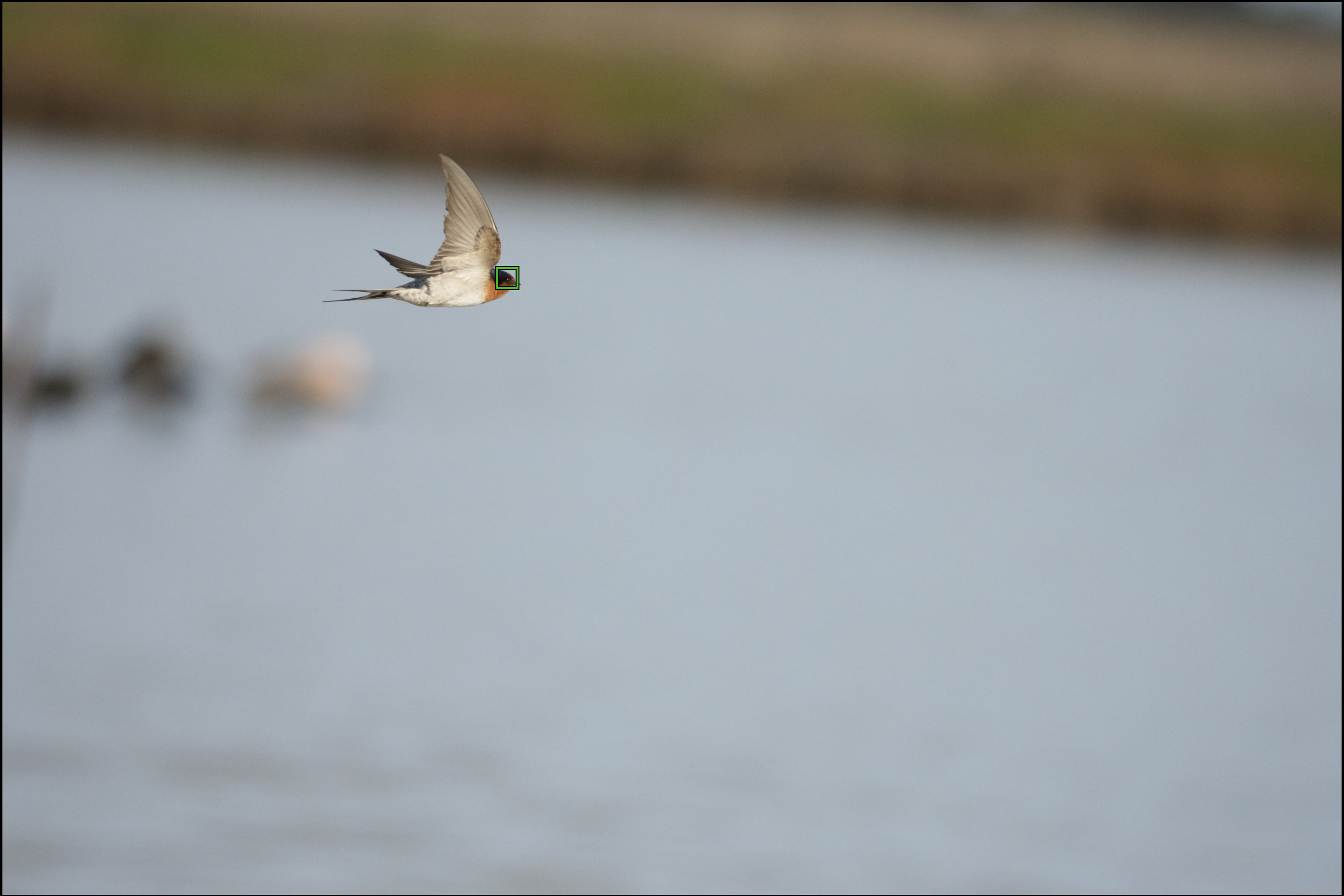
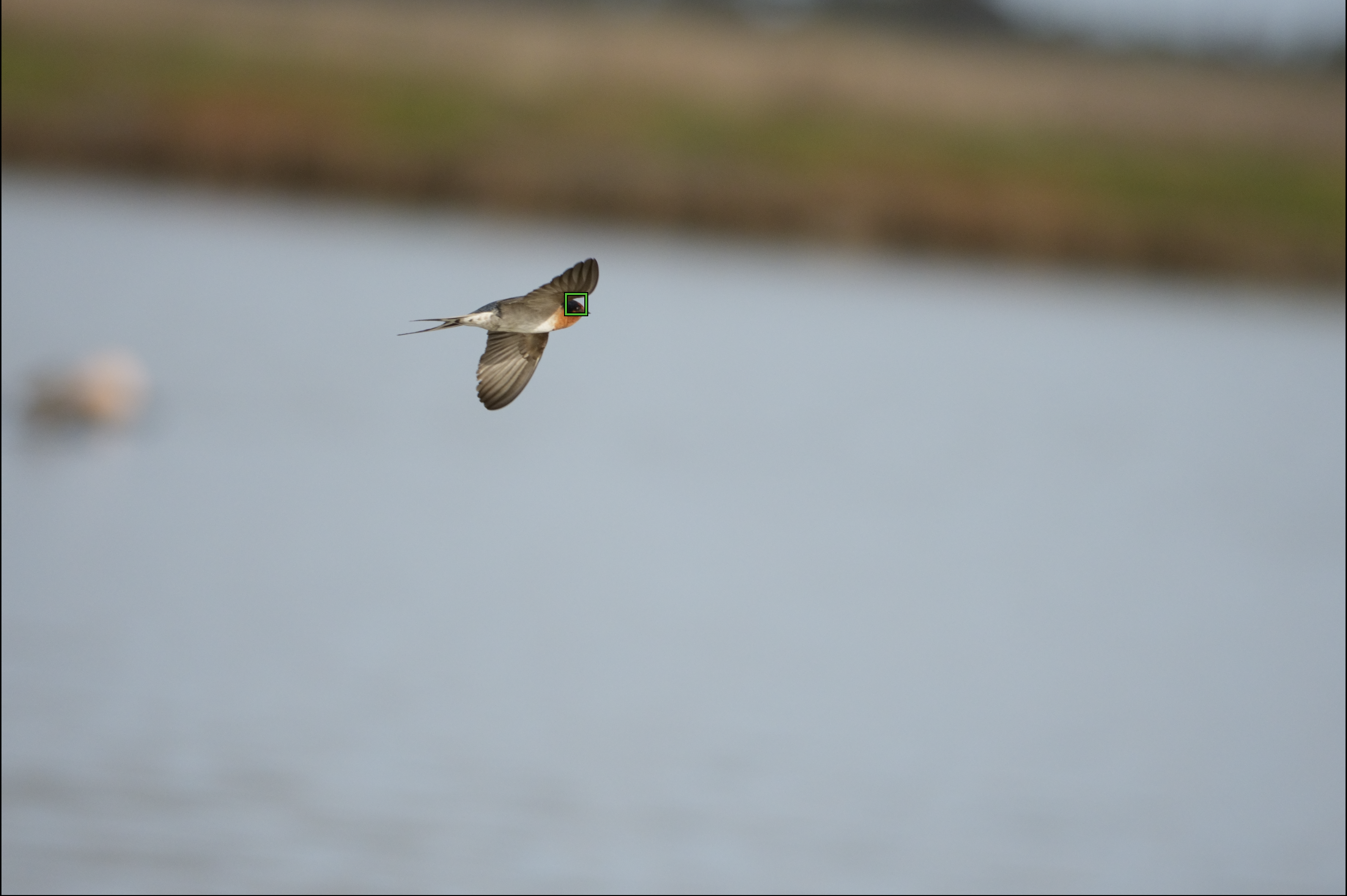
I shot a lot of swallows but saw very little distortion - I couldnt fill the frame for decent quality images because of conditions so I am sure there will be some visible if you can fill the frame.
I shot a pigeon and dotterel taking off with pre-capture and neither of them showed any signs of distortion - and they flap their wings pretty fast.
Sony is really pushing the envelop here.
Hopefully some better conditions later this week to give it a proper test.
Basically hilarious - bear in mind screen shots of Image Edge app.
EDIT: Forgot to mention - ignore the pole in the water = rolling shutter
Rotated image showing rolling shutter distortion on pole in water as a result of panning.