Rialto wrote:
If they don't mind mildly slanted background, panning shots tracking birds or racecars?
See I think that's hitting the nail on the head; if you come from a 100ms readout A7RIV or A7RV going to 15-20ms whatever the A7RVI is it will always be an improvement. You will always see improvements in terms of 'action' shots. So for people upgrading their R camera to the newest R camera that's a win. Upgrading from an A1 or A1II is not a win, but it wasn't supposed to be.
Rialto wrote:
If they don't mind mildly slanted background, panning shots tracking birds or racecars?
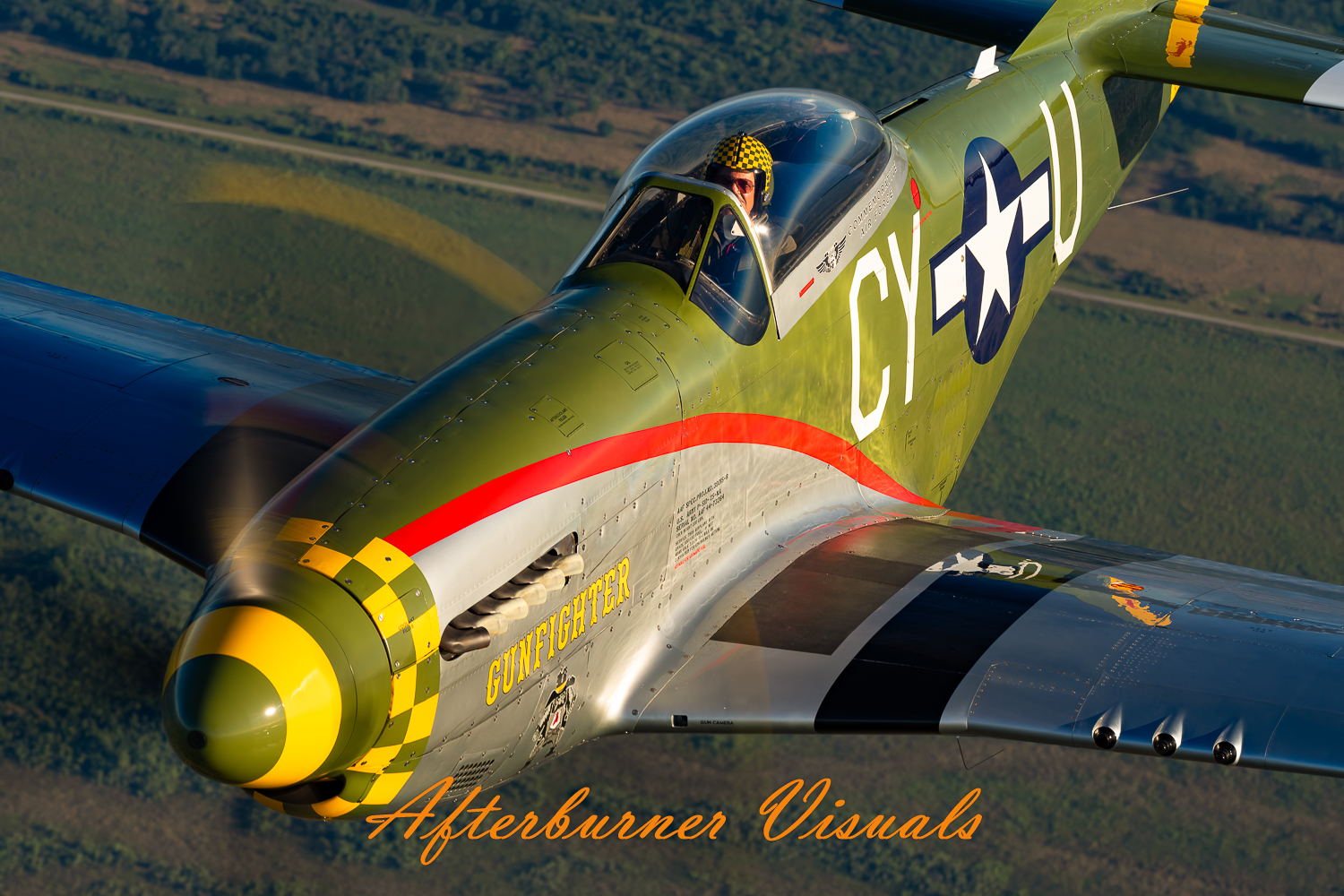
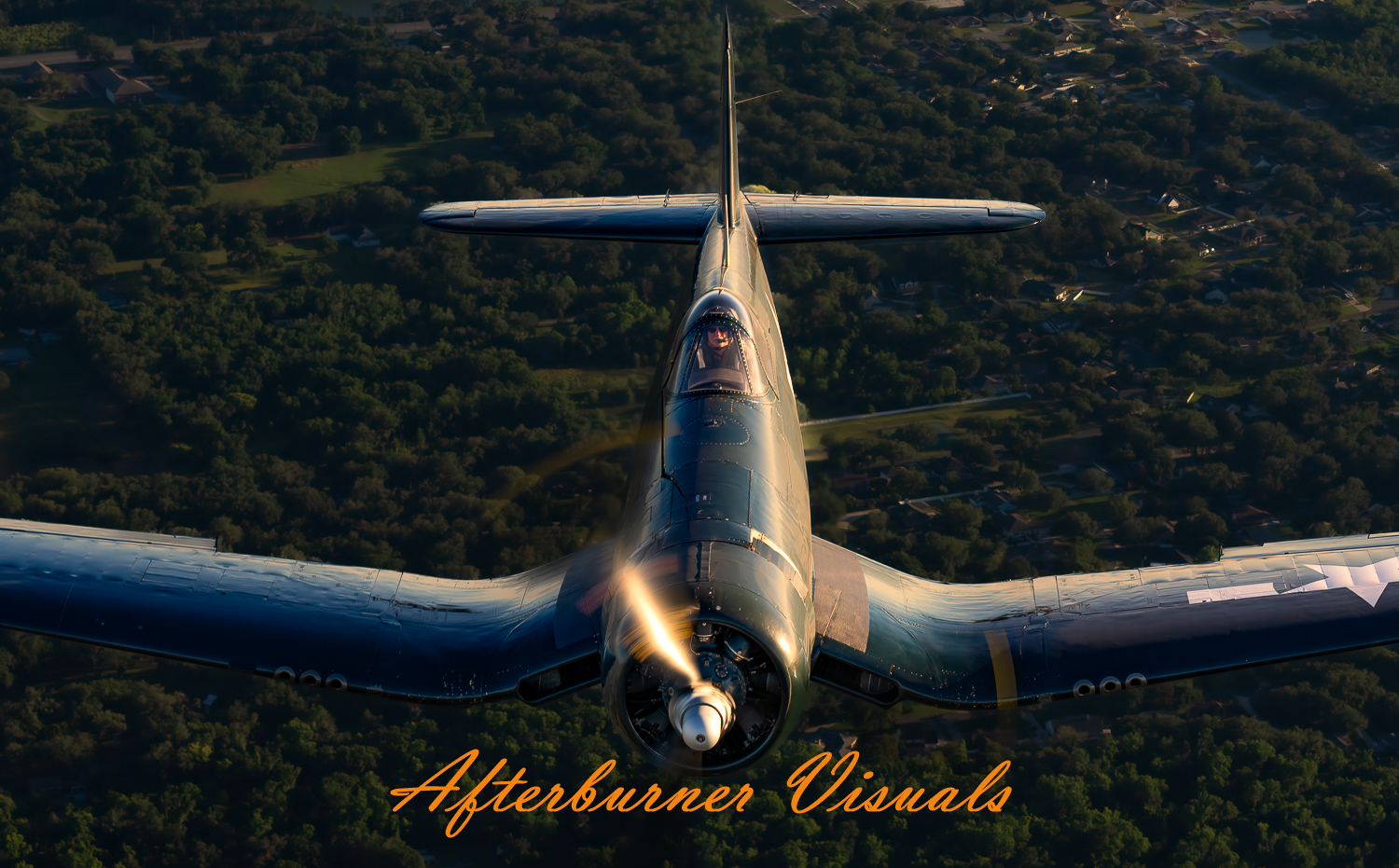
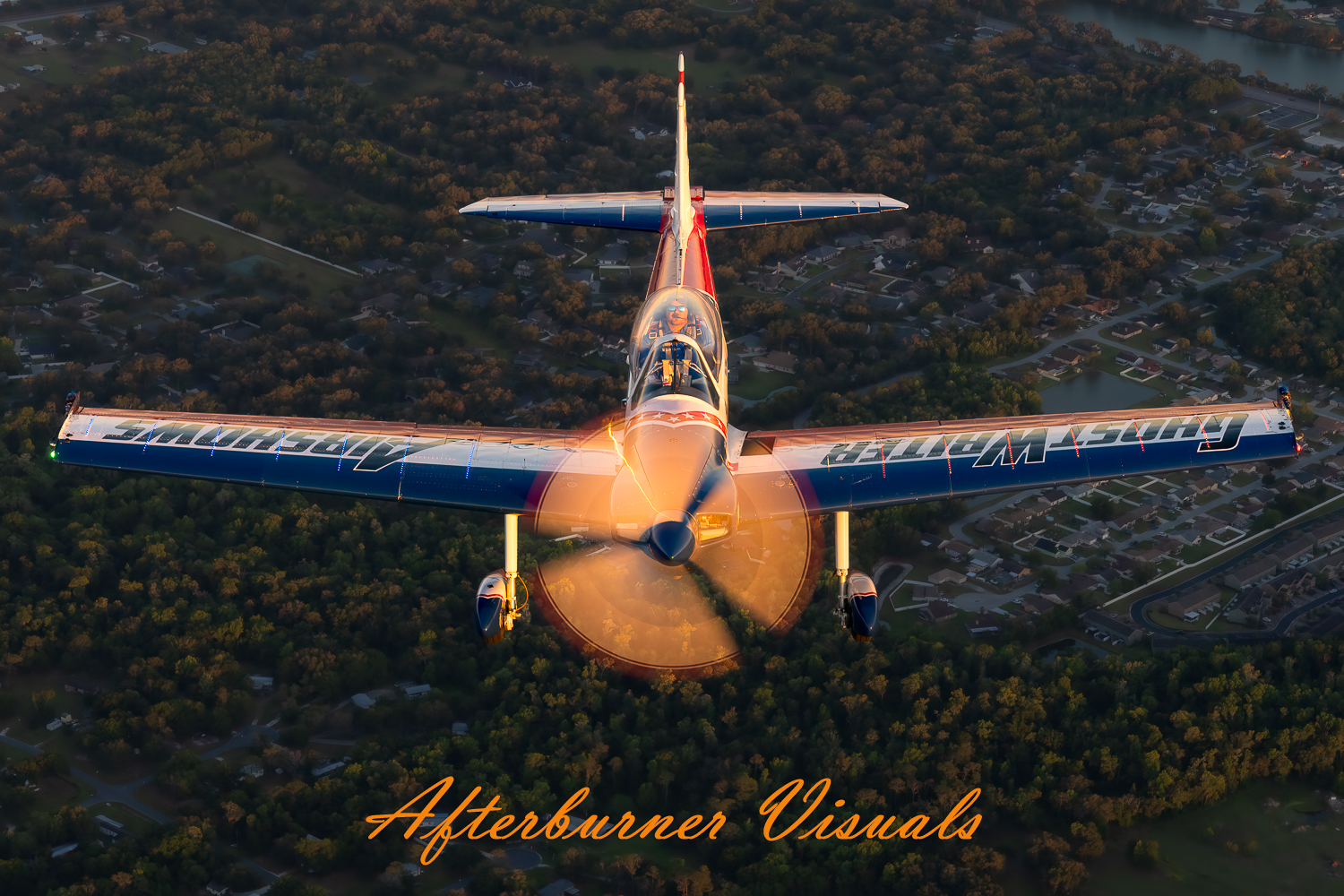
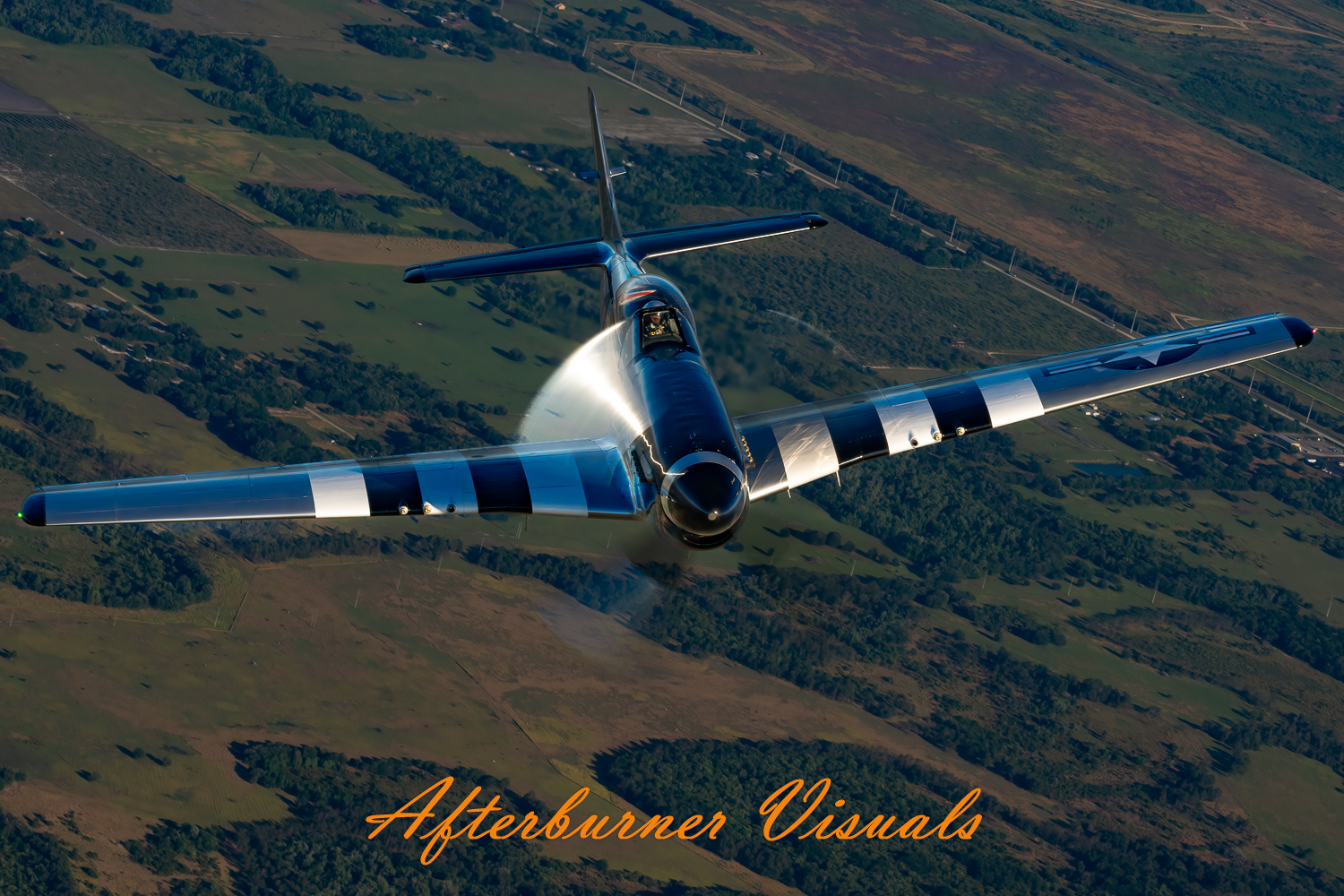
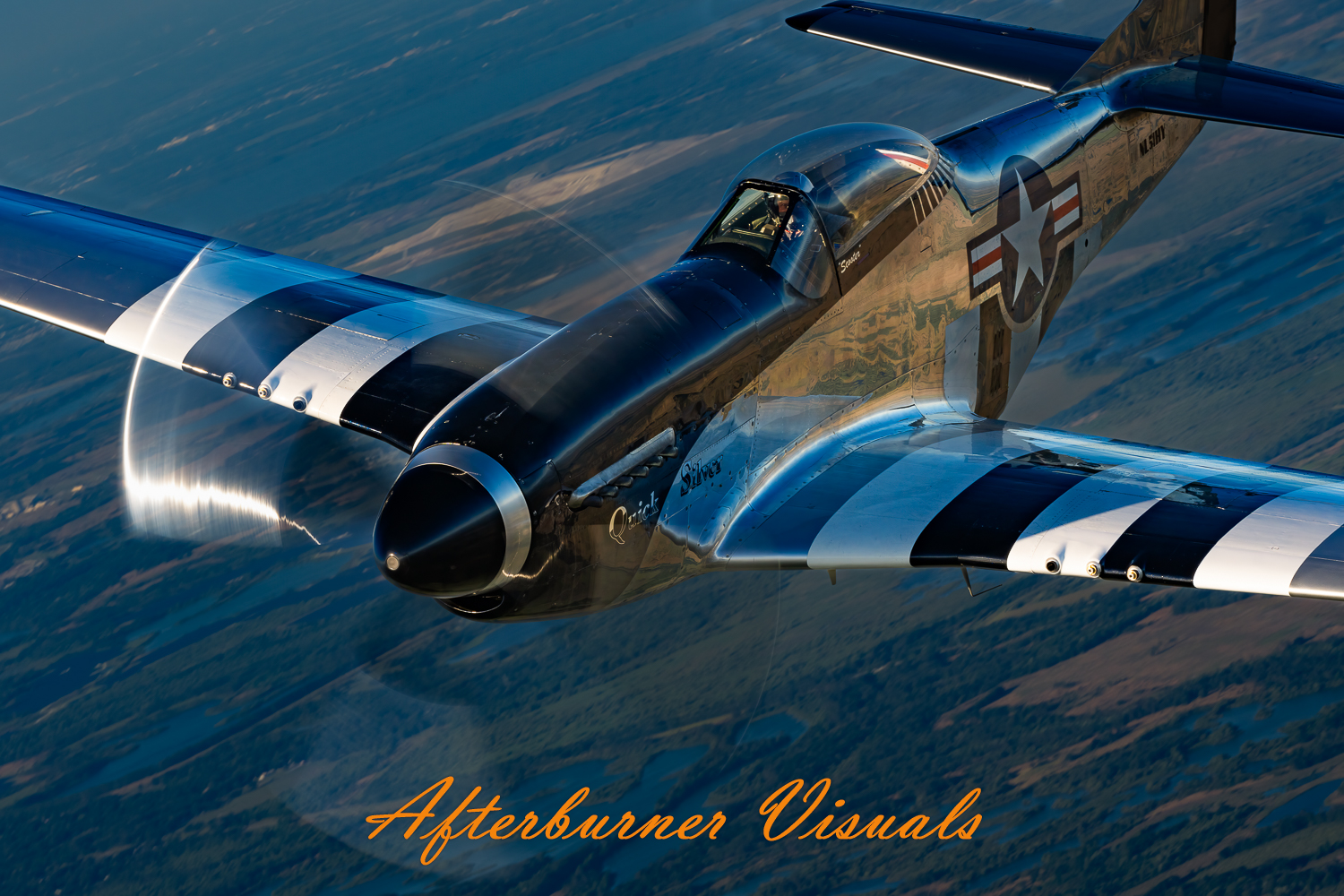
BTW I think propellers that aren't idling are too fast for even mechanical shutters: even just at 1500 rpm, a propeller rotates 36 degrees in 4 ms. Often, we set the shutter speed so slow the propellers are blurry. This is more to convey the speed of the aircraft, but it has the side effect of hiding rolling shutter.
Interesting. I don't think I have shot fast moving subjects with electronic shutter of a camera that has a slow reading sensor. Genuine question, are you saying A7RVI's electronic shutter will work for shots like these? I know it could be problematic for swinging baseball bats, golf clubs, which I don't shoot, and hummingbirds, which I shoot a lot.
Sorry for getting of topic.
ILCE-1FE 100-400mm F4.5-5.6 GM OSS lens226mmf/11.01/160s100 ISO0.0 EV
ILCE-1FE 100-400mm F4.5-5.6 GM OSS lens100mmf/8.01/160s100 ISO0.0 EV
shot with mechanical shutter
ILCE-7RM5FE 24-70mm F2.8 GM II lens70mmf/8.01/160s640 ISO-1.0 EV
ILCE-1FE 100-400mm F4.5-5.6 GM OSS lens128mmf/18.01/160s100 ISO0.0 EV
ILCE-1FE 100-400mm F4.5-5.6 GM OSS lens183mmf/18.01/160s100 ISO0.0 EV
EB-1 wrote:
Sure, but how is that relevant to the effect of rolling shutter/sensor readout speed on the image?
Isn't 18ms or whatever speed creating image distortion the same way for all cameras since the readout speed is for the same 24mm sensor height?
EBH
I’m just saying you can’t reach back to 2020 and compare it to camera with lower resolution and a lower bit rate.
Sony has the A1 series, so as someone who doesn’t frequent the Sony forum, I guess I’m confused at all the wah wah over a high res camera that only does ~19ms ES. Keeping or even improving DR as DPR reported over the past model seems like a bigger deal for a sensor with such a small pixel pitch.
Alan Parker wrote:
See I think that's hitting the nail on the head; if you come from a 100ms readout A7RIV or A7RV going to 15-20ms whatever the A7RVI is it will always be an improvement. You will always see improvements in terms of 'action' shots. So for people upgrading their R camera to the newest R camera that's a win. Upgrading from an A1 or A1II is not a win, but it wasn't supposed to be.
Yeah, and I think Sony was pretty truthful with their marketing and showing wildlife instead of very fast acton as a key selling point.
I think there is a sensible overlap of people that shoot both landscape and wildlife (nature at large) and there is a lot of wildlife that doesn't require very fast capture rates. The a7r VI can do that in a pinch (30 fps and pre-capture) if an interesting opportunity arises but it is more for a rare occasion than the norm, I would say.
There is also the mechanical shutter if you can accept 10 fps and worry about rolling shutter ruining your shot.
It is a shame that this was hyped up to be an A1 II killer, but apparently someone only saw the 30 fps and pre-capture specs and maybe forgot to apply a good dose of critical thinking.
Douglas L wrote:
Interesting. I don't think I have shot fast moving subjects with electronic shutter of a camera that has a slow reading sensor. Genuine question, are you saying A7RVI's electronic shutter will work for shots like these? I know it could be problematic for swinging baseball bats, golf clubs, which I don't shoot, and hummingbirds, which I shoot a lot.
Sorry for getting of topic.
Great photos. The 1/160 s shutter speed is good for mechanical shutters (4 ms = 1/250 s) and the fast electronic shutters like the a1 family's, but I presume the a7R VI electronic shutter (20 ms = 1/50 s) requires much longer exposure time to make the rolling shutter effect unnoticeable, which might make the propellers too blurred.
Stoffer wrote:
Yeah, and I think Sony was pretty truthful with their marketing and showing wildlife instead of very fast acton as a key selling point.
I think there is a sensible overlap of people that shoot both landscape and wildlife (nature at large) and there is a lot of wildlife that doesn't require very fast capture rates. The a7r VI can do that in a pinch (30 fps and pre-capture) if an interesting opportunity arises but it is more for a rare occasion than the norm, I would say.
There is also the mechanical shutter if you can accept 10 fps and worry about rolling shutter ruining your shot.
It is a shame that this was hyped up to be an A1 II killer, but apparently someone only saw the 30 fps and pre-capture specs and maybe forgot to apply a good dose of critical thinking. ...Show more →
You articulated this perfectly. The hype of "A1II killer" falsely raised the expectation.
May 14, 2026 at 07:02 AM
Steve Spencer Offline • • • • • • • Upload & Sell: On
Douglas L wrote:
Interesting. I don't think I have shot fast moving subjects with electronic shutter of a camera that has a slow reading sensor. Genuine question, are you saying A7RVI's electronic shutter will work for shots like these? I know it could be problematic for swinging baseball bats, golf clubs, which I don't shoot, and hummingbirds, which I shoot a lot.
Sorry for getting of topic.
Douglas,
I very much like your aviation photos, for these shots I think with an A7r VI you would have to worry about a couple things if you shot them in electronic shutter mode. First, there are the reflections captured in the propellers. In these shots they are generally fairly straight lines. You could expect those reflections to be irregularlly curved bent like the baseball bat pictured in earlier in this thred. Second, things on the ground (e.g., roads) that should be straight lines might end up looking curved. These problems might be significant with some shots and might not be with others. My guess is that for these types of shots you would still want to shoot them in mechanical shutter mode with that A7r VI, but you would have to try it and test it out to know for sure.
Cross shopping. A7Rvi vs X2Dii
The X2Dii body is 0.6” wider / 0.2” taller / 0.3” less depth / 0.2 lbs heavier with 1 TB Memory
Cost: X2Dii body: $7399.
A7Rvi body $4498 + Two 512GB Lexar Gold CFExpress Type A $658 A7Rvi: $5156
X2D2 better resolution and less high iso noise. Not sure about dynamic range. Leaf shutter and colors to die for, but this can be debated. Possibly better autofocus in very low light due to Lidar. Much better LCD screen.
A7Rvi slightly smaller and lighter. Much greater choice of lenses. Less rolling shutter with electronic shutter. Mostly smaller & lighter lenses, but some of the HB lenses are surprisingly small and light. Also, you don’t have to pay for the HB name and a shutter in every lens. Better EVF…likely much better. Superior autofocus, especially tracking in complex environments. Less expensive system. Lastly, the Sony will do video.
The HB is great for someone who doesn’t need long lenses, nor shoot sports, etc. Also, for someone that doesn’t shoot video. I think what I’m saying here is that comparing the new ‘R’ to a HB is a more oranges to oranges comparison than comparing it to lower resolution cameras with reduced dynamic range that have great electronic shutter performance. When I shot sports I used an A1 in that it was purpose built.
I’ll post Tony’s video comparing the A7Rvi to X2D2. If you aren’t interested in the full evaluation then fast forward to 17:36.
Personally, I think that Sony did an amazing job with the A7Rvi, once I recognized that it is an ‘R’ camera and a worthy replacement for the A7Rv.
Maybe I missed it but I did not see any comments on the faster electronic shutter reducing, or otherwise, banding from indoor lighting. Given the need for silent shooting in many indoor situations that is more important to me than baseball bats
Douglas L wrote:
Interesting. I don't think I have shot fast moving subjects with electronic shutter of a camera that has a slow reading sensor. Genuine question, are you saying A7RVI's electronic shutter will work for shots like these? I know it could be problematic for swinging baseball bats, golf clubs, which I don't shoot, and hummingbirds, which I shoot a lot.
LOVE these shots. I actually like the one shot with an A7RV the best. The propeller in that shot is wonderful!
rob_ww wrote:
Maybe I missed it but I did not see any comments on the faster electronic shutter reducing, or otherwise, banding from indoor lighting. Given the need for silent shooting in many indoor situations that is more important to me than baseball bats
Under the same Phillips hue LED lighting in my house, my Nikon ZR (not a stills camera but the point remains) got heavy banding, my Canon R5II in ES had no such issue.
ZR 14.4ms (according to AI search)
R5II 6.3ms
In fact, I have the R5II set to ES constantly, and have never noticed any issue. The ZR, even with it’s ability to fine tune shutter speeds to combat the flicker, was not good. I spent more time fiddling with the shutter speeds setting to try and tune out the flicker, and by then I’d missed the shot anyway.
May 14, 2026 at 08:09 AM
Steve Spencer Offline • • • • • • • Upload & Sell: On
cxpics wrote:
Does anyone know what the readout speed is if you drop to 12bit raw? Either way I'm excited for this sensor to make it into an a7cRii.
We don't know yet, it seems and we will have to wait until the camera is tested. It should be faster in lossy compressed RAW. The 19.6 ms that has been quoted is in uncompressed RAW. It will also be faster when cropped to APS-C size and keep in mind that if you crop you are in fact using a smaller section of the sensor, so the more you crop the faster the sensor scan speed for that area. All this means that whether you see movement distortion is not simply a matter of the one 19.6ms sensor scan speed number. It matters how much compression is being used and it matters how much of the sensor is being used. It also of course matters how fast the target is moving. All this means that sometimes it is hard to predict whether you will see movement distortion or not. This camera, however, seems to be in the ballpark of the Sony A7 V, the Nikon Z6 III, and the Canon R5/R6 III in terms of sensor scan speed and not in the ballpark of the Sony A1/A1 II, A9/A9 II, Nikon Z8/Z9 or Canon R1/R3/R5 II.
I'm still catching up on all the YT reviews. But so far both Jan and Duade have said they didn't find many rolling shutter problems while testing the camera. Jan said it was better than the A7V.
I think the readout speed is going to be faster than we think when in Compressed RAW AF-C. Of course it does depend on size of subject in the frame that they were mostly shooting.
May 14, 2026 at 08:26 AM
Steve Spencer Offline • • • • • • • Upload & Sell: On
arbitrage wrote:
I'm still catching up on all the YT reviews. But so far both Jan and Duade have said they didn't find many rolling shutter problems while testing the camera. Jan said it was better than the A7V.
I think the readout speed is going to be faster than we think when in Compressed RAW AF-C. Of course it does depend on size of subject in the frame that they were mostly shooting.
We will see when testing is done. I am skeptical of early YT reviews even from reputable people when they are based on impression and not actual testing. It generally takes awhile to know the limits of a camera. The camera in uncompressed RAW is a little slower than the A7 V, but should gain more in compressed RAW as the files are bigger and likely will gain a bit more speed when compressed. I am guessing (and it is just a guess) that they will be similar in compressed RAW. We will know before too long.
snapsy tested the Nikon Z6 III and it goes from 14.4 ms in 14-bit mode to 11.0 ms in 12-bit mode. I am guessing that the A7 V and A7r VI will both come in close to that 11ms or maybe even 10 ms in lossy compressed RAW, but again we will know before too long.
And for those who chatised Alex Phan for providing a number of 5-10ms, do realize that there isn't just one number. He was giving a range and that is appropriate given that the number does depend on a number of factors. That might well end up being the range with 5ms being close to the number in lossy compressed RAW in APS-C mode and 10ms being the number in lossy compressed RAW using the whole frame. I think it would have been better to describe the range as 5ms to 20ms if that is correct, but still the numbers he gave might not be far off from what the camera will provide in the way most people would use it for wildlife photograpy.
Neither does that mean that it really is in the same class as the A1/A1 II. That camera using similar numbers taking into account both lossy compressed RAW and using a smaller part of the sensor is more like 2-3ms and that could and likely will be quite meaningful to some people in comparison to 5-10ms if that is what the A7r VI ends up being.
johnvanr wrote:
I understand that. But demand can still drop. Used to be that I felt the newer camera was worth upgrading too. No more. Doesn’t mean they shouldn’t keep improving their cameras, just that fewer people might buy them.
It's quite amazing that there are so many camera models available from so many brands when the vast majority of the market uses smartphones. I do expect fewer Japanese models and brands and more from China as full blown systems in the 2030s.
But none of that is of interest. At my stage every new model may be the last, so it's a question of the value. Right now the shutter speed is a major concern, but the a7rV to VI is a major upgrade compared to some others like a7rII to a7rIII.
Rialto wrote:
However, I must say worrying about the two extra bits isn't usually necessary. A 14-bit raw file theoretically speaking captures darker details than a 12-bit one, and thereby offers better shadow recovery abilities. Such lighting condition is so harsh it's rare to find. In this article, the author had to very artificially create highly underexposed raw files to see a difference between 14-bit and 12-bit.
There is going to be a hit on dynamic range for sure, and annoyingly user has to choose the raw quality in order to influence the AF calculations. Not like A9m2 where you simply choose uncompressed raw and gets the max 60 calculations plus 14 bit file.
johnvanr wrote:
I understand that. But demand can still drop. Used to be that I felt the newer camera was worth upgrading too. No more. Doesn’t mean they shouldn’t keep improving their cameras, just that fewer people might buy them.
Apple iPhone sales have been steadily increasing every year yet so many people already have phones.
You also need to include new photographers that are just getting into photography. There are millions of people just getting into a stage in their lives where they have disposable income that can be spent on photography.
chez wrote:
Apple iPhone sales have been steadily increasing every year yet so many people already have phones.
You also need to include new photographers that are just getting into photography. There are millions of people just getting into a stage in their lives where they have disposable income that can be spent on photography.
Oh, sure. I’m not saying these new cameras shouldn’t be produced. I’m just amazed how many people seem to still be in the upgrade path when I don’t see that need anymore. And that goes for every brand I know of, not just Sony.
I think the best summary is this: the A7R VI is a really nice upgrade for the R series. Unfortunately it was hyped by some as an A1 II killer, and it is not. Overall it is a great all around camera.
With this release the A1 series has become more of a high end niche camera, more like the Canon R1 series and Nikon Z9 series.
Interestingly, this does leave more latitude for what Sony can do with an A1 III. They certainly can keep it a stacked sensor and not go global shutter. I would expect at most a modest resolution increase, if any at all. They will use the new Bionz XR2, probably 2 of them, and make the camera even faster. It will have the larger battery and improved EVF.