freaklikeme
Offline
• • • • • •
Upload & Sell: Off
|
 p.1 #1 · You win, Hasselblad. You win. p.1 #1 · You win, Hasselblad. You win. | |
This is a long story of slow surrender.
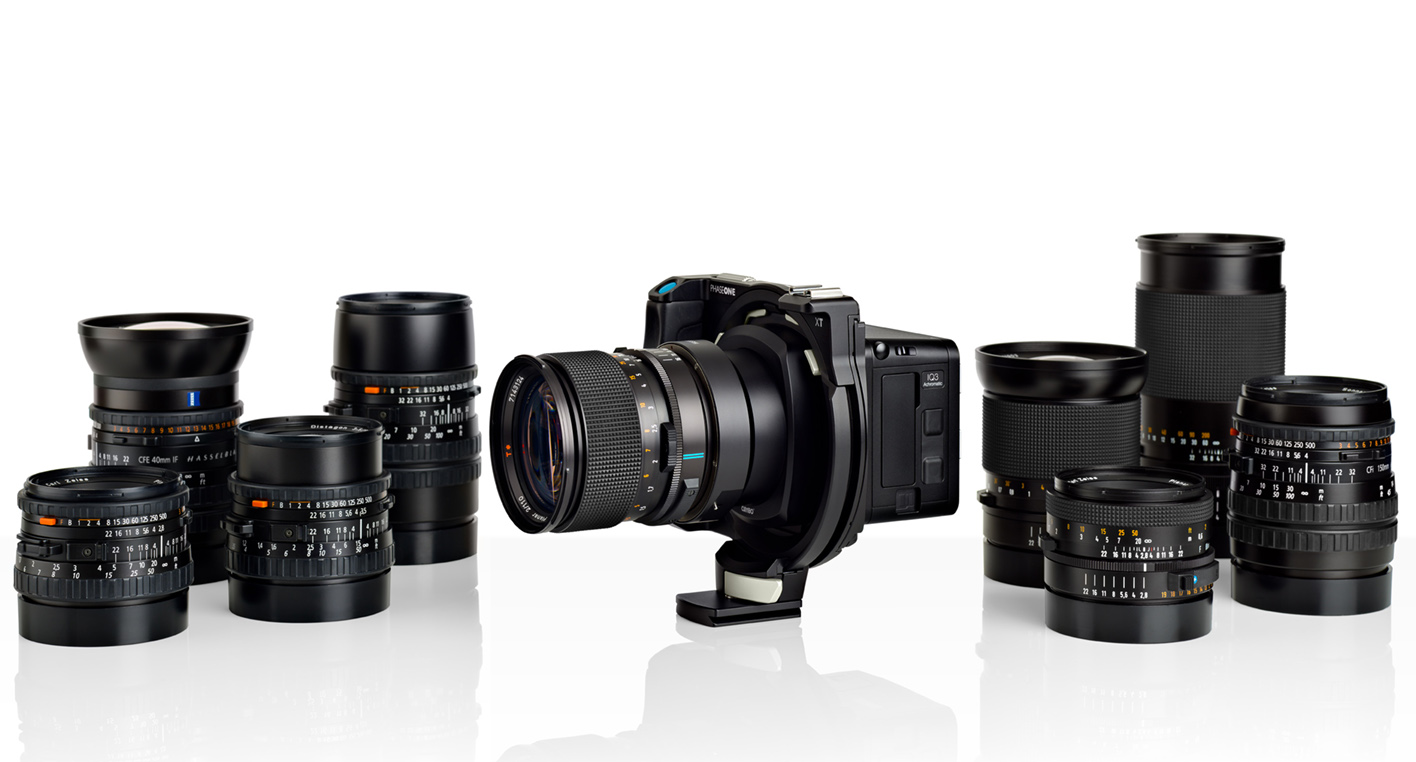
I've had Rodenstock lenses (originally the 35/4, 60/4, and 100/4 then added the 23/5.6) and have been in a perpetual search of the best way to use them. I adapted them to Fuji (GFX 50sII and, briefly, 100s). I used them with a Combo Actus Mini backed by my Sonys. I used them on an Actus DB with a borrowed Phase IQ3 100 Achromatic (full spectrum mono) and nearly stopped there. The back was so much fun. Still, the Actus reminded me why I’d sold off my first copy; it’s a dust pump that’s painful to travel with and there’s little hope of keeping that massive sensor clean, and the sensor itself reminded me that I don’t have lenses that allow for a lot of shift with medium FF. So that left tech cameras, and the smallest of those, the Cambo WRC 400, is designed to accommodate a FF, so it’s larger than it needs to be for the smaller sensor. Still, it was easily the best of my so-so options.
Enter my buddy Stephen, a mechanical engineer I worked with many moons ago and current Hasselblad shooter (X2D2 and, now, 907x 100c). When I told him what I was looking at, we had fun picking apart all the things we’d change about the Cambo (give it a real, circular mount instead of the clunky, difficult to pack Cambo lens boards, make the bottom and left hand edges dovetailed to easily switch the orientation of the movements, blah, blah, blah). We got each other so worked up over it, we literally drew plans and sent them to my machinist cousin, who’d expressed interest in the project.
In the meantime, I’d picked up a 907x 100c and 55V in a trade with a coworker with the expectation it would mostly be my back for the tech camera. A month or so later, the same coworker offered me his low-mileage 30/3.5 and the grip, the last two pieces of his kit he was having a hard time selling, for great prices. There was nothing to regret in that purchase, since I fell hard for the lens and the grip got my partner, Rolf, more excited about the camera. It seems to have triggered an uncharacteristically sentimental streak in my otherwise stoic Viking, who spent a lot of time in his youth shooting with his dad's old 500C. Thanks to that, we now have a 90V he came home with from his last business trip.
So he's got a simple, quirky camera he loves to use. I think he even sees the lack of IBIS as a bonus because it puts his epic levels of stability and decades of good technique to the test. Since I added a Chinese L-bracket, I've got what I consider to be the best tripod-mounted landscaper going. I thought using the screen to set the exposure would be bad (it really isn’t horrible), but Phocus Mobile 2 came to the rescue. I like not having to touch the camera once I've got it framed. It doesn't require much of a tripod and I've even used it on the Gorilla Pod in a couple of scenarios where a traditional tri would've been awkward or impossible. Bracketing, exposure and focus, are well implemented and easy to control through the app. AF isn't terribly impressive, but Rolf doesn't have a problem working with it, and I only use it when focus bracketing. We were both having a good time with it, and that’s rare. The last time that happened since we got together was when he was shooting Leica S.
Then my cousin got back with Stephen and me, letting us know that we were either going to have to simplify the gear and clutch mechanism we wanted to control the movements or he’d have to pass. It felt very much like a soft, I don’t want to hurt your feelings but I no longer want to do this pass from him, so I let him off the hook and we shopped the design around to places Stephen’s worked with previously. The quotes were sky high, so back to Cambo we went. We agreed I’d get the necessary panels for the lenses and he’d pick up the camera and back adapter. If he liked it and I didn’t, he’d buy the lenses off me, and if I liked it and he didn’t, I’d buy the camera and adapter off him. If neither of us were happy, we’d sell it all to others.
We had fun. I hadn’t been able to make any direct comparisons with the Rodenstocks to the XCD lenses on the 100MP back using their central shutters. I rented a 21/4 to compare to the 23/5.6, and the 21 really took the 23 to task so far as resolution and overall correction. The 21 has significantly stronger distortion (and significantly weirder) than the 23, but Phocus or LR clean it up nicely at landscape distances. If it weren’t for the difference in focal length, the 30 and 35 could be the same lenses. The 60’s a more even tempered across the frame landscaper than the 55, but I love the 55 for its all-around performance. The 90’s a smidge better than the 100, but you really have to pixel peep to see it.
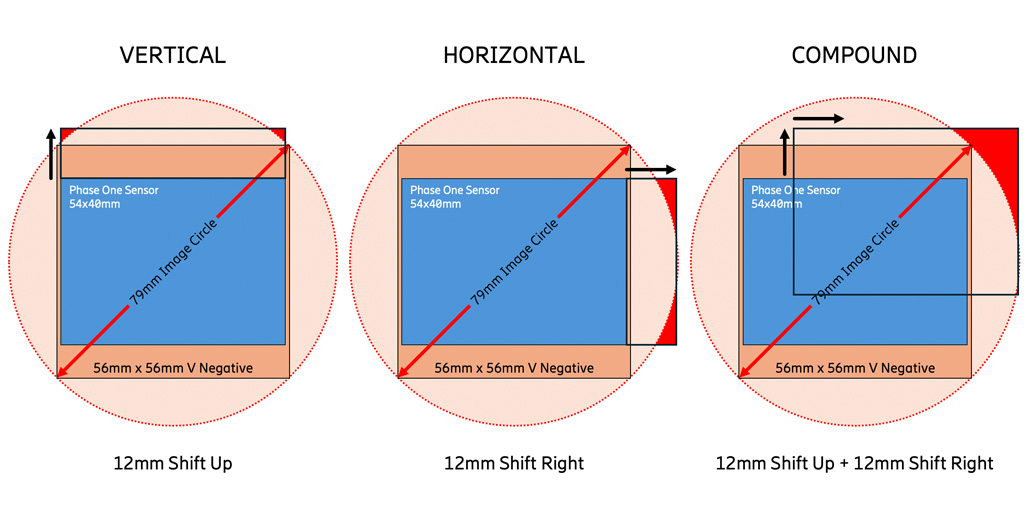
Using shift or rise/fall with the Rodenstocks was interesting. Those tiny little pixels are making the 23 show its age. It really needs f/8 or 11 when shifted, and, even there, I’d try to limit myself to a 65mm image circle (so about + or - 6mm rise fall with the back in portrait, 7mm in landscape), which may not sound all that useful, but it is an ultrawide. How much shift would I really need? And, to be fair to the lens, I feel essentially the same way about Canon’s TSE 17 and Nikon’s PCE 19. Neither of them are all that great with high resolution sensors when shifted to the max.
The 35’s good for its advertised 70mm circle from wide open, and that increases as you stop down. By f/8, you’ve got a good 80mm to work with. The 60 can cover 90mm with heavy vignetting wide open, but that clears up nicely stopped down. Same story with the 100, but the vignetting is much lighter wide open. All in all, nothing they hadn’t set me up to expect when using them in different scenarios.
The “what the hell am I doing?” moment came when I was looking at the two kits side by side. There’s the large, heavy WRC 400, those beautifully small lenses made unwieldy by their large, heavy mounting plates, all of which was going to require a special case for any kind of travel. Next to that was the diminutive little 907x box and it’s decently small lenses, all of which slip nicely into just about every bag I own. I don’t have to pack a heavy duty tripod with a leveling base for it, though I still will at times because the kit works with most pano solutions I have, and panos from the 30 and 90 have been very satisfying, The 907x doesn’t have a native PC solution, but I’m confident it’ll come. And no matter how chunky that solution is, it’ll still be easier to pack.
Stephen, on the other hand, was as excited about the Cambo kit as I would’ve probably been a few years ago. So I sold him the Rodenstocks and drove home feeling free, Part of was having the photography slush fund nice and slushy again. Part of it was feeling like I’d finally broken free of my attachment to those lenses. Most of it, though, was satisfaction from finally realizing I had what I wanted from the day I made the trade with my coworker. And, when I got home, I ordered an iPad Air for the camera, so I wouldn’t have to worry about draining my phone battery while shooting in the middle of nowhere.
You win, Hasselblad. You now own this small part of my photography, for better or worse. I’ll still rely mostly on the flexibility of my 135 kit, but I am taking the 907x and 30 and 90 to Iceland with me for a long weekend in April, and Rolf plans to pack it for our Scandinavian driving tour in June. If you’d like more love from us, a 60ish macro with the same optical qualities as the 120 would do it. If you want my undying love, a CFV 100c full spectrum mono, like Phase’s Achromatic 100, would certainly earn that.
Thank you for your attention, and thanks for producing the little wonder. Please excuse me. I now have to go convince Syrp/Manfrotto to make a trigger cable for the camera so it’ll work with all my pano solutions.
-Brad
|