Xysterz wrote:
On a bit of a tangent, may I ask why you have both the Z8 and Z9? From everything I'm reading/watching, they are nearly identical except the battery/grip of course.
I've always liked the Nikon bodies with the built-in vertical grip. Had the D1 through D5. I kept the D5 to shoot with my heavy 300mm f2.8 and 200mm f2.0 lenses. I was nervous about using them on the Z8 with the FTZ, since that put more stress on the lens mount (due to the extra length of the lens + FTZ) than with a F mount body. The Z9 is built a bit stronger than the Z8 plus with the latest firmware now has autofocus fearures the Z8 lacks.
Luke_Miller wrote:
I've always liked the Nikon bodies with the built-in vertical grip. Had the D1 through D5. I kept the D5 to shoot with my heavy 300mm f2.8 and 200mm f2.0 lenses. I was nervous about using them on the Z8 with the FTZ, since that put more stress on the lens mount (due to the extra length of the lens + FTZ) than with a F mount body. The Z9 is built a bit stronger than the Z8 plus with the latest firmware now has autofocus fearures the Z8 lacks.
That makes a lot of sense. I have a D3, and always appreciated the balance and ergonomics of the vertical grip.
What AF features did the new firmware introduce for the Z9 that are absent in the Z8?
A note on manually focusing F-mount lenses that are not AF-S. The Z-mount cameras have an excellent focus peaking feature for ensuring that you achieve proper focus. Way better than the green dot in the viewfinder that my DSLR’s had.
From the FWIW department, I bought my Z5-II and FTZ specifically to use my manual-focus lenses from the 1970's. Since then I've acquired several more, some slightly newer, all non-CPU, no in-lens VR, and not even supporting open-aperture metering, all under $100 apiece. (My only lens that even has an in-focus indicator is a later F-mount Tamron macro for scanning my old slides, cost me $75.) It's like shooting film, I have to focus manually. For best results I'll focus with full aperture then stop down the aperture manually, or use the + magnify button. It doesn't work for most sports or other moving subjects (unless I get lucky or shoot with a small aperture). OTOH, it makes me shoot carefully, never more than a few dozen shots a day, often just half a dozen, with a high keeper percentage.
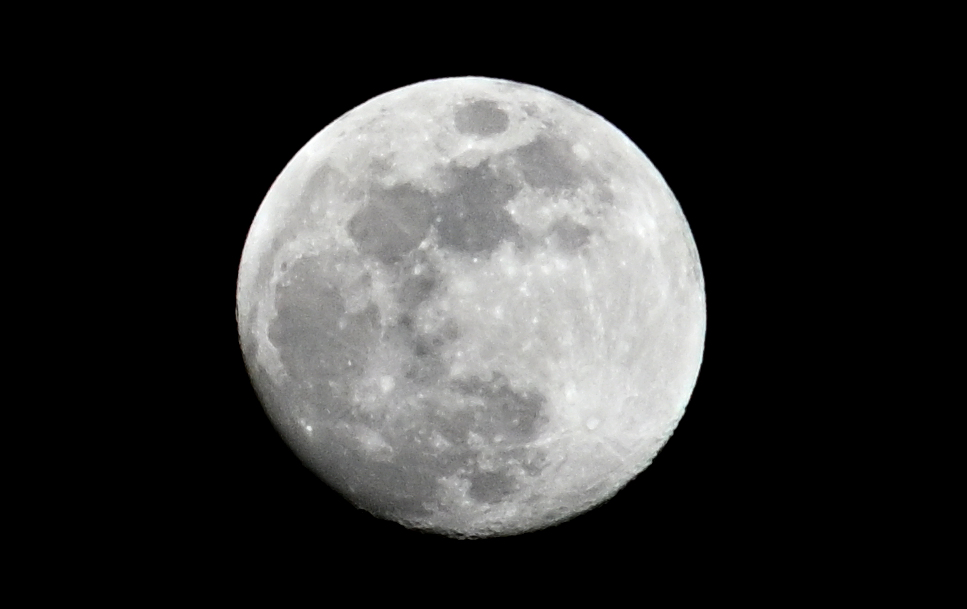
If you haven't found it yet, check out the Manual Focus Nikon Glass thread in the Nikon Forum on the FM website. Great pics there. Here is one of mine (I'm not saying it's great), hand-held with a 300mm f/4.5 AI-S, the newest Nikon lens I own.
Not too shabby for a hand-held picture without a 10ft-long lens.
One day I may pick up a real Z-mount lens just to get auto-focus for its convenience. Or maybe not.
From the FWIW department, I bought my Z5-II and FTZ specifically to use my manual-focus lenses from the 1970's. Since then I've acquired several more, some slightly newer, all non-CPU, no in-lens VR, and not even supporting open-aperture metering, all under $100 apiece. (My only lens that even has an in-focus indicator is a later F-mount Tamron macro for scanning my old slides, cost me $75.) It's like shooting film, I have to focus manually. For best results I'll focus with full aperture then stop down the aperture manually, or use the + magnify button. It doesn't work for most sports or other moving subjects (unless I get lucky or shoot with a small aperture). OTOH, it makes me shoot carefully, never more than a few dozen shots a day, often just half a dozen, with a high keeper percentage.
If you haven't found it yet, check out the Manual Focus Nikon Glass thread in the Nikon Forum on the FM website. Great pics there. Here is one of mine (I'm not saying it's great), hand-held with a 300mm f/4.5 AI-S, the newest Nikon lens I own.
Not too shabby for a hand-held picture without a 10ft-long lens.
One day I may pick up a real Z-mount lens just to get auto-focus for its convenience. Or maybe not....Show more →
Not too shabby at all!! That could go in a textbook! Before mirrorless, digital SLR's, etc., people were able to get amazing photos. I find it's just a lot easier with modern tech, and I need all the help I can get! :P
Xysterz wrote:
Not too shabby at all!! That could go in a textbook! Before mirrorless, digital SLR's, etc., people were able to get amazing photos. I find it's just a lot easier with modern tech, and I need all the help I can get! :P
Thank you!
You are absolutely right that modern tech helps. The Z5-II's instant feedback, IBIS, and center-weighted metering made that pic possible without a tripod and lots of wasted shots getting the exposure right. Without tech we wouldn't have cameras at all. Still, I had to think about how to take advantage of it. It wasn't just point and click.
I didn't post that to be showing off a pic (yeah, right!) but to illustrate how the FTZ works just fine with older lenses even without AF, since that was part of the original question. There are folks in the MFNG thread who do things far more amazing than I can ever do.
RoamingScott wrote:
Z glass has better optics and is usually substantially lighter.
---------------------------------------------
OffTrail wrote:
I notice that Z lenses tend to be sharper and better corrected. But I also notice that there can be significant rendering differences between comparable F and Z lenses, and I tend to land on the F-mount side.
I've been re-reading the responses on this thread. Interesting discussions, of course I can't compare Z and F lenses because I've never used a Z lens, just spent decades shooting film in the old F days, and now with a Z. But those two quotes make sense and should be obvious or at lease assumable. In the old days lenses were designed by experienced mathematician-engineers laboriously, manually working out designs. Today it is a done with computer analysis, much easier, faster, more comprehensive than it used to be. The results are better, as they should be. But even back in the old days, dedicated engineers would improve established designs when that was a recognized goal.
For fun, check out Thousand and One Nights on the Nikon website. https://imaging.nikon.com/imaging/information/story/
It's a collection of essays written by two senior Nikon designers on the development of individual lenses, up to almost 100 now. A good example is the development of the 200mm f/4, story #48. A few years after I bought mine (bought in 1973, I think) they released a newer version explained in story #87. As #87 explains, shorter and lighter was a design goal accomplished by adding a concave group to lengthen the focal length and redesigning the rest to be shorter overall. Imagine how they might do that today. Twiddle a few variables in a computer simulation, instant result.
So yeah, the Z lenses should be better over their entire range of distance and aperture, and more ergonomic too. And you get all the AF/zoom/VR goodies too. It doesn't make the old ones any worse. It means if you are willing to spend the money for a newer lens it should be an upgrade. That upgrade could cost you 20 times more than what you'd spend on an "obsolete" F equivalent. JMHO on the F/Z split.