I am thinking of getting a light meter sooner or later, I would some day like to play with strobe and it would come handy but I also like the idea to use one for landscape and for some film shooting.
Question being, I am looking at the Sekonics and figured it out that they are no less than 7-8 years old, I understand there is not much to improve there but just wondering if I am missing something like other brands.
Got it, so anywhere I fall with a meter being able to measure flash and spot would make it. I am going to begin with strobes so I don't know if worth to invest in a meter with built in trigger as I might either drop strobes or change brand, can trigger with the strobe trigger, dunno if worth going for a meter with built in spot ability or if to then add it in future but seems like the difference in cost, built in vs add on is tight.
GiovanniAprea wrote:
Got it, so anywhere I fall with a meter being able to measure flash and spot would make it. I am going to begin with strobes so I don't know if worth to invest in a meter with built in trigger as I might either drop strobes or change brand, can trigger with the strobe trigger, dunno if worth going for a meter with built in spot ability or if to then add it in future but seems like the difference in cost, built in vs add on is tight.
Thank you
Giovanni
Meters are handy in a couple situations. First is where you want to re-create a specific look with more than one strobe or even multiple constant lights. You can measure the light ratios and record them for future use.
Second is where you use multiple strobes and want to establish a specific ratio of light from different strobes like for portraits.
In a landscape situation, some meters come with the equivalent of a spot meter so you can base your exposure on a part of the scene.
You sure got me useful informations, landscape wise no difference with the built in camera meter, makes sense, might be more or less accurate but same principle, strobe wise useful to an extent but not indispensable.
One of the specific improvements on the sekonic L-858 over the older models that appealed to me was flash duration analysis. That gives you real insight into strobe performance and how much or little it can freeze action.
Newer meters have greater sensitivity so they are more accurate in lower light which is relevant as more sensitive camera sensors have become the norm. The L-858 includes many cine related functions so you have one device that's more universally useful for stills and video.
Using AA batteries was huge appeal with the L858. The previous couple models used CR123 3V batteries which are just a pain to deal with compared to simple AA.
I inviti ally thought “go big or go home” and aim at the 858 but as noted above the spot metering for landscape wont be of much use if I shoot digital and use the built in spot meter to make an evaluation to average the exposure, movie wise I am not into it, just photography so I would rather aim at the 458 which sure has all I need and more once I decide to start and experiment with strobe.
Giovanni, the main utilization of spot flashmeter is in shooting for later publication using offset press, you can check in the shadows areas to ensure shadow vs. highlight areas are kept within a limited range of brightness that is within the narrower capability of the offset press.
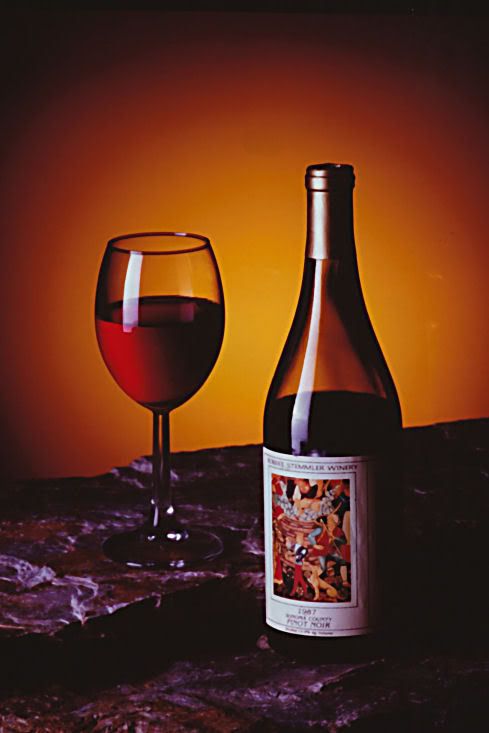
This somewhat small product could be easily measured locally by using a spotmeter
I include this shot as an example of use of spotmeter (Minolta Spotmeter F) to be able to set the brightness of the wine glass full of wine, vs. the brightness of the transilluminated background, vs. the overall scene. I did this decades ago, during a workshop I was taking for commercial photography lighting techniques, as a practical exercise that each of us did to make use of techniques that had been presented. (This was 3 exposures in one shot, on 4x5.)
There really is not much in the way of 'new technology' in meters. Some of the advaces, like LCD touchscreen, often are seen as really 'bothers' by many.
I got a mie range Sekonic, a 478 which I will get sometime later this month hopefully, I plan on trying to shoot strobe portraits with modifiers and after all the money forked out for cameras and lenses a meter won’t break the bank and will sure be another way to revive the hobby and learn something new.
p.1 #10 · Is there any new tech with light meters?
There are very limited situations where you would use a spot flash meter attachment, they are typically designed to read areas you can't get to, such as tall buildings or landscapes when measuring ambient.
For product work or portraits, an incident meter is the way to go. The Sekonic L-478 or L-858 are perfect for this, and with the retractable incident dome you can accurately measure EV ratios.
My now long since gone Minolta Flash Meter III had a 3.5mm port to plug in a flexible wand with a tiny incident dome for getting into small places for my commercial product work. This would be the one old/new feature modern light meters should have but the accountants are likely in charge these days.