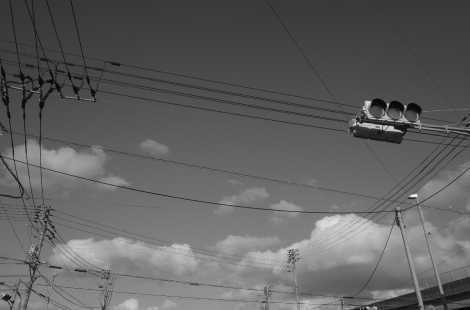
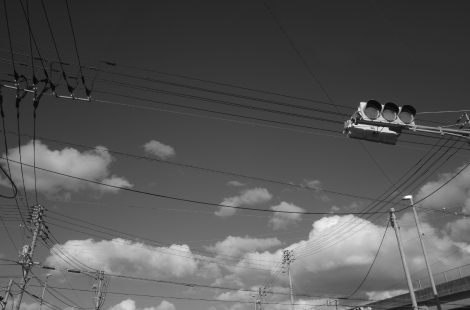
The price of the GR4M here is 1843 EUR, and I didn’t expect it to be any lower. When I compare the price of the Pentax K-3 Monochrome with the color version, the difference roughly matches. Unfortunately, I was expecting a similar output from Ricoh as from Pentax, but it seems significantly worse to me. I no longer want a DSLR, so I will wait for a monochrome camera from Fujifilm. I’m afraid that I probably won’t live to see it.
Fred Miranda wrote:
...Ricoh...probably want the effect to be obvious and extreme, similar to how their HDF setting is not subtle either.
Haven't been particularly excited about Ricoh HDF cameras, considering that Cobalt-Image has (in its Cobalt Editing presets) the Orton effect, with which you can apply an HDF look. Anyone have the same view on this?
Fred Miranda wrote:
I agree. The red filter is very specialized, and yellow is the more general and optimal choice. Even orange does not look that great on skin tones. That said, Ricoh may not be aiming for subtlety when pressing that red filter button. They probably want the effect to be obvious and extreme, similar to how their HDF setting is not subtle either.
A yellow filter basically lives on my Q3M (as it did on my pervious Q2M) and I carry a UV, orange and red filter with me at all times. I will only use a red occasionally when I have an extremely blue sky and may want to add a bit more contrast. For some reason I find a red filter seems to have less effect on a digital sensor than I seem to remember finding in my film days and to really darken a sky I need to combine a red filter with a polariser. Of course the Ricoh is no Q3M but if you want to have a pocketable fun camera that has a monochrome sensor then this is a steal compared to the Leica. Personally I think they may sell a load of them
Fred Miranda wrote:
I agree. The red filter is very specialized, and yellow is the more general and optimal choice. Even orange does not look that great on skin tones. That said, Ricoh may not be aiming for subtlety when pressing that red filter button. They probably want the effect to be obvious and extreme, similar to how their HDF setting is not subtle either.
Interestingly, the Ricoh developers argued the opposite in the developer interview. They chose a red filter over orange because orange felt too weak for the desired contrast, but deliberately tuned the red filter to avoid an extreme effect. They explained that overly strong filters become tiring, so their goal was a versatile, everyday-usable look with a bit of extra punch.
In the europe the price is at the moment around 1800€ for the GRIV-Monochrome compared to 1400€ for the GRIV. The 400€ Bonus is reasonable for the develepment cost for such a niche product.
If somebody wants to pay that much or not depends on the individual use and the financial abilities.
I apriciate the bold move to develope such a niche product!
Aldarin wrote:
Interestingly, the Ricoh developers argued the opposite in the developer interview. They chose a red filter over orange because orange felt too weak for the desired contrast, but deliberately tuned the red filter to avoid an extreme effect. They explained that overly strong filters become tiring, so their goal was a versatile, everyday-usable look with a bit of extra punch.
I didn't see the video, but if that is what they said, I have to push back. Both real-world testing and basic light physics show that a red filter is inherently more extreme than orange. Red cuts far more blue and green light, which leads to stronger sky darkening, higher contrast, and more dramatic tonal separation, which is unpleasant especially for portraits. That's measurable and well established in b&w photography.
I think it's possible to tune a red filter to be milder, but even then it will still be more aggressive than an orange filter with similar transmission. Orange sits in a balanced middle ground between yellow and red, adding more contrast than yellow without the extreme and dramatic effect of red. That's why yellow has traditionally been the true go-to filter for everyday b&w work and would be my choice if I could only have one filter. Going straight to red feels extreme. At the very least, orange should have been considered as the middle ground.
So while I understand their intention, the idea that red is less extreme than orange doesn't really hold up. If subtlety and everyday use were the goal, orange or even deep yellow would have made more sense.
Fred Miranda wrote:
I didn't see the video, but if that is what they said, I have to push back. Both real-world testing and basic light physics show that a red filter is inherently more extreme than orange. Red cuts far more blue and green light, which leads to stronger sky darkening, higher contrast, and more dramatic tonal separation, which is unpleasant especially for portraits. That's measurable and well established in b&w photography.
I think it's possible to tune a red filter to be milder, but even then it will still be more aggressive than an orange filter with similar transmission. Orange sits in a balanced middle ground between yellow and red, adding more contrast than yellow without the extreme and dramatic effect of red. That's why yellow has traditionally been the true go-to filter for everyday b&w work and would be my choice if I could only have one filter. Going straight to red feels extreme. At the very least, orange should have been considered as the middle ground.
So while I understand their intention, the idea that red is less extreme than orange doesn't really hold up. If subtlety and everyday use were the goal, orange or even deep yellow would have made more sense....Show more →
Just watch the video or find some samples. The video explains how the mono sensor in the gr has very different spectral sensitivity than film or colour sensors. A red filter simply has very differently effect with the gr mono sensor.
You may not like the results but you can't compare with film or other sensors. Pentax mono users have already found out that filters don't work the same and stronger filters are needed even for subtle effety
Back in the 70s we used yellow or amber filters, but rarely red. Why not make one with no color filters and use a screw-on if they are not easily swapped?
EB-1 wrote:
Back in the 70s we used yellow or amber filters, but rarely red. Why not make one with no color filters and use a screw-on if they are not easily swapped?
EBH
You can use add on filters with an adapter. The video explains the decision to include it in camera. They explain how fiddling with filters break the flow for a snapshot camera it's a feature to be able to tune the look with a press of a button.
The video has a whole section on the filter where the interviewer had the same thoughts as Fred but saw that the effect was appropriate considering the whole system. Now that's advertising of course but I imagine such a niche question/observation was probably genuine from someone with experience shooting be film.
One problem is that we do not know the spectral response of the nativ bw sensor with the regular cover glas. Usually sensors have an increased response towards longer frequencies (e.g. red) which have to be counteracted by a hot mirror.
We thus do not know how the GR bw is tweaked: It may well be that native response corresponds to a yellow filter and the swung in „red“ corresponds to a mild red filter.
I too would have loved a light yellow filter instead of the red. I also think the price is high especially here in the US. That said, I just pre-ordered mine from Popflash. I've been wishing for a monochrome Ricoh GR for forever and I'll just suffer the price. To me I'm just happy they made it at all.
Knut. wrote:
One problem is that we do not know the spectral response of the nativ bw sensor with the regular cover glas. Usually sensors have an increased response towards longer frequencies (e.g. red) which have to be counteracted by a hot mirror.
We thus do not know how the GR bw is tweaked: It may well be that native response corresponds to a yellow filter and the swung in „red“ corresponds to a mild red filter.
The sample above just doesn't look like a red filter to me. Does it to you? I expect way darker skies with a red filter on film.
I have the adapter for the wide-angle lens that lets you screw filters in. When my Monochrome arrives, I’m planning to try yellow and orange filters and see how they compare to red.
It’d actually be pretty cool if Squarehood made a version with a light yellow filter built in. Then you could choose between that or the red (assuming you remove the hood).
My real wish, though, would be for Ricoh to somehow let you slide between multiple color filters internally… even if that’s not physically realistic 😅
JohnPike wrote:
My real wish, though, would be for Ricoh to somehow let you slide between multiple color filters internally… even if that’s not physically realistic 😅
Should be doable ... I have a vintage shift lens with that feature. Only slight, very minor, issue may be that the lens is 4 times bigger than the GR inclunding lens.
As someone who shoots 95% B&W and has been eyeing the Ricoh GR series since the GRII came out, I was very excited about the announcement of the GR IV Mono. Like a lot of people the announced price gave me a bit of a shock, but after a few days to think it over I ended up placing a pre-order after all. I'm fairly sure this is something I'm going to use all the time, and if it turns out I still prefer one of my other cameras for a daily, the limited nature of the mono means it'll likely hold it's value well if I need to resell it.
FWIW I placed my pre-order with B&H on Jan 21st and B&H said while there's no guarantees, I should still be getting one of the first batch they get. They don't know when they are getting any in stock yet, but I've seen Feb 13th listed a few places as release date so fingers crossed!
Fred Miranda wrote:
I didn't see the video, but if that is what they said, I have to push back.
I think it's possible to tune a red filter to be milder, but even then it will still be more aggressive than an orange filter with similar transmission.
I watched some of it. I'm wondering if the "just right" aspect of a red filter that they were referring to wasn't as much referring to the red hue was the "just right" hue, but in using the red filter hue, the amount of transmission was "just right" (i.e. milder). Looking at the comps, the impact of the red filter seemed mild.
Imo, the amount of impact in the comps they showed for a red filter, left me wanting for more (i.e. thinking I'd need to add an external filter of choice).